

Main Facts: The Battle of the TTI Stablemates
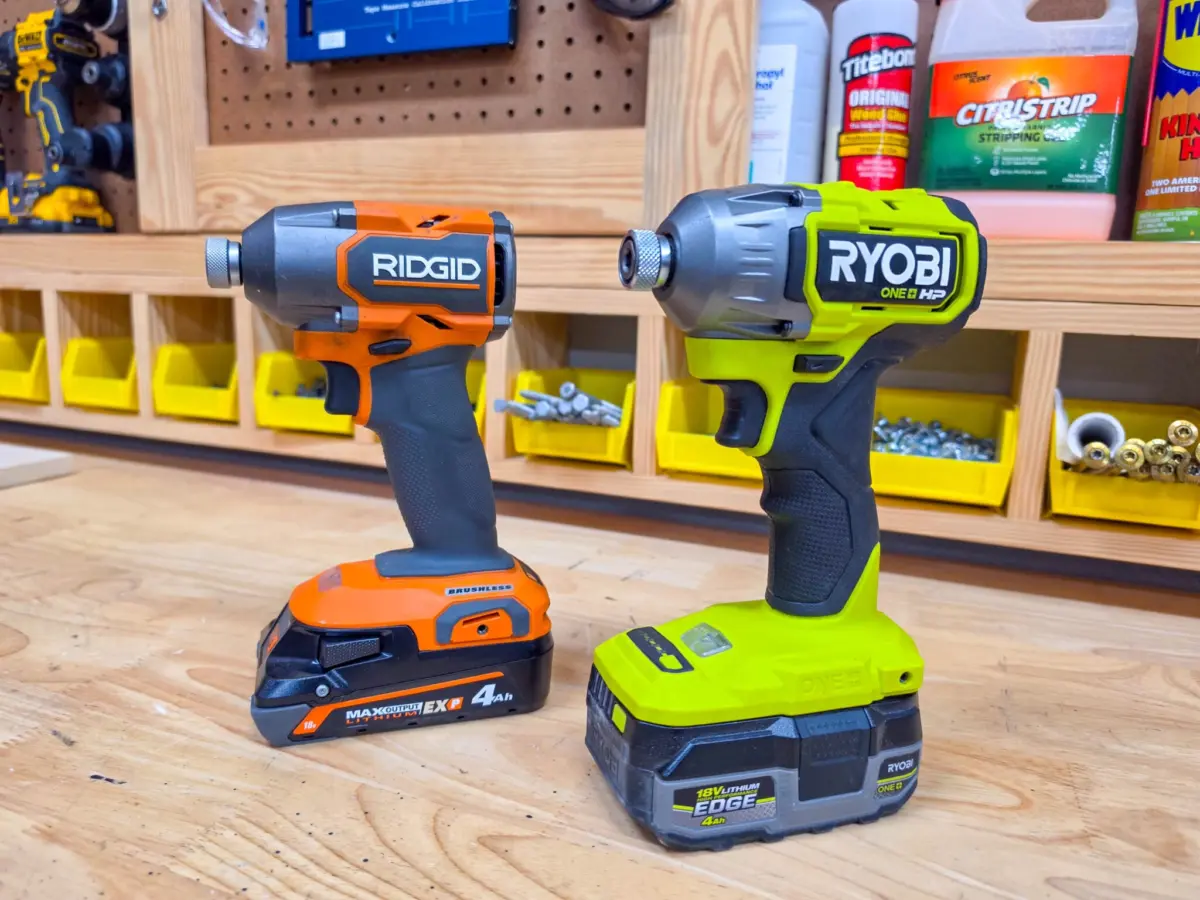
For years, the DIY and professional power tool landscapes have been neatly categorized by brand tiers, price points, and target audiences. However, the lines are blurring faster than ever. In a recent head-to-head testing showdown conducted by industry experts, two flagship impact drivers—both proudly retailed at Home Depot and both manufactured by parent company Techtronic Industries (TTI)—went toe-to-toe.
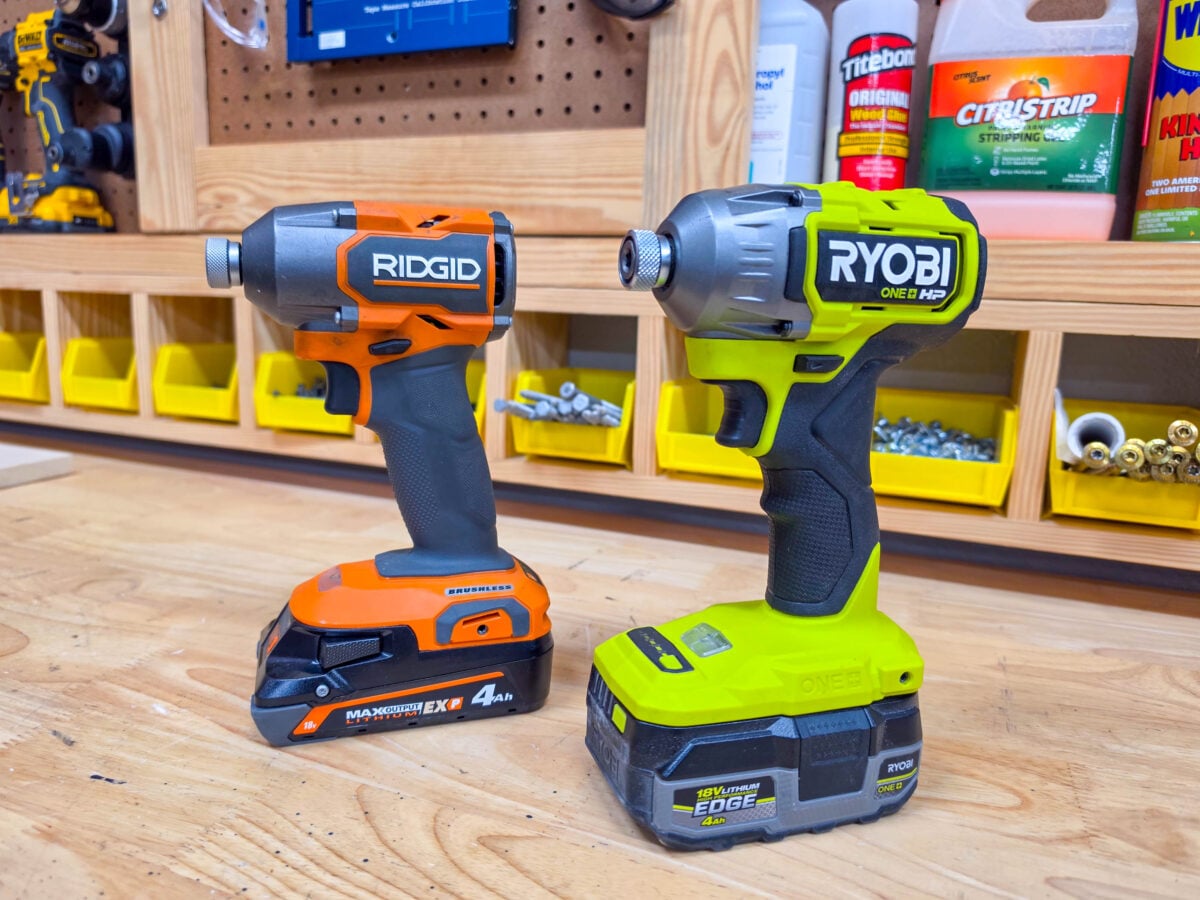
The contenders? The Ryobi HP Brushless PBLID04 and the Ridgid 18V Brushless R862312.
Traditionally, Ridgid has held the crown as the "Pro value" brand, engineered with durability, trade-level performance, and advanced warranties in mind. Ryobi, conversely, has long dominated the DIY and homeowner space, celebrated for its massive, accessible ecosystem and budget-friendly pricing. Yet, with the relentless evolution of Ryobi’s high-performance (HP) Brushless line, the performance gap has steadily eroded.
This test sought to answer a single, compelling question: Has Ryobi’s top-tier impact driver finally surpassed its stablemate, or does Ridgid’s pro-grade pedigree still reign supreme? The results challenge conventional wisdom about brand tiers and offer vital insights for everyone from weekend warriors to professional contractors looking to maximize their tool budget.
Chronology and Testing Methodology: Putting Power to the Test
To ensure an unbiased and comprehensive assessment, both impact drivers were put through a rigorous suite of standardized performance evaluations designed to test speed, endurance, and raw torque under heavy loads.
The evaluation chronology was structured across three distinct applications, moving from medium-load fastening to extreme torque resistance:
- The Speed Test (Ledger Screws): Testing commenced with a medium-load application designed to measure raw rotational speed. Each tool was tasked with driving three 8-inch GRK RSS structural screws into a dense, stacked Oriented Strand Board (OSB) test block. The time required to fully drive each fastener was meticulously recorded, and an average was calculated to establish a consistent performance baseline.
- The Bolt Break Test: Next, the evaluation shifted to heavy-load breakaway performance. Eight 1.5-inch hardened steel lug nuts were torqued down to an unforgiving 150 ft-lbs (1,800 in-lbs). The impact drivers were then timed on how quickly they could break loose and remove all eight nuts, measuring how efficiently each motor and impact mechanism handled high-resistance torque demands.
- The Lag Bolt Speed Test: The final test raised the stakes significantly. Returning to the stacked OSB blocks, each tool was given 30 seconds to drive a massive 10 x 0.5-inch lag bolt. Because this is an extreme test that typically prevents tools from driving fasteners completely flush within the time limit, the remaining exposed length was measured to determine depth efficiency and stall resistance.
Supporting Data: Specifications and Head-to-Head Results
On paper, both impact drivers present remarkably similar specifications, with Ridgid holding slight numerical advantages in raw brute strength and impact frequency. However, real-world performance metrics often tell a different story.
Technical Specifications Breakdown
| Feature | Ryobi PBLID04 | Ridgid R862312 |
|---|---|---|
| No-Load Speed | 950 / 2100 / 3400 / 2100 (A) RPM | 800 / 2000 / 3400 / 2000 RPM |
| Max Impact Rate | 4,200 IPM | 4,300 IPM |
| Max Torque | 2,300 in-lbs | 2,400 in-lbs |
| Head Length | 5.2 inches | 5.0 inches |
| Bare Weight | 2.5 lbs | 2.5 lbs |
| Working Weight | 3.8 lbs (4.0Ah Edge battery) | 3.75 lbs (4.0Ah Max Output EXP battery) |
Performance Test Results
| Test Category | Ryobi PBLID04 | Ridgid R862312 | Winner / Notes |
|---|---|---|---|
| RSS Screw Average | 6.80 seconds | 6.83 seconds | Ryobi (Virtually identical, slight speed edge) |
| Bolt Break Average | Total: 16.25 sec Per Nut: 2.03 sec |
Total: 15.46 seconds Per Nut: 1.93 sec |
Ridgid (Handles heavy breakaway marginally faster) |
| Lag Bolt Test | 1.13 inches remaining | 1.5 inches remaining | Ryobi (Drove deeper within the 30-second window) |
As the performance data illustrates, the two tools are exceptionally close. Ridgid leverages its 2,400 in-lbs of max torque and 4,300 IPM impact rate to edge out the competition in the heavy-duty bolt break test. However, Ryobi counters with superior top-end rotational speed, allowing it to win the RSS screw test and bury the heavy lag bolt deeper into the OSB block within the allotted timeframe.
Official Insights and Design Comparison
Beyond the raw numbers, evaluating the physical ergonomics, features, and value propositions of the Ryobi PBLID04 and Ridgid R862312 reveals how closely matched these platforms truly are.
Ergonomics and Physical Build
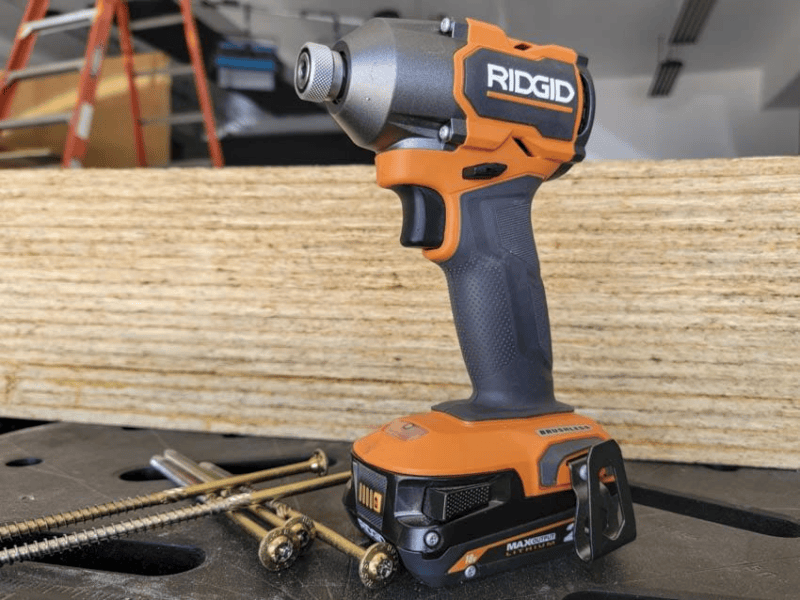
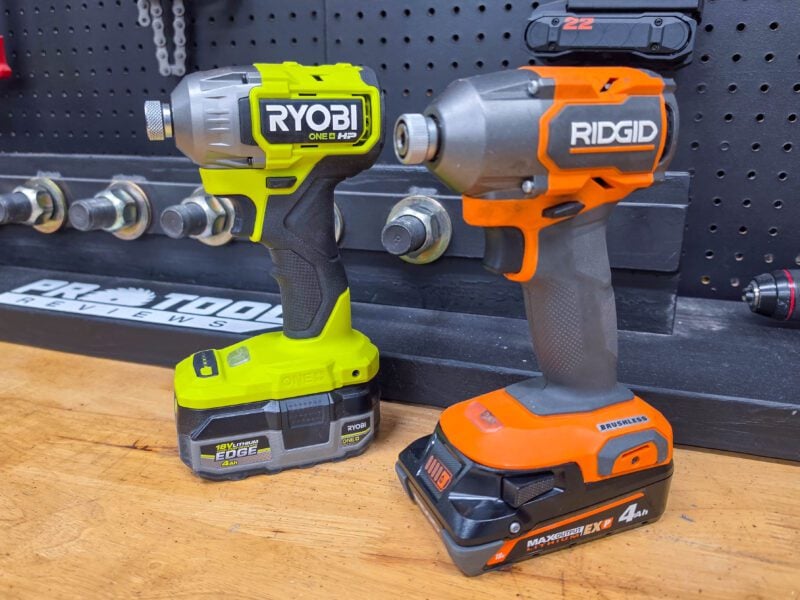
When handling the tools side-by-side, the physical differences are negligible. Both bare tools weigh an identical 2.5 pounds. Ridgid manages a microscopic advantage in head length, measuring 5.0 inches compared to Ryobi’s 5.2 inches—a difference so small it is virtually imperceptible in tight workspace applications.
When loaded with their respective 4.0Ah mid-capacity batteries (Ryobi’s 4.0Ah Edge versus Ridgid’s 4.0Ah Max Output EXP), the working weights are practically identical at roughly 3.8 lbs. Both tools feature comfortable, rubberized over-molds, well-positioned tri-beam LED work lights to eliminate shadows, and responsive variable-speed triggers with multi-mode electronic settings.
Pricing and Warranty Terms
| Category | Ryobi PBLID04 | Ridgid R862312 |
|---|---|---|
| Bare Tool Price | $129 | $149 |
| Kit Price | N/A (Sold as bare tool) | $209 |
| Standard Warranty | 3-Year Limited Warranty | 3-Year Limited Warranty |
| Extended Protection | N/A | Ridgid Lifetime Service Agreement (LSA) |
Price and warranty represent the most significant points of divergence between the two models. The Ryobi PBLID04 retails as a bare tool for $129, undercutting the Ridgid R862312’s $149 bare tool price by $20. Furthermore, while Ryobi offers a solid 3-year manufacturer warranty, Ridgid fields its industry-renowned Lifetime Service Agreement (LSA). For buyers who register their tools within the required timeframe, the LSA provides free parts and free service for the lifetime of the tool—a massive incentive for professional tradespeople.
Implications: Which Tool Belongs in Your Kit?
The convergence of performance between Ryobi and Ridgid carries profound implications for the power tool market and consumer purchasing behavior.
1. The Death of the "DIY Penalty"
For years, buying a budget-friendly tool meant accepting a noticeable performance deficit. Tests like this prove that strategy is obsolete. Ryobi’s HP Brushless line delivers speeds and driving power that easily trade blows with acknowledged prosumer and professional grades. Consumers no longer have to sacrifice capability to save money.
2. Ecosystem Lock-In Dictates the Choice
Because the performance gap is razor-thin and physical ergonomics are largely a tie, the ultimate purchasing decision should rarely come down to the impact driver in isolation. Instead, buyers must evaluate the broader battery platforms:
- The Ryobi Advantage: Homeowners and advanced DIYers embedded in the Ryobi 18V ONE+ system gain access to the largest cordless ecosystem on the market. Spanning hundreds of products—from heavy-duty miter saws to lawn mowers, fans, and camping gear—the platform offers unmatched versatility. Additionally, frequent Home Depot promotions and battery sales make expanding the collection exceptionally cost-effective.
- The Ridgid Advantage: Contractors and serious tradespeople will find the Ridgid R862312 immensely appealing. It holds its own against dedicated professional brands, and the inclusion of the Lifetime Service Agreement provides long-term financial security that casual tool platforms simply cannot match.
Final Verdict
While Ridgid technically captured a marginal victory in overall scoring due to its heavy-load breakaway strength, the Ryobi PBLID04 emerges as a standout value champion. It delivers top-tier speed, exceptional balance, a lower price point, and seamless integration into one of the most expansive cordless ecosystems available today. Whichever route you choose at Home Depot, modern engineering ensures that neither tool will leave you hanging on the job site.
