

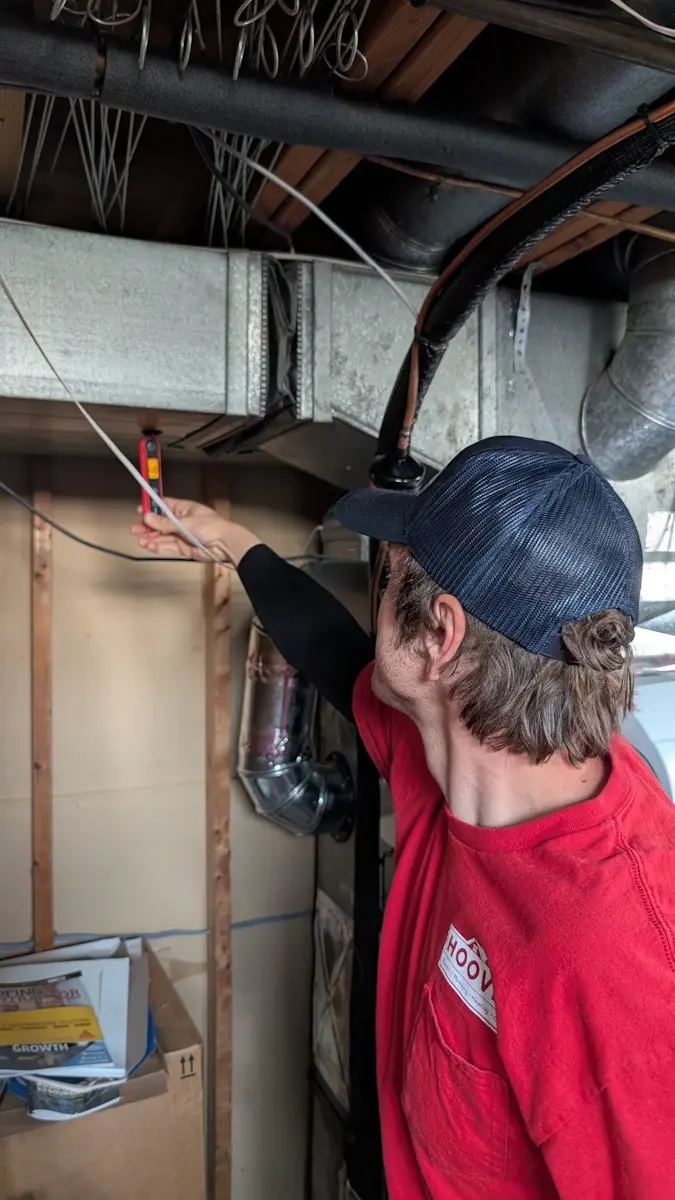
Main Facts: The Digital Transformation of HVACR Diagnostics
The heating, ventilation, air conditioning, and refrigeration (HVACR) industry is undergoing a quiet revolution. For decades, the technician’s toolkit remained remarkably consistent: a set of analog gauges, a reliable multimeter, hand tools, and a heavy reliance on gut instinct, mental math, and visual inspections. Today, however, that toolkit is rapidly expanding to include wireless smart probes, digital manifolds, smart clamp meters, psychrometers, and app-connected combustion analyzers.
While analog equipment has served the industry reliably for generations, the introduction of smart technology is redefining accuracy, efficiency, and customer relations. Steve Moon, CEO of Moon Air Inc. in Maryland, recently invested in smart tools for his business—a first in the company’s 40-plus-year history. Despite historical gaps in supplier offerings and options, Moon notes that the transition has been entirely justified.
"The accuracy of the smart tools far surpasses the analog," Moon said. "The ease of use makes a less experienced tech look like a pro."
However, this transition is not uniform across the industry. While early adopters praise the unprecedented precision and automatic feedback loops provided by smart instrumentation, many contractors still hesitate. Concerns range from the steep upfront price tags and ongoing learning curves to persistent connectivity bugs and the limitations of digital systems when dealing with legacy or inverter-driven equipment.
Chronology: From Analog Foundations to App-Driven Diagnostics
To understand where the industry stands today, it is helpful to trace the technological timeline of HVACR service and installation:
- The Analog Era (Pre-2010s): For generations, mechanical diagnostics relied strictly on mechanical gauges, pressure-temperature charts, and standalone multimeters. Technicians calculated superheat and subcooling manually, leaving ample room for human error, miscalculation, and subsequent system inefficiencies.
- The Early Digital Shift (2010–2018): Digital manifolds and basic electronic meters entered the market, offering initial digital readouts. However, these tools were often bulky, expensive, and tethered by tangled cords, limiting their widespread field adoption among standard service technicians.
- The Rise of Smart Probes and Ecosystems (2018–Present): The proliferation of Bluetooth technology, smartphones, and dedicated diagnostic software (such as measureQuick) birthed the modern "smart tool ecosystem." Technicians could now clip wireless probes onto a system, stream live data directly to a tablet or phone, and generate automated performance reports.
- The Current Crossroads (2024–Present): Modern HVAC businesses are forced to weigh the high costs of smart equipment against the proven data surrounding callback reduction, customer trust, and system performance enhancements. Simultaneously, industry thought leaders are pushing for the next generation of smart tools optimized for natural refrigerants and advanced inverter technology.
Supporting Data: What the Research Says About Smart Ecosystems
The debate over smart tools is no longer merely philosophical; hard data is beginning to emerge regarding their impact on business performance. A 2024 Department of Energy (DOE) report studying HVAC businesses utilizing the measureQuick diagnostic platform highlighted several measurable operational shifts:
Performance and Efficiency Gains
When technicians utilized smart diagnostics to tune up existing systems, the study documented clear performance improvements:
- Normalized Capacity: Grew by an average of 3.3%.
- Sensible Capacity: Increased by 5.4%.
- Energy Efficiency Ratio (EER): Rose by 6.2%, with average EER climbing from 11.8 to 12.5.
Callbacks and Job Durations
- Reduced Callbacks: A striking 83% of survey respondents reported fewer callbacks after adopting smart diagnostic tools. Many contractors noted that the automated feedback loop provides "natural accountability," ensuring installations and repairs are done right the first time.
- Longer Service Visits: Interestingly, 64% of respondents reported that service visits actually took longer when utilizing smart tools. Rather than cutting corners, technicians used the detailed digital diagnostics to uncover hidden system issues that previously would have gone unnoticed.
Financial Impacts
- Revenue Per Ticket: Among 47 at-large individual technicians surveyed, 55% reported an increase in revenue per ticket.
- Business Growth Claims: Business practice partners (small-to-large HVAC enterprises) reported revenue increases ranging from 20% to 80% for service calls, and 30% to 40% for new installation sales. However, analysts note these commercial claims should be interpreted cautiously, as formal backup data was not uniformly provided by all participating enterprises.
Official Responses: Insights from Industry Leaders
Contractors, service managers, and educators across the country offer diverse perspectives on how smart tools are reshaping daily operations in the field.
Precision and Remote Support
Eli Dover, service manager at Garner Heating & Air Conditioning in Texas, emphasizes the granular accuracy modern digital instruments provide.

"We are able to read pressures inside rooms that help better determine positive and negative pressures; we are able to record readings over an extended period of time and can also livestream that data to other devices/computers in the field for diagnostic help," Dover explains.
Jen Manzo, owner of Valeriani Air Conditioning in Maine and founder of the HVAC-Chicks Coalition, utilizes smart tools both in the field and while operating a global technical support line. She notes that live data drastically streamlines troubleshooting.
"When a first-time caller immediately gives me their pressures, I tell them, ‘OK, I don’t need your pressures, I need your temperatures,’" Manzo says. "So when they have those answers on the screen and aren’t flying blind with only pressures, my job in helping them is a breeze."
Accountability and the Feedback Loop
Nate Adams, widely known as "The House Whisperer," frequently observes a steep drop in callbacks when smart tools are integrated into a contractor’s workflow.
"It provides natural accountability and also a feedback loop that can help the technicians be better at their job," Adams states. He points out that nearly 90% of HVAC systems suffer from significant, measurable defects according to DOE estimates—a systemic issue that digital feedback loops are uniquely positioned to correct.
Implications: Overcoming the Hurdles of Adoption
Despite their clear benefits, widespread adoption of smart tools faces persistent headwinds. Industry leaders point to three major areas of concern:
1. The Learning Curve and Foundational Knowledge
A common misconception is that smart tools make diagnosis automatic. Experts emphasize that a digital screen only displays raw data; it cannot replace fundamental mechanical knowledge.
"Teaching them what each of those numbers mean, whether it’s on smart gauges or a combustion analyzer, and seeing those lightbulbs flash behind their eyes, makes it clear that simply having the number on the screen does not teach diagnosis, nor does it cut callbacks," Manzo warns.
Furthermore, technicians must master the operational nuances of their equipment, understand what to do when cellular or Wi-Fi signals fail, and maintain company-wide accountability for tool usage.

2. Connectivity and Hardware Limitations
Wireless technology is not without its operational frustrations. Bluetooth and Wi-Fi dropouts remain a frequent headache for field technicians.
"Oftentimes, I find myself setting up tools and then running around the house, going in and out of the attic, and losing connection to the probes at the outdoor unit if I am inside and vice versa being outside," Dover notes.
Additionally, battery management is critical. Dead double-A batteries can bring a diagnostic sequence to a halt—particularly if a technician has sacrificed their spares to power a homeowner’s thermostat.
3. The Enduring Relevance of Analog Tools
Analog equipment is far from obsolete. Traditional gauges remain superior for certain tasks, such as visually identifying moisture and contaminants within a refrigerant circuit. Moreover, older or specialized equipment—such as modern inverter systems that modulate compressors, electronic expansion valves (EEVs), and fans without a steady liquid line—can sometimes render digital probes incompatible or less effective during initial non-invasive testing.
4. Financial Investment and Tool Allowances
Traditionally, HVAC technicians purchase their own basic hand tools, while employers supply specialized or heavy machinery. Because smart tools command a significant price premium over analog alternatives, business owners must re-evaluate their compensation models, tool allowances, and purchase bonuses to ensure their crews have access to state-of-the-art diagnostic equipment.
Conclusion: The Future of the HVAC Toolkit
The trajectory of the HVACR industry is clear. As younger generations of homeowners, business operators, and technicians demand data transparency, instant status checks, and verifiable system health reports, the mechanical trade must adapt.
While upfront costs, learning curves, and connectivity issues require careful navigation, the long-term rewards—fewer callbacks, enhanced energy efficiency, higher customer trust, and elevated installation quality—make smart tools an increasingly indispensable asset. As manufacturers continue to innovate, particularly with tools designed for emerging natural refrigerants, smart technology is poised to transition from an optional luxury to the absolute standard of the modern HVAC toolkit.
