

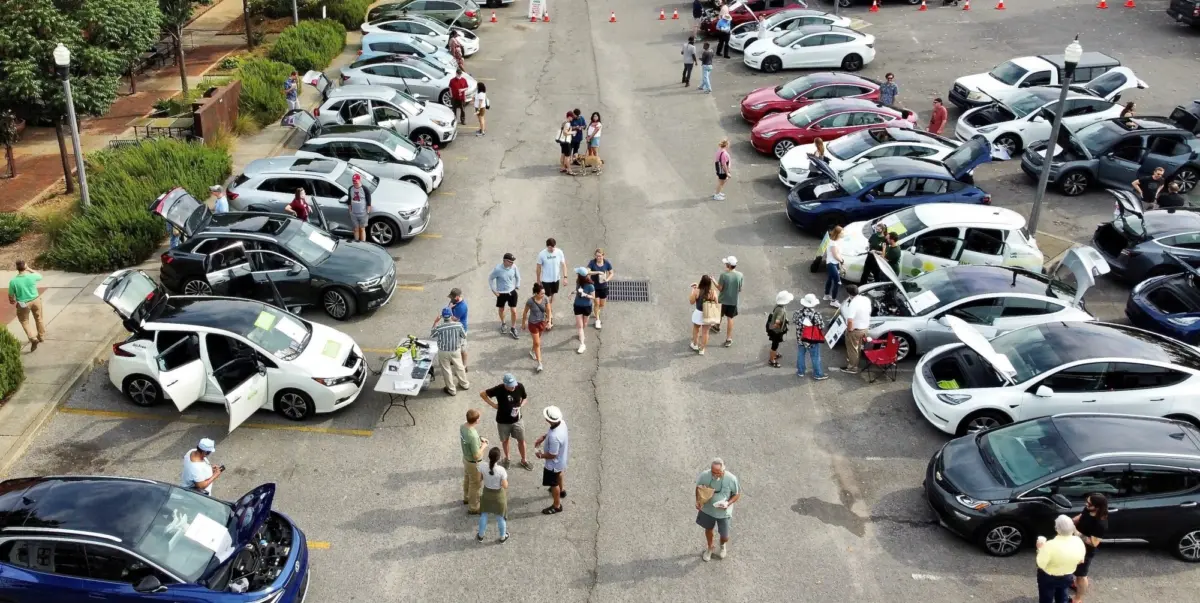
As global oil markets experience another volatile price spike and fuel costs at American pumps hit punishing new highs, the transition toward transportation electrification has never felt more urgent. Amidst this economic backdrop, the 16th annual Drive Electric Month is officially underway, offering more than 150 online and in-person events throughout September and stretching into early October.
Spanning nearly every U.S. state and reaching communities in Canada, this year’s nationwide celebration serves a dual purpose: it is a festival for current electric vehicle (EV) enthusiasts and an accessible, low-pressure educational gateway for curious prospective buyers. With conventional fuel expenses straining household budgets, organizers emphasize that understanding how to achieve personal energy independence is no longer just an environmental goal—it is a pragmatic financial strategy.
Main Facts: What is Drive Electric Month?
Drive Electric Month is a sprawling, decentralized grassroots campaign coordinated by a coalition of prominent clean transportation advocacy groups. Originally launched in the United States as National Drive Electric Week 16 years ago, the initiative has steadily expanded due to surging public interest, evolving into a month-long programming schedule that bridges September and October.
The event is jointly organized by:

- Plug In America
- The Electric Vehicle Association (EVA)
- EVHybridNoire
- Drive Electric USA
- The Sierra Club
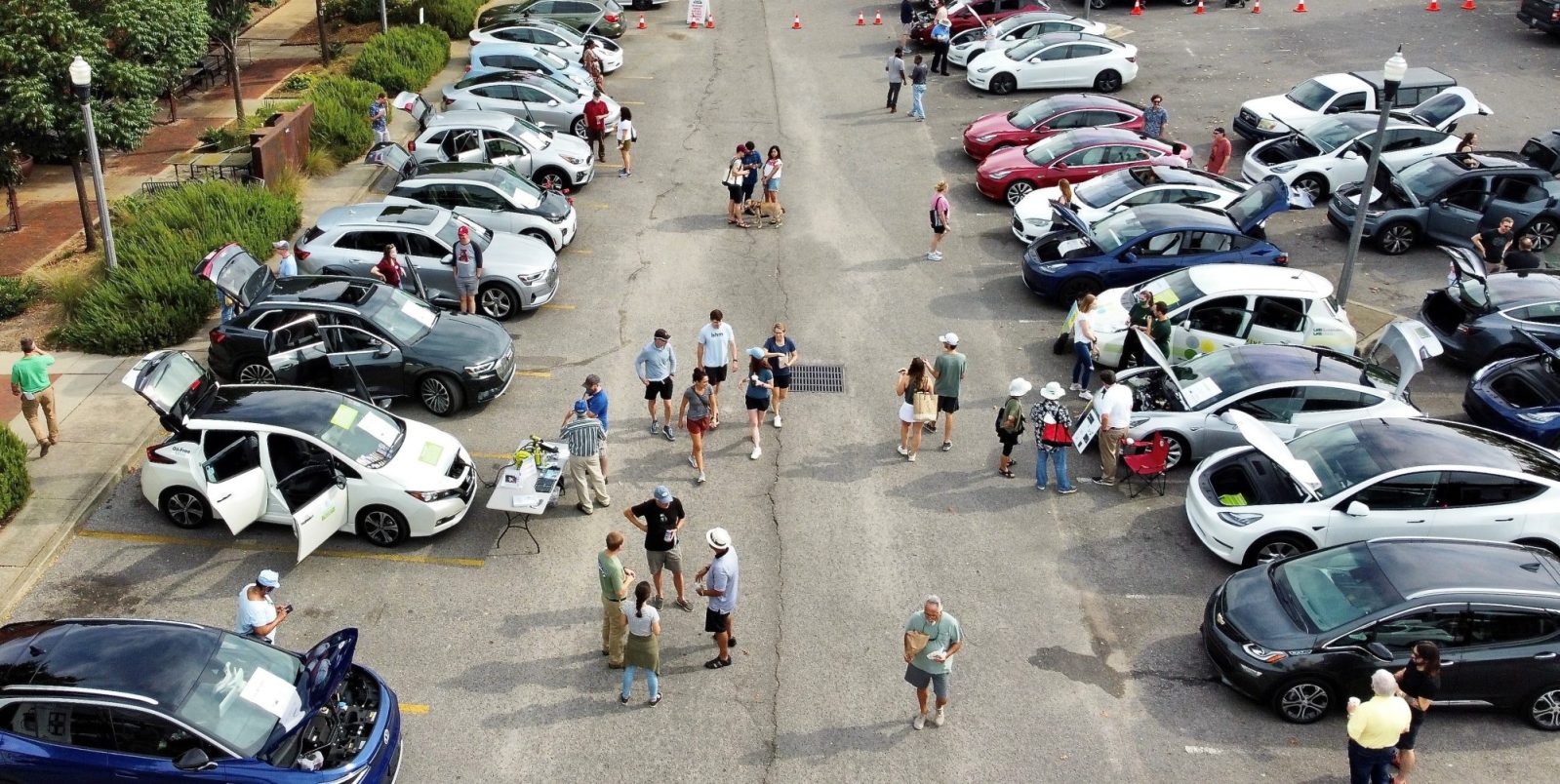
Rather than relying on traditional, high-pressure dealership environments—which consumer reports frequently cite as sub-optimal or opaque for EV shoppers—Drive Electric Month relies on peer-to-peer education. Prospective buyers can speak candidly with everyday EV owners about the realities of daily driving, home charging routines, battery longevity, and winter performance.
Events range significantly in scale. Urban centers often host large green-transportation festivals featuring live music, food trucks, family-friendly activities, and commercial booths from local dealerships and solar installers. Meanwhile, smaller towns and rural communities hold intimate gatherings in local town centers, church parking lots, or local parks, featuring modest lineups of privately owned vehicles.

Chronology: From National Week to Continental Movement
The history of the event reflects the rapid acceleration of the electric vehicle market over the past decade and a half:
- 2011–2010s (The Early Years): Established as National Drive Electric Week, the initiative began as a localized series of weekend rallies primarily concentrated in major American tech hubs and progressive cities to promote early-generation EVs like the Nissan Leaf and Chevrolet Volt.
- The Late 2010s: Recognizing that public demand and vehicle availability were outgrowing a single week of programming, organizers gradually scaled operations. Local chapters reported difficulties securing adequate event space during a compressed seven-day window.
- 2020–2023 (The Expansion Phase): Amid pandemic-related supply chain shifts and a broader pivot toward mainstream EV adoption, the event officially expanded into a month-long calendar ("Drive Electric Month"). This allowed organizers to spread volunteer resources thinner across more geographic regions.
- The Present (2026): Now in its 16th year, the initiative features over 150 diverse events. It adapts to contemporary market conditions—most notably, recurring global oil shocks—by heavily emphasizing how home charging paired with rooftop solar can completely decouple personal mobility from fossil fuel price volatility.
Supporting Data and On-the-Ground Highlights
Data compiled from past years and current registrations illustrate the sheer diversity of vehicles and locations participating in Drive Electric Month:
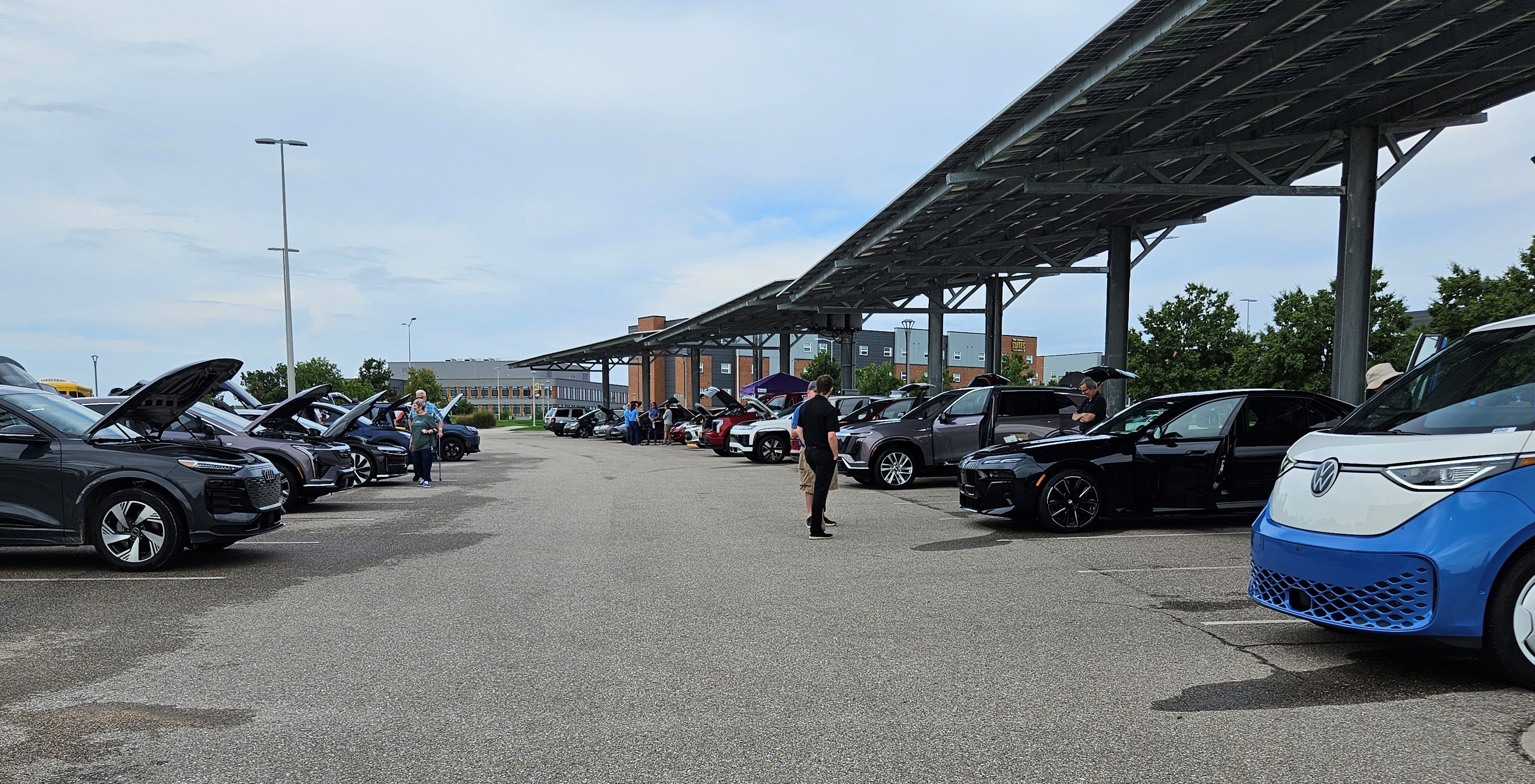
- Geographic Reach: Events span coast-to-coast, including island communities such as Lihue and Hilo in Hawaii, cold-weather regions like Wenatchee, Washington, and Muskegon, Michigan, as well as dense metropolitan hubs like Columbia, South Carolina, and Ventura, California.
- Vehicle Diversity: Far from showcasing just standard sedans, modern meetups feature an eclectic mix of commercial fleets, electric school buses, high-end luxury SUVs like the Mercedes-Benz G-Wagen EV, modern retro-mod conversions (such as electric classic VW Beetles), and adventure vans like the Volkswagen ID. Buzz.
- Digital Accessibility: Recognizing that physical attendance is not always possible, organizers continue to host companion webinars. For those unable to reach an in-person meetup, virtual sessions—such as the upcoming "All about electric vehicles: Ownership, charging, and how to get money back" webinar scheduled for late October—ensure educational access remains universal.
Official Responses and Organizer Perspectives
Advocacy groups driving the event emphasize that consumer education remains the single greatest catalyst for overcoming lingering myths about electric mobility.
Representatives from the Sierra Club and Plug In America have repeatedly pointed out that traditional automotive dealerships frequently lack sales incentives or staff knowledge required to properly pitch electric alternatives. By creating neutral public spaces where owners can share unfiltered feedback, Drive Electric Month removes the corporate sales friction from the equation.

"When a potential buyer talks to someone who has driven an EV for five years through freezing winters and blazing summers, all their anxieties about range anxiety or battery degradation evaporate," note regional coordinators with the Alabama Clean Fuels Coalition. "It shifts the narrative from abstract technology to lived experience."
Furthermore, environmental health advocates stress the public health dividends of transitioning fleets away from internal combustion engines, noting that local clean-air metrics improve measurably as electric adoption rates climb within municipal and commercial transit sectors.

Implications: Energy Independence and the Future of Mobility
The timing of Drive Electric Month intersecting with a severe global oil price spike underscores a profound macroeconomic reality: energy security begins at home.
1. Economic Resilience Against Fossil Fuel Shocks
When geopolitical conflicts or supply chain bottlenecks cause petroleum prices to skyrocket, households relying exclusively on gasoline-powered vehicles absorb immediate financial blows. Conversely, EV owners who charge primarily at night or via residential rooftop solar systems operate in an insulated economic bubble. Their "fuel" costs remain flat, stable, and predictable.

2. The Rise of Decentralized Charging and Solar Synergy
Events across the country increasingly highlight the synergy between electric vehicles and home energy generation. Pairing an EV with residential solar arrays transforms a car from a consumable expense into a mobile battery asset. Initiatives promoting home solar installations—such as unbiased comparison platforms like EnergySage—allow consumers to calculate potential 20% to 30% savings on domestic energy bills, reinforcing the financial logic of going electric.
3. Shifting Consumer Sentiment
Despite persistent political and macroeconomic crosswinds affecting the automotive sector, grassroots momentum remains remarkably resilient. Events in unpredictable weather conditions—such as the rain-threatened turnouts in Wichita, Kansas, or the bustling marina meetups in Ventura, California—prove that public curiosity is robust.

As Drive Electric Month rolls through its remaining weekends and approaches its final virtual sessions in late October, the message to consumers is clear: the transition to electric mobility is no longer an experimental trend for early adopters. It is a proven, economical, and increasingly necessary evolution in modern transportation.
Interested in participating? Prospective attendees, vehicle owners, and volunteers can visit the official Drive Electric Month website to browse the comprehensive events map, view local schedules, and secure registration details for upcoming meetups and webinars.
