

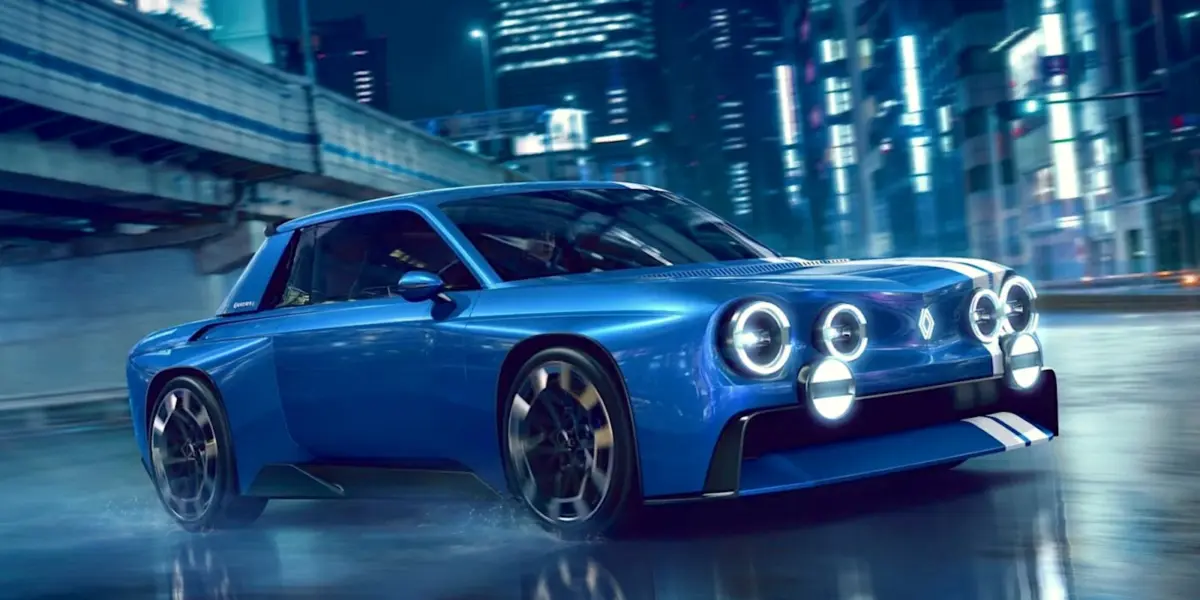
PARIS — In an automotive landscape increasingly dominated by autonomous commuter pods and utilitarian crossovers, Renault continues to lean heavily into its illustrious motorsport heritage. The French automaker has once again captured the imagination of enthusiasts worldwide by pulling the covers off its latest retro-inspired creation: the all-electric Renault 8 Gordini concept.
While the concept pays fierce homage to a terror of the 1960s rally circuits, it packs a thoroughly modern, heavy-hitting punch. Pumping out an impressive 270 horsepower and wearing a bespoke widebody stance, the electric "Gorde" is a masterclass in nostalgic design executed through a contemporary lens. Unfortunately, purists and EV enthusiasts alike will have to temper their excitement—Renault has confirmed that, for now, the 8 Gordini concept is destined to remain a strict one-off.
Main Facts: The Electric R8 Gordini at a Glance
The Renault 8 Gordini concept is a striking design exercise that fuses the unmistakable silhouette of a classic French icon with modern battery-electric architecture.
- Powertrain & Performance: The concept ditches the original’s rear-mounted four-cylinder engine in favor of a modern electric motor generating 270 horsepower.
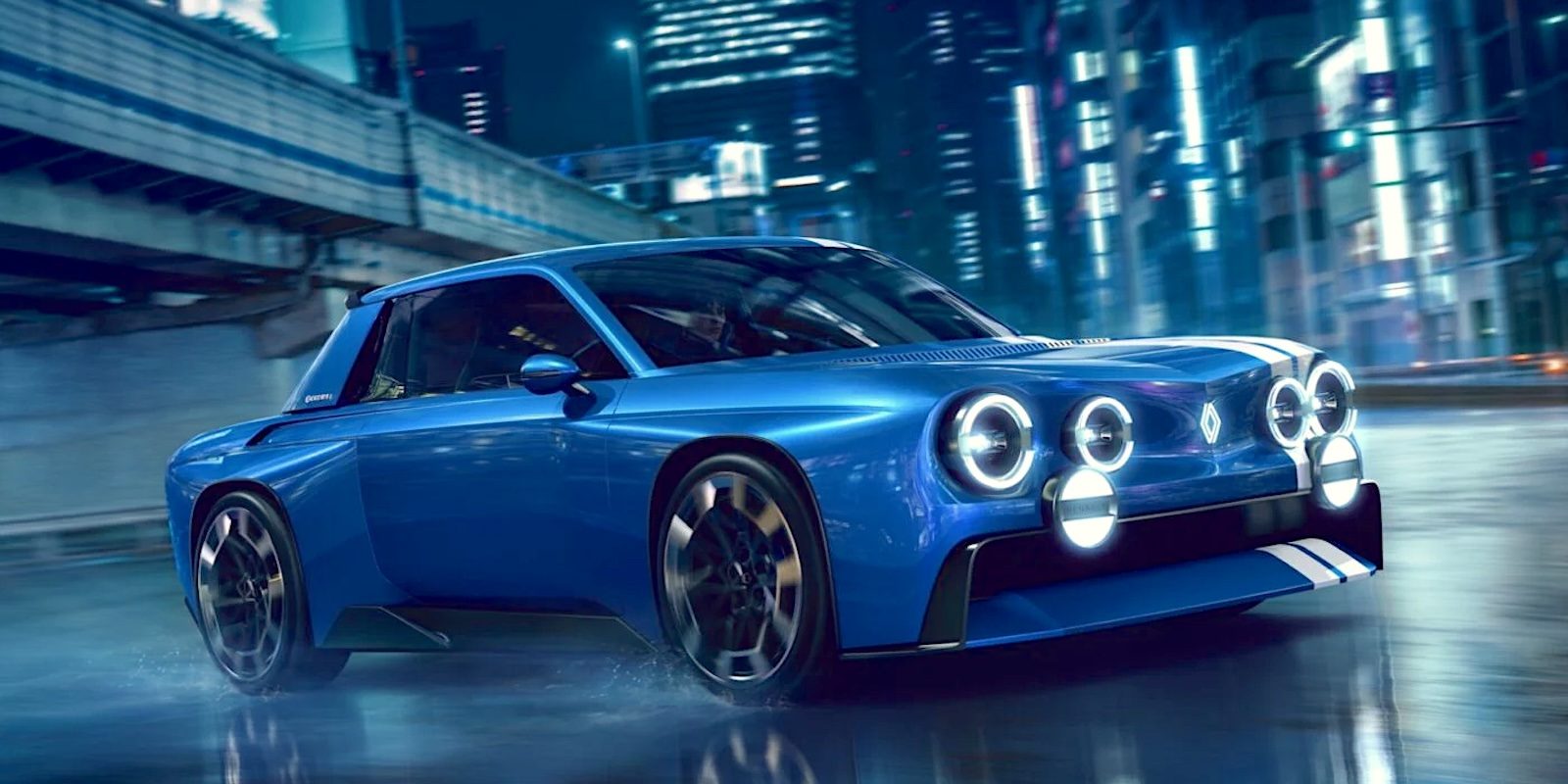
- Stance & Aerodynamics: To keep the prodigious power planted, designers widened the track significantly. The car rides on staggered wheels—measuring 19 inches up front and 20 inches at the rear—creating a muscular, forward-lunging posture.
- Exterior Finish: The vehicle is painted in a modernized, three-layer interpretation of Bleu de France, the signature hue of the historic Gordini line, incorporating mother-of-pearl and a blue-tinted binder for unmatched depth.
- Availability: Despite generating massive online buzz, Renault has designated the car as a design-study one-off, with no current plans for mass production.
Chronology: From Widow-Maker to Zero-Emission Revival
1964: The Birth of "La Gorde"
To understand the significance of the new concept, one must look back to its turbulent ancestor. Launched in 1964, the original Renault 8 Gordini was an evolution of the standard Renault 8 family sedan, heavily modified by legendary engine tuner Amédée Gordini.
Packing a modest 95-horsepower four-cylinder engine mounted entirely behind the rear axle, the car possessed a dangerously rear-heavy weight distribution. At the limit, it was notoriously "squirrely." Drivers frequently experienced sudden snap oversteer—a phenomenon that could instantly strike fear into the hearts of pilots, particularly on wet or gravel-strewn rally stages.
However, in the hands of skilled drivers, la Gorde was blisteringly fast. It quickly earned a stellar reputation as an unforgiving yet brilliant "training car" for a generation of motorsport legends, most notably French Rally Champion Jean Ragnotti. It democratized motorsport performance in Europe, proving that agility and driver engagement could triumph over sheer displacement.
Recent Years: Renault’s Retro EV Strategy
Over the last several years, Renault has aggressively mined its past to fuel its electric future. The company has established a clear pattern of turning nostalgic fondness into high-performance EV currency.
This strategy began in earnest with modern concepts like the Renault 5 Electric hot hatch and reached a fever pitch with the jaw-dropping R5 Turbo 3E—an electric drift monster that channeled the spirit of the mid-engine Group B beasts of the 1980s. The introduction of the 8 Gordini concept marks the latest chapter in this calculated nostalgia trip, proving that Renault’s design teams are fully committed to keeping the enthusiast fire burning in the electric age.
The Design Genesis: 300 Sketches to One Blueprint
The path to the 8 Gordini concept was rigorous. Renault’s design department generated more than 300 spontaneous sketches for the project. The proposals varied wildly, ranging from ultra-faithful heritage reissues to aggressive, modern Grand Touring interpretations.
Out of those 300 proposals, two distinct design directions were selected for physical modeling. By bringing the two concepts into reality side-by-side, Renault’s designers were able to compare proportions, surface treatments, and emotional weight. This comparative process ultimately yielded a "new blueprint," combining the best elements of both worlds into the final show car.
Supporting Data & Design Engineering
Creating a retro-modern EV is a delicate balancing act. Scale up an old design too much, and it loses its charm; keep it too faithful, and it looks like a kit car. Renault’s exterior and materials teams paid meticulous attention to every square millimeter of the 8 Gordini.
Exterior Proportions and Aerodynamics
Alexandre Malval, Vice President of Design at Renault, highlighted the unique architectural challenges of updating the classic car:
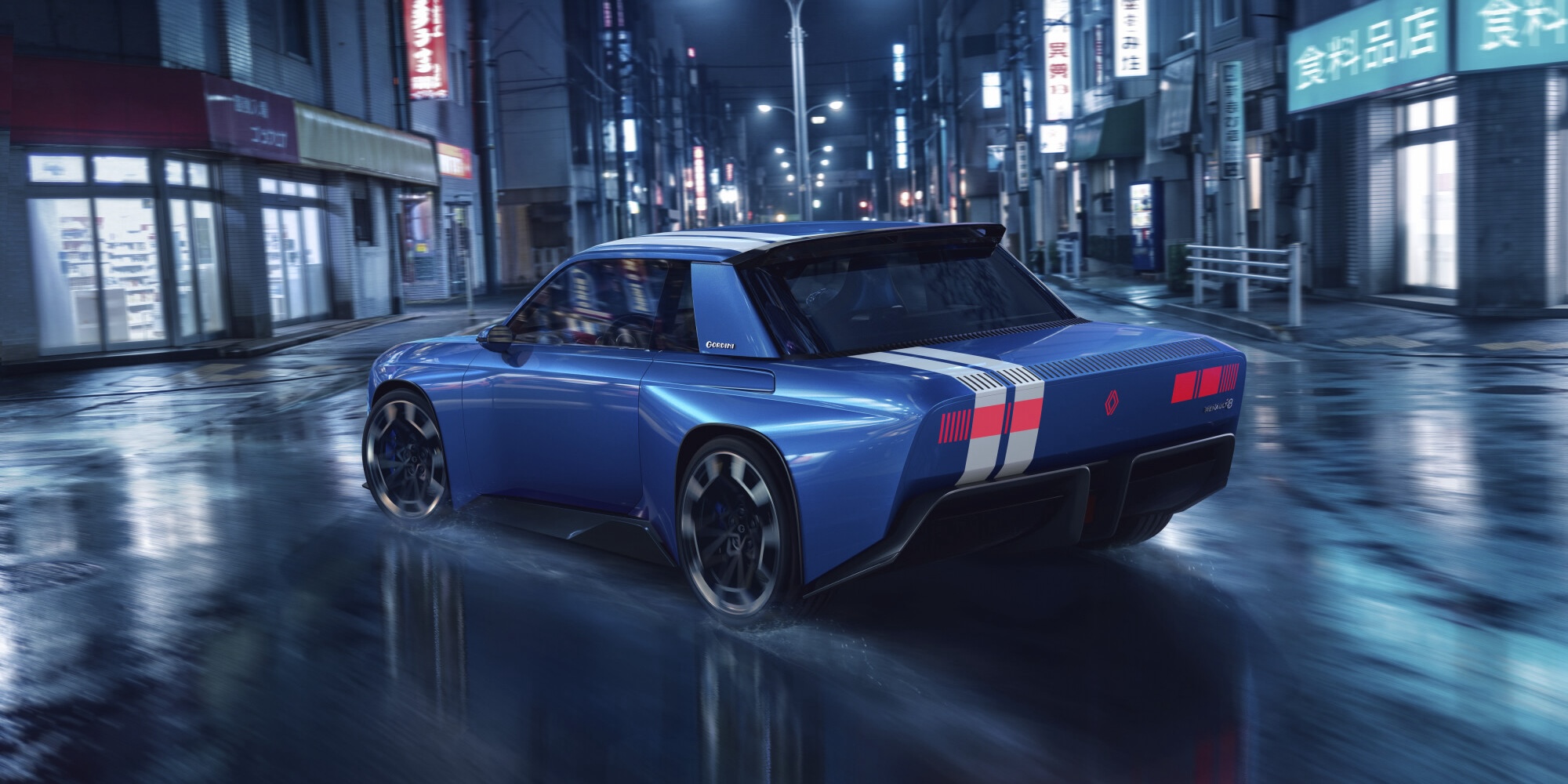
"We updated the distinctive styling of the original Renault 8, which was virtually symmetrical from front to rear, to give it a more dynamic look. With the flowing cabin lines, wide track, prominent wings and wheels of 19 inches at the front and 20 inches at the rear, it appears to hug the road."
Malval specifically noted the functional symbolism of the staggered wheel sizes:
"The decision to make the rear wheels larger creates a visual sense of momentum: a nod to the rear layout that was the hallmark of the hugely enjoyable ride delivered by the original."
The Science of "Renault Blue"
Color selection is paramount when resurrecting a legendary trim level like Gordini. Thomas Altet, Colour and Materials Designer at Renault, revealed that the blue on the new concept is entirely bespoke, drawing a direct line back to Bleu de France while refusing to copy past iterations blindly.
"The colour of the concept car was inspired by Bleu de France, the signature colour of the original Renault 8 Gordini," Altet explained. "This modern reboot is based on a construction in three layers, combining mother-of-pearl with a blue-tinted binder for greater depth and richness. Under the light, the historic shade of blue can be glimpsed along the edges, revealing in full the sculpted lines of the bodywork."
This complex paint formulation ensures that under shifting showroom or sunlight conditions, the car’s razor-sharp body creases and flared arches are continuously accentuated.
The Interior: "The Office"
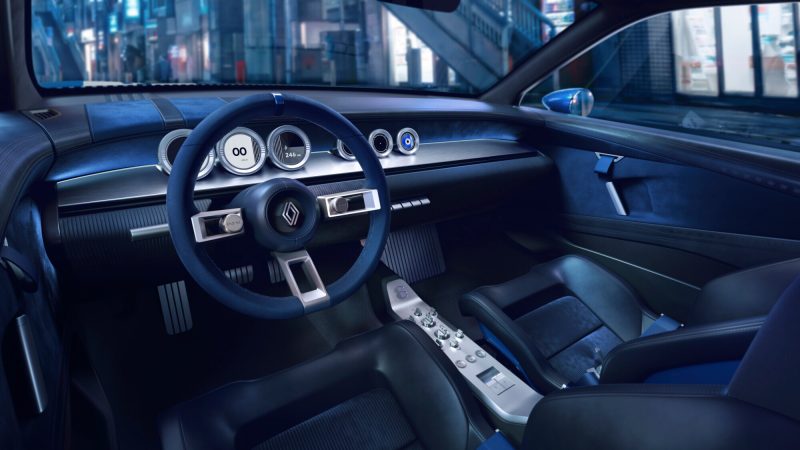
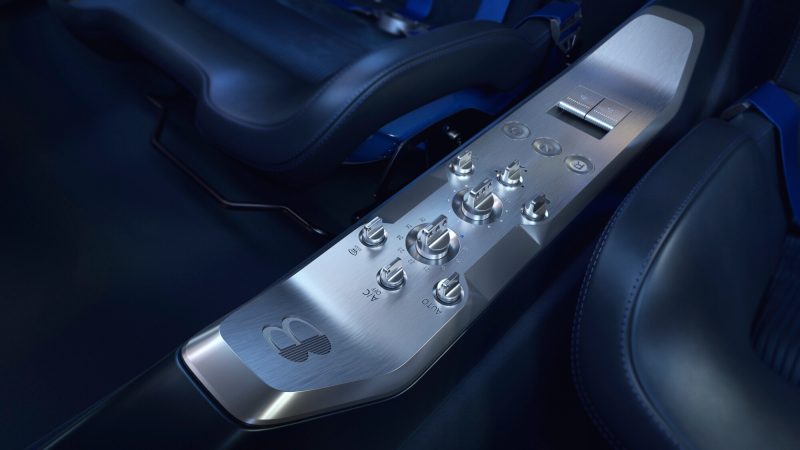
Stepping inside the 8 Gordini concept reveals a cabin explicitly tailored for driving purists. Nicknamed "The Office" by the development team, the interior strips away extraneous luxury in favor of a rally-ready cockpit ethos.
While official detailed specifications regarding the infotainment and battery capacity remain under wraps, the visual language inside speaks volumes. Deeply bolstered bucket seats, a purposeful multi-point harness system, a driver-focused steering wheel, and minimalist instrumentation underscore the vehicle’s serious sporting intentions. Every element is designed to keep the driver locked in communication with the front and rear axles, recalling an era when driving was a visceral, analog experience—even if the underlying powertrain is entirely digital.

Implications: What the 8 Gordini Means for Renault’s EV Future
While the 8 Gordini concept is officially a one-off vehicle, its existence carries heavy implications for the automotive industry and Renault’s brand positioning.
1. Proof of Concept for Emotional EVs
A common critique of the electric vehicle transition is that EVs are becoming homogenized—soulless, quiet appliances that lack cultural resonance or emotional engagement. By continually rolling out high-performance, heritage-based electric concepts (such as the R5 Turbo 3E, the Lancia HF electric redux, and now the 8 Gordini), legacy automakers are proving that electrification does not have to mean the death of automotive passion.
2. The Power of Heritage Marketing
Renault is cleverly using its rich archive to build immense brand equity. Younger demographics are drawn to the cyberpunk aesthetic of these retro-redesigns, while older enthusiasts feel validated seeing their childhood heroes honored. This halo effect inevitably spills over into consumer interest for mundane, everyday production EVs like the standard Renault 5 or upcoming electric crossovers.
3. The Hunger for Lightweight, Driver-Focused EVs
At 270 horsepower, the 8 Gordini concept hits a sweet spot. It avoids the 1,000-horsepower absurdity plaguing many high-end hyper-EVs, focusing instead on agility, stance, and historical reverence. If consumer demand for concepts like this remains deafeningly positive, automakers may eventually feel compelled to translate these design studies into low-volume, specialized production halo cars.

For now, however, the Renault 8 Gordini electric concept remains a brilliant ghost from the past—a high-voltage love letter to an era of snap oversteer, courage, and racing romance.
