

By Anthony Capkun
Published September 16, 2026
Main Facts
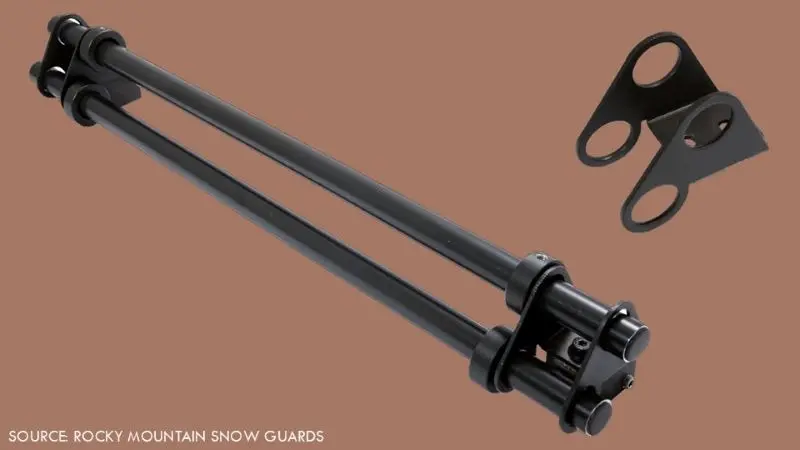
The architectural and metal construction industries are seeing a significant addition to winter safety infrastructure with the introduction of the "Rocky Fence" by Rocky Mountain Snow Guards. Engineered specifically for standing seam metal roofs, this new two-pipe snow retention system is designed to cater to both new construction developments and complex retrofit projects.
At the core of the system’s design is a streamlined mechanical assembly utilizing a single heavy-duty aluminum bracket paired with two nominal 1-inch aluminum tubes. Rather than penetrating the roof deck—which can compromise the weather-tight integrity of modern metal roofing—the Rocky Fence bracket bolts directly to a compatible S-5! clamp. These S-5! clamps are meticulously selected based on the precise profile, dimensions, and seam geometry of the specific metal roof panel being utilized.
To ensure seamless architectural integration, the system is offered in a raw mill finish aluminum as well as a variety of high-performance powder-coated finishes, including dark bronze and custom-matched color options. Furthermore, to mitigate the complexities often associated with architectural layout and engineering calculations, Rocky Mountain Snow Guards provides complimentary, project-specific layouts and comprehensive quotations. This service assists contractors, architects, and design professionals in determining the optimal system configuration, correct clamp selections, and exact bracket spacing required for individual building specifications.
Chronology of Development and Industry Evolution
The launch of the Rocky Fence system does not occur in a vacuum; rather, it represents the culmination of decades of evolution within the metal construction, roofing safety, and alpine engineering sectors.
Early Innovations in Metal Roofing and Safety
For generations, sloped metal roofs have been prized for their longevity, aesthetic appeal, and superior water-shedding capabilities. However, the very properties that make metal roofs efficient—low surface friction combined with rapid thermal conductivity—create a severe winter hazard. Accumulated snow and ice can bond temporarily to the cold metal surface before shifting rapidly as temperatures fluctuate. When these massive sheets of snow, commonly referred to as "roof avalanches," slide off unchecked, they pose catastrophic risks to pedestrians, property, vehicles, and lower-level architectural appurtenances like gutters and landscaping.
Historically, early snow retention devices were rudimentary, often involving site-fabricated bars or heavy timber logs held in place by improvised brackets. As standing seam metal roofs grew in popularity during the late 20th century, these improvised methods proved inadequate. Piercing standing seam panels with traditional fasteners introduced catastrophic risks of roof leaks, galvanic corrosion, and structural panel failure under lateral snow loads.
The Rise of Non-Penetrating Clamps
A major paradigm shift occurred with the introduction of non-penetrating mechanical attachment technologies, most notably pioneered by industry leaders like S-5!. By utilizing precision-milled aluminum clamps that mechanically attach to the seams of metal panels via set screws, the industry eliminated the need to puncture the roof membrane. This innovation preserved manufacturer warranties and drastically reduced installation times.
Building upon this foundation, manufacturers began developing multi-part snow guards, transitioning from simple individual snow guards (such as "pad-style" brackets) to continuous bar and pipe systems capable of distributing heavy snow loads across multiple roof seams.
The Engineering and Release of Rocky Fence (2025–2026)
Recognizing a demand among contractors for a streamlined, highly adaptable two-pipe system that could interface seamlessly with various proprietary standing seam geometries, Rocky Mountain Snow Guards initiated the development phase for the Rocky Fence.
- Late 2025: Initial engineering drafts and prototype stress-testing began, focusing on optimizing the strength-to-weight ratio of the central aluminum bracket and ensuring compatibility with a wide array of S-5! profiles.
- Early 2026: Field testing was conducted on commercial and residential structures in high-snow alpine regions, testing the system’s structural resilience under severe freeze-thaw cycles and heavy ice-load conditions.
- September 16, 2026: The official market rollout of the Rocky Fence system, accompanied by dedicated design-support services to assist industry professionals with layout engineering.
Supporting Data and Technical Specifications
Understanding the structural mechanics of the Rocky Fence system requires a deep dive into material science, load distribution, and building physics in cold climates.
Material Composition and Durability
The structural integrity of the Rocky Fence relies heavily on marine-grade and architectural-grade aluminum alloys. Aluminum is chosen for its exceptional strength-to-weight ratio, natural corrosion resistance, and compatibility with standard aluminum and galvalume metal roof panels.
- Tubes: The system incorporates two nominal 1-inch aluminum tubes. These tubes act as continuous barriers that intercept sliding snow, tumbling ice chunks, and slush, holding them in place until they can safely melt and dissipate through evaporation or controlled runoff.
- Brackets: The single-piece aluminum brackets are engineered to transfer the shear forces exerted by sliding snow directly into the roof seams via the S-5! clamp connection, preventing localized bending moments that could twist or deform the metal panels.
- Finishes: For projects where visual aesthetics are paramount, the powder-coated variants undergo an electrostatic application process followed by thermal curing. This creates a UV-resistant, color-stable finish that withstands harsh solar radiation, ice scouring, and heavy precipitation without chipping or fading prematurely.
Mathematical and Environmental Load Considerations
When designing a snow retention system, engineers must account for several variables, including Ground Snow Load ($p_g$), roof pitch, roof run length, and panel material strength.
According to structural engineering principles outlined in ASCE 7 (Minimum Design Loads and Associated Criteria for Buildings and Other Structures), snow loads can vary dramatically based on geographic location and elevation. A roof with a pitch ranging from 3:12 up to 12:12 presents an ideal environment for rapid snow slippage.
The Rocky Fence system addresses these forces by distributing the load across multiple attachment points. Rather than concentrating stress onto a single point of failure, the continuous tubing configuration shares the load among dozens—or even hundreds—of S-5! clamps, depending on the run length.
| Technical Feature | Specification | Engineering Benefit |
|---|---|---|
| Primary Material | Architectural-Grade Aluminum | Prevents galvanic corrosion, lightweight, high tensile strength. |
| Component Configuration | Single bracket + two 1-in. tubes | Optimizes load distribution across dual horizontal barriers. |
| Attachment Method | Non-penetrating S-5! clamps | Preserves panel integrity, avoids roof leaks, maintains warranties. |
| Finish Options | Mill finish or custom powder-coat | Matches aesthetic requirements; ensures superior weather resistance. |
| Design Support | Complimentary layouts & quotes | Eliminates guesswork, ensures compliance with site-specific loads. |
Official Responses and Industry Perspectives
The introduction of the Rocky Fence has drawn positive commentary from structural engineers, roofing contractors, and manufacturers alike, who view the product as a timely solution to ongoing challenges in architectural metal construction.
Manufacturer Insights
Representatives from Rocky Mountain Snow Guards emphasized that the primary motivation behind the Rocky Fence was simplicity without sacrificing structural rigor.
"Contractors and architects often find themselves caught between overly complicated multi-tier systems that take hours to install and flimsy alternatives that cannot handle heavy alpine snowpacks," said a lead product developer for Rocky Mountain Snow Guards. "With the Rocky Fence, we wanted to deliver an engineered, elegant, and robust two-pipe solution that installs quickly using trusted non-penetrating clamping technology, all backed by our comprehensive layout and engineering support."
Contractor and Installer Feedback
Field contractors have long advocated for products that reduce labor hours while minimizing liability. Because the Rocky Fence utilizes pre-engineered brackets designed to lock securely onto S-5! clamps, installation crews can work efficiently without requiring specialized welding or custom fabrication tools on the job site.
Furthermore, roofing consultants have highlighted the value of the free layout service. In the past, incorrect spacing or under-engineered snow fence layouts led to catastrophic field failures where improperly secured systems tore away from the roof under excessive snow loads. By offering project-specific calculations, Rocky Mountain Snow Guards bridges the gap between theoretical engineering and practical field execution.
Implications for the Metal Construction Industry
The release of the Rocky Fence carries broad implications for building design, liability management, and the ongoing evolution of architectural metal roofing.
1. Enhanced Safety and Liability Mitigation
Falling ice and snow represent a massive liability for building owners, facility managers, and commercial tenants. A single incident involving personal injury or property damage from a roof avalanche can result in costly litigation, insurance premium hikes, and reputational damage. By installing a robust, certified two-pipe system like the Rocky Fence, building stakeholders can significantly mitigate these risks, ensuring compliance with local building codes that mandate snow retention in snow-heavy regions.
2. Preservation of Roof Warranties
One of the most delicate aspects of metal roofing installation is maintaining manufacturer warranties. Many traditional snow retention systems required drilling holes directly through standing seam panels, creating inherent points of water infiltration and voiding weather-tightness warranties. The reliance on non-penetrating S-5! clamps ensures that the structural integrity of the metal panel remains uncompromised, safeguarding long-term capital investments.
3. Architectural Freedom and Aesthetic Harmony
Historically, safety devices on roofs were viewed as unsightly necessary evils. However, modern architectural standards demand that safety hardware blend seamlessly into the overall design vision of a structure. The availability of custom powder-coated finishes—ranging from standard dark bronze to bespoke architectural colors matched to unique panel coatings—allows the Rocky Fence to virtually disappear against the backdrop of the roof, satisfying the stringent demands of high-end residential and commercial architects.
4. Streamlined Supply Chains and Professional Support
The inclusion of complimentary layout and quotation services shifts a portion of the complex engineering burden away from the busy contractor. By partnering directly with manufacturers who provide precise placement schematics, installation teams can execute jobs faster, reduce material waste, and ensure that every bracket is positioned precisely where structural loads demand it.
Conclusion
As modern architecture continues to embrace standing seam metal roofs for their environmental efficiency, durability, and striking visual profiles, the need for sophisticated winter safety solutions will only intensify. The launch of the Rocky Fence by Rocky Mountain Snow Guards marks a significant step forward in this domain. By combining high-grade aluminum materials, non-penetrating S-5! clamp integration, customizable finishes, and expert engineering support, the system offers a reliable, safe, and aesthetically pleasing defense against the formidable power of alpine snowpacks. For contractors, architects, and building owners navigating the complexities of cold-weather construction, innovations like the Rocky Fence represent the gold standard in modern roof safety engineering.
