

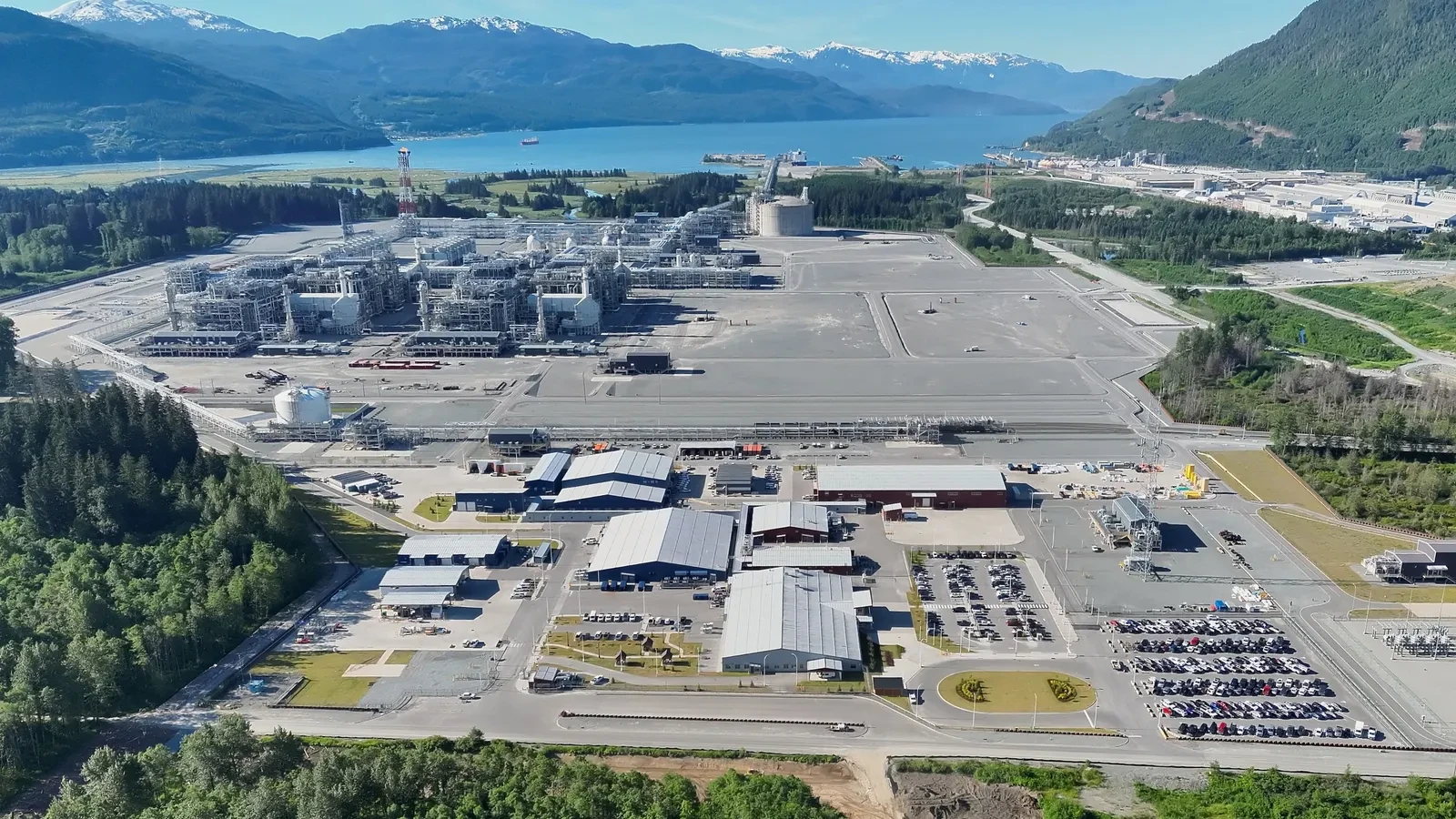
KITIMAT, British Columbia — In a landmark milestone for North American energy infrastructure, engineering giants Fluor Corporation and JGC Holdings Corporation have officially locked in their roles for the next chapter of western Canada’s most ambitious industrial build. Following a formal Final Investment Decision (FID) by project ownership, the long-standing joint venture has been tapped to execute the engineering, procurement, fabrication, construction, and commissioning (EPFCC) for Phase 2 of the LNG Canada export facility.
The expansion is poised to dramatically scale up liquefied natural gas production in Kitimat, British Columbia, reinforcing Canada’s footprint in the global energy market. With individual contract values hitting $7.5 billion for each partner, the combined construction and development scope marks one of the most significant engineering awards of the decade. Canadian government estimates project the total capital expenditure for the facility’s second phase to hover around $23 billion, reflecting the immense scale of the undertaking.
As global demand for cleaner-burning transitional fuels continues to surge, the multi-billion-dollar expansion will double the export terminal’s capacity, cementing British Columbia as a critical hub for international energy security.
Main Facts and Project Scope
The core objective of Phase 2 is to double the facility’s overall output, effectively scaling up Canada’s ability to export natural gas to key markets, particularly across the Asia-Pacific region.
According to project outlines released by Fluor and JGC, the expansion scope centers on several heavy industrial additions:
- Two New Liquefaction Units (Trains): These complex processing units cool natural gas into a liquid state, reducing its volume by 600 times for safe marine transportation.
- Additional LNG Storage Tank: A massive, cryogenic containment structure designed to hold liquefied gas safely prior to vessel loading.
- Capacity Doubling: Once operational, the expanded facility will scale total production capacity to approximately 28 million tonnes per annum (MTPA).
The joint venture operates on a strict 50-50 partnership model. Irving, Texas-based Fluor announced it will book its $7.5-billion share of the contract in the third quarter of fiscal 2026, a move that significantly bolsters the contractor’s backlogs. Simultaneously, Yokohama, Japan-based JGC confirmed an identical $7.5-billion booking in its corporate disclosures.
LNG Canada itself is structured as a powerhouse international joint venture involving some of the world’s largest energy conglomerates: Shell, PETRONAS, PetroChina, Mitsubishi Corporation, and Korea Gas Corporation (KOGAS). Shell, acting as the primary operator, anticipates that commercial operations for Phase 2 will officially kick off in the early 2030s.
Chronology and Project History
The path to Phase 2 is built upon the monumental foundation laid during the first phase of construction, which fundamentally reshaped the heavy industrial landscape of coastal British Columbia.
Phase 1: Innovation Through Modular Construction
During the initial development of the Kitimat export terminal, Fluor and JGC pioneered logistics strategies to manage the remote geography and complex engineering demands of the site. Rather than relying entirely on stick-built construction, the contractors utilized an extensive modular construction strategy.
The joint venture fabricated 215 massive industrial modules overseas. These components were constructed internationally before being shipped via cargo vessels across the Pacific Ocean directly to Kitimat. The arrival of the final module from China in July 2023 marked the completion of the major shipping phase, setting the stage for final assembly and integration.

Milestones to Commercial Reality
- June 2025: The facility officially achieved first LNG production, signaling the technical success of the Phase 1 build.
- October 2025: Fluor and JGC completed the formal handover of the Phase 1 facility to LNG Canada, transitioning the site from construction to active operational status.
- September 2026: Following a successful operational runway for Phase 1 and favorable market indicators, project stakeholders issued the Final Investment Decision (FID) for Phase 2. Fluor, JGC, and Shell simultaneously published announcements confirming the go-ahead for the $15 billion EPFCC award.
Supporting Data and Economic Impact
The sheer magnitude of the LNG Canada Phase 2 expansion places it among the largest private-sector infrastructure projects in Canadian history. The economic ripples of a $23 billion capital injection extend far beyond the immediate industrial footprint in Kitimat.
- Capital Allocation: The $15 billion combined contract awarded to Fluor and JGC represents the primary EPFCC expenditure, with the remaining balance allocated toward marine infrastructure, upstream pipeline expansions, regulatory compliance, and community integration.
- Production Scaling: By pushing output from Phase 1 levels to 28 MTPA, the facility will supply millions of households and industrial users overseas with natural gas, which burns cleaner than coal and heavy fuel oil.
- Employment and Contracting: Phase 1 sustained thousands of direct and indirect jobs, including specialized trades, engineering roles, and Indigenous partnerships. Phase 2 is expected to maintain a similarly massive labor footprint, driving economic activity through local supply chains, hospitality, and transportation sectors in British Columbia.
Official Responses and Industry Reactions
Corporate leadership from both contracting powerhouses and the project’s ownership group emphasized the strategic importance of continuity and trust built during Phase 1.
“LNG Canada Phase 1 was a landmark achievement for Fluor, and we are excited to carry that momentum into the next chapter,” said Fluor CEO Jim Breuer in a public statement. He added that the decision to greenlight Phase 2 demonstrates strong confidence in Canada’s regulatory environment and its capability to responsibly develop natural resources for international markets.
JGC echoed these sentiments in its corporate disclosures, highlighting the technological and logistical alignment required to execute a project of this scale. The Japanese contractor’s extensive global experience in LNG mega-projects played a vital role in the successful delivery of the first phase.
Shell, speaking on behalf of the LNG Canada ownership consortium, reiterated that the investment decision underscores the long-term viability of Canadian natural gas. By securing commitments from major Asian buyers—backed by equity partners like Mitsubishi, KOGAS, PetroChina, and PETRONAS—the project ensures decades of stable, contractual energy supply.

Implications for Global Energy Markets and Engineering
The advancement of LNG Canada Phase 2 carries profound implications for geopolitics, global decarbonization strategies, and the engineering and construction (E&C) sector.
1. Energy Security and the Asian Market
With its strategic geographic location on Canada’s Pacific coast, the Kitimat facility offers a distinct shipping advantage over U.S. Gulf Coast exporters. Cargo ships traveling from British Columbia to major Asian economies—such as Japan, South Korea, and China—bypass the congested Panama Canal, significantly reducing transit times and shipping emissions. As Asian nations look to secure reliable energy while transitioning away from high-carbon coal, Canadian LNG serves as a crucial bridge fuel.
2. Validation of Modular Engineering
The success of Phase 1 proved that ultra-large-scale modular construction is viable in remote northern climates. By relying on international fabrication yards and disciplined marine logistics, Fluor and JGC minimized on-site labor constraints in Kitimat. Carrying this methodology into Phase 2 minimizes execution risk, giving project owners greater predictability regarding timelines and budgets.
3. A Boost for Contractor Backlogs
For Fluor and JGC, booking $7.5 billion each in new awards provides immense revenue visibility into the late 2020s and early 2030s. In an economic climate marked by inflationary pressures and supply chain volatility, multi-year energy megaprojects offer stable cash flows for tier-one E&C firms.
Conclusion
As preliminary engineering and procurement ramp up following the September 2026 announcement, LNG Canada Phase 2 stands as a defining venture for modern industrial construction. With commercial operations slated for the early 2030s, the project will permanently alter Canada’s economic landscape, securing the nation’s status as a top-tier global energy exporter for decades to come.
