

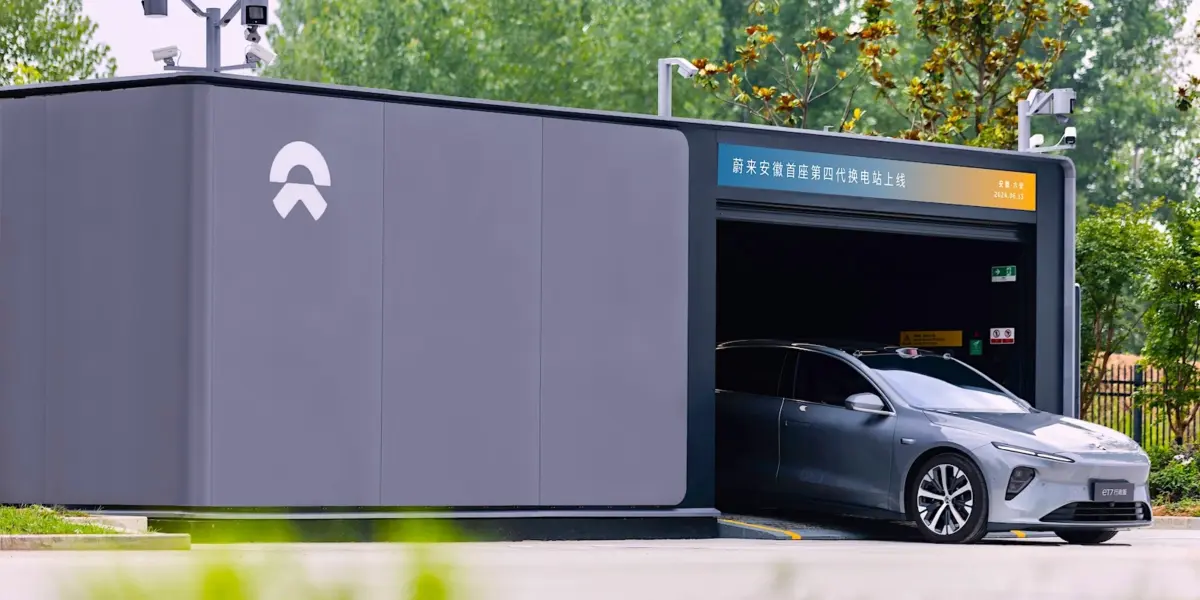
SHANGHAI — In a landmark transaction that promises to reshape China’s electric vehicle (EV) charging landscape, Chinese automotive giant Geely Holding has agreed to acquire a 30% stake in NIO Power, the dedicated charging and battery-swapping subsidiary of NIO.
Announced via definitive agreements signed on Sunday, the deal values NIO Power at approximately RMB 16 billion ($2.4 billion) on a post-money basis. Rather than a pure cash acquisition, the transaction relies heavily on asset consolidation, cross-investments, and performance-based equity adjustments.
The agreement marks a watershed moment for NIO, which has spent years trying to convince competing automakers to adopt its proprietary battery-swapping ecosystem. By bringing Geely—parent to global brands like Volvo Cars, Polestar, Zeekr, and Lynk & Co—into the fold, NIO has secured its first major automotive partner with skin in the game, signaling a decisive shift toward industry-wide standardization in China’s rapidly growing EV market.
Main Facts
The core of the transaction involves a complex cross-pollination of assets between two of China’s most prominent automotive innovators:
- Geely’s Investment in NIO Power: A Geely Holding subsidiary will acquire a 30% equity stake in NIO Power, valued at roughly RMB 4.8 billion ($700 million).
- Payment Structure: Instead of paying entirely in cash, Geely is contributing its own commercial battery-swapping business, Yiyi, alongside a cash injection of RMB 640 million ($94 million).
- NIO’s Counter-Investment: In a parallel transaction, NIO China is subscribing to newly issued shares in Zhejiang Haohan Energy Technology, Geely’s charging subsidiary, securing a 10% stake. Haohan will use these funds to purchase specific charging assets from NIO.
- Performance-Based Safeguards: NIO values the contributed Yiyi commercial swap business at a little over RMB 4.1 billion ($610 million). To protect NIO against underperformance, the deal includes milestone clauses stipulating that if Yiyi fails to deliver projected business metrics, Geely’s final equity share in NIO Power will be adjusted downward.
Both transactions remain subject to customary regulatory approvals before closing.
Chronology of the NIO-Geely Partnership
The path to this multi-billion-dollar joint venture has been years in the making, evolving from high-level aspirations into concrete industrial cooperation.
- July 2021: NIO officially announces its intention to open up its proprietary battery-swapping infrastructure to other electric vehicle manufacturers, a move met with industry skepticism regarding whether rivals would willingly adopt a competitor’s standard.
- November 2023: NIO and Geely sign a preliminary strategic partnership agreement focused on battery swapping. The non-binding memorandum outlines a mutual commitment to establish joint standards for both private passenger cars and commercial vehicles, though it lacks hard financial commitments or asset transfers.
- May 2024: NIO Power secures its first major outside funding round, capturing RMB 1.5 billion ($215 million) led by the Wuhan Guangchuang fund, which is slated to hold a 6.4% stake following the Geely integration.
- March 2025: NIO reports that battery giant CATL is advancing an investment capped at RMB 2.5 billion in NIO Power, though CATL does not ultimately appear on the ownership cap table released in the latest disclosures.
- February 2026: NIO achieves a monumental operational milestone, passing 100 million total battery swaps across a network of 3,790 operational stations. During the peak Lunar New Year travel rush, the company sets a new single-day record, performing 175,976 battery swaps in 24 hours.
- June 2026: NIO reports healthy Q2 2026 financial results, delivering 107,658 vehicles, achieving an 18.5% vehicle margin, and maintaining a robust cash reserve of RMB 56.7 billion ($8.3 billion), underpinning the company’s financial stability as it enters the Geely agreement.
- August 2026: NIO and Geely finalize and officially announce their definitive cross-investment agreements, tying together NIO Power and Geely’s Haohan Energy.
Supporting Data and Network Scale
To understand the strategic gravity of the transaction, one must examine the staggering scale of NIO’s infrastructure and its financial underpinnings.
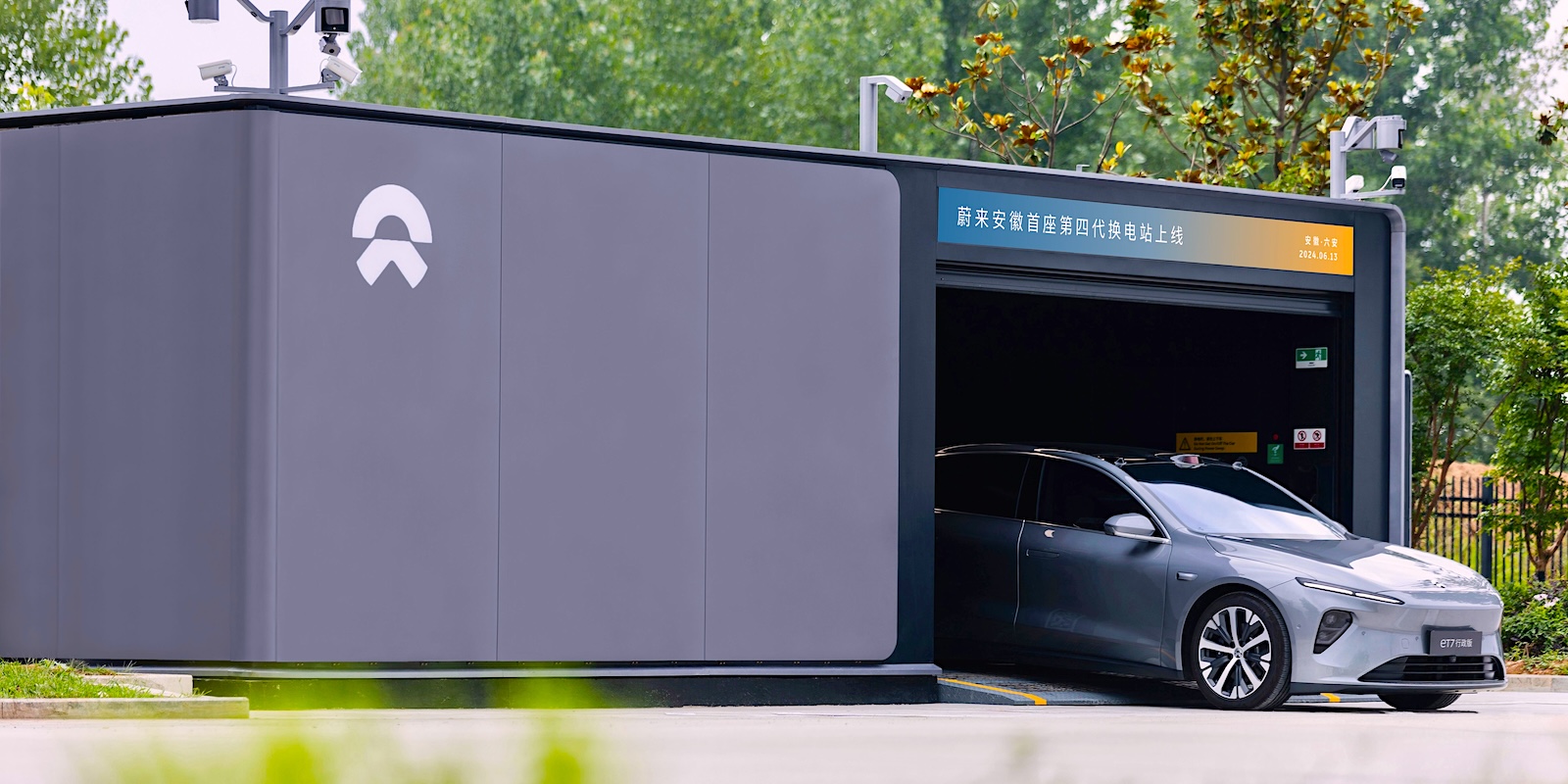
NIO Power is no longer a modest ancillary project; it is a heavy-duty industrial utility. As of early 2026, the network encompasses nearly 3,800 active battery swap stations globally, with aggressive corporate targets to deploy another 1,000 stations before the end of the year.
The economic engine behind these stations is NIO’s unique "Battery-as-a-Service" (BaaS) model. By decoupling the battery pack from the vehicle purchase price, NIO can dramatically lower upfront vehicle acquisition costs for consumers—a strategy famously utilized to price its flagship ES9 SUV at an aggressive $54,000 equivalent.
Despite the capital-intensive nature of building out and maintaining this network, NIO enters this partnership from a position of relative financial strength rather than desperation. According to the company’s Q2 2026 earnings report, NIO generated strong revenue on deliveries exceeding 107,000 units, posted a healthy 18.5% vehicle margin, and eked out a small non-GAAP profit. While posting a net GAAP loss of RMB 528 million for the quarter, the automaker finished June with a formidable RMB 56.7 billion in cash and cash equivalents.

Geely, meanwhile, brings the commercial powerhouse known as Yiyi to the table. While NIO’s network has historically catered heavily to private passenger vehicles, Yiyi specializes in heavy-duty commercial fleet swapping, perfectly complementing NIO’s passenger-centric footprint.
Official Responses and Strategic Vision
Leadership from both organizations has framed the transaction as a vital step toward scaling EV adoption through infrastructure sharing and standardization.
While formal executive statements underscore a shared vision of a unified charging ecosystem, industry analysts point out that the deal fundamentally alters the competitive dynamics of China’s EV sector. China’s recharging and refueling market is rapidly polarizing into distinct philosophical camps:
- The Battery-Swapping Camp: Led by NIO and fortified by Geely, alongside alternative models like CATL’s Choco-Swap network.
- The Ultra-Fast Charging Camp: Championed by automakers like BYD, which heavily prioritize high-voltage DC supercharging over mechanical pack swapping.
By securing Geely as a committed stakeholder, NIO has effectively transformed its proprietary infrastructure into an open utility standard for a massive fraction of the domestic automotive market.
Broader Market Implications
The long-term implications of the NIO-Geely pact stretch far beyond corporate balance sheets, touching upon consumer adoption, national energy policy, and the global automotive supply chain.

1. The Consolidation of Charging Standards
For years, the Achilles’ heel of battery swapping has been the lack of cross-brand interoperability. Traditional automakers have been reluctant to design vehicles around a competitor’s battery dimensions, electrical architecture, and locking mechanisms. By folding Geely’s commercial swapping expertise into NIO Power—and outlining preliminary plans to introduce NIO-compatible battery swapping across select Geely consumer and commercial brands—the joint entity creates a critical mass. If major Geely marques begin deploying swappable packs at volume, suppliers and other automakers will face mounting pressure to adopt the same standard to remain competitive.
2. Redefining Fleet and Commercial Mobility
While private drivers value the convenience of bypassing the slow-charging bottleneck, commercial fleets (such as taxis, ride-hailing vehicles, and logistics trucks) live and die by vehicle uptime. Yiyi’s integration into NIO Power supercharges the network’s capacity to service high-mileage commercial vehicles. A unified network that can seamlessly swap a delivery van’s power pack in three minutes holds immense economic value for China’s booming logistics sector.
3. Hedging Against Grid Pressures and Energy Costs
As electric vehicle penetration surges past tipping points in major urban centers, local electrical grids face unprecedented strain during peak travel windows, such as the Lunar New Year holiday where NIO shattered its daily swap record. Battery-swapping stations act as localized energy buffers. They can pull electricity from the grid during off-peak hours (or store excess energy from renewable sources) and slowly charge batteries overnight, alleviating stress on municipal infrastructure while offering drivers rapid-fire energy replenishment.
4. A Template for Industry Collaboration
The deal also signals a maturing Chinese EV market. As price wars intensify and profit margins face compression across the board, automakers are increasingly realizing that duplicating capital-intensive infrastructure is economically inefficient. By pooling resources—trading equity in charging subsidiaries rather than burning through pure cash reserves—NIO and Geely have pioneered a pragmatic blueprint for collaborative infrastructure development that other global automakers may soon be forced to emulate.
As the transaction awaits final regulatory clearance, all eyes will be on how quickly Geely brands begin rolling out swap-enabled vehicles, and whether rival manufacturers will now seek to join the growing NIO ecosystem before they are left out in the cold.
