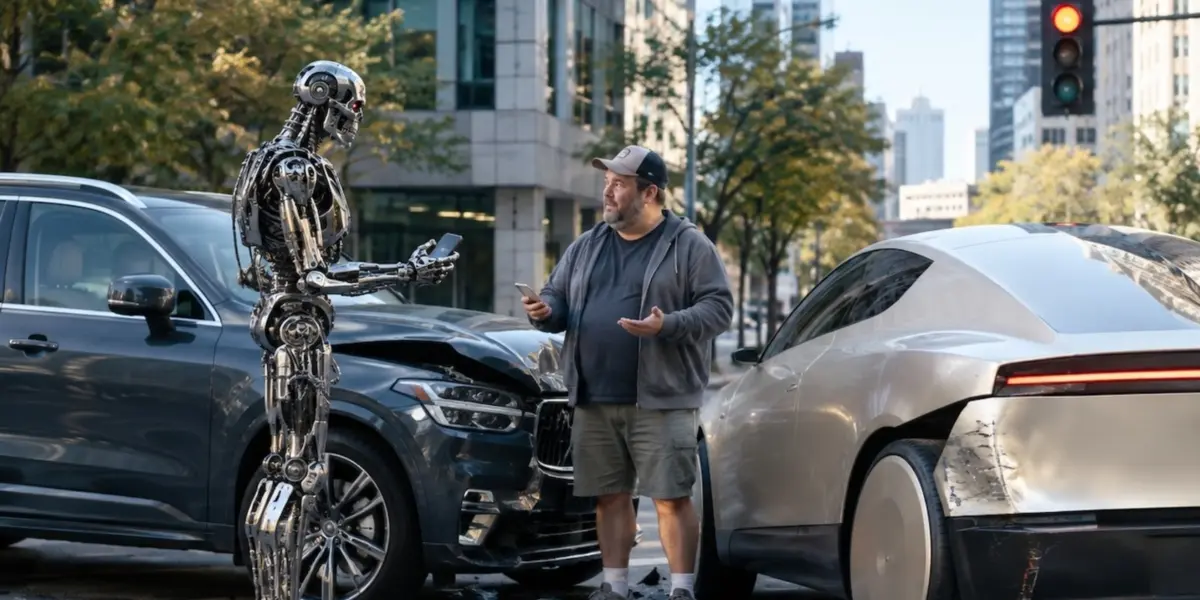
As autonomous vehicles (AVs) and advanced driver-assistance systems (ADAS) transition from speculative technology to everyday urban infrastructure, a profound legal and moral gray area has emerged: When an artificial intelligence-driven vehicle fails and causes harm, who ultimately bears the responsibility?
This pressing question served as the focal point of a recent multi-week sidebar survey conducted by Electrek, capturing nearly 3,000 reader responses. The timing of the poll was far from accidental. It coincided with a turbulent period for the autonomous and semi-autonomous vehicle sectors, marked by headlines detailing fatal Tesla driver-assist crashes, a relentless accumulation of parking tickets by Waymo robotaxis in dense urban environments like San Francisco, the re-unveiling of the Tesla Cybercab in Austin, Texas, and the long-awaited launch of series production for the Tesla Semi in Nevada.
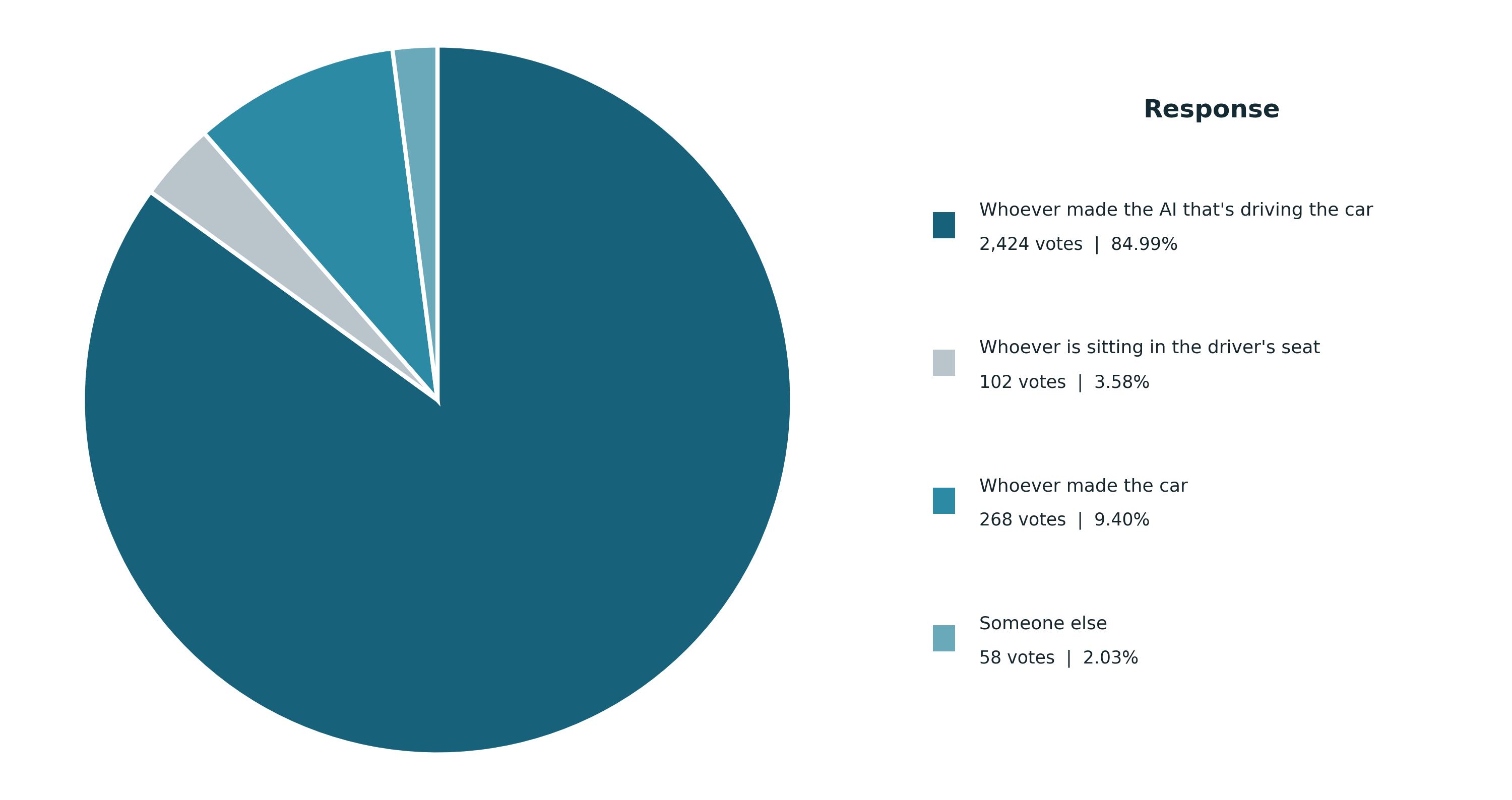
The results of the Electrek survey shatter traditional assumptions of vehicular accountability. By a staggering margin—nearly 90% of all respondents—the reading public believes that the primary liability for AI-driven vehicular failures rests squarely on the shoulders of the software developers and tech creators. Conversely, traditional notions of personal driver accountability have been thoroughly sidelined, with a minuscule fraction of voters willing to point a finger at the human occupant sitting inside the cabin.
Chronology of the Debate: Contextualizing the Survey
To understand the weight of the public sentiment captured in the survey, one must examine the timeline of events leading up to September 2026, a month that has proven to be a watershed moment for autonomous mobility.
Early September 2026: Waymo’s expanding fleet of autonomous taxis hits a public milestone—not all of it positive—as the company racks up thousands of parking citations across San Francisco. The sheer volume of driverless vehicles navigating complex urban environments highlights the scaling pains of autonomous fleet operations.
Mid-September 2026: Tesla makes major waves by re-unveiling its highly anticipated Cybercab in Austin, Texas. Designed without traditional steering wheels or pedals, the vehicle forces regulators and consumers alike to seriously confront a future devoid of human fallback options. Simultaneously, a fresh wave of safety scrutiny follows reports highlighting a cluster of fatal crashes tied to Tesla’s driver-assist suites.
Late September 2026: Tesla shifts attention to heavy-duty transport, officially launching series production of the long-delayed Tesla Semi at its Nevada factory. While commercial trucking operates under different regulatory frameworks than consumer AVs, the expansion of automated and semi-automated heavy machinery amplifies broader anxieties regarding corporate liability on public roads.
Throughout September 2026:Electrek runs its continuous sidebar survey, prompting readers to answer the core ethical dilemma: “When an AI-driven taxi fails, who should be responsible?”
Late September 2026: Closing the survey with nearly 3,000 responses, the editorial team begins parsing through the data, voter justifications, and community commentary, revealing an overwhelming consensus against traditional driver-blaming models.
Supporting Data: By the Numbers
The quantitative breakdown of the Electrek survey reveals a deep skepticism toward holding individual vehicle occupants accountable for the actions of autonomous systems.
[Electrek AI Liability Survey Breakdown]
Total Responses: ~3,000

■ AI Developers / Software Creators: ~89.7%
■ Vehicle Owner / Registered Operator: ~6.8%
■ Split Liability (Car Manufacturer + AI Maker): ~3.5%
□ Human Passenger in Driver’s Seat: ~3.5% (102 votes)
1. The Marginalization of Personal Responsibility
A mere 102 votes (roughly 3.5%) were cast in favor of the traditional personal responsibility model. The prompt for this option argued:
"Whoever is sitting in the driver’s seat: even if YOU summoned the taxi, it’s common sense that human intervention will sometimes be required, and YOU are the human."
For the few respondents supporting this view, the logic is rooted in the historical social contract of driving: if you occupy the control seat, you are the ultimate pilot in command. However, this viewpoint was overwhelmingly rejected by the broader community, treated almost as an anachronism in an era where level-4 and level-5 autonomy actively strips away steering wheels.
2. The Shift to Corporate and Developer Blame
Nearly 90% of respondents placed the burden of liability directly onto the software engineers, tech conglomerates, and corporate entities designing the neural networks and machine learning models that pilot these vehicles.
Commenters pointed out the fundamental asymmetry of power and knowledge between the average consumer and a multi-billion-dollar technology enterprise. As community member Stephen Fields articulated:
"What action could the owner have taken to prevent an accident? They buy a black box which drives the vehicle. If the owner failed to follow the recommendations of the manufacturer (i.e., keep software up to date, stay in this geofence) they could be liable, but they could not be held liable if there is no action they could have taken to prevent an accident."
3. The Middle Ground: Owners and Joint Liability
A vocal minority of respondents championed alternative frameworks, drawing parallels to existing property and tort law.
Commentator Ian argued from a traditional legal perspective:
"This is obvious. Whether the driver is AI or the human, the liable person is the owner of the car. If I lend my car to you and you drive it into a coffee shop, I get to pay for the damages. The car is insured, not the driver."
Pushedbyvolts expanded on this by noting that every conventional automobile is inherently capable of breaking the law if misused, and the registered owner ultimately answers for introducing a non-compliant vehicle onto public rights-of-way.
Meanwhile, reader BCGeiger introduced a nuanced hybrid perspective that resonated widely across the comment threads:
"I think liability should be split evenly between the car manufacturer and the AI manufacturer. It isn’t an either-or thing. They are working hand-in-hand to bring about this hellscape."
Official Responses and Regulatory Landscape
As commercial deployments of robotaxis accelerate across North America, regulatory bodies are scrambling to draft frameworks that can withstand the unique legal challenges posed by machine-driven transportation.
National Highway Traffic Safety Administration (NHTSA): Federal regulators have steadily ramped up investigations into automated driving systems (ADS) and advanced driver-assistance systems (ADAS). Recent inquiries emphasize transparency in data logging, requiring manufacturers to immediately report collisions involving automated driving software. However, federal guidelines have been slow to establish a unified national standard for criminal or civil liability when an algorithm errs.
State-Level Jurisdictions (California, Texas, Nevada): States acting as testbeds for companies like Waymo and Tesla have adopted patchwork policies. In California, the Department of Motor Vehicles (DMV) holds permit-holding companies financially and operationally responsible for the performance of their autonomous fleets. In Texas—home to Tesla’s expanding footprint—regulatory frameworks lean heavily toward fostering technological innovation, often shielding manufacturers from aggressive immediate litigation while passing compliance responsibilities onto operating permits.
Automotive and Tech Manufacturers: Companies like Waymo operate under a strict fleet-ownership model, meaning the corporation owns, maintains, and insures the vehicle entirely, naturally absorbing operational liability. Tesla, however, straddles a complex line by selling consumer-facing Full Self-Driving (FSD) software alongside plans for dedicated commercial Cybercab fleets. Tesla’s official user agreements historically place the ultimate monitoring burden on the human driver—a stance that faces mounting pressure as the industry moves closer to unmonitored autonomy.
Implications: The Road Ahead for Autonomous Law and Ethics
The overwhelming verdict from the Electrek readership highlights a fundamental shift in public consciousness. Society is rapidly losing patience with the idea that consumers should act as unpaid safety drivers and legal lightning rods for experimental technologies pushed onto public roads by corporate entities.
1. The Demise of the "Beta Tester" Defense
For years, technology companies have shielded themselves from catastrophic liability by labeling advanced software suites as "Beta," "Driver-Assist," or requiring drivers to remain alert at all times. As autonomous fleets scale—evidenced by Waymo’s ubiquitous urban presence and Tesla’s aggressive push toward commercial robotaxi networks—the legal fiction of the "attentive human supervisor" is collapsing. Juries and regulators are increasingly unlikely to accept that a passenger paying for a point-to-point transit service should possess the engineering expertise required to override a split-second algorithmic failure.
2. Insurance and Product Liability Overhaul
The traditional auto insurance industry, built entirely around actuarial tables evaluating human error, driving records, and personal negligence, faces an existential transformation. If corporate developers and vehicle manufacturers absorb 90% of the liability, the primary insurance policy shifts away from personal auto coverage and toward commercial product liability and corporate umbrella policies. Insurers will no longer sell policies to individuals; instead, they will underwrite the code itself, pricing risk based on software safety verification, neural network update logs, and hardware redundancy.
3. Corporate Accountability vs. Innovation
While holding AI developers strictly liable protects consumers, industry advocates warn that excessive legal exposure could stifle innovation, slowing the deployment of technology that proponents argue will eventually save tens of thousands of lives currently lost to human error on global roadways. Nevertheless, the consensus reflected in the Electrek survey suggests that the public is unwilling to trade human safety for corporate immunity.
Conclusion
The debate over AI liability is no longer a theoretical exercise confined to academic philosophy seminars or science fiction novels. With autonomous taxis congesting city streets, driver-assist mishaps dominating news cycles, and commercial robotaxis entering mass production, the question of who pays when the code crashes is a defining legal battle of our decade.
As the data shows, Electrekkers have spoken: when an AI fails, the blame belongs firmly with those who wrote the code, built the machine, and profited from putting it on the street.
Do you agree with the nearly 90% of respondents who place the blame on AI developers, or do vehicle owners and passengers still carry the ultimate burden? Let us know your thoughts in the comments below.