

Published: August 13, 2026
Author: Antonia Piñeiro (Enriched Editorial Coverage)
Main Facts
The global architectural landscape during the second week of August 2026 was defined by a striking dichotomy: the urgent demand for humanitarian resilience and historical preservation on one hand, and the relentless upward push of high-end, internationally engineered urban mega-projects on the other.
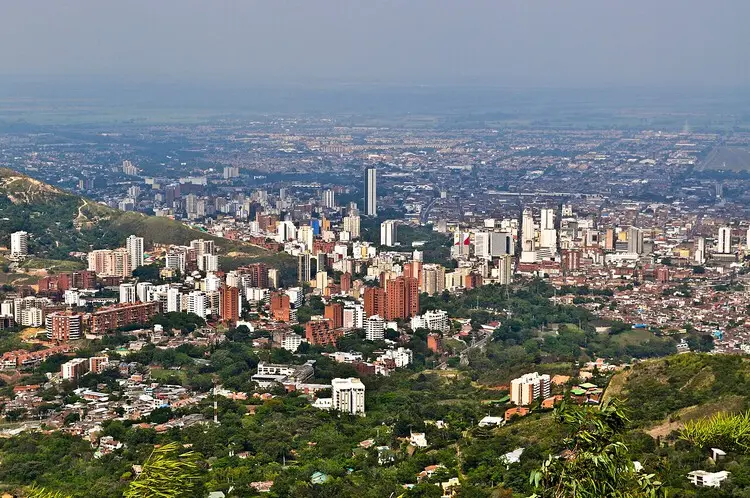
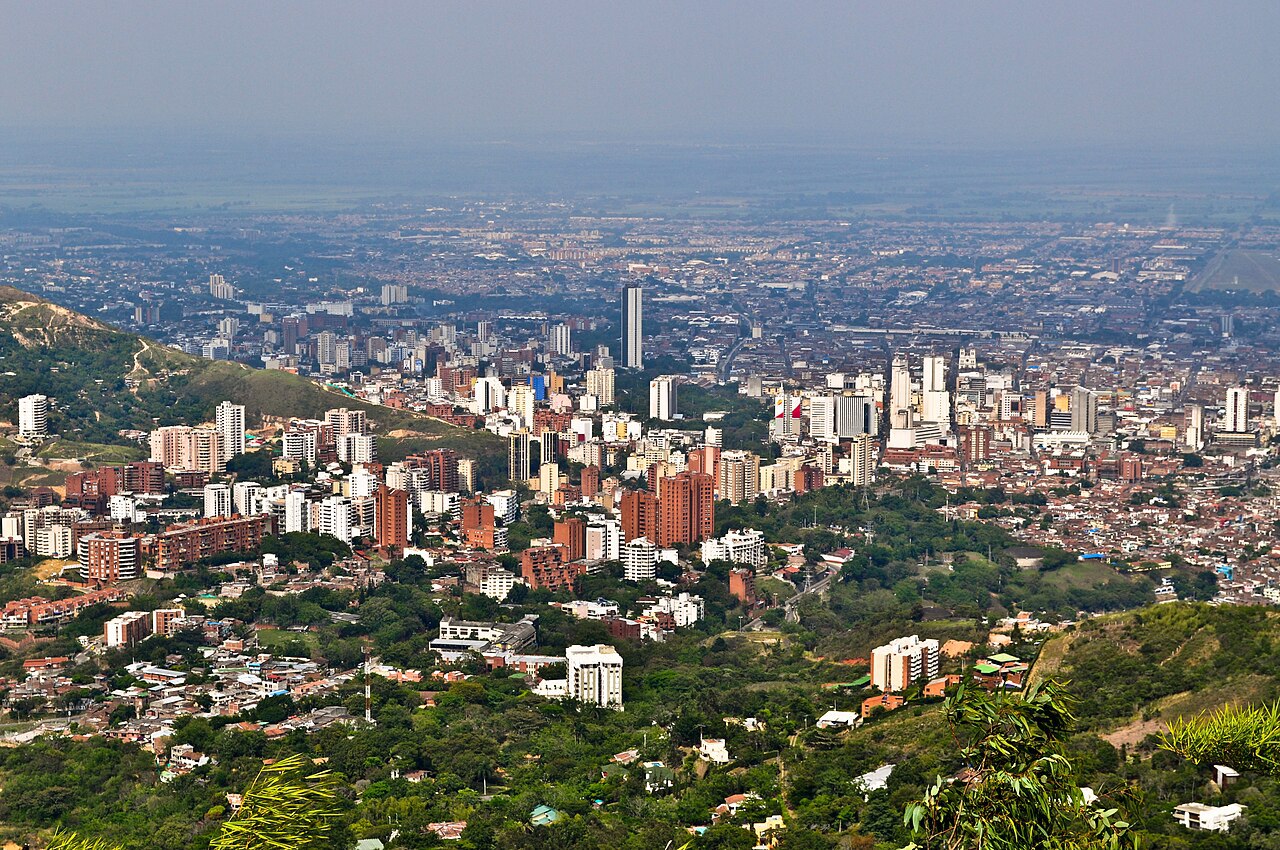
In Latin America, the architectural community shifted its immediate focus toward Colombia following a devastating magnitude 7.4 earthquake, which severely damaged historic architecture across multiple regions and triggered massive rescue and damage-assessment operations. Concurrently, UNESCO and the International Union of Architects (UIA) made major headlines by designating Beijing as the World Capital of Architecture for 2029, celebrating the Chinese capital’s synthesis of ancient heritage and sustainable development.
On the development front, three major architectural interventions captured global attention:

- OODA’s DUAS Towers in Vlorë, Albania, advanced into the formal licensing stage, introducing a mixed-use, locally-sourced marble duo of towers to the Adriatic coastline.
- Skidmore, Owings & Merrill (SOM) topped out the striking North Tower at 400 Lake Shore Drive in Chicago, defining a new 261-metre benchmark on the city’s historic lakefront.
- Populous unveiled plans—with construction actively underway—for the colossal National Tennis Centre in Qiddiya City, Saudi Arabia, characterized by sweeping green facades and climate-responsive architecture.
Chronology
Early to Mid-August 2026: Disaster, Heritage, and Commemoration
- Immediate Post-Earthquake (August 2026): Rescue and heritage-assessment teams deployed across Colombia in the wake of the 7.4 magnitude earthquake, focusing on stabilizing compromised historic structures and mapping structural failures.
- August 9, 2026 (International Day of the World’s Indigenous Peoples): Architectural platforms and cultural institutions launched retrospective case studies and interviews focusing on ancestral constructive knowledge and indigenous building techniques.
- August 12, 2026 (International Youth Day): Global publications highlighted architectural frameworks designed to address the socio-economic aspirations, housing needs, and environmental realities of younger generations.
- Mid-August 2026: UNESCO and the UIA officially named Beijing the World Capital of Architecture for 2029, a milestone decision honoring the metropolis’s balancing act between heritage preservation and forward-thinking sustainability.
Project Milestones and Cultural Previews
- Licensing Stage (August 2026): OODA’s DUAS Towers in Vlorë, Albania, cleared critical municipal hurdles to begin their transition toward the physical construction phase.
- Topping Out (August 2026): SOM completed the crown of the North Tower at 400 Lake Shore Drive in Chicago, locking in its 72-storey silhouette ahead of a scheduled spring 2027 delivery.
- Exhibition and Film Openings (Scheduled for Fall 2026): The Canadian Centre for Architecture (CCA) opened its deep-dive exhibition into Álvaro Siza’s urban-scale interventions, while Wim Wenders prepared his highly anticipated documentary From Inside Out – The Architecture of Peter Zumthor for its September 2026 premiere at the Venice International Film Festival.
Supporting Data & Technical Specifications
| Project / Event | Location | Key Stakeholders / Designers | Technical Highlights & Metrics |
|---|---|---|---|
| Colombia Earthquake Recovery | Colombia | Local Authorities, Heritage Conservators, Engineering NGOs | Magnitude 7.4 seismic event; widespread impact on colonial and historic architecture; ongoing structural triage. |
| Beijing 2029 World Capital | Beijing, China | UNESCO, UIA | Recognition of urban integration uniting ancient architectural lineages with modern sustainability mandates. |
| DUAS Towers | Vlorë, Albania | OODA (Architects), OKDRAW (Renderings) | 30,333 sq. m. total area; two 98m towers (24 floors each); one quadrangular (30x25m), one circular (26m diameter); clad in Tomorri marble sourced 60km away; features a traditional rrodhe weaving-inspired facade motif. |
| North Tower at 400 Lake Shore Drive | Chicago, USA | SOM (Skidmore, Owings & Merrill) with David Childs | 261 metres tall, 72 storeys; 635 rental units (127 affordable); faceted glass curtain wall referencing Chicago bay windows; wind-tunnel-tested stepped setbacks eliminating the need for mechanical dampers. |
| National Tennis Centre | Qiddiya City, Saudi Arabia | Populous, Qiddiya Investment Company | 30 total courts (28 hard, 2 clay); 33,000 total seating capacity; Centre Court (15,000 seats with retractable roof); Court 3 (8,000-seat multi-use arena); integrated vertical green facades. |
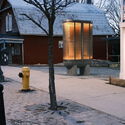
| Civic Grid Energy Prototype | Ontario, Canada | Civic Grid | Monolithic architectural battery prototype functioning as civic furniture for community-level energy transition. |
Official Responses and Institutional Statements
The convergence of crises, mega-developments, and cultural recognitions prompted strong statements from international bodies, design firms, and cultural guardians:
- On Heritage and Sustainable Urbanism: In announcing Beijing as the 2029 World Capital of Architecture, joint representatives from UNESCO and the International Union of Artists (UIA) emphasized that contemporary urban centers must "actively demonstrate how historical identity can serve as a catalyst for green innovation rather than a barrier to progress."
- On Indigenous and Vernacular Knowledge: Commenting on the programming surrounding the International Day of the World’s Indigenous Peoples, architectural theorists pointed out that "modern seismic and climate resilience is frequently hidden plain in sight within ancestral constructive cultures—methods that prioritize local material intelligence over energy-intensive industrial outputs."
- On High-Rise Engineering Innovations: Speaking on the structural resolution of the North Tower at 400 Lake Shore Drive, SOM design leads noted that the building’s aerodynamics were solved organically through geometry rather than technology: "By addressing wind loads directly through the cascading terraces and faceted architectural profile, we eliminated the requirement for heavy mechanical damping systems, proving that form and engineering can act as one."
- On Cultural Memory and Cinematic Architecture: Looking toward the upcoming Venice Biennale and the debut of Wim Wenders’ documentary, curators of the Türkiye Pavilion stressed that the concept of spolia—the tactical reuse of building elements—represents "an ethical necessity for an era grappling with ecological repair, societal healing, and the spatial translation of collective memory."
Implications for the Future of Architecture
The collective events of this week point to several profound paradigm shifts within the global architectural discipline:

1. The Duality of Scale: Crisis Triage versus Mega-Speculation
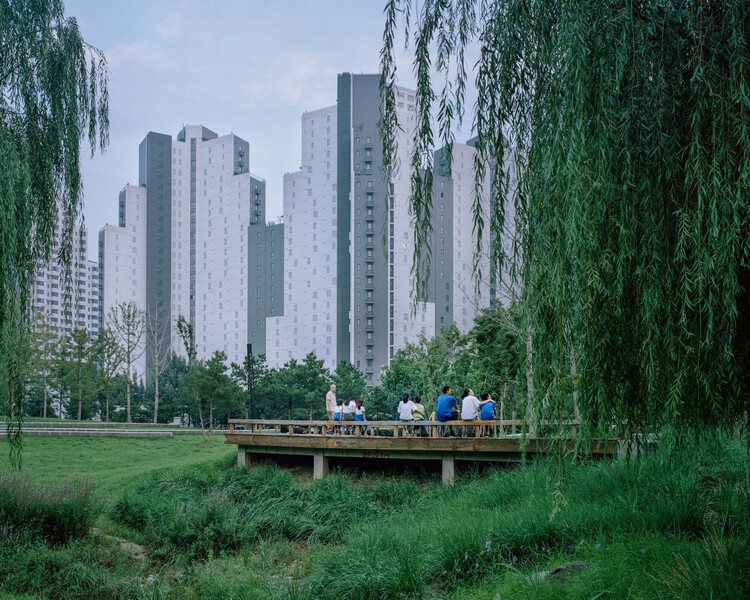
The juxtaposition of earthquake recovery efforts in Colombia with the aggressive expansion of mega-developments like Qiddiya City and high-rise hubs in Chicago and Vlorë highlights a growing professional divide. While a significant portion of the architectural workforce is increasingly thrust into disaster mitigation, post-disaster reconstruction, and climate adaptation, corporate and state-sponsored design continues to push the boundaries of high-tech verticality and entertainment-driven urbanism. The challenge for the profession moving forward will be cross-pollinating these two realms—applying the economic scale and engineering prowess of mega-firms toward rapid-deployment seismic resilience and sustainable housing.
2. Material Authenticity and Local Geologies
The specification of local materials—exemplified by OODA’s sourcing of Tomorri marble from within a 60-kilometer radius in Albania, and the thematic focus on spolia at the upcoming Venice Biennale—signals a definitive retreat from globalized, high-carbon material supply chains. Architects are increasingly turning to regional geological surveys and vernacular craft traditions (such as the southern Albanian rrodhe weaving motifs) to ground contemporary buildings in a distinct, unrepeatable sense of place.
3. Infrastructure as Public Art and Civic Hardware
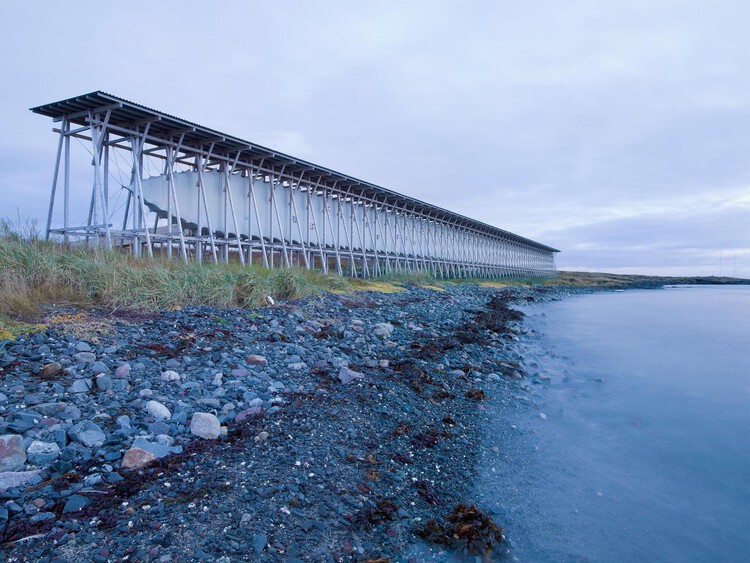
Projects like Civic Grid’s architectural battery prototype in Ontario and Populous’s heavily vegetated, climate-mitigating tennis arenas in Saudi Arabia point toward a future where infrastructure and landscape are no longer hidden behind the building envelope. Instead, energy storage, water conservation, and native flora are being integrated directly into the architectural syntax, turning utilitarian civic necessities into engaging public spaces.
As the discipline prepares for the autumn 2026 festival and exhibition circuit—highlighted by Peter Zumthor’s cinematic retrospective and Álvaro Siza’s urban explorations—the overarching message is clear: architecture remains an indispensable medium for translating collective trauma, technological ambition, and cultural memory into physical reality.
