

By Andrew J. Hawkins
Transportation Editor
Main Facts: The Autonomous Paradox
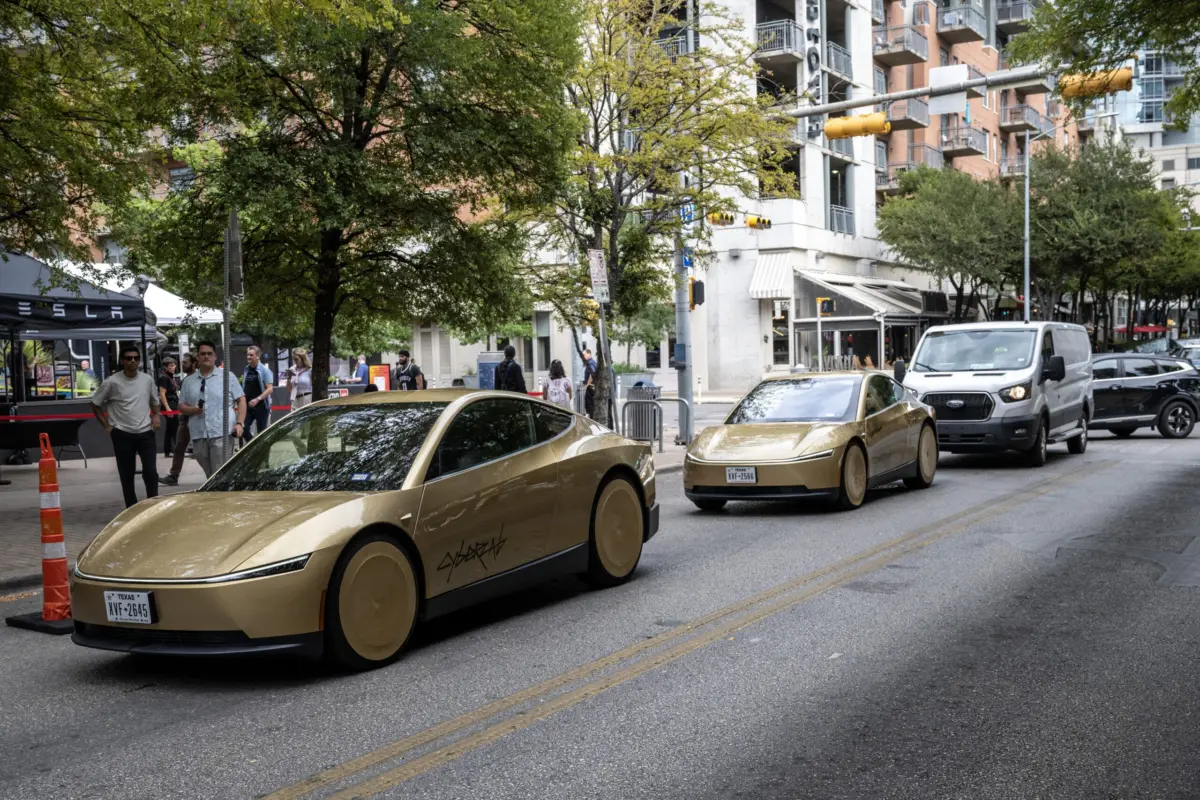
When Tesla officially rolled out its long-awaited Cybercab in Austin, Texas, the vehicle was heralded as a definitive milestone in the evolution of personal and public transportation. Most notably, the vehicle commanded headlines for what it conspicuously lacked: a traditional steering wheel, accelerator pedals, and brake levers. Designed from the ground up as a fully autonomous robotaxi, Elon Musk’s vision for the Cybercab painted a picture of a transport ecosystem completely liberated from human intervention. By stripping away standard manual controls, Tesla sought to send a clear ideological message to the automotive industry—that human driving is a relic of the past, and true autonomy requires no fallback.
However, reality has a way of complicating high-tech manifestos. Less than a week after the vehicle’s high-profile debut on the public streets of Austin, eagle-eyed riders made an unexpected discovery: the Cybercab possesses a hidden, virtual manual control interface. Captured in at least two separate videos shared on the social media platform X, these secret controls take the form of a virtual joystick embedded within the central touchscreen display.
The interface features a square-shaped menu positioned in the lower-left corner of the main console, complete with a directional toggle labeled “forward” and “reverse.” Additional on-screen buttons allow users to bring the vehicle to an abrupt halt, sound the horn, and manually trigger the doors to open. To the right of these manual driving tools, live camera feeds provide situational awareness, though at least one video captured a glitch where the camera display remained frozen on a Tesla Supercharger location visited earlier in the day.
While the discovery sparked immediate fascination—and some brief, unsuccessful attempts by passengers to pilot the vehicle themselves—the presence of the virtual joystick highlights the practical, gritty realities of managing a commercial robotaxi fleet. Even in a future entirely governed by algorithms and artificial intelligence, automobiles occasionally need to be nudged, parked, or repositioned by human hands.
Chronology: From Austin Debut to Digital Discovery
To understand how a secret control panel found its way onto passenger-facing screens, it is helpful to trace the timeline of the Cybercab’s public rollout and the subsequent events that led to its digital unmasking.
- Pre-Launch Hype: For years, Tesla teased the concept of a dedicated robotaxi fleet, building anticipation for an affordable, mass-produced autonomous vehicle that would operate without human drivers or safety drivers behind the wheel.
- The Austin Premiere: Tesla officially launched the Cybercab service in Austin, Texas. Selected riders, tech reviewers, and invited guests were given the opportunity to book rides through the Tesla app, experiencing point-to-point autonomous transit on public roads without a steering wheel or pedals in sight.
- The Discovery (Days 1–5): Within the first week of commercial operation, riders paying close attention to the vehicle’s cabin interfaces noticed anomalies on the central touchscreen.
- Videos Surface on X: At least two independent riders published video footage documenting the hidden user interface. The clips quickly circulated online, showing a virtual joystick layout designed to manipulate the vehicle at low speeds.
- The Unresponsive Trial: Curious passengers attempted to interact with the virtual joystick during their rides. Fortunately for road safety, the controls were either locked out, unresponsive, or improperly calibrated for active passenger use, preventing any mid-ride mishaps.
- The Aftermath: Tesla has yet to issue a formal, public explanation for why these internal diagnostic or fleet-management controls were left visible on screens accessible to fare-paying customers, leaving industry analysts to debate whether it was a software deployment oversight or a routine telemetry bug.
Supporting Data and Technical Context
The engineering behind the Cybercab represents a radical departure from traditional automotive design. Without mechanical linkages connecting a steering column to the front wheels or hydraulic lines running from a foot pedal to the brake calipers, the vehicle relies entirely on drive-by-wire technology. Every motion—acceleration, deceleration, and steering—is executed via electronic signals sent from onboard computers to actuators.
This architecture explains why a virtual joystick is even technically possible. Because the vehicle’s computers already translate digital commands into physical movement, adding a software-based control scheme requires no mechanical modifications.
However, the presence of these controls during active passenger trips points to potential oversights in Tesla’s software segregation protocols. In professional fleet management, vehicles typically feature multiple software environments:
- Consumer Mode: The interface presented to everyday riders, focusing on entertainment, climate control, route progress, and basic ride customization.
- Service/Maintenance Mode: A restricted interface accessible only via authenticated credentials, technician key fobs, or secure network handshakes, intended for mechanics, depot workers, and logistics personnel.
By all indications, the virtual joystick observed in Austin belongs in the second category. Fleet workers at Tesla depots face the daily challenge of organizing dozens, if not hundreds, of vehicles in tight parking lots, washing bays, and charging stations. Requiring a specialized technician to walk up to every vehicle with a laptop or coordinate movements through a remote operations center is inefficient. A localized, low-speed virtual drive mode allows workers to quickly shuffle cars into position without stepping inside a vehicle that lacks a physical steering wheel.
Furthermore, emergency preparedness requires consideration. Tesla has engaged in preliminary briefings with the Austin Police Department and local emergency responders regarding the Cybercab service. While it remains unconfirmed whether these manual override options were explicitly highlighted during those safety talks, having a digital method to clear a disabled or obstructing vehicle from a roadway is a critical safety consideration for municipal authorities.

Official Responses and Stakeholder Reactions
As news of the hidden joystick spread across automotive and tech forums, reactions varied from amusement to mild concern regarding software quality control.
The Consumer Perspective
For early adopters and tech enthusiasts, the discovery was viewed as an entertaining Easter egg or a minor software glitch. The passengers who attempted to manipulate the virtual controls reported that the vehicle ignored their inputs. This provided immediate reassurance that random passengers cannot commandeer a moving robotaxi from the back seat—a reassuring thought for critics who have long voiced safety anxieties regarding fully autonomous transport.
Industry and Regulatory Response
Regulatory bodies, including the National Highway Traffic Safety Administration (NHTSA), scrutinize every facet of autonomous vehicle deployment. The Federal Motor Vehicle Safety Standards (FMVSS) traditionally mandate physical controls like steering wheels and pedals. Manufacturers seeking to deploy vehicles without these components must secure specific exemptions or demonstrate compliance through alternative safety frameworks.
The revelation that internal movement tools exist—even if intended exclusively for employee use—raises interesting regulatory questions. If a vehicle can be manually guided via a touchscreen interface, does it technically lack manual controls under the strictest legal definitions? While the interface is clearly not designed for high-speed road driving, legal experts note that regulators will likely examine how access to these sub-menus is restricted, ensuring that unauthorized individuals cannot bypass safety locks.
Tesla’s official communications channels have remained largely tight-lipped regarding the specific software build that allowed the joystick menu to appear on consumer-facing displays. Historically, the company relies on over-the-air (OTA) software updates to rapidly patch user interface anomalies, meaning the hidden menu has likely already been suppressed or secured in subsequent firmware releases.
Implications: The Reality of Autonomous Fleets
The discovery of the Cybercab’s hidden joystick sheds light on a broader truth about the transition to autonomous mobility: human labor does not vanish; it simply changes location.
For decades, the narrative surrounding autonomous vehicles focused on the complete elimination of the human element. The steering wheel was framed as an outdated tool, akin to a horse’s reins in the early days of the combustion engine. Yet, as autonomous fleets scale up in dense urban environments like Austin, operational realities intervene.
Vehicles break down. GPS signals fail in urban canyons. Construction zones force unexpected detours. Battery charging bays get congested. In all of these scenarios, fleet operators need a practical way to move vehicles that cannot drive themselves out of a jam or navigate an unmapped obstruction.
Relying entirely on remote tele-operations—where an off-site human operator pilots the vehicle via video feed—comes with latency challenges and bandwidth requirements. Providing yard workers with a localized, low-speed virtual drive interface offers a pragmatic bridge between full autonomy and physical management.
Lessons for the Future of Robotaxis
- Strict Interface Segmentation: Software deployment pipelines must ensure that internal diagnostic and depot-management tools are strictly firewalled away from consumer-facing cabins. Even harmless bugs can undermine public trust in nascent technologies.
- Redefining Emergency Protocols: First responders and city planners will need standardized, intuitive protocols for moving driverless vehicles during emergencies, bridging the gap between proprietary software interfaces and public safety needs.
- The Persistence of the Human Touch: The Cybercab proves that even the most futuristic, wheel-less robotaxi cannot completely escape the need for human intervention. Whether through a steering wheel or a digital joystick, managing complex urban traffic environments still requires human ingenuity behind the scenes.
As Tesla continues to refine its Cybercab software and expand its footprint beyond Austin, the incident will likely be remembered as a minor growing pain—a humorous glitch that reminded the world that even the vehicle of the future still needs someone to park it.
