

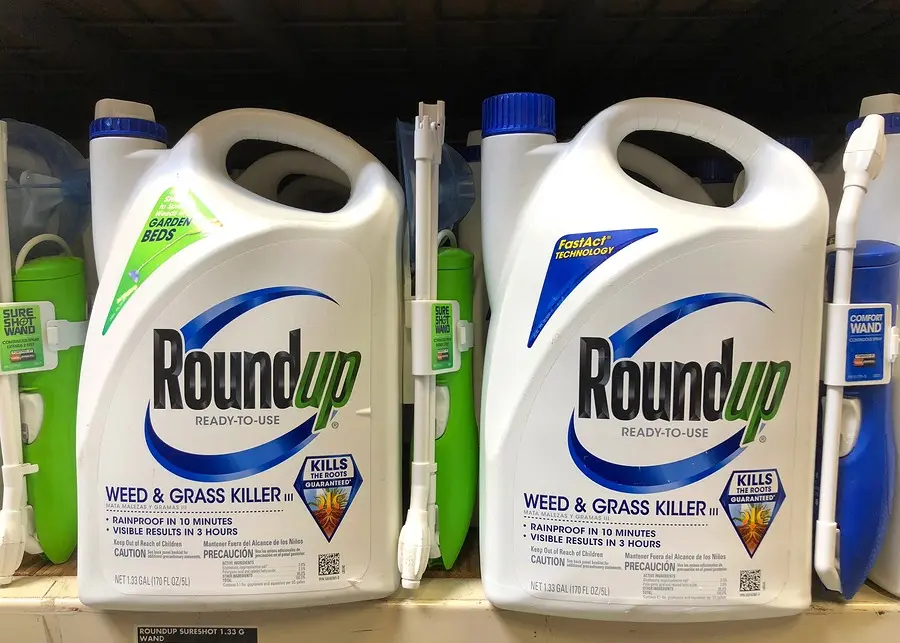
ST. LOUIS — In a courtroom that could dictate the future of one of the most contentious mass torts in American history, legal battles over the popular weedkiller Roundup entered a critical new phase. Attorneys representing three cancer patients—one of whom has already passed away—delivered opening statements before a Missouri jury, asserting that Bayer AG’s Monsanto unit rushed a dangerous product to market without conducting adequate safety tests.
The trial, broadcast via Courtroom View Network, unfolds against a backdrop of sweeping legal developments. It represents an early, high-stakes test of whether plaintiffs can successfully bypass a favorable U.S. Supreme Court ruling for Bayer by reframing their legal arguments around defective product design rather than inadequate warning labels. As Bayer attempts to close the chapter on years of costly litigation through a multi-billion-dollar settlement proposal, the proceedings in St. Louis may determine whether non-settling plaintiffs retain a viable path to courtroom victories.
Main Facts of the Case
The lawsuit centers on three women—Theresa Aretino, Cynthia Fernandez, and Betty Larkin—who used Roundup regularly in residential and occupational settings over the years. According to their legal team, all three subsequently developed non-Hodgkin lymphoma, a type of blood cancer frequently linked in litigation to glyphosate, the active ingredient in Roundup. Tragically, Cynthia Fernandez passed away before the trial commenced, leaving her family and legal representatives to carry forward her pursuit of accountability.
During opening statements, plaintiffs’ attorney Greg Dovel delivered a blunt assessment of Monsanto’s historical safety protocols.
"Monsanto did not adequately test Roundup," Dovel told the jury. "To this day, they’ve never done all the testing they’ve needed to do."
The plaintiffs are advancing legal theories centered on defective design, arguing that the herbicide is inherently unsafe for sale and that the company prioritized commercial success over public health. This strategic focus is deliberately tailored to navigate around a monumental legal hurdle: a U.S. Supreme Court decision earlier this year that heavily favored Bayer concerning product warning labels.
Bayer, which acquired Monsanto in 2018 in a $63 billion mega-deal that has since plagued the German pharmaceutical and life sciences conglomerate with billions in liabilities and depressed share prices, has vigorously denied all allegations. Paul Boehm, representing Bayer, told the jury that the plaintiffs cannot prove glyphosate-based herbicides are too dangerous to sell. Boehm emphasized that such an argument directly contradicts decades of comprehensive safety evaluations conducted by regulatory bodies around the globe, most notably the U.S. Environmental Protection Agency (EPA).
Chronology of the Roundup Litigation
To understand the weight of the current St. Louis trial, it is necessary to examine the timeline of events that brought Bayer to this precarious legal crossroads:
- 1974: Monsanto introduces glyphosate-based Roundup to the agricultural and consumer markets, marketing it as a revolutionary, broad-spectrum, systemic herbicide. Over the subsequent decades, it becomes the most widely used weedkiller in the world.
- 2015: The International Agency for Research on Cancer (IARC), a specialized agency of the World Health Organization (WHO), classifies glyphosate as "probably carcinogenic to humans." This classification serves as the foundational catalyst for thousands of lawsuits filed across the United States.
- 2018: Bayer completes its acquisition of Monsanto. Almost immediately, the company inherits tens of thousands of active lawsuits filed by plaintiffs alleging that exposure to Roundup caused their non-Hodgkin lymphoma. St. Louis juries and other courts begin handing down massive verdicts against the company.
- 2020–2021: Bayer announces a massive settlement agreement totaling over $10 billion to resolve the vast majority of existing claims, though subsequent efforts to settle future claims hit persistent judicial roadblocks.
- June of the Current Year: The U.S. Supreme Court issues a pivotal ruling in Bayer’s favor. The high court bars lawsuits alleging that Roundup’s warning label failed to adequately warn consumers about cancer risks, ruling that federal law requires herbicide makers to use the exact label approved by the EPA, which maintains that Roundup does not require a cancer warning.
- September 29 (Current Year): Opening statements begin in the St. Louis courtroom before a state court judge, involving Aretino, Fernandez, and Larkin—three plaintiffs who opted out of the proposed class action settlement to pursue design-defect claims. Concurrently, a separate St. Louis state court judge reviews Bayer’s proposed $7.25 billion class action settlement aimed at resolving nearly all remaining current and future claims.
Supporting Data and Financial Fallout
The legal battle over Roundup is not merely a scientific or moral dispute; it is an economic war of attrition that has fundamentally reshaped Bayer’s corporate valuation and operational strategy.
- 65,000 Claims: Bayer currently faces approximately 65,000 active claims in state and federal courts across the United States. Plaintiffs uniformly maintain that long-term, routine exposure to Roundup—whether used in home gardens, municipal landscaping, or large-scale agriculture—was the direct cause of their non-Hodgkin lymphoma diagnoses.
- $7.25 Billion Settlement Proposal: In an effort to draw a definitive line under the endless wave of litigation, Bayer is seeking to secure judicial approval for a $7.25 billion class action settlement. This financial package is designed to resolve both existing litigation and preemptively address future claims. However, the proposal remains under intense scrutiny by a Missouri state court judge in St. Louis, with skeptical plaintiffs and consumer advocacy groups watching closely.
- Billions in Prior Losses: Since the initial verdict against Monsanto in 2018, Bayer has already paid out billions of dollars in individual settlements, trial losses, and legal defense fees. The relentless litigation has severely damaged investor confidence, driving down Bayer’s share price and prompting ongoing leadership debates over whether to spin off or restructure parts of the company’s agricultural science division.
- The EPA Re-evaluation Timeline: While Bayer leans heavily on historical EPA backing, the regulatory landscape is fluid. The EPA is currently in the middle of a comprehensive, updated review of glyphosate safety. The federal agency has estimated that its formal re-evaluation will not be completed until the end of 2026, leaving a window of regulatory uncertainty that plaintiffs’ attorneys are actively exploiting in courtrooms.
Official Responses and Arguments from Both Sides
The courtroom showdown in St. Louis highlights a stark divide in how scientific data, regulatory oversight, and corporate responsibility are interpreted by the opposing legal teams.
The Plaintiffs’ Perspective
Greg Dovel and the legal team representing Aretino, Fernandez, and Larkin argue that corporate compliance with regulatory minimums does not equate to proof of product safety. By framing their case around design defects, they contend that Monsanto could have manufactured a safer product or pulled an inherently hazardous chemical from the shelves long before consumers were exposed.
Furthermore, Dovel directly attacked the infallibility of federal regulators during his opening statement. He argued that the EPA’s historical reviews of Roundup were fundamentally outdated and relied upon incomplete or heavily corporate-influenced science.
"EPA approval of Roundup doesn’t mean that it is safe," Dovel told the jury, setting the stage for expert testimony that will likely question the independence and thoroughness of past toxicological assessments.
Bayer’s Defense
Bayer’s legal representatives maintain an unwavering stance: Roundup is safe when used according to instructions, and the scientific consensus overwhelmingly clears glyphosate of being a human carcinogen.
Paul Boehm emphasized to the jury that accepting the plaintiffs’ arguments would require jurors to dismiss decades of rigorous safety reviews conducted not just by the U.S. EPA, but by major regulatory and public health authorities worldwide. Bayer points out that regulatory agencies in Europe, Canada, and Asia have repeatedly reviewed the data and concluded that glyphosate does not pose a carcinogenic risk to humans when utilized under approved guidelines.
Regarding the legal framework, Bayer argues that the U.S. Supreme Court’s recent ruling establishes a clear boundary: state-level tort claims that attempt to penalize a company for failing to include warnings that federal regulators explicitly rejected are legally preempted. Bayer contends that the plaintiffs’ design-defect claims are simply a thinly veiled attempt to circumvent federal preemption and punish the company for adhering strictly to federal labeling standards.
Implications for the Future of Mass Tort Litigation
The outcome of the St. Louis trial carries profound implications that stretch far beyond the individual lives of the plaintiffs involved.
1. The Viability of Design-Defect Claims Post-Supreme Court
For years, the backbone of the Roundup litigation relied heavily on "failure-to-warn" claims. The Supreme Court’s decision earlier this year effectively pulled the rug out from under that legal strategy by affirming that federal law supersedes state-level warning requirements. Consequently, plaintiffs’ attorneys across the country have pivoted toward design-defect and manufacturing-defect claims, which focus on the physical composition and inherent safety of the product itself rather than what was written on the bottle. If juries prove receptive to this reframed argument, Bayer could face a renewed wave of litigation that bypasses the Supreme Court’s protective shield, complicating the company’s exit strategy.
2. The Fate of the $7.25 Billion Settlement
The timing of the trial running concurrently with the judicial review of Bayer’s $7.25 billion settlement proposal creates a high-stakes chess match. If the St. Louis jury hands down a massive verdict in favor of Aretino, Fernandez, and Larkin, it could embolden other plaintiffs in the proposed class action to opt out of the settlement, preferring to roll the dice in front of sympathetic juries. Conversely, a victory for Bayer would significantly weaken the negotiating leverage of holdout plaintiffs and validate the company’s overarching defense strategy.
3. The Role of Federal Regulation in Tort Law
This trial serves as a major ideological battleground regarding the relationship between federal administrative agencies and the civil court system. When private citizens sue multi-national corporations over products approved by bodies like the EPA, courts are frequently forced to decide where regulatory authority ends and consumer protection liability begins. As the EPA prepares to finalize its updated glyphosate review by late 2026, judges and juries alike are grappling with how to weigh current regulatory stances against evolving independent scientific literature.
As testimony continues in St. Louis, the legal world watches closely. For Bayer, a favorable verdict is desperately needed to stabilize its corporate outlook and bring closure to a multi-billion-dollar nightmare. For the thousands of cancer patients fighting for their day in court, the trial represents a crucial frontier in the ongoing effort to hold corporate giants accountable for consumer safety.
