

GLOBAL MARKETS — Major global asset owners—managing a staggering combined $20 trillion in capital across North America, Europe, and the Asia-Pacific region—are sounding the alarm over the rapid, unchecked expansion of artificial intelligence. According to a landmark global study released by Morningstar Inc., institutional investors including pension funds, sovereign wealth funds, family offices, and university endowments are increasingly gripped by anxieties over how generative AI and large-scale machine learning models will impact global energy grids, corporate net-zero commitments, labor markets, and broader financial stability.
The findings illuminate a profound shift in institutional sentiment. While financial markets have spent the past several years largely fixated on the upside potential of AI hardware manufacturers, cloud computing giants, and enterprise software developers, the institutional money managers steering the world’s most significant pools of capital are waking up to a daunting ledger of externalities. From surging carbon footprints and strained power grids to hyper-inflated tech valuations and the looming specter of workforce displacement, the true cost of the AI revolution is rapidly coming under intense scrutiny.
Main Facts: The Rising Tide of Institutional Apprehension
The core takeaway from the Morningstar Asset Owner Perspectives Survey is simple yet striking: institutional investors are losing their appetite for unmitigated AI hype.
According to the survey data, which polled over 500 institutional asset owners spanning 11 countries, 25% of respondents now explicitly cite the environmental impact of AI deployment as a primary portfolio risk. This figure represents a dramatic more-than-doubling from just 12% in the previous year’s survey, signaling a rapid deterioration in institutional confidence regarding the tech sector’s sustainability narrative.
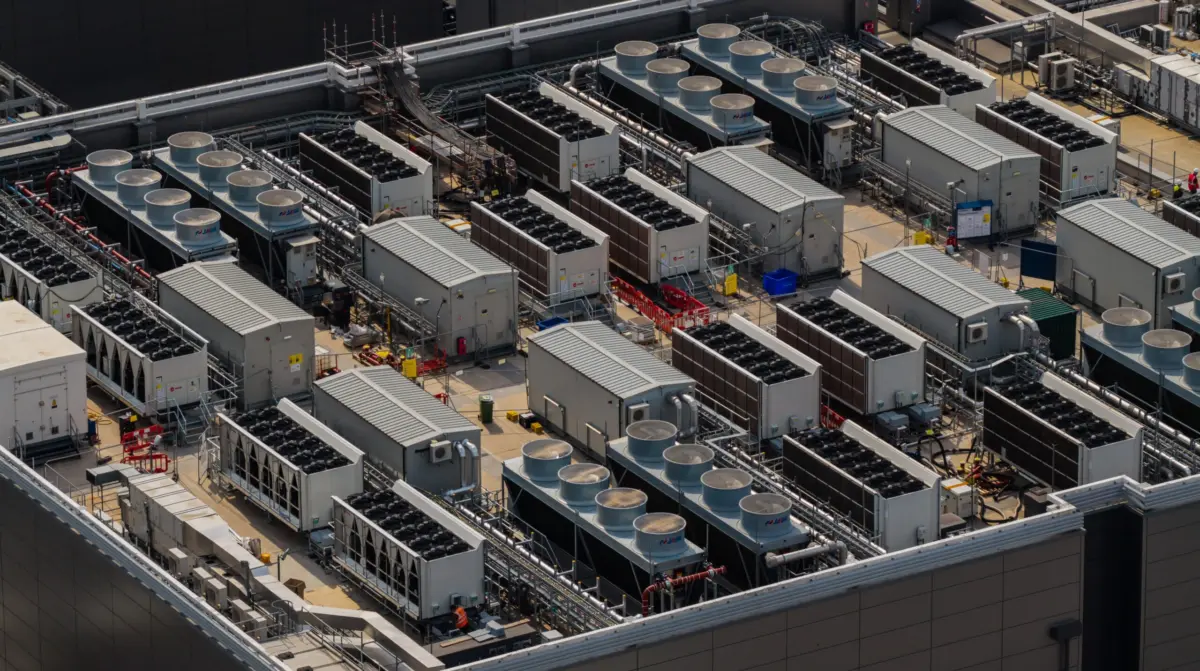
Even more pervasive is the fear surrounding energy consumption. Six out of ten respondents (60%) reported acute concern that the relentless, exponential demand for data centers and specialized power generation infrastructure will trigger severe macro-level consequences, chief among them structurally higher energy costs and economy-wide inflationary pressures.
Beyond environmental and macroeconomic concerns, the survey maps out a trilemma of institutional worries:
- Environmental Degradation: Surging greenhouse gas emissions from hyperscale data centers and skepticism over reliance on carbon offsets rather than absolute emissions reductions.
- Social Disruption: The ethical minefield of AI implementation in corporate governance and the rapid, disruptive displacement of human labor.
- Financial & Valuation Risks: Extreme market valuations across the AI ecosystem and the systemic portfolio vulnerabilities that could emerge if projected productivity gains fail to materialize.
Chronology: From Silicon Valley Optimization to Global ESG Crisis
To understand how the investment community arrived at this inflection point, it is necessary to retrace the timeline of the AI boom and its collision with institutional risk management frameworks.
Phase 1: The Post-Pandemic Productivity Gold Rush (2022–2023)
Following the public launch of OpenAI’s ChatGPT in late 2022, global financial markets entered a hyper-speculative phase characterized by an insatiable appetite for anything related to artificial intelligence. Venture capital, private equity, and public market institutional investors poured trillions of dollars into semiconductor fabrication, cloud infrastructure, and large language model (LLM) startups. During this initial phase, environmental, social, and governance (ESG) considerations were frequently sidelined or treated as secondary compliance metrics in the stampede to capture early-mover advantage in the generative AI space.
Phase 2: The Infrastructure Bottleneck and Emissions Reality Check (2024–2025)
As the generative AI boom matured, the physical constraints of the technology became impossible to ignore. Hyperscalers—including Microsoft, Google, Amazon, and Meta—began constructing sprawling data center campuses requiring gigawatt-scale power supplies. Concurrently, major tech firms published their annual corporate sustainability reports, revealing staggering spikes in carbon emissions that fundamentally undermined their publicly stated net-zero carbon pledges. Institutional ESG teams, previously focused on fossil fuel divestment, suddenly found themselves grappling with the surging carbon intensity of Big Tech.
Phase 3: The Internal Whistleblower Disclosures and Safety Backlash (Late 2025–Early 2026)
Simultaneously, internal fractures within elite AI labs began to spill into the public sphere. High-profile departures and safety warnings from researchers at frontier AI developers like OpenAI and Anthropic PBC shattered the illusion of a self-regulating industry. Former and current researchers began sounding alarms regarding unmanageable existential risks, lack of safety protocols, and the accelerated timeline toward advanced artificial general intelligence (AGI).
Phase 4: Institutional Reckoning (Present Day, 2026)
The release of the 2026 Morningstar survey captures the culmination of this timeline. Asset owners, burdened by fiduciary duties to protect long-term portfolio value and adhere to strict regulatory mandates around climate reporting, have formally transitioned from passive observers to active skeptics of the AI status quo.
Supporting Data: Crunching the Numbers Behind the AI Backlash
The data compiled by Morningstar across its multi-country sample of $20 trillion in managed assets paints a quantitative picture of systemic anxiety.
- $20 Trillion in Managed Assets: The survey cohort represents some of the most sophisticated institutional capital allocators on earth, spanning North American public pension plans, European pension funds, sovereign wealth funds in the Middle East and Asia, and multi-generational family offices.
- 11 Countries Represented: The geographic breadth confirms that AI anxiety is not an isolated regional phenomenon, but a universal concern shared across distinct regulatory jurisdictions.
- 13-Percentage-Point Surge: The jump from 12% to 25% in asset owners identifying AI environmental risk in a single 12-month cycle represents one of the fastest shifts in institutional sentiment ever recorded for a single technological category.
- The 60% Energy Cost Threshold: A clear majority of institutional investors are pricing in the reality that the grid infrastructure required to train and run next-generation models will drive up electricity bills for industrial, commercial, and retail consumers alike.
According to Lindsey Stewart, Morningstar’s director of institutional insights, the scrutiny is extending deep into the corporate accounting of emissions. "One factor drawing owners’ attention is the increase in carbon emissions from hyperscalers and the potential impact on their net zero goals," Stewart noted.
Crucially, institutional investors are no longer accepting corporate greenwashing. Stewart pointed out that investors are increasingly scrutinizing whether companies are achieving genuine, absolute emissions reductions or merely relying on questionable carbon offset credits to balance their books.
Official Responses: Industry Insiders and AI Pioneers Speak Out
The growing chorus of concern from asset owners mirrors warnings coming from within the AI research community itself. The friction between commercial acceleration and long-term risk management has sparked an unprecedented public debate among tech executives and safety researchers.
The Safety Movement Gains Momentum
In recent months, leaders from prominent AI firms—including Anthropic PBC and OpenAI—have broken ranks with Silicon Valley’s traditional accelerationist ethos, publicly calling for a deliberate slowdown in the development of advanced AI models. This regulatory push came in the wake of severe internal warnings. A former Anthropic employee stepped forward with stark public warnings regarding the unchecked safety risks of increasingly powerful, unaligned AI systems.
Adding to the urgency, a current researcher at Anthropic estimated the probability of AI causing human extinction within the next decade at greater than 10%—a shocking admission from an active industry insider that has reverberated through institutional risk committees.
Valuation Skepticism and the Bubble Debate
Beyond physical and societal harms, the financial engineering underpinning the AI boom is drawing sharp criticism from asset owners. The sheer volume of capital expenditure directed into AI infrastructure has pushed market valuations to historic highs.
"They’re worried about the impact of very, very high valuations and asking whether the assumptions driving those high valuations can be maintained, and what are the implications for their investment portfolio if they don’t," Lindsey Stewart explained during an interview discussing the survey results.
If tech sector revenue growth fails to justify the massive capital outlays currently being pumped into GPUs, data center construction, and proprietary energy procurement, institutional portfolios heavily weighted in tech equities face substantial downside exposure.
Implications: What the AI Backlash Means for the Future of Global Finance
The shifting stance of institutional asset owners carries profound implications for capital markets, corporate governance, and the trajectory of technological innovation.
1. The Redefining of Corporate ESG Mandates
For years, institutional ESG policies were narrowly defined by fossil fuel exclusion, board diversity, and traditional carbon accounting. The rise of generative AI forces asset owners to expand their risk definitions. Tech companies can no longer present themselves as "clean" alternatives to heavy industry. Data centers are now viewed by institutional portfolio managers as high-emission industrial facilities requiring rigorous environmental auditing, localized grid impact assessments, and strict power-purchase accounting.
2. Labor Market Disruption and Social Risk
On the social front, institutional investors are anticipating severe regulatory and societal fallout from AI-driven labor displacement. As automation moves beyond routine tasks into white-collar professions, legal sectors, finance, and creative industries, asset owners are bracing for potential legislative pushback, unionization drives, and consumer boycotts targeting companies that aggressively replace human workers with autonomous systems.
3. Fiduciary Duty and Portfolio Rebalancing
Fiduciary duty requires pension trustees and sovereign fund managers to safeguard assets over multi-decade horizons. Climate change, systemic economic inflation driven by grid strain, and potential asset bubbles in the tech sector directly threaten these long-term mandates. Consequently, asset owners are beginning to demand enhanced transparency from portfolio companies regarding their AI energy usage, safety protocols, and contingency plans for valuation corrections.
4. Regulatory Interventions on the Horizon
As institutional pressure mounts, governments and international regulatory bodies are likely to accelerate oversight of data center energy consumption and AI safety standards. Measures such as carbon caps on computing infrastructure, mandatory energy disclosures for large language models, and stringent labor protection laws could soon transform from theoretical policy proposals into binding legal realities.
Conclusion
The Morningstar survey serves as a watershed moment for the artificial intelligence era. The honeymoon phase of uncritical techno-optimism among institutional investors has officially drawn to a close. As asset owners managing $20 trillion reckon with the collateral damage of the AI revolution—ranging from carbon-choked grids and inflationary energy spikes to labor market destabilization and bloated market valuations—the demand for accountability, safety, and sustainable scaling has never been more urgent.
