

Main Facts
WASHINGTON COUNTY, Tenn. — Nearly two years to the day after the cataclysmic waters of Hurricane Helene swept through the rugged Appalachian mountain towns of the American Southeast, a devastating chapter of grief has finally drawn toward a close. Authorities in northeastern Tennessee confirmed on Monday that search crews have recovered the remains of Nancy Tucker, the final missing person from the state attributed to the historic September 2024 storm.
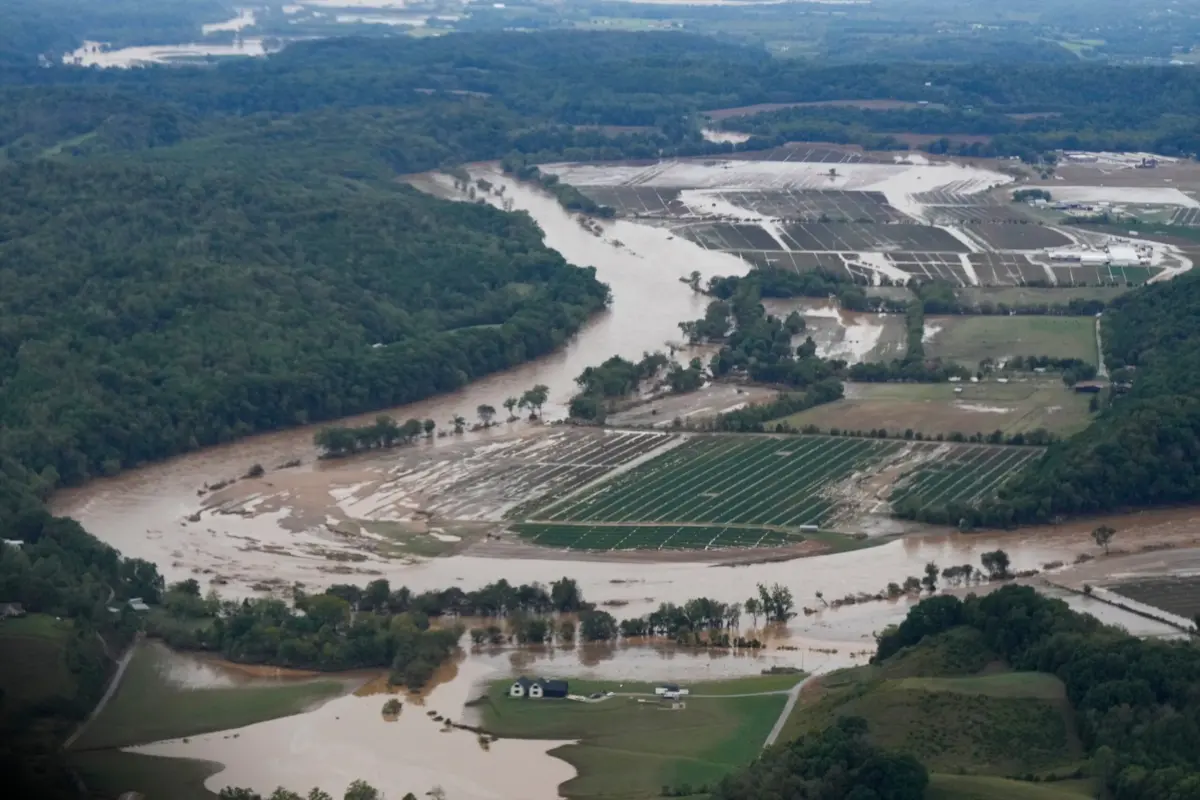
Nancy Tucker, 76, vanished alongside her husband, 79-year-old Jimmy Tucker, on September 27, 2024, when catastrophic flash flooding from the swollen Nolichucky River tore their home from its foundation in rural Washington County. While her husband’s body was recovered by emergency personnel within days of the disaster, Nancy remained unaccounted for, leaving her family, first responders, and the broader community locked in a protracted, agonizing limbo. Their son, who also lived in the residence, survived only because he was away at work when the midnight waters violently breached the property.
The agonizing search came to an end on Saturday, just four days after heavy federal debris removal operations finally commenced in a remote sector of the Cherokee National Forest known as Jackson Island. A medical examiner positively identified the remains on Monday afternoon, bringing official confirmation to a family that had waited 24 months for answers.
"The promise to bring Nancy home is now reality," wrote family spokesperson Risa Buck in an emotional statement provided to the Associated Press. "And now we work on healing and celebrating and finally being able to bring her home and properly lay her to rest with her husband, Jim."
The recovery of Nancy Tucker marks a poignant, albeit sorrowful, milestone in a disaster that permanently scarred the topography and communities of the southern Appalachian region. Hurricane Helene, which began its destructive march as a monstrous Category 4 storm before tracking inland as an unprecedented rainmaker, claimed more than 250 lives and generated nearly $80 billion in damages from the sun-drenched coasts of Florida to the steep hollows of the Carolinas and Tennessee.
Yet, for the residents of Washington County, the catastrophe was defined not merely by the staggering property loss, but by the personal void left by a beloved matriarch whose final resting place remained hidden beneath mountains of mud, pulverized timber, and automotive wreckage.
Chronology of a Two-Year Search
The timeline of Nancy Tucker’s disappearance and the subsequent two-year effort to locate her is a testament to extraordinary resilience in the face of immense physical, geographical, and bureaucratic obstacles.
- September 27, 2024: Hurricane Helene drops up to 30 inches of torrential rain across the mountainous borders of North Carolina and Tennessee. The Nolichucky River surges past historic flood stages, obliterating the Washington County home of Nancy and Jimmy Tucker. Jimmy Tucker perishes, and his body is recovered within days, but Nancy is swept away into the churning, debris-choked waters.
- Late 2024 – Early 2025: In the immediate aftermath, Washington County search and rescue teams comb the riverbanks and accessible drift piles. As weeks turn into months, search coordinators progressively narrow the target zone down to Jackson Island, a remote tract of the Cherokee National Forest where floodwaters deposited massive quantities of uprooted trees and synthetic debris.
- February 2025: Local first responders ramp up foot patrols in the rugged forest terrain. Over the ensuing months, specialized search crews log more than 400 miles (644 kilometers) on foot. However, their progress is repeatedly thwarted by monumental piles of debris—some reaching heights of 40 feet (12 meters)—that are densely packed not just with natural timber and boulders, but with crushed automobiles, heavy appliances, and massive industrial propane tanks.
- Spring to Summer 2025: Because the search zone sits on federal land and is believed to harbor sensitive Native American historical and cultural burial sites, local municipal and county emergency crews are legally barred from deploying the heavy machinery required to dismantle the towering debris fields. They must petition the federal government for intervention and contracting, enduring a protracted bureaucratic wait.
- Summer 2026: The federal government finally awards a contract for heavy debris removal operations in the designated sector of the Cherokee National Forest, paving the way for mechanized excavation.
- September 2026: Heavy equipment operations begin on-site. Just four days into the excavation, on Saturday, September 2026, search crews uncover anomalies within a massive drift pile. Upon clearing away layers of accumulated sediment and wreckage, they find definitive indications pointing to Mrs. Tucker.
- Sunday, September 2026: Specialized extraction and recovery operations continue through Sunday evening. James Matthews of the Washington County-Johnson City Emergency Medical Service, among those present at the site, describes a scene of profound emotional release as workers halt operations to pray and mourn.
- Monday, September 2026: A regional medical examiner conducts a formal examination and officially confirms the positive identification of Nancy Tucker.
Supporting Data and Scale of the Disaster
To fully understand the gravity of the search for Nancy Tucker, one must examine the broader, apocalyptic scale of Hurricane Helene. The storm was not merely a coastal weather event; it transformed into an inland hydrological disaster of historic proportions.
Meteorological data indicates that parts of the North Carolina-Tennessee border received up to 30 inches (76 centimeters) of rainfall within a matter of days. This sudden, concentrated deluge turned normally tranquil, shallow mountain streams into raging, supersonic torrents capable of moving entire homes, sweeping away centuries-old infrastructure, and rearranging the physical geography of river valleys.
- Human Toll: The storm resulted in more than 250 confirmed fatalities across multiple states, making it one of the deadliest mainland hurricanes in modern U.S. history. Many victims were caught completely unawares as flash floods struck in the dead of night, washing away vehicles and entire households.
- Economic Impact: Insurers and federal estimators calculated the total damage at approximately $80 billion. The destruction crippled regional supply chains, washed out interstate highways, and severed power and communication lines to isolated mountain communities for weeks.
- The Ongoing Absence: While Nancy Tucker’s recovery brings closure to Tennessee, the disaster left scars that extend beyond state lines. In neighboring North Carolina, the body of Alena Ayers has never been recovered despite extensive multi-agency searches. Her tragic case exposed critical gaps in legal frameworks governing missing persons during natural disasters, prompting the North Carolina legislature to enact "Alena’s Law" last year. The legislation streamlines and simplifies the legal process for declaring an individual legally dead when they vanish during a certified natural catastrophe, sparing grieving families prolonged legal and financial purgatory.
- The Search Metrics: In Washington County alone, the operation to find Nancy Tucker required exhaustive endurance. Crews walked over 400 miles through punishing forest terrain. The debris fields they targeted were staggering: 40-foot-high walls of interwoven tree trunks, thick mud, household goods, cars, and industrial hazards that required specialized heavy machinery to safely breach without compromising the structural integrity of the excavation site.
Official Responses and Human Perseverance
The successful culmination of the search was lauded by local officials, emergency coordinators, and family representatives alike, who emphasized that giving up was never an option.
Susan Saylor, spokesperson for the Washington County Sheriff’s Department, credited Washington County Sheriff Keith Sexton with establishing an ironclad commitment in the immediate aftermath of the disaster. Sheriff Sexton had publicly vowed that law enforcement and emergency services would exhaust every available resource to recover every missing person, ensuring that no family would be left wondering about the fate of their loved one.
"Why would you not want to bring what you could bring to the family, who had already lost a father?" Saylor remarked, reflecting on the humanitarian imperative that drove the two-year operation. "There was never a question of stopping."
The partnership between local emergency medical services, county law enforcement, state agencies, and federal land management was fraught with administrative friction—particularly regarding the protection of federal lands and culturally sensitive Native American sites. However, once federal contracts were secured and heavy machinery was cleared to enter Jackson Island, the operation moved swiftly.
James Matthews, representing the Washington County-Johnson City Emergency Medical Service, recalled the raw emotional impact of Saturday’s discovery. For Matthews and his colleagues, who had spent countless hours hiking through the desolate, debris-laden forest, the moment of discovery was both a professional triumph and a deeply human trial.
"The moment we found a clear indication that this was Mrs. Tucker, everyone on the scene—we stopped. We cried. All of us cried. And we prayed," Matthews said. The recovery work itself was delicate and dangerous, stretching from Saturday’s initial breakthrough through Sunday evening as teams painstakingly sifted through the remaining layers of sediment to ensure her remains were handled with the utmost dignity and respect.
For the Tucker family, the recovery offers an opportunity to bridge a two-year emotional divide. According to historical obituaries from 2024, Nancy and Jimmy Tucker shared a deep and enduring bond. The couple first met while both were actively serving in the United States Army, forging a partnership that lasted through 44 years of marriage before the storm tragically tore them apart.
With Nancy’s remains now recovered and identified, the family can finally proceed with arrangements to lay her to rest side-by-side with her husband, bringing a sacred sense of completion to a tragedy that began in the dark waters of September 2024.
Implications and Lessons Learned
The prolonged ordeal of locating Nancy Tucker and the broader search efforts across the Appalachian region hold vital implications for emergency management, environmental policy, and disaster response protocols in the United States.
- Intergovernmental Coordination on Federal Lands: The two-year delay in accessing Jackson Island underscores a critical bottleneck in disaster recovery: the friction between local urgency and federal environmental/cultural protections. While laws protecting Native American burial sites and national forests are essential, the impasse highlights the urgent need for streamlined emergency waiver protocols. Establishing pre-approved, expedited frameworks for disaster recovery on federal lands could save months—if not years—of bureaucratic delay for grieving families.
- Debris Management in Extreme Terrain: Hurricane Helene demonstrated that modern flash floods in mountainous regions deposit industrial and natural debris in configurations that traditional foot-search teams cannot penetrate. Emergency management agencies must invest in specialized heavy-debris engineering units capable of rapidly deploying to remote, ecologically sensitive zones without violating environmental protections.
- Legal Precedents for Missing Persons: The legislative response in North Carolina—Alena’s Law—serves as a template for other states, including Tennessee, grappling with the bureaucratic nightmares of missing persons after natural disasters. Ensuring that families can secure death certificates and settle estate matters without waiting years for a formal presumption of death is a vital component of post-disaster humanitarian aid.
- The Psychological Toll of Unresolved Disasters: Mental health professionals have increasingly pointed to "ambiguous loss"—the grief experienced when a loved one is missing without confirmation of death—as one of the most psychologically damaging aspects of modern natural disasters. The persistence of Sheriff Sexton, Susan Saylor, James Matthews, and countless volunteers demonstrates that recovering the missing is not merely a logistical recovery operation, but an indispensable psychological necessity for community healing.
As the leaves in the Appalachian mountains begin to turn in the autumn of 2026, marking two full years since Helene’s wrath reshaped the landscape, the return of Nancy Tucker closes a profound chapter of sorrow. It stands as a powerful reminder that while nature possesses the destructive force to erase communities, human dedication, empathy, and resolve can ultimately restore dignity and peace to the most shattered of lives.
