

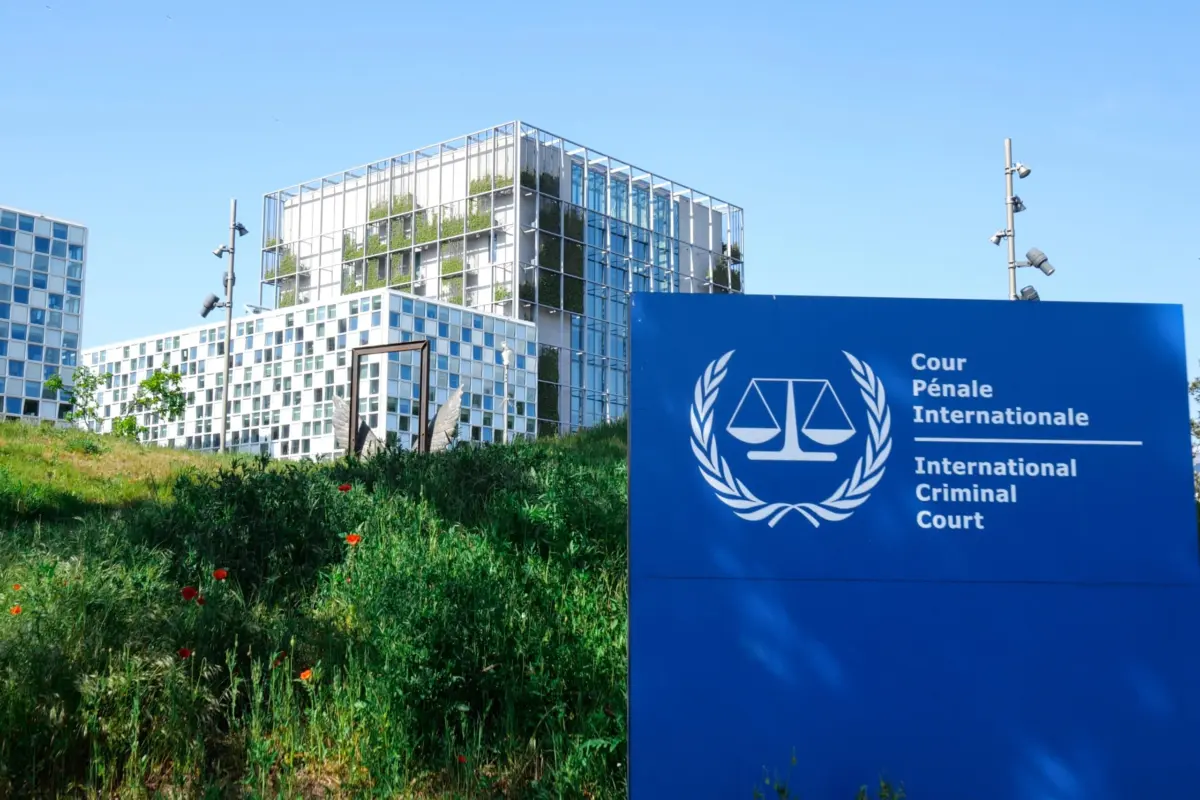
THE HAGUE — The International Criminal Court (ICC) has officially severed its longstanding contractual relationship with French life and health insurance giant AXA, transitioning to an undisclosed new healthcare provider effective October 1. The high-stakes parting of ways, first brought to light by the Financial Times, highlights the profound and far-reaching operational complications that arise when corporate compliance intersects with volatile geopolitical disputes.
While the Hague-based tribunal and its former corporate partner initially characterized the separation as a mutual decision, subsequent revelations point to a much more complex reality: mounting anxieties within European boardrooms over the extraterritorial reach of aggressive United States sanctions and an escalating campaign waged by Washington against the global judicial body.
Main Facts
The core development centers on the administrative transition of the ICC’s staff health insurance coverage. AXA, one of Europe’s premier financial and insurance institutions, formally concluded its coverage contract with the tribunal at the start of October. Although an ICC spokesperson declined to disclose the identity of the incoming insurer—citing operational discretion—the sudden shift underscores how deeply international politics can penetrate the day-to-day administrative machinery of an intergovernmental organization.
The separation did not occur in a vacuum. It coincides with a period of severe institutional strain for the ICC, which has increasingly found itself in the crosshairs of United States foreign policy. The Trump administration and its congressional allies have launched a multifaceted campaign against the court, driven by deep-seated objections to the tribunal’s assertions of jurisdiction over nationals of non-member states, most notably the United States and Israel.
According to financial and legal experts, AXA’s decision to walk away from the multi-million-dollar contract was heavily influenced by the looming threat of U.S. punitive measures. As Washington scales up its economic pressure tactics—including financial asset freezes and strict visa bans targeting ICC personnel—multinational corporations with substantial commercial exposure to the American market are finding themselves forced to choose between servicing international public bodies and safeguarding their own global corporate interests.
Chronology of Events
To understand how a routine administrative contract between an international court and a private insurer transformed into a geopolitical flashpoint, it is necessary to examine the timeline of escalating tensions between Washington, the ICC, and corporate compliance officers:
- The Rome Statute and Early Jurisdictional Clashes: Established in 2002 via the Rome Statute, the ICC was designed to prosecute individuals for international crimes of genocide, crimes against humanity, war crimes, and the crime of aggression. However, because economic powerhouses like the United States, China, and Israel never ratified the treaty, Washington has consistently maintained that the court has no legal standing over its citizens or military personnel.
- The Intensification of U.S. Sanctions: Over recent years, the U.S. executive branch ramped up its posture against the tribunal. This materialized through executive orders authorizing financial sanctions and travel restrictions against ICC officials, prosecutor staff, and anyone materially assisting the court’s investigations into American or allied military actions.
- Months of Internal AXA Deliberations: Behind closed doors, the implications of these U.S. measures sent shockwaves through AXA’s risk-management departments. According to sources familiar with the matter who spoke to the Financial Times, executives spent months engaged in internal deliberations alongside ICC representatives. The primary goal was to find a viable workaround that would allow AXA to continue providing health coverage without falling afoul of secondary U.S. sanctions.
- The Search for a Blocking Statute Solution: During these protracted talks, insurance experts explored whether European "blocking statutes"—legal mechanisms explicitly designed to shield European companies from the extraterritorial application of third-country laws—could offer sufficient legal protection. Ultimately, internal legal assessments concluded that no such mechanism could adequately insulate the French insurer from the sweeping financial penalties the U.S. Treasury Department could potentially levy.
- Late September Public Disclosure: The Financial Times broke the story regarding AXA’s impending exit, detailing the firm’s concerns over U.S. regulatory exposure. Shortly thereafter, the ICC confirmed the split to international news agencies, stating that the contract was terminated by "mutual agreement."
- October 1 Transition Deadline: The contract officially expired on October 1, marking the transition of thousands of ICC staff members and their dependents to a new, confidential health insurance provider capable of navigating the high-risk geopolitical landscape.
Supporting Data and Geopolitical Context
The rupture between the ICC and AXA provides a clear window into the mechanics of modern "lawfare" and economic coercion. Data from corporate risk analysts highlights the growing anxiety among European multinational corporations regarding secondary sanctions—penalties imposed by one country on firms from other nations that continue to do business with a targeted entity.
Financial Exposure vs. Public Mission
AXA manages billions of dollars in assets globally and maintains an extensive footprint in North America. For a financial institution of this scale, the risk of triggering U.S. Treasury blacklists or losing access to the U.S. clearing and banking systems far outweighs the commercial value of an institutional health insurance contract with a tribunal based in The Hague.
The Regulatory Mechanics of Blocking Statutes
The failure of European blocking statutes in this context exposes a systemic weakness in international trade and jurisdictional defenses. These statutes are enacted by the European Union to prohibit EU companies from complying with certain extraterritorial foreign laws. However, as corporate legal teams pointed out during their negotiations with the ICC, blocking statutes put companies in an impossible catch-22:
- If they comply with U.S. sanctions, they violate EU law.
- If they ignore U.S. sanctions to comply with EU law, they face catastrophic asset freezes and exclusion from the American financial market by Washington.
Given this asymmetric risk profile, risk-averse institutions will almost invariably prioritize compliance with the superpower controlling the world’s primary reserve currency.
Official Responses
The unfolding administrative crisis has drawn sharp statements from political figures, international civil servants, and corporate representatives alike, illustrating the deep ideological and legal divides at play.
The U.S. Stance
The U.S. government has made little effort to conceal its hostility toward the tribunal. President Donald Trump publicly condemned the institution, labeling it “evil” and a “rogue institution,” while actively urging foreign allies to sever their ties and funding arrangements with the court.
The official justification from Washington remains anchored in the principle of state sovereignty. The Trump administration argues that because the United States never signed or ratified the Rome Statute, any attempt by the ICC to assert jurisdiction over American military personnel or diplomats operating abroad is an unconstitutional and illegitimate overreach. This perspective has similarly been echoed by close U.S. allies, such as Israel, which faces concurrent ICC scrutiny over its military operations in Gaza and the West Bank.
The ICC’s Official Position
Publicly, the ICC has maintained a measured and pragmatic approach to the insurance controversy. In a statement provided to Reuters, the tribunal’s spokesperson sought to downplay any overt political coercion, emphasizing the consensual nature of the parting:
"AXA and the Court have decided by mutual agreement to terminate the contractual relationship."
Despite this diplomatic phrasing, court insiders have privately expressed deep concern over the long-term viability of maintaining administrative functions if commercial service providers continue to flee out of fear of American retaliation.
AXA’s Reticent Silence and Risk Assessment
While AXA did not immediately respond to official requests for comment from major news organizations following the breaking reports, the Financial Times revealed that the insurer explicitly pointed to “risks arising from the extraterritorial application of US sanctions.”
Furthermore, company communications indicated that the decision was a direct reflection of an “international environment that has become increasingly tense and complex for businesses.” This rare public acknowledgment by a major financial player lays bare how corporate compliance departments are increasingly forced to act as geopolitical shock absorbers.
Implications for International Law and Global Governance
The departure of AXA is far more than a routine administrative hiccup regarding employee healthcare benefits; it carries profound implications for the future of international jurisprudence, institutional resilience, and global corporate behavior.
1. The Vulnerability of International Civil Servants
At a micro level, the incident creates acute stress for the judges, prosecutors, investigators, and administrative staff who make up the ICC workforce. Ensuring reliable health insurance is a basic employer obligation. If private insurers view servicing the court as a toxic liability, the ICC could face severe recruitment and retention challenges. Highly qualified international legal experts may think twice before joining an institution that cannot even guarantee standard administrative support services without running into geopolitical roadblocks.
2. The Chilling Effect on Corporate Partnerships
On a macro level, the fallout establishes a troubling precedent. If a major European insurer can be frightened away by the mere specter of U.S. secondary sanctions, other vital commercial partners—ranging from IT infrastructure providers and cloud computing firms to facilities management and security contractors—may reevaluate their relationships with the court. This "de-risking" trend threatens to slowly strangle the ICC’s operational capacity from the outside in, achieving through economic pressure what diplomatic opposition alone could not.
3. The Crisis of Multilateralism
Finally, the episode highlights the fragility of the post-World War II multilateral order. When domestic legal frameworks of a single superpower can effectively pierce the administrative armor of an independent, internationally mandated judicial body, the foundational premise of universal accountability begins to fracture.
As the International Criminal Court works to stabilize its operations under its new, undisclosed health insurance provider, the broader question remains unanswered: How can global institutions designed to uphold international law protect themselves when the commercial and financial systems they rely upon are weaponized against them? For now, the ICC’s administrative shift serves as a stark warning bell for the entire ecosystem of global governance.
