

By Matthew Thibault
Published August 31, 2026
Executive Summary: Main Facts
Capitalizing on an unprecedented convergence of technological demands, industrial repatriation, and an urgent national imperative to modernize aging utilities, major commercial builder JE Dunn Construction has officially announced the expansion of its advanced technology group. Announced on August 26, 2026, the newly minted division is entirely dedicated to power generation and utility infrastructure.
To helm this high-stakes strategic pivot, the Kansas City, Missouri-based general contractor has tapped internal veteran Ryan Wilson to serve as vice president and market lead for the power generation sector. Wilson, who brings nearly a decade of institutional knowledge at JE Dunn alongside a specialized background in heavy industrial and power infrastructure, will coordinate with clients, strategic partners, and internal engineering teams to spearhead new project delivery methods.
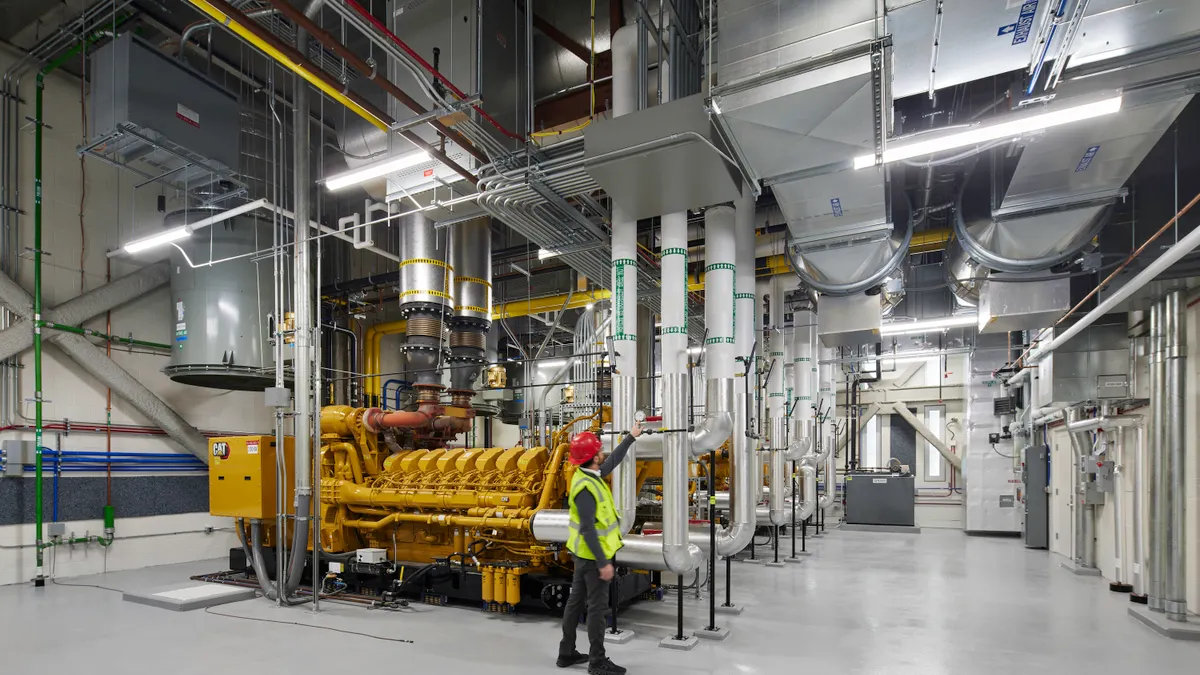
This corporate restructuring is far from an isolated corporate maneuver. It reflects a seismic shift across the American construction and engineering landscape. Driven by the voracious energy appetites of hyperscale data centers, a nationwide manufacturing onshoring boom, and a fragile legacy power grid, builders across North America are pivoting rapidly to capture market share in the booming energy sector. While JE Dunn already boasts an impressive portfolio exceeding 220 completed power projects—exemplified by complex mechanical endeavors like the Allina Health Abbott Northwestern Central Energy Plant in Minneapolis—the establishment of a dedicated unit signals the firm’s intent to scale aggressively in the utility and energy marketplace.
Chronology of the Strategic Expansion
The path toward JE Dunn’s creation of a dedicated power generation unit spans years of steady market evolution, punctuated by targeted internal leadership appointments and broader industry movements.
- 2018: Ryan Wilson joins JE Dunn Construction as a project engineer, rapidly scaling the corporate ladder by managing complex, high-stakes assignments focused on power, heavy industrial, and specialized manufacturing facilities.
- March 2026: Sensing a nationwide tightening in power supply chains and a surge in utility-scale demands, rival builder Clayco launches its own dedicated power and energy business unit, setting a competitive precedent among major contractors.
- August 2026: WSP Global reports during its second-quarter earnings call that power-related work has ballooned to represent roughly 35% to 40% of the firm’s total U.S. revenue, highlighting the massive financial gravity of the sector.
- August 26, 2026: JE Dunn officially announces the formation of its specialized power generation unit under its broader advanced technology group, naming Ryan Wilson as vice president and market lead.
- August 31, 2026: Public rollout of the division details how the contractor plans to integrate advanced delivery strategies to meet compounding pressures from artificial intelligence and industrial onshoring.
Supporting Data and Market Dynamics
The macroeconomic fundamentals supporting JE Dunn’s strategic expansion are robust, multi-layered, and unprecedented in modern construction history. The unprecedented demand for electrical power is primarily fueled by three converging vectors: the artificial intelligence revolution, the reshoring of American manufacturing, and the structural decay of 20th-century utility assets.
1. The Artificial Intelligence and Data Center Wave
The rapid proliferation of generative artificial intelligence, large language models, and cloud computing infrastructure has triggered a gold rush for hyperscale data centers. Unlike traditional commercial office spaces, modern data centers consume staggering amounts of electricity—not only to power banks of high-density servers, but also to run intensive liquid- and air-cooling systems. Major technology corporations are scouring the country for sites with guaranteed multi-megawatt power allocations, frequently pressuring contractors to build dedicated, on-site microgrids or co-locate facilities next to generation plants.
2. The Manufacturing Onshoring Surge
Federal legislation, including the CHIPS and Science Act and the Inflation Reduction Act, has spurred a massive wave of capital investment in domestic manufacturing. Billions of dollars are currently pouring into the construction of advanced semiconductor fabrication plants, electric vehicle battery gigafactories, and critical mineral processing facilities across the United States. These heavy industrial facilities require reliable, high-capacity, uninterrupted power to maintain continuous production cycles, pushing industrial builders to master complex electrical distribution and generation integration.

3. Aging Legacy Infrastructure
Decades of deferred maintenance have left much of the United States’ electrical transmission, distribution, and generation infrastructure in a precarious state. Utilities are under mounting pressure to retire aging, carbon-intensive fossil fuel plants while simultaneously building out renewable assets, battery energy storage systems (BESS), and localized peaker plants. Contractors capable of executing complex mechanical and electrical retrofits while keeping existing grids online are finding themselves in extraordinarily high demand.
The numbers across the industry underscore this tectonic shift. For international professional services firm WSP Global, power generation and transmission work now accounts for an astonishing 35% to 40% of its total U.S. revenues. Meanwhile, mega-builders like Kiewit and Bechtel have secured massive, high-profile commissions, such as a landmark $33 billion power generation project in Ohio designed to support expanding technological infrastructure.
Official Responses and Strategic Vision
In corporate statements released alongside the announcement, JE Dunn emphasized that the new power generation unit is designed to streamline client collaboration and optimize project delivery in an increasingly complex regulatory and technical environment.
"In this new role, Wilson will work with the firm’s clients, industry partners and internal teams to develop new delivery strategies and identify market opportunities for the segment," corporate communications noted.

By centralizing its expertise under dedicated leadership, JE Dunn aims to eliminate operational silos between its traditional commercial construction divisions and its advanced technology builders. Ryan Wilson’s multidisciplinary background—spanning hands-on project engineering to high-level senior project management within industrial and power sectors—positions him to bridge the gap between architectural design, heavy civil engineering, and specialized electrical mechanical contracting.
Competitors are watching closely. The move mirrors a broader industry-wide realization that traditional general contracting models, which rely heavily on standard commercial and institutional builds, must evolve to encompass heavy industrial power systems if they wish to capture the largest and most lucrative capital improvement projects of the late 2020s.
Implications for the Construction Industry
The formation of JE Dunn’s power generation unit carries profound implications for the broader engineering, procurement, and construction (EPC) marketplace.
Workforce and Talent Acquisition
As contractors rush to establish specialized energy divisions, the war for executive and engineering talent will intensify. Leaders like Ryan Wilson—who possess cross-functional experience in both standard commercial workflows and heavy industrial power systems—will command significant market value. Firms that lack internal pipelines for grooming specialized technical leadership may be forced into aggressive lateral hiring or costly mergers and acquisitions.
Evolving Project Delivery Models
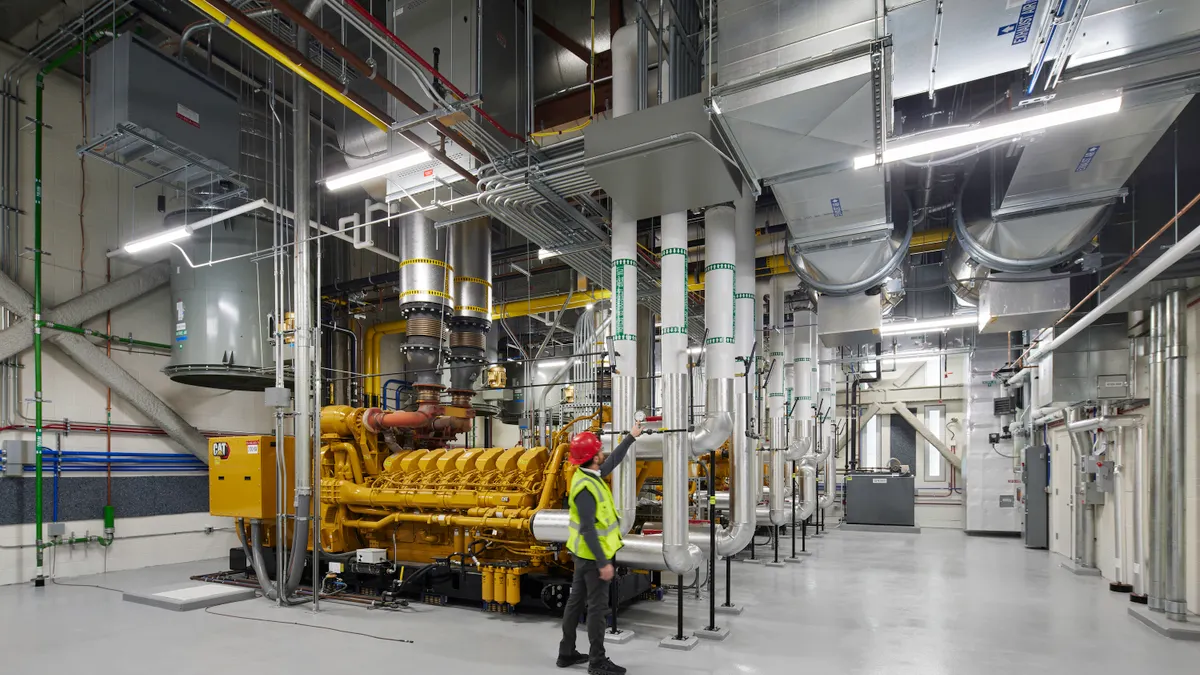
The sheer scale and complexity of modern power projects are accelerating the adoption of alternative project delivery methods. Design-build, integrated project delivery (IPD), and early contractor involvement (ECI) are becoming non-negotiable prerequisites for clients undertaking multi-billion-dollar energy installations. Builders must possess the sophistication to manage long-lead equipment procurement cycles—such as massive step-up transformers, gas turbines, and specialized switchgear—which currently face severe supply chain bottlenecks globally.
Environmental, Social, and Governance (ESG) Pressures
JE Dunn and its peers must navigate a complex regulatory and environmental landscape. While the demand for power generation is soaring, clients and regulatory bodies are placing increased emphasis on carbon reduction, grid resiliency, and sustainable construction practices. The contractors who succeed will be those capable of seamlessly integrating traditional thermal generation assets with cutting-edge renewable storage, smart-grid technologies, and lower-emission operational footprints.
Ultimately, JE Dunn’s structural evolution signals that the traditional boundaries of commercial construction are dissolving. For builders willing to adapt, the intersection of technology, industrial policy, and utility modernization offers a generational runway for sustained, high-margin growth.
