

By Terrence O’Brien
With reporting from tech industry analysts and exclusive leaks.
Main Facts
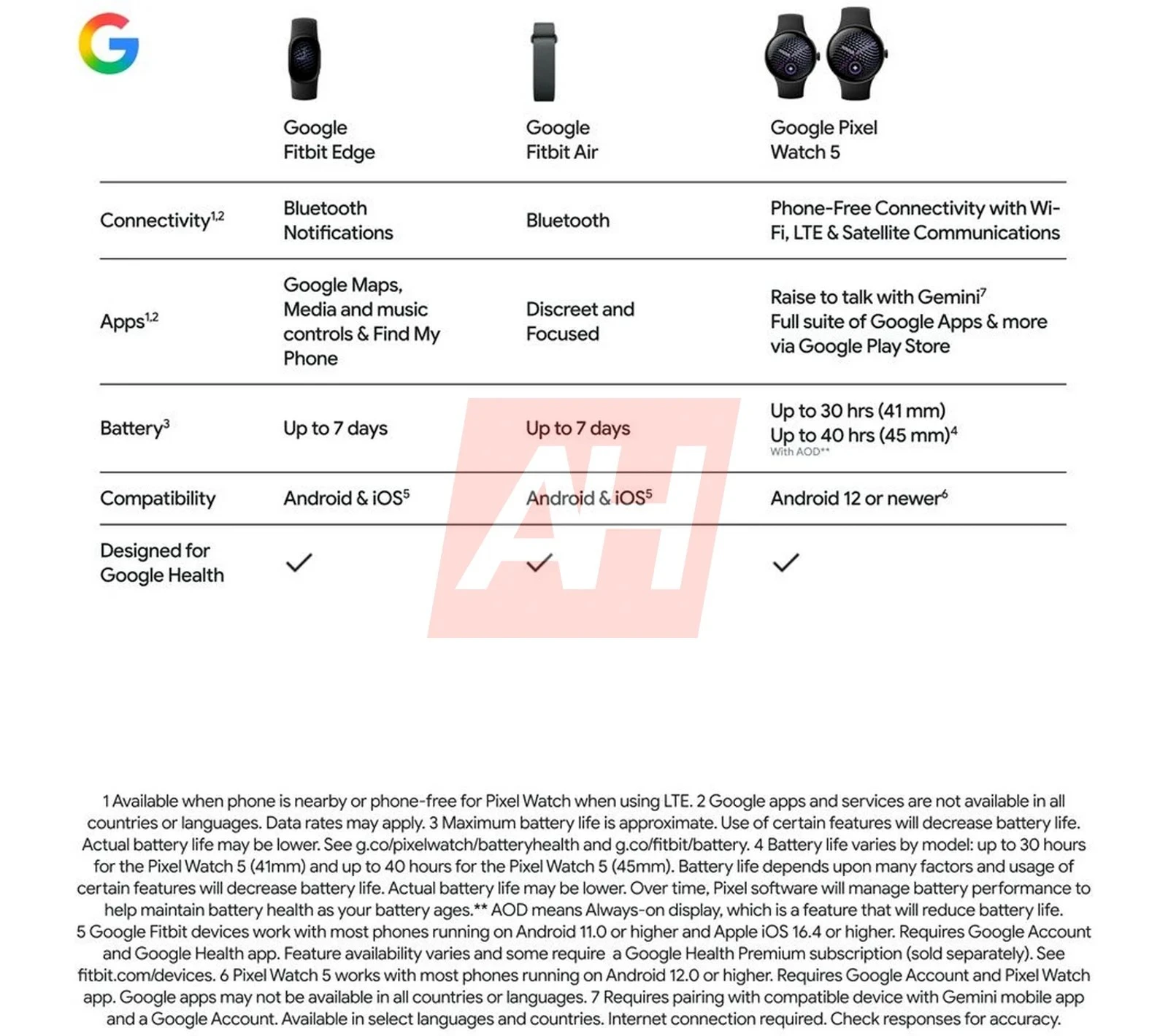
Google appears to be expanding its wearable ecosystem with a brand-new device: the Fitbit Edge. Recently surfaced leaks, originally published by Android Headlines and previewed across enthusiast communities like Reddit, provide a detailed look at what is expected to be the true successor to Fitbit’s popular midrange Charge lineup.
The Fitbit Edge appears to split the design and functional difference between Google’s high-end Pixel Watch and the more minimalist, AI-focused Fitbit Air. Featuring a compact screen capable of displaying dynamic widgets, the Edge deliberately avoids the expansive, full-color application ecosystem of a traditional smartwatch while offering significantly more utility than a basic wristband tracker.
Key leaked specifications for the Fitbit Edge include:
- Battery Life: An impressive estimated 7-day battery life on a single charge.
- Hardware Sensors: Built-in GPS and a dedicated altimeter for precise elevation and route tracking.
- Smart Capabilities: Limited app support, highlighted by integrations for essential services like Google Maps and YouTube Music.
- Positioning: Designed strictly as a fitness-first wearable that bridges casual step-counting and robust biometric monitoring.
While Google has not yet officially confirmed the existence, pricing, or release window of the Fitbit Edge, industry analysts project a launch price between $150 and $200, slotting neatly into the mid-tier portfolio alongside the $99.99 Fitbit Air and the $399.99 Pixel Watch.

Chronology of the Fitbit Midrange Line
To understand where the Fitbit Edge fits into Google’s hardware strategy, it is helpful to look back at the evolution of Fitbit’s midrange and fitness-focused product roadmap since Google’s acquisition of the company.
2021–2023: The Reign of the Charge 6
The Fitbit Charge series has historically represented the gold standard for dedicated fitness bands. The Charge 5 introduced a vibrant color AMOLED display and built-in GPS, though it faced criticism for software bugs and battery management issues.
In late 2023, Google released the Fitbit Charge 6, which integrated deeper Google services—such as YouTube Music controls, Google Wallet, and Google Maps turn-by-turn directions—onto a fitness tracker format. Retailing at $159.95, the Charge 6 became a staple for users wanting robust health data without the daily charging requirements of a smartwatch. However, since the 2023 release of the Charge 6, the midrange lineup has remained stagnant, leaving consumers waiting for a fresh hardware cycle.
Late 2025: The Shift Toward Diversification
As Google unified its wearable software architecture around Wear OS and optimized Fitbit’s companion app, the company began experimenting with distinct device form factors. The introduction of the minimalist Fitbit Air targeted budget-conscious users looking for lightweight health tracking and AI-driven health coaching, retailing at an accessible $99.99. Meanwhile, the Pixel Watch line continued to target premium smartwatch buyers.
Late 2026: The Fitbit Edge Leaks
By the second half of 2026, rumors of a missing link in Google’s portfolio began to circulate. Initial whisperings on Reddit forums (r/pixel_phones) were soon validated when high-resolution marketing and product images were leaked by Android Headlines. These images revealed a device bearing the "Edge" moniker, signaling a strategic pivot away from the traditional "Charge" branding and introducing a sleeker, modern aesthetic that borrows design cues from both the Pixel Watch and the Fitbit Air.

Supporting Data and Product Comparison
When evaluating the upcoming Fitbit Edge, market analysts rely on comparisons with existing Google-owned wearables. The device ecosystem is currently stratified into clear price points and use cases:
| Device Model | Category | Estimated / Retail Price | Battery Life | Key Features |
|---|---|---|---|---|
| Fitbit Air | Minimalist Tracker | $99.99 | Varies (Multi-day) | Lightweight design, AI health coaching, basic tracking |
| Fitbit Edge (Rumored) | Midrange Fitness Band | $150.00 – $200.00 (Expected) | ~7 Days | Built-in GPS, altimeter, Google Maps & YouTube Music support |
| Fitbit Charge 6 | Midrange Fitness Band | $159.95 (Launch) | Up to 7 Days | ECG sensor, built-in GPS, core Google service integrations |
| Pixel Watch Series | Premium Smartwatch | $399.99+ | 24 – 48 Hours | Full Wear OS ecosystem, expansive app support, cellular options |
Hardware Analysis from Leaked Renders
The leaked images of the Fitbit Edge highlight several physical design changes:
- Form Factor: The body features a smoother, more contoured profile than the angular Charge 6, suggesting improved comfort during sleep tracking.
- Display Integration: The screen sits flush against the chassis, offering a seamless look that mimics the curved glass of the Pixel Watch while maintaining a narrower, less obtrusive footprint on the wrist.
- Band Mechanism: The quick-release band system appears to be refined, potentially borrowing from the proprietary or universal attachment styles seen across Google’s recent wearable refreshes.
Official Responses and Industry Reactions
As is customary for unannounced hardware, Google has declined to comment on the Android Headlines leaks or speculate on the existence of the Fitbit Edge. Representatives from Google’s hardware division maintained a "no comment" stance when pressed by tech journalists.
However, the tech community and industry experts have been vocal about the implications of the leak:
- Retail Positioning: Most retail analysts agree that pricing the Edge between $150 and $200 is a calculated necessity. If priced too close to the $399 Pixel Watch, it risks cannibalizing smartwatch sales; if priced too close to the $100 Air, it fails to justify its advanced hardware suite (such as dedicated GPS and altimeter integration).
- Consumer Sentiment: Early reactions on social media and tech forums have been largely positive. Users who found full smartwatches too bulky or short-lived on battery, yet found basic trackers too limiting, view the Edge as the ideal compromise.
- The Fitbit Brand Identity: Some Fitbit purists have expressed curiosity—and mild concern—over the rumored shift from the "Charge" moniker to "Edge." While rebranding could signal a fresh start for Google’s fitness line, it also risks alienating long-time fans of the legacy numbering system.
Strategic Implications for Google and the Wearable Market
The arrival—even in leaked form—of the Fitbit Edge carries significant implications for the broader wearable technology landscape.

1. Consolidation of the Midtier Market
The fitness tracker market has faced intense pressure over the last several years. On one end, ultra-cheap smartbands from brands like Xiaomi and Amazfit have driven down the cost of entry. On the other end, budget smartwatches offer near-complete smartphone functionality for under $200. By positioning the Fitbit Edge in the $150–$200 sweet spot, Google is betting that consumers are still willing to pay a premium for reliable health algorithms, ecosystem integration, and a battery that lasts a full week.
2. Streamlining the Fitbit and Pixel Ecosystems
Since Google acquired Fitbit, industry watchers have frequently questioned how the two brands would coexist without stepping on each other’s toes. The emerging product pyramid—comprising the Fitbit Air for casual users, the Fitbit Edge for dedicated fitness enthusiasts, and the Pixel Watch for tech-centric smartwatch users—creates a clear, tiered hierarchy. This clarity helps consumers choose the right device based on their specific needs rather than brand confusion.
3. The Battle for Biometric Accuracy
With built-in GPS and an altimeter, the Fitbit Edge is clearly targeting runners, cyclists, and outdoor enthusiasts who require precise workout mapping without hauling a heavy smartphone along for the workout. By retaining advanced sensors while stripping away power-hungry full smartwatch operating systems, Google can optimize health-tracking accuracy while preserving industry-leading battery longevity—a metric where traditional smartwatches continually fall short.
Conclusion
While official confirmation from Google remains pending, the leaks surrounding the Fitbit Edge point to an imminent and logical evolution of the company’s wearable strategy. By merging the battery efficiency and fitness focus of the classic Charge line with modern design sensibilities inspired by the Pixel Watch and Fitbit Air, Google is positioning the Edge to capture a vital segment of the fitness market.
As we await further announcements, pricing details, and an official release date, one thing is certain: the midrange fitness tracker category is about to get a lot more competitive.
