

By Tech & Urban Mobility Desk
Published August 2026
Main Facts
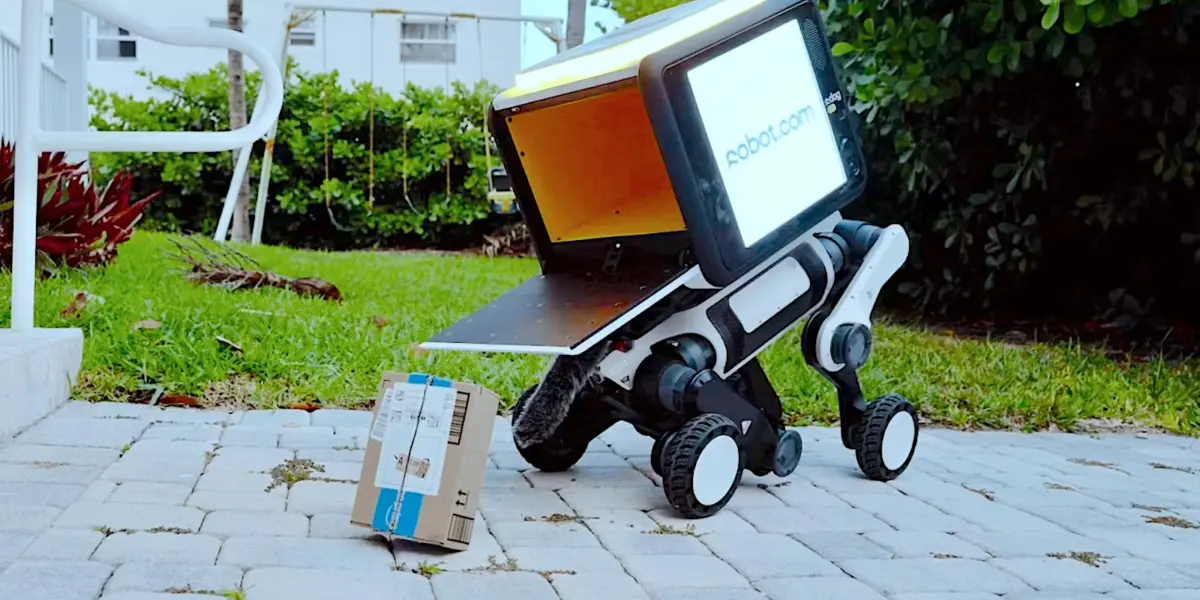
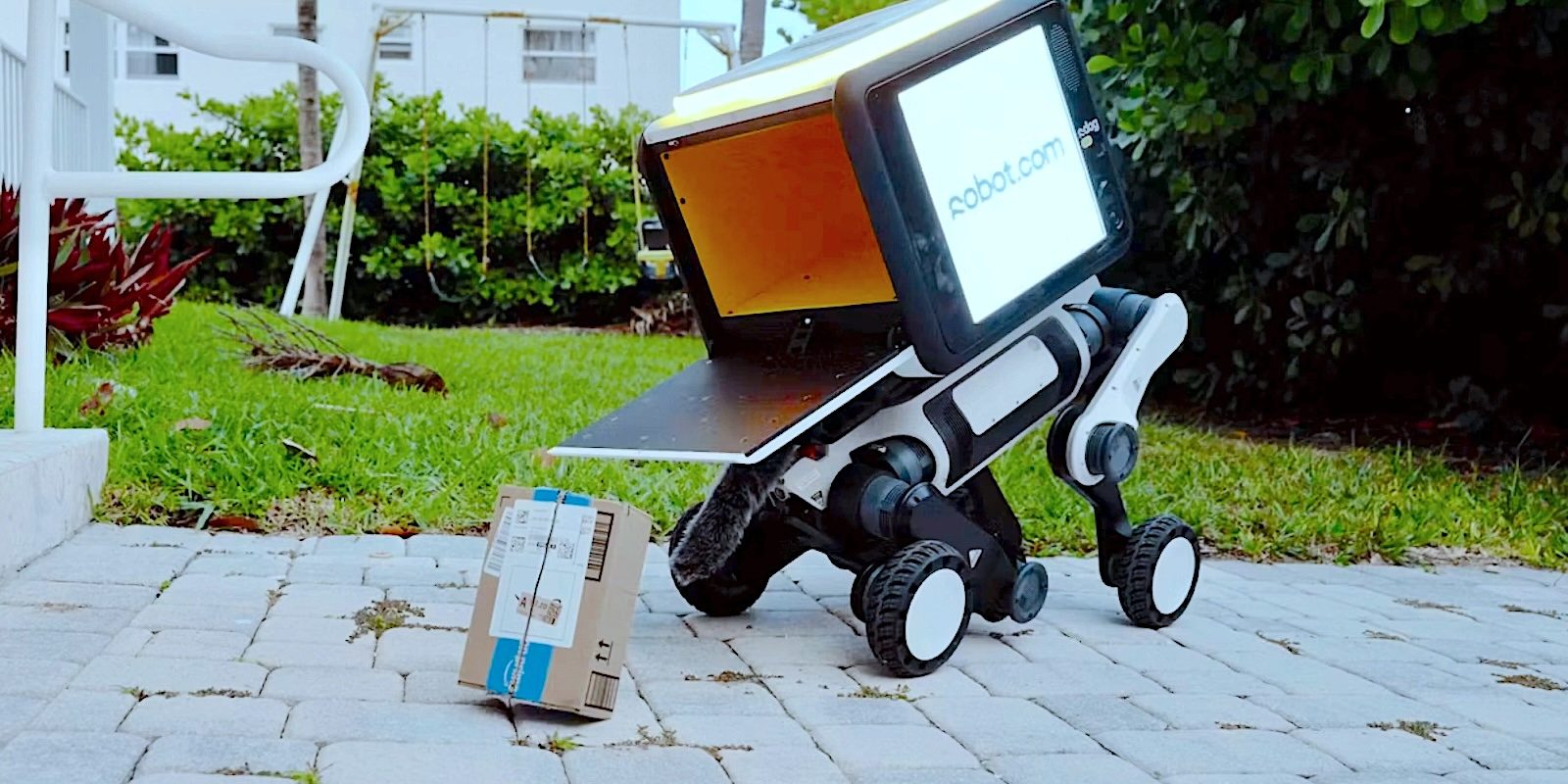
The landscape of last-mile delivery and urban advertising is shifting beneath our feet—quite literally. Robot.com has officially unveiled its latest creation: the R-dog, a quadrupedal delivery robot that blends whimsical consumer-facing design with heavy-duty commercial ambitions. Equipped with wheel-legged mobility, stair-climbing capabilities, expressive Wall-E-style digital eyes, a jaunty cap, and a wagging furry tail, the R-dog aims to bridge the gap between cold automation and approachable public robotics.
However, beneath its adorable exterior lies a complex and controversial machine. The R-dog is not merely designed to drop off packages at your front door; it is a mobile advertising platform. Featuring dual onboard display screens, advanced sensors, and natural voice conversational capabilities, the robot actively broadcasts advertisements while navigating public sidewalks. Using onboard cameras, it counts impressions, measures dwell time, and evaluates pedestrian engagement in real time, shifting out-of-home advertising from estimated metrics to hard, data-driven analytics.
While proponents praise its agility over traditional boxy delivery bots—citing its ability to effortlessly scale stairs and bypass low urban barriers—critics are already raising pressing concerns regarding public surveillance, data privacy, and the steady displacement of human gig-economy workers.
Chronology: The Evolution of Delivery Robotics and the Rise of the R-Dog
The journey toward autonomous delivery robots has accelerated rapidly over the past decade, moving from experimental university campus pilots to crowded metropolitan deployment.
- 2018–2021: The Boxy Era Begins. Early iterations of delivery bots dominated the market. These were primarily slow-moving, wheeled coolers on sidewalks, handling food and grocery deliveries on flat urban terrain. While functional, their utility was severely limited by curbs, steps, and unpaved pathways.
- 2022–2024: Quadrupedal Exploration. Robotics firms began adapting four-legged (quadrupedal) locomotion—originally popularized for industrial inspection and military applications—for consumer tasks. These robots proved far superior at navigating dynamic terrain, but lacked a friendly consumer interface.
- Early 2025: The Pivot to Humanoid and Expressive Robotics. As public skepticism toward anonymous surveillance hardware grew, tech developers recognized the need for "friendly" designs to ease public acceptance. Companies began experimenting with facial expressions, auditory cues, and softer aesthetics.
- Late 2025 – Early 2026: The Convergence of Delivery and Digital Advertising. Recognizing that the high cost of autonomous hardware required multiple revenue streams, developers looked closely at monetizing the sidewalk real estate occupied by robots.
- August 2026: Robot.com officially unveils the R-dog concept in Miami Beach. By combining advanced wheel-legged quad mobility, interactive conversational AI, and continuous ad-streaming screens, the company defines a new frontier in commercial robotics—merging logistics with intrusive public marketing.
Supporting Data and Technical Specifications
To understand how the R-dog plans to disrupt urban spaces, it is necessary to examine the hardware, software, and operational metrics driving its deployment.
Mobility and Navigation
Unlike traditional wheeled delivery units that struggle with standard architectural barriers, the R-dog utilizes a hybrid wheel-legged locomotion system. This allows the robot to roll efficiently on smooth sidewalks while dynamically lifting its legs to step over obstacles, traverse uneven terrain, and climb staircases. This expanded mobility footprint allows it to reach front porches and complex multi-level apartment complexes that were previously inaccessible to automated delivery fleets.
The "R-Ads" Performance Engine
Robot.com’s primary business model relies heavily on its proprietary advertising ecosystem, dubbed R-Ads. Traditional out-of-home (OOH) advertising—such as billboards or transit posters—relies on theoretical traffic estimates. The R-dog transforms this paradigm by capturing granular, real-time engagement data:
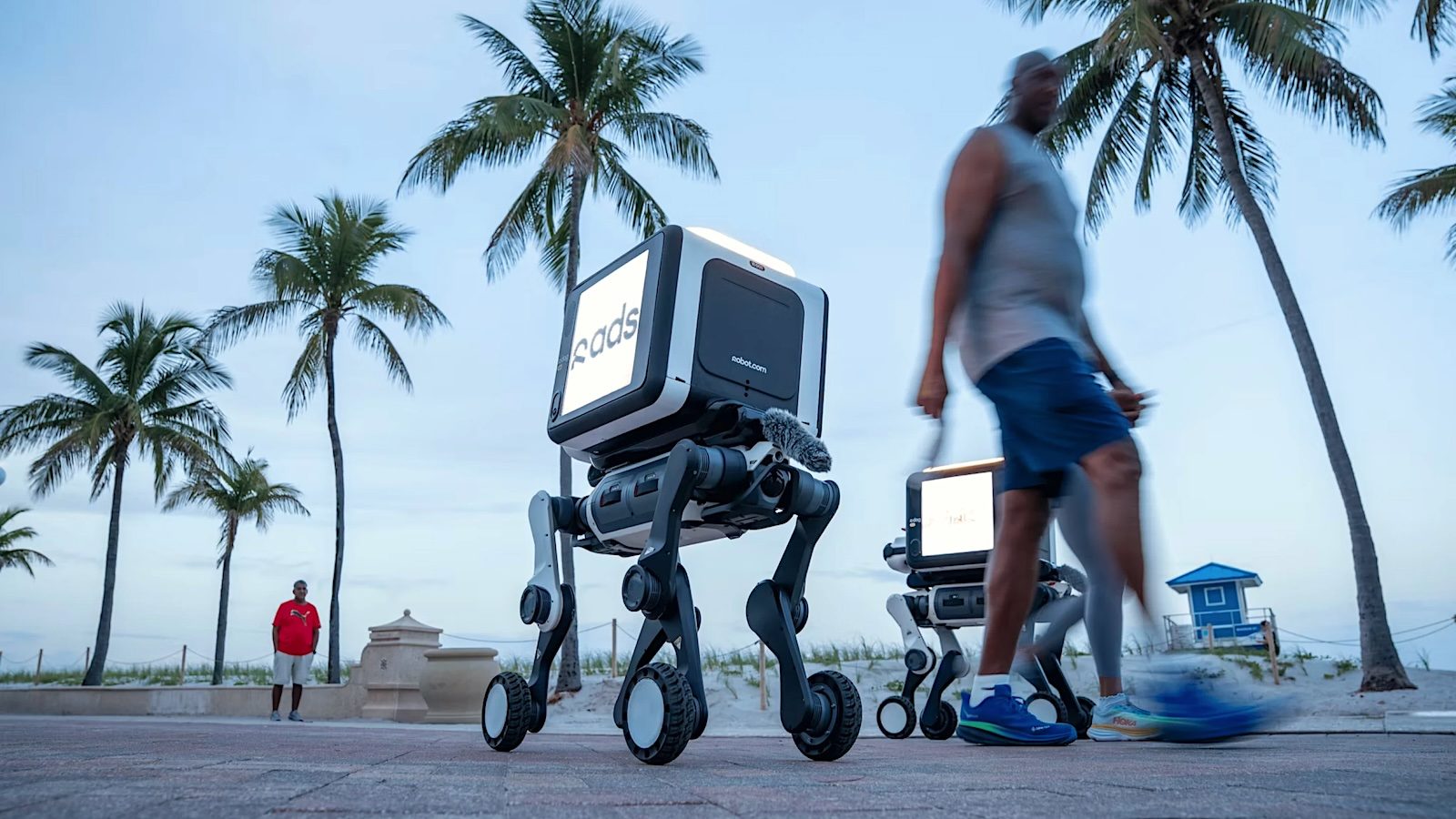
- Impression Tracking: Onboard sensors log the exact number of individuals who cross the robot’s path.
- Dwell Time Measurement: Cameras and depth sensors calculate how long passersby pause to look at the screens.
- Interactive Metrics: The robot’s natural voice conversational capabilities allow brands to track direct verbal or physical interactions.
- Dashboard Integration: Brand partners receive live updates via a real-time analytics dashboard, quantifying the exact return on investment for their mobile sidewalk campaigns.
Privacy and Data Handling Infrastructure
With cameras actively scanning pedestrian faces for engagement and sentiment analysis, Robot.com has faced immediate scrutiny regarding public privacy. In response, the company has published data governance guidelines highlighting limited data retention windows and strictly controlled internal access to Personally Identifiable Information (PII).
According to Robot.com, individuals seeking to correct, access, or delete personal data captured by the units must submit formal requests. However, logistics remain murky regarding how an ordinary pedestrian—caught unaware on a public sidewalk—is supposed to identify the operating company in real time and submit a data removal request.
Official Responses and Industry Perspectives
The unveiling of the R-dog has sparked a polarized debate across the technology, labor, and urban planning sectors.
Robot.com’s Official Stance:
Company executives and promotional materials emphasize that the R-dog is designed to make automation "welcome" rather than intimidating. By incorporating playful elements like a furry tail, expressive digital eyes, and friendly conversational abilities, Robot.com argues that the public will be more receptive to sharing sidewalk space with autonomous machines.

"Out-of-home advertising has always run on estimated reach. R-Ads measures impressions, interactions, and dwell time per robot, so brands get actual engagement data on the go with a real-time dashboard."
— Robot.com Official Statement
Labor and Gig-Worker Advocates:
Labor organizations and independent gig-workers view the R-dog through a much darker lens. Following previous industry shifts toward humanoid security guards and automated delivery fleets, critics argue that the R-dog represents the systematic replacement of human labor under a veneer of corporate cuteness. The integration of advertising is seen as an aggressive monetization of public space, turning every public sidewalk into a captive audience zone.
Urban Planners and Privacy Advocates:
City planners have expressed growing anxiety over the proliferation of private commercial hardware cluttering public right-of-ways. Privacy watchdogs, meanwhile, remain deeply skeptical of corporate assurances regarding facial data collection. While companies offer opt-out pathways via email, critics point out that passive public surveillance on public walkways creates an unavoidable consent dilemma for citizens.
Implications: The Future of Urban Sidewalks and Commerce
The introduction of the R-dog signals profound changes for modern cities, touching upon several key areas of urban life:

1. The Commercialization of Public Space
Sidewalks have historically been treated as public commons—spaces for pedestrian transit, socialization, and community interaction. The advent of advertising-driven robots like the R-dog converts these shared spaces into monetized channels. When a delivery robot actively tracks your gaze, analyzes your facial expressions, and shouts promotional offers as you walk your dog or push a stroller, the boundary between public freedom and corporate surveillance dissolves.
2. The Next Wave of Labor Displacement
While delivery apps have long relied on a flexible workforce of human couriers navigating cities on bicycles, e-bikes, and cars, autonomous quadrupeds offer corporations a labor-free alternative free from health insurance, hourly wage requirements, or labor disputes. As machines become more adept at navigating stairs and complex architectural layouts, the economic viability of human gig work in last-mile logistics faces an existential threat.
3. Regulatory and Legal Challenges
Municipalities across the globe will soon be forced to grapple with a new class of street-faring commercial entities. Questions regarding sidewalk congestion, liability in the event of collisions, environmental noise pollution from conversational AI units, and stringent municipal data privacy laws will require urgent legislative action.
Ultimately, the R-dog stands as a complex symbol of modern technological development: brilliantly engineered to solve complex logistical challenges, yet wrapped in a disquieting mix of corporate advertising and pervasive public data harvesting. Whether urban residents will embrace the furry-tailed, ad-slinging robot as a welcome neighborhood fixture or reject it as a dystopian intrusion remains to be seen.
