

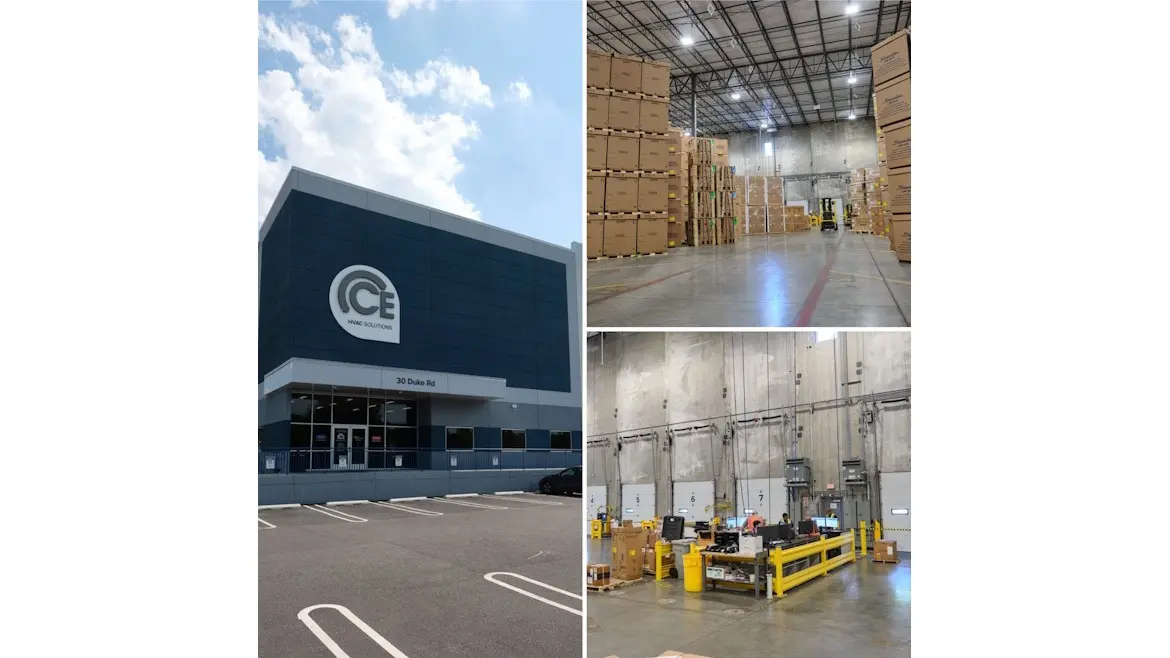
Main Facts
The HVAC (Heating, Ventilation, and Air Conditioning) supply chain is undergoing a massive operational transformation driven by shifting contractor expectations. Recent data published by The ACHR News highlights a pressing industry demand: nearly a third of all HVAC contractors now expect their equipment and parts distributors to maintain same-day availability for essential warranty items.
Meeting this demand is not simply a matter of packing more inventory onto warehouse shelves. Instead, it requires a complete overhaul of behind-the-scenes warehousing mechanics, including receiving, storage, counting, picking, and loading protocols. Historically, much of the HVAC distribution sector operated on "tribal knowledge"—the localized expertise and accumulated habits of veteran employees. While this approach sufficed during an era of smaller distribution networks and predictable supply chains, it falls short in today’s hyper-connected, high-demand market.
To bridge this operational gap, industry leaders like Carrier Enterprise (CE) have reimagined their supply chain frameworks. By integrating modern warehouse management systems (WMS), transitioning to cloud-based enterprise resource planning (ERP) solutions, digitizing inventory audits, and deploying automated route planning, CE has achieved a 16% increase in network-wide inventory accuracy. Furthermore, the company has slashed manual route-planning times from an entire eight-hour workday to under an hour, while introducing rapid-response delivery options like "Delivery Express" to meet urgent, on-site contractor needs.
Chronology of Transformation: The "Crawl, Walk, Run" Evolution
The modernization of Carrier Enterprise’s supply chain did not happen overnight. It represents a deliberate, multi-year strategic roadmap designed to replace legacy on-premises platforms with a scalable, cloud-connected digital ecosystem.
2022: Establishing the Baseline
The journey began in earnest as part of a comprehensive five-year warehouse strategy plan. In 2022, CE rolled out its first wave of standardized operational procedures at a single pilot location. Rather than forcing a rigid, top-down mandate that ignored daily operational realities, leadership treated the initial launch as a living blueprint. The core objective was to establish baseline metrics for inventory receipt, physical counts, and order picking, while actively gathering feedback from front-line warehouse workers.
2023–2024: Scaling Through Collaboration
Following successful pilots, the transformation shifted to a cross-functional collaborative effort involving IT, operations, supply chain management, and local branch teams. According to Senior Vice President of Supply Chain Jim Somppi, the rollout philosophy was defined by a classic "crawl, walk, run" methodology.
Innovations and technologies were rigorously tested in select distribution centers, fine-tuned in real time based on user feedback, and then systematically scaled across the broader network. This phased approach allowed CE to rapidly accelerate its deployment timeline, successfully rolling out standardized procedures across multiple distribution centers within single calendar years. Strong strategic backing from partners like Watsco—specifically executive support from figures like Jim Brady—provided the operational momentum required to sustain the nationwide rollout.
Present Day: Continuous Evolution
Today, the standard operating procedures implemented in 2022 look vastly different, continuously refined by a corporate culture that prioritizes employee feedback. The warehouse infrastructure is now anchored by Infor CloudSuite Distribution, a cloud-based ERP platform purpose-built for the distribution sector. This technological foundation has empowered CE to integrate best-of-breed software, creating a unified operational pipeline that connects back-office inventory data with front-line delivery fleets.
Supporting Data and Operational Metrics
The transition from legacy practices to a standardized, data-driven supply chain has yielded measurable improvements across Carrier Enterprise’s operational footprint. Key performance indicators underscore the impact of digitization and automation:
- 16% Inventory Accuracy Increase: Implementing a modern warehouse management system paired with standardized storage, receiving, and picking protocols drove a significant 16% boost in inventory accuracy network-wide.
- Inventory Audits Reduced from Days to Hours: Physical inventory counts—traditionally labor-intensive operations that paralyzed warehouse productivity for multiple days—have been fully digitized. Audits now take mere hours, simultaneously improving visibility, precision, and overall operational efficiency.
- Route Planning Slashed by Over 87%: Prior to automation, scheduling a day’s worth of delivery routes consumed an entire eight-hour workday for a logistics employee. By deploying automated intraday route planning and scheduling software tied directly into the WMS, planning time has dropped to under one hour.
- Rapid Delivery Tiers: Through the integration of the "Delivery Express" service, critical parts—such as emergency replacement compressors—can be placed directly into a contractor’s hands in as little as one hour from the initial request.
- Elimination of Administrative Friction: The implementation of e-commerce-style proof-of-delivery applications, complete with photographic evidence and digital signatures, has sharply reduced the volume of post-delivery customer service inquiries regarding missing shipments or unverified drop-off locations.
Official Responses and Executive Insights
The leadership team at Carrier Enterprise emphasizes that their supply chain evolution is rooted in practical execution rather than a superficial chase for trendy technologies.
Reflecting on the digital transformation, Vincent Mugavero, Senior Vice President of Digital and Enterprise Services at Carrier Enterprise, noted the profound impact of moving away from legacy systems:
"Making the leap from a legacy on-premises platform to a cloud-based solution that continuously evolves with the latest innovations, including an expanding suite of AI-powered capabilities, has been a game changer."
Mugavero highlighted that the Infor CloudSuite platform acts as the central nervous system for the company’s supply chain. By abandoning isolated spreadsheets and disjointed phone calls, CE has successfully interconnected order management, warehouse logistics, route planning, and customer-facing digital channels (such as the CE HVAC Pro+ mobile app).
Jim Somppi, Senior Vice President of Supply Chain, underscored the importance of organizational pacing and cross-functional unity during the implementation phase. By adopting the "crawl, walk, run" strategy, CE avoided the pitfalls of overly ambitious, overnight overhauls that frequently disrupt daily warehouse operations. Instead, by testing processes in controlled environments and incorporating insights from local team members, the supply chain team ensured that theoretical strategies could withstand the rigors of physical warehouse execution.
Implications for the HVAC Industry
The operational shifts at Carrier Enterprise carry broad implications for the broader HVAC manufacturing, distribution, and contracting landscape.
Rising Contractor Expectations
As highlighted by The ACHR News, contractors are no longer willing to tolerate prolonged equipment downtime or vague delivery timelines. With 31% of contractors expecting immediate, same-day availability for essential warranty parts, distributors who rely on outdated, manual inventory tracking risk losing market share to competitors offering absolute transparency and speed.
The Consumerization of B2B Distribution
HVAC contractors increasingly expect the same digital convenience in their professional lives that they experience as retail consumers. This "consumerization" of B2B supply chains means that real-time inventory visibility, automated tracking notifications, mobile ordering apps, and photographic proof-of-delivery are no longer luxury features—they are baseline requirements.
Breaking Down Silos
A critical takeaway from CE’s transformation is the recognition that order fulfillment, route planning, and delivery visibility cannot function as independent, back-office tasks. Modern distribution success relies on treating the entire supply chain as a single, connected ecosystem. When warehouse inventory data communicates seamlessly with fleet management software—and when those insights are instantly accessible to contractors via mobile devices—operational friction evaporates.
Ultimately, distributors who master this holistic integration will earn enduring contractor trust. By ensuring that a warehouse can pick accurately, a routing system can navigate efficiently, and a delivery driver can verify drop-offs transparently, forward-thinking distributors are setting a new benchmark for excellence across the entire HVAC service sector.
