

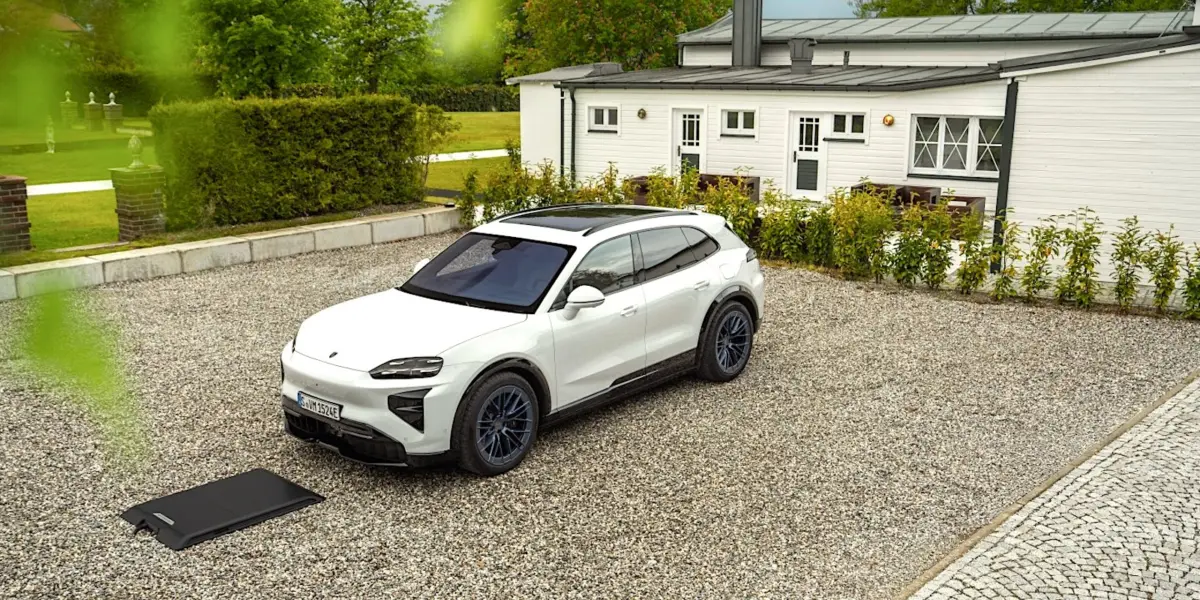
BERLIN — In a quiet yet revolutionary announcement tucked away inside a routine model-year update press release, German sports car manufacturer Porsche has officially changed the landscape of electric vehicle ownership. Dubbed “Even more colours and even greater convenience for the Cayenne Electric,” the release contained a blockbuster piece of industry news: Porsche is introducing cutting-edge, inductive wireless charging for its flagship all-electric SUV.
For an automotive icon renowned for extracting blistering performance out of heavy machinery, the introduction of a cable-free ecosystem eliminates one of the final remaining friction points of daily EV life. By marrying state-of-the-art magnetic resonance technology with the raw, uncompromising power of the Cayenne Electric, Porsche is signaling to the luxury automotive market that the future of refueling is entirely hands-free.
Main Facts: How Porsche Wireless Charging Works
At its core, the newly introduced Porsche Wireless Charging system removes the physical tether between wall and wheel. Instead of wrestling with heavy, weather-beaten charging cables in the rain or dark, drivers simply park their vehicles over a designated space, and power transfer begins automatically.
The architecture of the system relies on a dual-pad setup:
- The Vehicle Pad: Integrated seamlessly into the underbody of the Cayenne Electric.
- The Ground Pad: A low-profile, weatherproof base plate installed permanently in a home garage or designated parking space.
When the vehicle is properly aligned over the ground pad, energy is transmitted wirelessly via an alternating magnetic field. Porsche quotes an impressive charging rate of up to 11 kW, making it an ideal solution for effortless overnight replenishment. Furthermore, the system achieves an energy transfer efficiency of roughly 90%, rivaling traditional plug-in Level 2 home chargers without the thermodynamic drawbacks often associated with early iterations of wireless power.
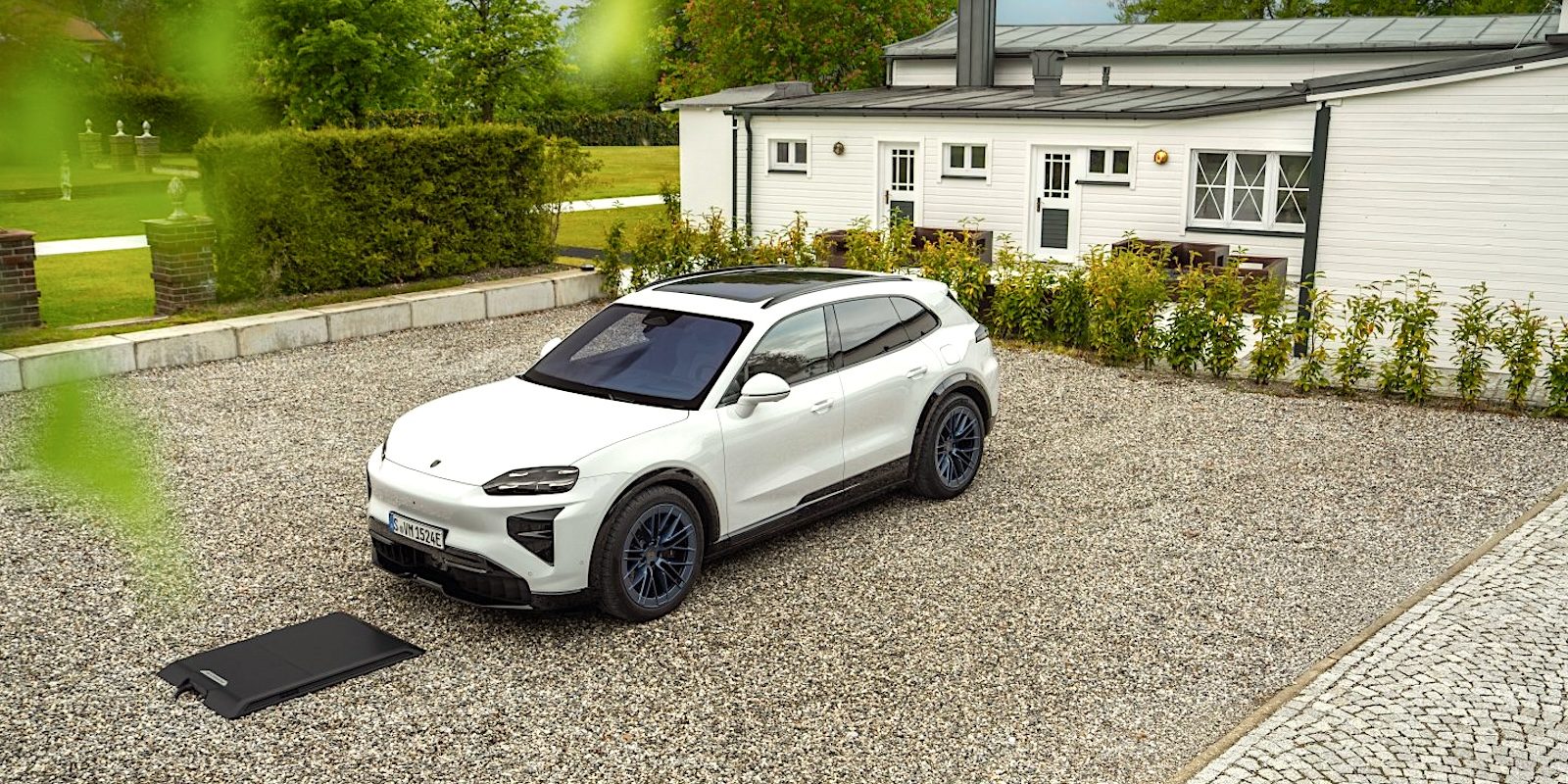
Safety has been a primary engineering focus for Porsche’s development team. The ground and vehicle pads are outfitted with advanced motion sensors and sophisticated foreign object detection (FOD) systems. If a living creature—such as a pet or small animal—approaches the active magnetic field, or if stray metallic debris rests upon the pad, the system instantly halts the power transfer to ensure absolute safety.
Chronology: The Road to Wireless EV Integration
While inductive charging has long existed as a consumer convenience for smartphones and electric toothbrushes, scaling the technology to safely transfer the kilowatt-hours required by a high-performance luxury SUV has been a methodical, decades-long engineering journey.
Early Concepts and Academic Research (2010–2018)
Throughout the early 2010s, wireless power transfer (WPT) for electric vehicles was largely confined to university laboratories and heavily restricted public-transit pilot programs. Automotive engineers recognized the immense potential of dynamic and stationary inductive charging, but efficiency losses, high manufacturing costs, and strict electromagnetic interference (EMI) regulations kept the technology from commercial viability.
The Rise of Aftermarket and Niche Solutions (2019–2024)
As global EV adoption accelerated, tier-one suppliers and specialized startups—such as WiTricity—began pioneering commercial wireless solutions for fleets and high-end consumer applications. By the early 2020s, limited-run aftermarket conversions and niche luxury pilot programs proved that inductive charging could safely deliver Level 2 speeds. However, major automakers remained hesitant to factory-integrate the hardware due to warranty complexities and the high cost of standardizing ground infrastructure.
The Breakthrough: Porsche’s Factory Integration (2025–2026)
The paradigm shifted definitively in late 2025 and early 2026, as Porsche pushed its electrification strategy into hyper-drive with the rollout of the Cayenne Electric—touted as the most powerful vehicle the marque has ever produced. Realizing that buyers of six-figure luxury performance SUVs demand absolute frictionless convenience, Porsche’s engineering division finalized factory support for wireless induction.

By integrating the necessary hardware directly into the production cycle, Porsche bypassed the reliability and installation hurdles that plagued earlier third-party solutions, culminating in the official global rollout announcement in September 2026.
Supporting Data and Technical Specifications
To fully understand the engineering triumph behind Porsche’s wireless charging implementation, it is helpful to examine the technical parameters under which the system operates.
| Feature / Metric | Porsche Wireless Charging Specification |
|---|---|
| Maximum Charging Power | Up to 11 kW |
| Transfer Efficiency | Approximately 90% |
| Operating Technology | Inductive Magnetic Field Resonance |
| Hardware Components | Underside vehicle pad + Weatherproof outdoor ground pad |
| Safety Features | Automated foreign object detection (FOD) & proximity motion sensors |
| Initial Market Availability | Germany and select European markets (Global rollout in stages) |
Efficiency vs. Convenience
Skeptics of wireless charging often point to the theoretical energy loss inherent in magnetic field transmission compared to a direct copper-to-copper wire connection. While traditional plug-in chargers typically hover around 93% to 95% efficiency, Porsche’s 90% efficiency rate represents a negligible difference in daily home energy consumption—costing the average user mere pennies more per full charge, while completely removing the daily physical chore of plugging in.
Official Responses and Industry Reactions
The announcement has sent ripples across both the traditional automotive sector and the clean-tech community. Industry analysts view the move as a watershed moment for luxury EV adoption, predicting that competing German and domestic automakers will be forced to follow suit.
Porsche representatives have emphasized that the inclusion of wireless charging aligns with the brand’s broader philosophy of combining uncompromised performance with effortless daily usability.

"Our customers expect the absolute pinnacle of engineering performance, but true luxury is also about removing friction from daily life," noted a spokesperson close to the Cayenne development program. "With the Cayenne Electric, we wanted to ensure that interacting with the most powerful Porsche ever built was as intuitive as locking your front door."
Initial reactions from early adopters and automotive journalists have been overwhelmingly positive, particularly regarding the system’s robust weatherproofing and safety mechanisms. By engineering the ground pad to withstand extreme temperatures, heavy rain, and snow loads, Porsche has successfully addressed the primary durability concerns that kept earlier wireless concepts restricted to indoor, climate-controlled garages.
Implications for the EV Market and Future Infrastructure
Porsche’s introduction of factory-installed inductive charging for the Cayenne Electric carries profound implications for the trajectory of global electric mobility.
1. Shifting Consumer Expectations in the Luxury Segment
For high-end vehicle buyers, features quickly cascade from "exotic novelties" to "table stakes." Now that Porsche has made cable-free charging a factory option on a major production SUV, high-end competitors from Mercedes-Benz, BMW, and Audi will inevitably face pressure to offer comparable or superior inductive solutions. As the technology scales, manufacturing costs will drop, paving the way for wireless charging to trickle down into more mainstream vehicle segments over the next decade.
2. Paving the Way for Autonomous Fleets
While stationary wireless charging pads in home garages are a massive luxury win for individual consumers, the long-term implications for autonomous vehicle (AV) fleets are even more significant. True Level 4 and Level 5 autonomous robotaxis cannot plug themselves in. The widespread commercialization of robust, weatherproof, high-efficiency inductive charging pads is a mandatory stepping stone toward fully automated, self-sustaining electric vehicle fleets that require zero human intervention for refueling or maintenance.

3. Market Rollout and Availability
Porsche Wireless Charging is currently being rolled out in stages globally. Order books are officially open in Germany and select European markets, with expansion to North America and Asia expected to follow as local regulatory approvals for high-frequency magnetic power transfer are finalized.
As the automotive world watches to see how quickly consumer adoption takes off, one thing is abundantly clear: the days of wrestling with heavy, grease-stained charging cables in the freezing rain are officially numbered—at least for those fortunate enough to park a new Porsche Cayenne Electric in their garage.
