Main Facts: A Global First in Maritime Decarbonization
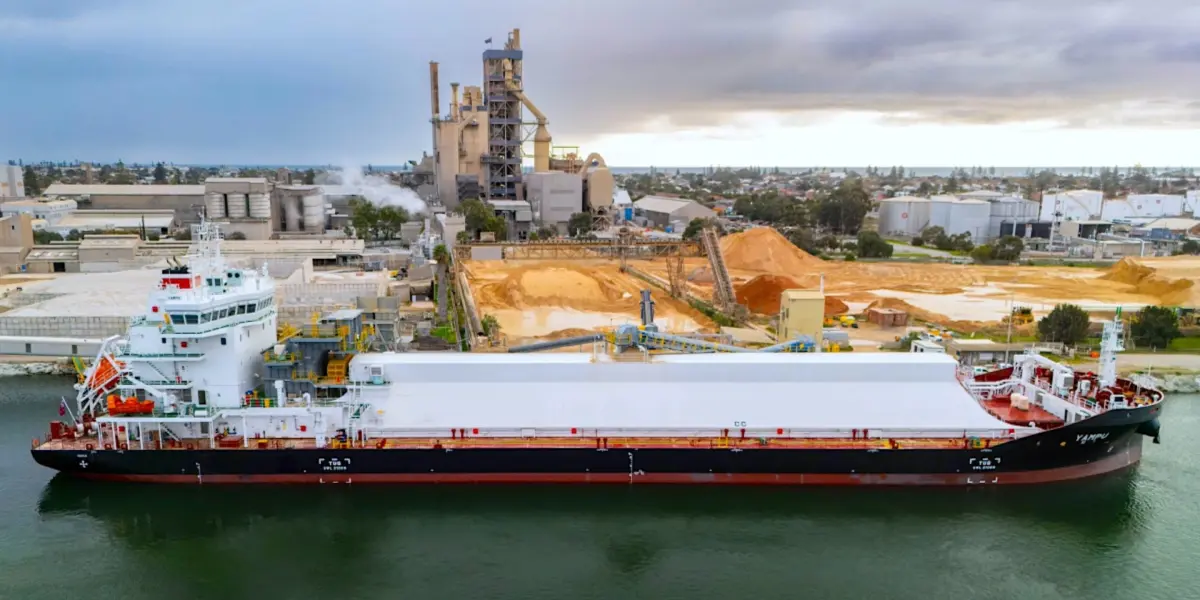
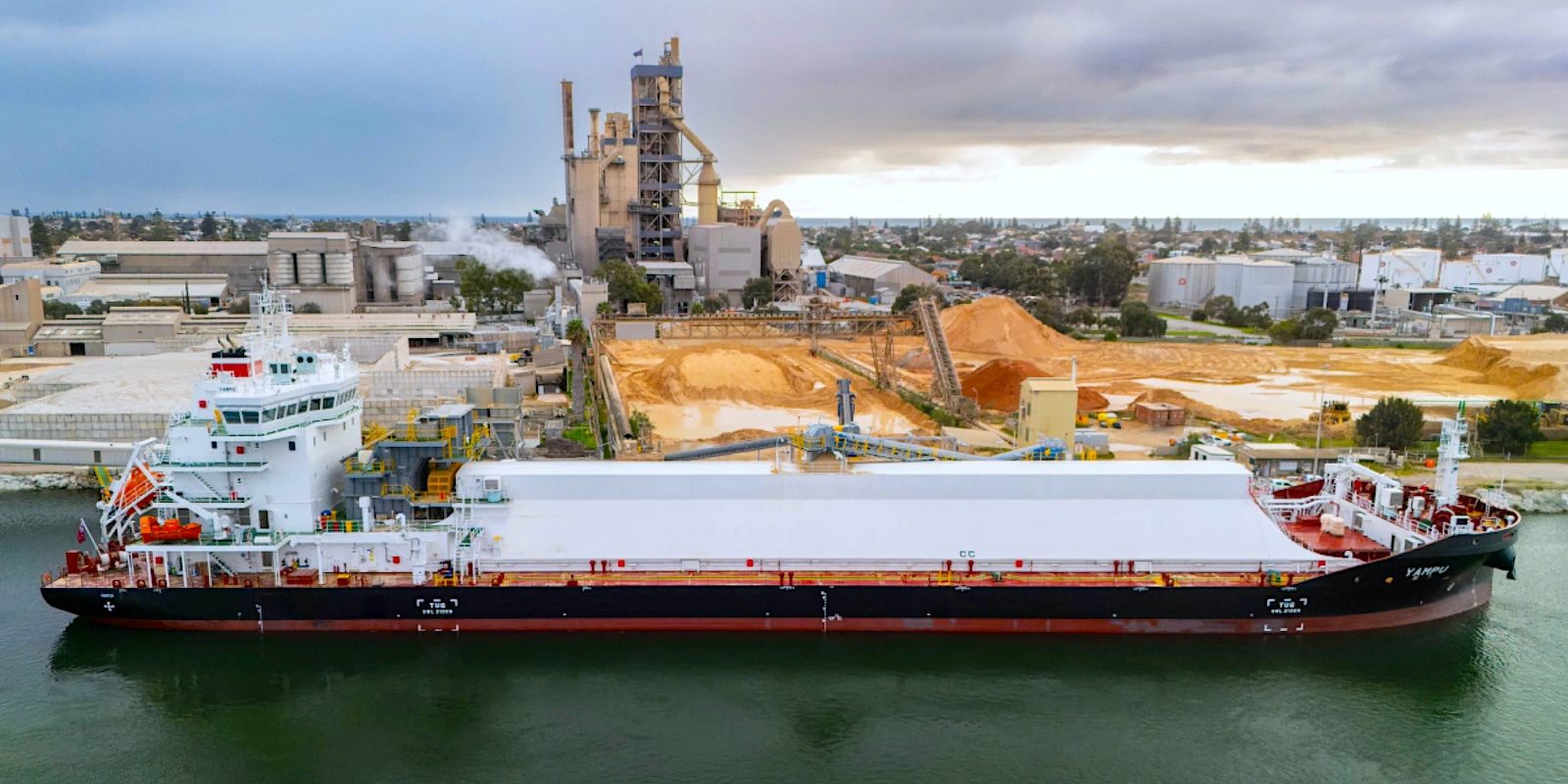
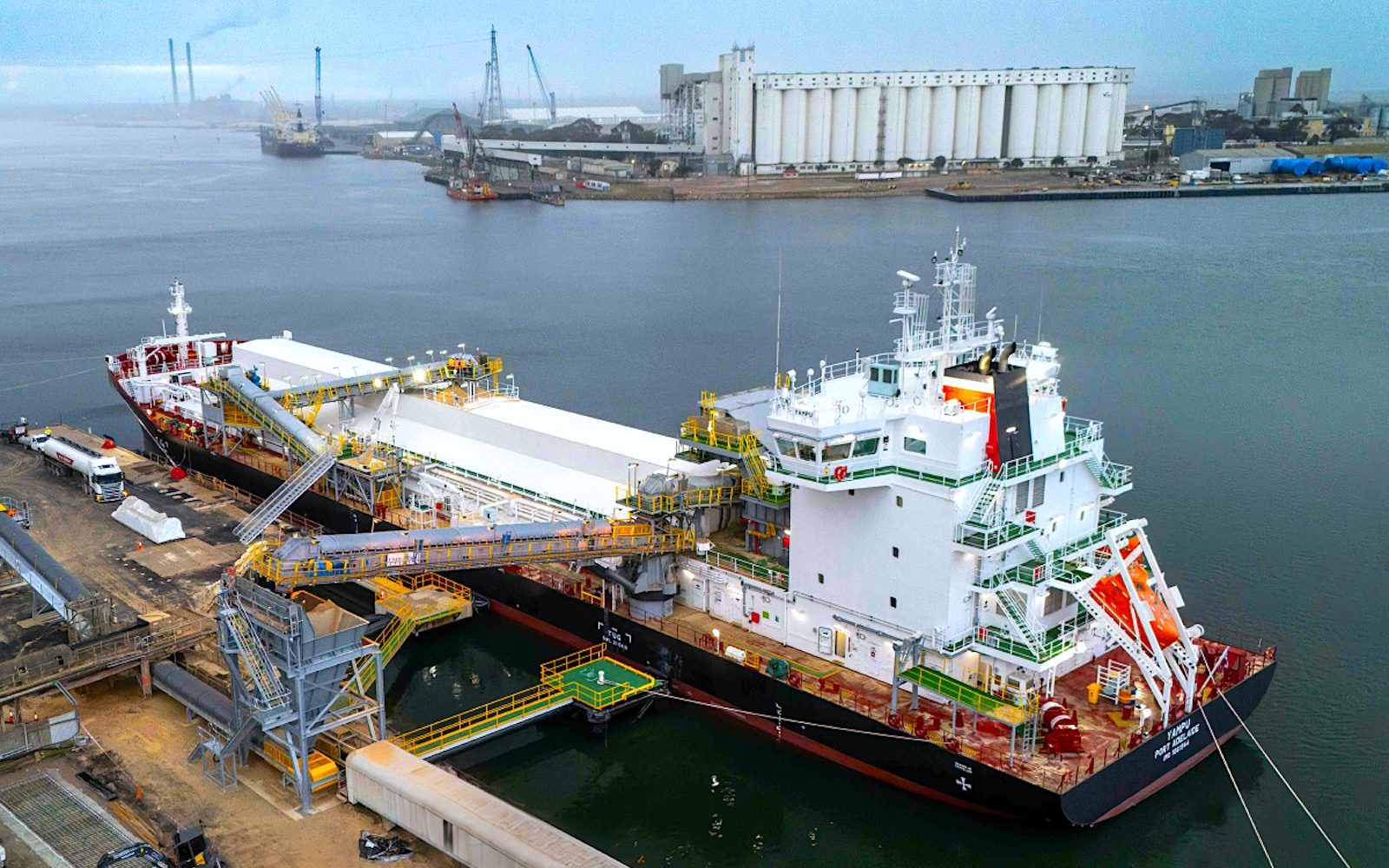
The global maritime shipping industry, long considered one of the hardest sectors to decarbonize, has reached a notable milestone with the introduction of the MV Yampu. Touted as the world’s first self-loading and unloading bulk cargo vessel of its kind, this 125-meter (approximately 410-foot) engineering marvel represents a paradigm shift in how heavy industrial materials are transported across coastal waters.
Purpose-built by maritime engineering leaders CSL Group for the Australian aggregate and concrete giant Adbri, the MV Yampu combines locomotive-style diesel-electric propulsion with a massive, utility-scale marine battery installation. Developed by battery energy storage system (BESS) specialists Wärtsilä, the vessel’s onboard energy storage system weighs a staggering 131 tons, boasts a capacity of 6,758 kWh, and is capable of outputting more than 600 kW (roughly 800 horsepower).
The ship’s primary mission is as grueling as it is essential: ferrying 2.7 million tonnes (approximately 3 million short tons) of raw limestone annually across a 42-mile maritime route in Australia’s Gulf St. Vincent. Operating between the Klein Point quarry on the Yorke Peninsula and an Adbri cement manufacturing facility in Birkenhead, Adelaide, the vessel efficiently bypasses what would otherwise be a punishing 300-mile round trip for heavy diesel trucks on land.
Beyond eliminating thousands of heavy truck journeys from local highways, the MV Yampu delivers immediate, quantifiable environmental returns. Compared to the older vessel it replaces, the hybrid cargo ship cuts overall fuel consumption by 25% and slashes direct (Scope 1) carbon emissions by more than 40%. By integrating advanced battery storage not only for propulsion but also for powering its heavy-duty self-unloading machinery, the ship points the way forward for sustainable heavy logistics.
Chronology: From Concept to Maiden Voyage
The realization of the MV Yampu is the culmination of years of targeted research, strategic partnerships, and progressive engineering goals aimed at shrinking the carbon footprint of regional supply chains.
The Planning Phase: Recognizing the heavy logistical and environmental costs associated with moving millions of tons of limestone via traditional combustion-engine vessels and overland trucking, Adbri and CSL Group began exploring alternative propulsion frameworks. The objective was clear: design a vessel capable of maintaining high commercial throughput while fundamentally altering its emissions profile.
Engineering and Construction: Marine architects and BESS developers collaborated to integrate Wärtsilä’s massive 6,758 kWh battery architecture into a specialized hull design. Engineers had to ensure that the heavy 131-ton battery system could be safely housed, balanced, and integrated with a locomotive-style diesel-electric drive system and complex self-unloading gear.
Delivery and Commissioning: Following its construction and rigorous sea trials, the MV Yampu was officially welcomed into service during a high-profile launch ceremony in late 2026. The vessel immediately entered its demanding commercial rotation in South Australia.
The Horizon (2031 and Beyond): Industry stakeholders and maritime engineers are already looking toward the next phase of maritime evolution. With battery energy densities projected to improve significantly over the remainder of the decade, operators are anticipating the development of robust shore-charging infrastructure. Current projections eye the year 2031 as a cautious milestone for transitioning similar regional vessels to fully electric, zero-emission operations.
Supporting Data: Numbers Behind the MV Yampu
To fully grasp the scale and engineering ambition behind the MV Yampu, one must examine the specific metrics driving its operation:
Vessel Length: 125 meters (~410 feet), optimized for coastal navigation and tight regional port docking.
Battery System Specifications: Developed by Wärtsilä, the setup weighs 131 tons and delivers a massive 6,758 kWh of energy storage capacity, with an output capability exceeding 600 kW (~800 hp).
Pure Electric Operating Window: The onboard battery system allows the MV Yampu to run entirely on zero-emission electric power for up to 40% of its standard transit route.
Annual Cargo Volume: Approximately 2.7 million tonnes (3 million short tons) of raw limestone ferried per year.
Route Distance: A 42-mile maritime stretch across Australia’s Gulf St. Vincent, replacing what would otherwise be a 300-mile overland round trip by heavy semi-trucks.
Emissions and Efficiency Reductions: A 25% decrease in overall fuel consumption and a greater than 40% reduction in Scope 1 greenhouse gas emissions compared to the legacy vessel it replaces.
Ancillary Power Integration: The battery-electric architecture does not merely assist with propulsion; it also drives the ship’s massive self-unloading equipment, allowing cargo to move seamlessly from ship hold to shore without running auxiliary diesel generators.
Official Responses: Industry Leaders Speak
The deployment of the MV Yampu has drawn widespread attention from maritime and industrial executives, who view the vessel as a blueprint for future commercial fleets.
Louis Martel, Chief Executive Officer of CSL Group, emphasized the practical, operational philosophy driving the project:
“MV Yampu represents a significant step forward in our decarbonization journey, and demonstrates how practical innovation can deliver real environmental benefits while meeting the demands of commercial operations. Every improvement in cargo handling, every enhancement to onboard systems, and every operational innovation has been implemented with one goal in mind: helping our crews perform their work safely, efficiently, and sustainably.”
Echoing these sentiments, Paul Headd, CEO of Adbri, highlighted the broader societal and economic impact of the vessel’s daily operations:
“Every day, the limestone carried by MV Yampu will help produce the cement used to build homes, hospitals, schools, roads, and major infrastructure projects across South Australia and Victoria. Being able to do that while further reducing emissions helps Adbri remain at the forefront of lower-carbon cement manufacturing in Australia.”
Implications: The Future of Maritime Heavy Logistics
The successful launch of the MV Yampu carries profound implications for the global shipping and construction materials sectors. For decades, heavy bulk carriers—vessels designed to transport unpackaged commodities like coal, grain, sugar, and aggregate minerals—have relied heavily on traditional, high-sulfur or marine diesel engines due to the immense power demands of both transit and onboard cargo handling.
By proving that a hybrid diesel-electric system paired with multi-megawatt battery storage can handle the punishing demands of self-loading and unloading, CSL and Adbri have shattered long-standing industry skepticism. The vessel demonstrates that decarbonization in maritime logistics does not require waiting for unproven, futuristic fuels to scale; rather, hybridization and massive energy storage can yield immediate, double-digit cuts in emissions today.
Furthermore, the operational success of the MV Yampu highlights the synergy between regional maritime transport and land-based supply chains. By shifting thousands of tons of limestone from congested, high-emission highway routes onto an efficient coastal shipping lane, the project alleviates wear and tear on regional infrastructure while drastically lowering the carbon intensity of cement production.
As shore-charging infrastructure develops and battery chemistries continue to evolve in energy density, the path blazed by the MV Yampu paves the way for a fully electric future. If the industry’s conservative projections hold true, ships of this class could be plugging directly into renewable energy grids by the early 2030s, turning what is currently a low-emission hybrid solution into a completely zero-emission standard for bulk cargo shipping worldwide.