

By HousingWire Reporting Desk
Enriched & Expanded Coverage
Main Facts
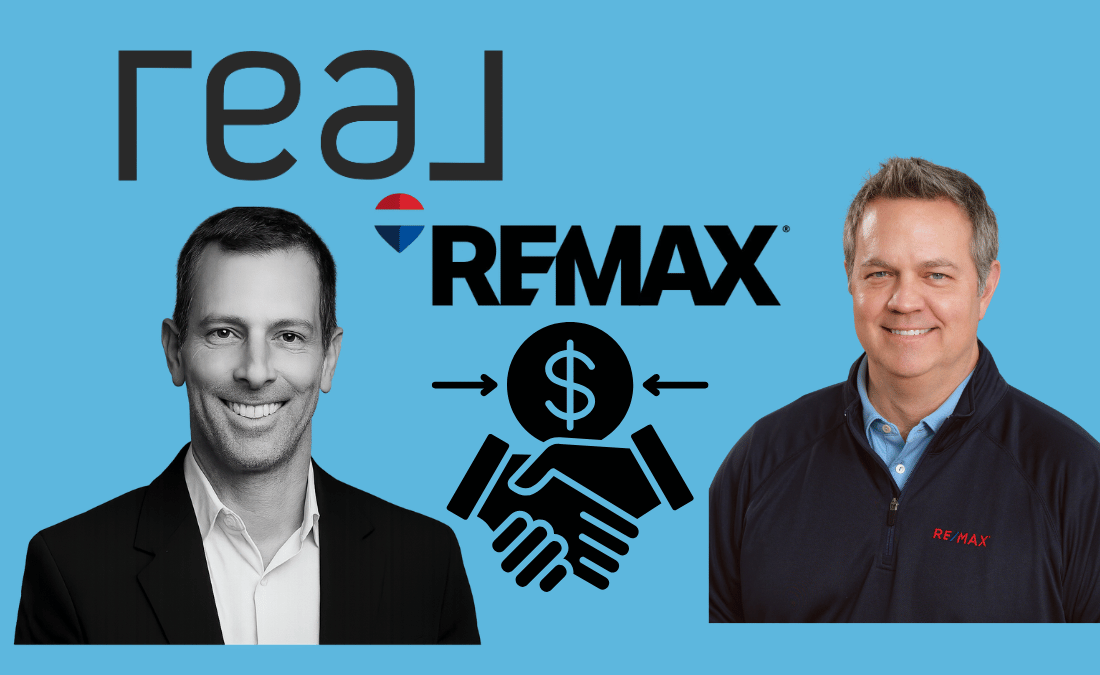
In a landmark decision reshaping the residential real estate landscape, shareholders of The Real Brokerage Inc. and REMAX Holdings Inc. voted overwhelmingly on Friday to approve Real’s proposed acquisition of REMAX. The successful votes clear the path for the creation of a massive new entity: the Real REMAX Group.
First announced in April 2026, the strategic combination marries Real’s cutting-edge, technology-driven brokerage platform and rapidly expanding agent community with REMAX’s historic global franchise network and iconic brand identity.
The transaction numbers underscore the sheer magnitude of the merger. Upon final closing, the combined Real REMAX Group is projected to support more than 180,000 real estate professionals operating across more than 120 countries and territories. Financial projections for the newly minted powerhouse estimate a staggering pro forma 2025 revenue of roughly $2.3 billion, alongside $157 million in adjusted EBITDA before anticipated corporate synergies.
Despite the sweeping nature of the consolidation, leadership from both sides has emphasized that the core tenets of each brand will be respected. Real brings its proprietary AI tools and modern cloud-based ecosystem to the table, while REMAX preserves its renowned legacy, decentralized broker-owner structure, and five-decade-plus footprint in international markets.
While the shareholder vote represents a monumental hurdle cleared, the deal is not yet completely finalized. The transaction remains subject to customary closing conditions, most notably a final approval order from the Supreme Court of British Columbia, given the cross-border and arrangement aspects of the corporate restructuring. Executive leadership anticipates that all remaining conditions will be satisfied swiftly, setting the stage for a final closing within the coming weeks.
Chronology of the Deal
The path to the Real REMAX Group has been carefully calculated and executed through a series of regulatory, financial, and corporate milestones since the initial announcement in the spring of 2026:
- April 2026: The real estate industry is sent into a frenzy when The Real Brokerage and REMAX Holdings jointly announce an $880 million definitive agreement for Real to acquire REMAX, setting the stage for the formation of Real REMAX Group.
- Mid-July 2026: The proposed merger clears a critical regulatory hurdle when the U.S. Department of Justice (DOJ) grants an early termination of the waiting period under the Hart-Scott-Rodino (HSR) Antitrust Improvements Act. This development bypasses potential bureaucratic delays, signaling that federal antitrust regulators found no immediate competitive red flags that would stall the integration.
- August 2026: Both companies post their Q2 2026 financial earnings. The reports reveal the immediate fiscal impact of the pending union: Real continues a strong top-line growth streak with $700.6 million in quarterly revenue (up 30% year over year) while absorbing $11.6 million in acquisition-related expenses, resulting in a net loss of $8 million. Concurrently, REMAX reports $68.5 million in Q2 revenue (down 5.8% year over year) and a net loss of $4.3 million.
- Friday, August 2026: Special meetings of security holders are convened. Shareholders of both companies cast their ballots, delivering near-unanimous approval for Real and an exceptionally strong mandate from REMAX investors.
- Late August / September 2026 (Anticipated): Pending a final blessing from the Supreme Court of British Columbia and the clearing of remaining minor closing conditions, the acquisition is expected to officially close, formally birthing the Real REMAX Group.
Supporting Data and Financial Performance
To fully understand the strategic calculus behind the Real REMAX Group merger, industry analysts must examine the recent financial health and structural metrics of both parent companies as they headed into the crucial shareholder vote.
The Real Brokerage: Rapid Top-Line Growth
The Real Brokerage has staked its reputation on aggressive market share acquisition fueled by a modern, cloud-based platform. In its Q2 2026 earnings report, Real demonstrated continued momentum, posting revenue of $700.6 million—a remarkable 30% increase compared to the same period in the previous fiscal year.
However, growth has come with short-term capital expenditures. Real reported a net loss of $8 million for the second quarter, a figure directly influenced by $11.6 million in transaction-related expenses tied directly to the legal, advisory, and logistical groundwork of acquiring REMAX. Despite these integration costs, investors have clearly signaled faith in Real’s long-term trajectory, evidenced by the staggering turnout and support at Friday’s special meeting.
REMAX Holdings: A Stabilizing Legacy Brand
REMAX Holdings, operating through its legacy franchise model, reported Q2 2026 revenue of $68.5 million, marking a 5.8% decline year over year. The company posted a net loss of $4.3 million for the quarter. While legacy brokerages have faced macro-level pressures—including elevated mortgage interest rates, low housing inventory, and ongoing commission litigation industry-wide—REMAX’s global brand recognition and deep-seated agent loyalty remain invaluable assets.
Combined Pro Forma Financial Outlook
When merged, the financial profile of the Real REMAX Group changes dramatically. The companies project a combined pro forma 2025 revenue of approximately $2.3 billion and $157 million in adjusted EBITDA (before operational synergies). By pairing Real’s high-volume, tech-optimized agent onboarding machine with REMAX’s steady international footprint, the resulting enterprise commands unmatched scale in the residential brokerage space.
Shareholder Voting Breakdown
The degree of investor buy-in was exceptionally high across both corporate camps:
- Real Shareholders: The special resolution approving the arrangement was backed by approximately 99% of the votes cast by pure Real shareholders. When factoring in optionholders and restricted share unit (RSU) holders voting together as a single class, support remained overwhelmingly strong at 98.9%.
- REMAX Shareholders: Holders representing approximately 78.8% of the total voting power of REMAX common stock cast ballots in favor of the acquisition, comfortably securing the required corporate thresholds.
Regulatory Clearance: The HSR Act
A major inflection point for the merger occurred in mid-July when the DOJ granted an early termination of the Hart-Scott-Rodino (HSR) Antitrust Improvements Act waiting period. Enacted to give federal agencies (including the DOJ and the Federal Trade Commission) advance notice and oversight of massive corporate consolidations to prevent monopolies or unfair market disadvantages, the HSR clearance removed a massive regulatory cloud over the deal. The speed with which the clearance was granted indicated that federal regulators viewed the horizontal integration of a cloud brokerage and a franchise network as cooperative rather than anti-competitive.
Official Responses and Executive Vision
Leadership from both organizations seized the moment to articulate a unified vision for the future, highlighting how the merger will redefine agent support, technology integration, and global reach.
Tamir Poleg, Chairman and CEO of The Real Brokerage
Expressing profound gratitude to the investor base, Real Chief Executive Officer Tamir Poleg emphasized that the overwhelming vote count represents an explicit endorsement of a modern, interconnected real estate ecosystem.
"We’re grateful for the strong support from securityholders of both companies, and appreciate the confidence this signals in our vision for a more connected, innovative real estate ecosystem," Poleg stated. "Together, through Real REMAX Group, we’ll have the scale, talent and resources to invest more, build faster and create even greater value for the more than 180,000 real estate professionals who choose our brands, and for the clients they serve."
Poleg has long championed the idea that technology should serve to empower agents rather than replace them. By integrating Real’s advanced agent tools—including proprietary AI systems designed to streamline administrative workflows and lead generation—into the global infrastructure of REMAX, the executive team aims to provide agents with unprecedented operational leverage.
Erik Carlson, CEO of REMAX Holdings
Erik Carlson, CEO of REMAX Holdings, characterized the successful shareholder vote as a historic milestone that preserves the soul of the REMAX brand while drastically upgrading its technological capabilities.
"This combination provides the opportunity to strengthen the value for Broker/Owners and their agents while preserving the entrepreneurial culture, local leadership and trusted REMAX brand that have fueled success for more than 50 years," Carlson noted.
Carlson’s remarks directly address a vital concern for legacy franchise networks: fear of culture loss during corporate takeovers. By explicitly promising to protect local leadership and the autonomous entrepreneurial spirit intrinsic to REMAX offices worldwide, Carlson aims to reassure thousands of independent broker-owners that their daily business operations will be enhanced, not stifled, by the partnership.
Implications for the Real Estate Industry
The formation of the Real REMAX Group sends shockwaves through the residential real estate sector, carrying profound implications for brokerage operations, agent recruitment, technology deployment, and competitive market dynamics.
1. Redefining Brokerage Models: Cloud Meets Franchise
Historically, the real estate brokerage universe has been sharply divided into traditional, office-centric franchise models (exemplified by REMAX, Keller Williams, and Century 21) and modern, cloud-based, high-split brokerages (such as Real and eXp Realty).
The union of Real and REMAX shatters this dichotomy. By housing a cloud-based technology platform and a global franchise network under a single corporate umbrella, Real REMAX Group creates a hybrid blueprint. It proves that legacy physical footprints and virtual infrastructures can coexist, leveraging each other’s strengths to capture broader market share.
2. A Massive Talent Footprint
With a combined force of over 180,000 agents spanning more than 120 countries and territories, Real REMAX Group instantly becomes one of the largest real estate sales forces on the planet. This immense scale provides unique advantages in agent recruitment and retention. Agents within the network will theoretically have access to hyper-local global referral networks (via REMAX) coupled with top-tier, cloud-native tech stacks and financial incentives (via Real).
3. Technological Arms Race and AI Integration
As real estate tech evolves past simple CRM platforms into advanced artificial intelligence applications—such as automated transaction coordinators, predictive pricing tools, and marketing assistants—smaller brokerages are increasingly priced out of competitive R&D budgets.
Real has heavily positioned itself as a technological innovator, recently focusing its AI strategy on replacing tedious administrative tasks rather than human agents. Bringing this proprietary tech infrastructure to the REMAX ecosystem immediately supercharges thousands of legacy agents with modern digital capabilities, setting a high bar for competing national brokerages.
4. Navigating Industry Headwinds
The residential real estate industry has faced unprecedented turbulence over the past few years, marked by historic commission lawsuits, settlement mandates by the National Association of Realtors (NAR), fluctuating interest rates, and compressed transaction volumes.
By pooling resources, diversifying revenue streams across cloud splits and franchise fees, and targeting $157 million in pre-synergy EBITDA, Real REMAX Group is exceptionally well-positioned to weather macroeconomic storms. The sheer financial muscle of a $2.3 billion pro forma revenue engine offers a robust safety net against housing market volatility, allowing the combined entity to invest aggressively in legal compliance, agent education, and platform development while smaller regional brokerages struggle to survive.
Looking Ahead
As the final legal paperwork makes its way to the Supreme Court of British Columbia, the real estate community watches with bated breath. If executed smoothly, the integration of Real and REMAX into the Real REMAX Group will not only alter corporate balance sheets but fundamentally rewrite the playbook for how modern brokerages operate on a global scale.
