

Published: September 3, 2026
Source: ArchDaily / Stratosferica
Main Facts
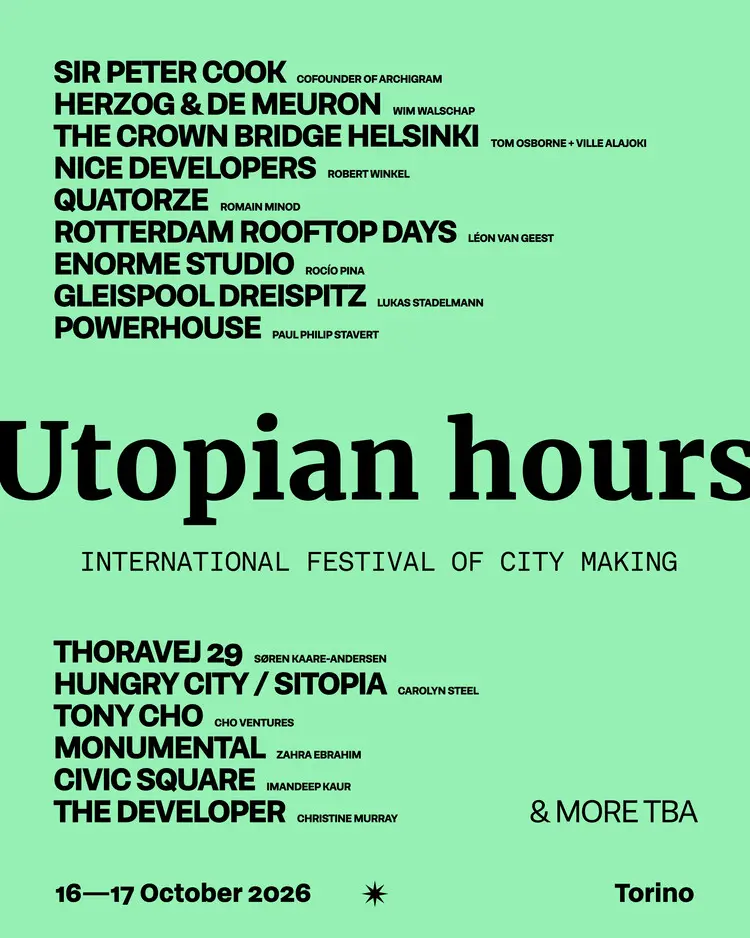
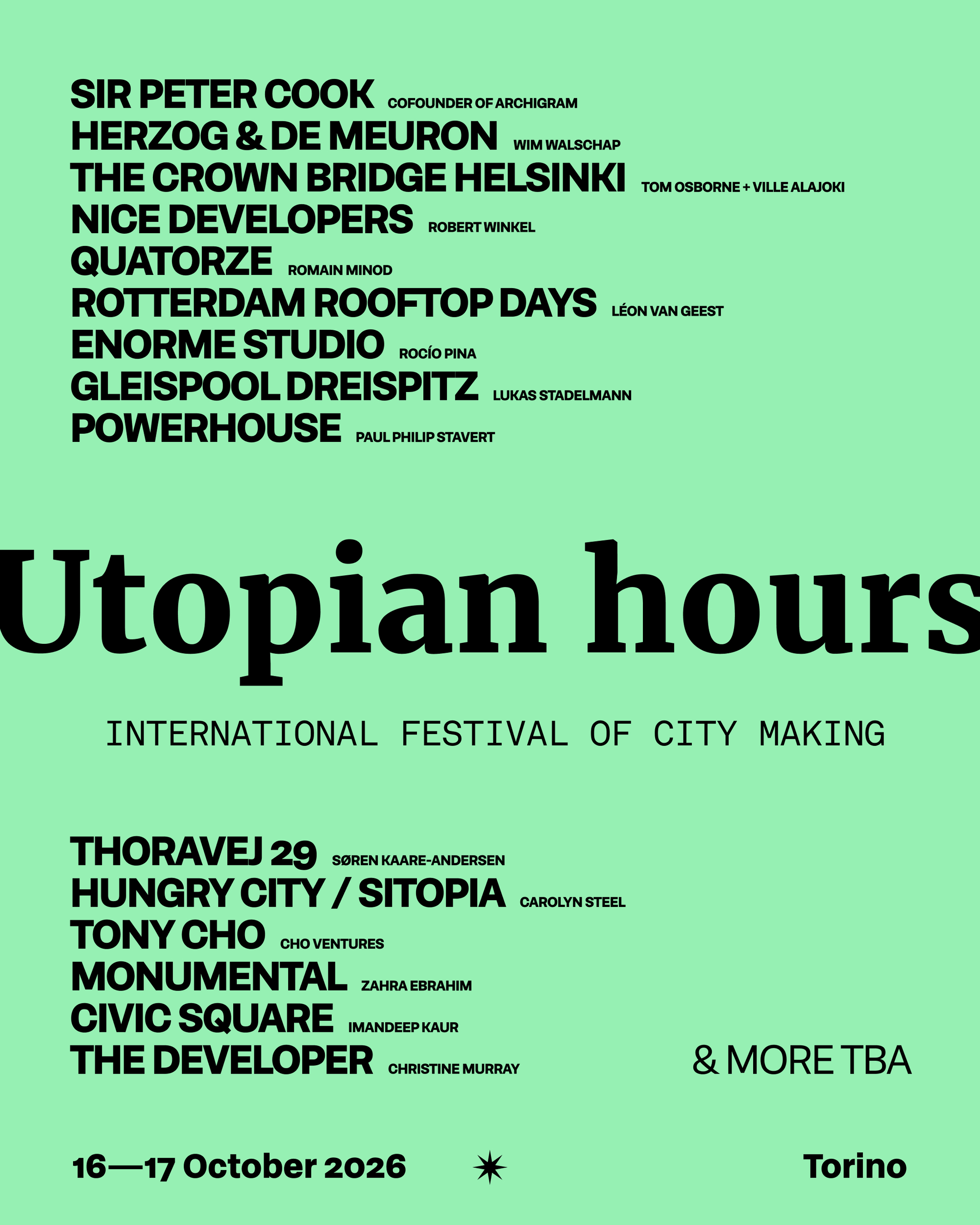
The global festival of city-making, Utopian Hours, has officially announced the details for Part 2 of its milestone Ten Years Edition, following a triumphant opening event in Rotterdam last May. Over an intensive two-day program, the festival will convene a diverse coalition of global thought leaders—including architects, real estate developers, urban practitioners, grassroots community organizers, policymakers, and civic innovators.
The core mission of Utopian Hours is to dissect and reconstruct the fundamental questions dictating the future of modern urban life:
- Who truly holds the power to design and build our cities?
- How can existing urban spaces and infrastructures be repurposed, shared, and optimized?
- What are the pressing implications of climate change on public spaces, micro-mobility, and urban resilience?
- How can everyday citizens reclaim agency and actively shape the neighborhoods they inhabit?
Rejecting the notion that cities are the exclusive domain of architects and master planners, the festival embraces a holistic, interdisciplinary premise. Urban environments are continuously forged by real estate investments, complex transport and food systems, civic institutions like museums and libraries, informal social spaces such as cafes and bars, and, most importantly, the collective behavior of the people who navigate them daily.
Setting a legendary tone for the anniversary celebration, the program’s opening keynote will feature Archigram co-founder Sir Peter Cook. Delivering a masterclass just one week before his 90th birthday, Cook will reflect on a lifetime of radical, visionary, and paradigm-shifting ideas about what a city can be.
Chronology: A Decade of Challenging Urban Norms
To understand the weight of the Ten Years Edition, it is essential to trace the trajectory of Utopian Hours since its inception by the Turin-based urban agency Stratosferica.
- 2016–2018 (The Formative Years): Launched as a localized experiment in Turin, Italy, Utopian Hours began as a modest gathering intended to bridge the gap between municipal administrators and creative urbanists. Early editions focused heavily on tactical urbanism, bottom-up neighborhood interventions, and the democratization of public spaces.
- 2019–2021 (The International Pivot): As global interest surged, the festival expanded its scope, inviting international speakers from pioneering cities such as Copenhagen, Medellin, and Portland. Despite the disruptions of the global pandemic, the festival pivoted effectively to hybrid digital-physical formats, maintaining a continuous dialogue on post-pandemic urban recovery, green corridors, and the 15-minute city concept.
- 2022–2024 (Scaling Up and Institutional Partnerships): Utopian Hours solidified its reputation as Europe’s premier festival for urban public discourse. Attendance records shattered annually as developers and policymakers sought out the festival’s unconventional, progressive blueprints for urban transformation.
- May 2026 (The Rotterdam Kickoff): Marking the beginning of its tenth anniversary, the festival hosted its first major international chapter in Rotterdam, Holland. Focused heavily on water management, high-density living, and port-city regeneration, the event set a high benchmark for contemporary urban debate.
- September 2026 (Torino Part 2 & The Grand Finale): Returning to its spiritual home in Turin, Italy, Part 2 of the Ten Years Edition serves as a retrospective and a look forward. The event bridges historical radical architecture—embodied by figures like Sir Peter Cook—with contemporary digital-era civic tech and climate adaptation strategies.
Supporting Data: The Evolution of Urban Priorities
The conversations driving the 2026 edition of Utopian Hours are backed by shifting global demographics and pressing environmental data:
- Urbanization Rates: According to UN-Habitat projections, nearly 68% of the global population is projected to live in urban areas by 2050, placing unprecedented strain on municipal resources, housing affordability, and transport grids.
- Climate Vulnerability: Urban areas currently account for more than 70% of global greenhouse gas emissions. Concurrently, over 90% of urban areas are coastal or riverine, making them acutely vulnerable to rising sea levels and extreme weather events—a primary topic of discussion in the festival’s panels on climate and public space.
- The Shift in Real Estate Investment: Post-pandemic urban data indicates a 35% decline in traditional commercial office demand across major European and North American metropolitan areas, compelling developers to collaborate with urban practitioners on adaptive reuse strategies. Festivals like Utopian Hours serve as vital incubators for these transitional real estate models.
- Citizen Participation Metrics: Municipalities utilizing participatory budgeting and community-led design frameworks report a 40% increase in long-term public satisfaction with neighborhood regeneration projects, validating the festival’s core thesis on citizen agency.
Official Responses and Perspectives
Organizers, urbanists, and participating institutions have shared profound insights regarding the milestone tenth anniversary of Utopian Hours.
Stratosferica (Festival Organizers)
In an official statement released ahead of the Turin sessions, the curatorial team behind Stratosferica emphasized the shifting definition of urbanism over the past decade:
"When we started Utopian Hours ten years ago, urbanism was largely viewed as a top-down technical discipline—something left entirely to municipal engineers and starchitects. Today, the conversation has radically democratized. Cities are living organisms shaped as much by a neighborhood pop-up garden, a delivery worker’s route, or a civic protest as they are by a master plan. Reaching our tenth anniversary is a testament to the hunger for open, cross-disciplinary dialogue about the places we call home."
Architectural Community and Academic Reflections
The inclusion of Sir Peter Cook has drawn high praise from international architectural circles. Colleagues and critics alike note that honoring Cook serves as a vital reminder that modern urban planning must retain a sense of speculative wonder.
"Archigram taught us that cities do not have to be static monuments of concrete and steel," noted a member of the festival’s academic advisory board. "Inviting Sir Peter Cook on the eve of his 90th birthday bridges the gap between the visionary pop-architecture of the 1960s and the complex ecological and algorithmic challenges we face in 2026."
Municipal leaders attending the event have similarly lauded the festival’s ability to strip away bureaucratic jargon, fostering an environment where real estate tycoons, activists, and landscape architects sit at the same table to debate the future of the shared public realm.
Implications for the Future of City-Making
The outcomes of Utopian Hours Ten Years Edition Part 2 extend far beyond a two-day conference; they establish a blueprint for how metropolitan areas must adapt to a volatile global climate and shifting socio-economic landscapes.
1. Decentralization of Design Authority
The festival’s sustained focus on "who gets to make cities" challenges traditional municipal hierarchies. As civic tech platforms, grassroots neighborhood associations, and participatory design tools mature, city halls are increasingly pressured to move away from paternalistic planning toward a model of co-creation. The implications suggest that future master plans will be heavily negotiated documents, blending professional architectural foresight with hyper-local community desires.
2. Adaptive Reuse over Tabula Rasa
With economic pressures and environmental imperatives making demolition and new construction less viable, the ideas championed at Utopian Hours point toward a future dominated by adaptive reuse. Transforming obsolete commercial spaces, reclaiming asphalt for green corridors, and repurposing infrastructural remnants (such as railway lines and elevated highways) will define the next decade of architecture.
3. Climate Resilience as a Public Space Catalyst
Climate change is no longer treated as a distinct engineering problem confined to drainage reports; rather, it is being integrated into the aesthetic and functional design of public squares, parks, and transit hubs. Sponge cities, urban heat island mitigation, and modular flood defenses are transitioning from theoretical concepts to essential urban infrastructure requirements.
4. Reclaiming the Human Scale
Amid rapid technological integration—including autonomous mobility, AI-driven traffic management, and smart city data grids—Utopian Hours acts as a vital counterweight, advocating for the human scale. The festival continually reminds stakeholders that the success of a city is ultimately measured by its walkability, social cohesion, and the richness of its unplanned public interactions.
As Utopian Hours concludes its tenth-year celebrations, it leaves behind an undeniable legacy: transforming urban dreaming from an idle fantasy into an urgent, practical, and collective civic duty.
