

By Anthony Capkun
Published August 27, 2026
Main Facts
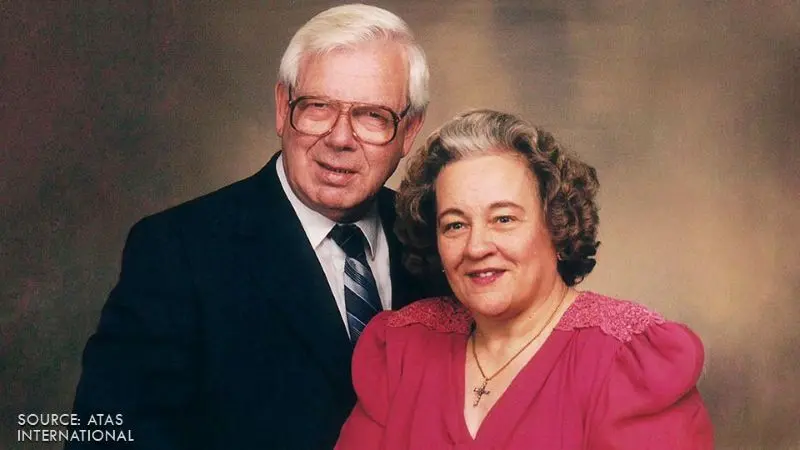
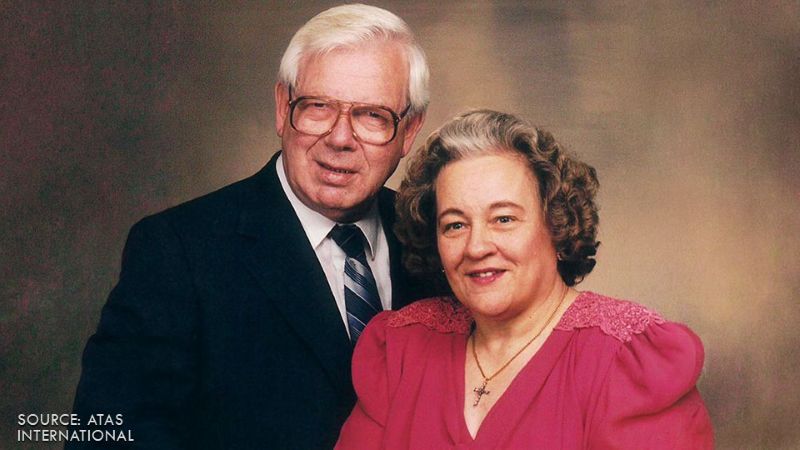
The metal construction industry is mourning the loss of a true pioneer and matriarch. ATAS International has officially announced the passing of Petronella J. “Nel” Bus (née Van Egmond), who co-founded the globally recognized metal roofing and wall-cladding manufacturer alongside her late husband, Jacobus “Jack” P. Bus. Nel Bus passed away at the remarkable age of 95, just months after celebrating her milestone birthday this past summer surrounded by a large, multigenerational family gathering.
Nel’s passing marks the end of an era for ATAS International, a company that began as a modest, home-based entrepreneurial venture and grew into an industry powerhouse. Together, Jack and Nel built the foundation of Aluminum Trim and Shapes while simultaneously raising eight children. Their entrepreneurial spirit, coupled with a keen eye for industry shortages, transformed the way contractors approached architectural metal fabrication.
Today, the legacy of Jack and Nel Bus lives on through a thriving, multi-facility operation. Their sons, Dick and Jim Bus, currently lead the company as president and executive vice president, respectively, while a third generation of the Bus family actively manages daily operations across ATAS and its sister company, Brightsmith Coaters. From humble beginnings in a residential basement to coast-to-coast manufacturing plants, the story of Nel Bus is an enduring testament to perseverance, family values, and structural innovation.
Chronology: From Dutch Roots to American Industry Leadership
To truly understand the impact of Nel Bus on the contemporary construction landscape, one must retrace a journey that spans over half a century, multiple continents, and generations of familial dedication.
Early Beginnings and Immigration (1963)
Originally hailing from the Netherlands, Jack and Nel Bus made a life-altering decision in 1963, packing up their lives and relocating across the Atlantic to Rochester, New York. Like many immigrants of their era, they arrived seeking new opportunities, armed with a strong work ethic and a desire to build a secure future for their growing family.
Identifying the Market Gap
Upon settling in Rochester, Jack found work in the residential construction sector, specializing in the installation of siding and trim. At the time, the construction industry faced a distinct logistical bottleneck: contractors frequently struggled to acquire the specialized equipment needed to bend and shape trim products directly at the job site. Recognizing this glaring gap in the market, Jack and Nel put their heads together. They realized that if contractors could not easily fabricate custom trim, they would create a business that provided precisely what the market lacked.
The Birth of ATAS (1963)
Operating out of their family home—where they were concurrently raising eight children—Jack and Nel established Aluminum Trim and Shapes (ATAS). The early days demanded extraordinary sacrifice and teamwork. While Jack focused on production and market outreach, Nel played an indispensable role in managing the administrative, financial, and logistical demands of a burgeoning startup while maintaining a bustling household.
Scaling Up: Rochester to Allentown (1972–1985)
As word of their reliable products spread among local contractors, the home-based operation quickly outgrew its domestic footprint.
- 1972: The company achieved its first major physical expansion, relocating out of the family home into a dedicated 12,000-square-foot industrial facility in Rochester, New York.
- 1985: To better serve a rapidly expanding regional and national market, ATAS executed a strategic relocation to Allentown, Pennsylvania, establishing the city as the permanent home of its corporate headquarters.
Generational Transition and National Expansion (Late 20th Century)
As the company matured into the 1980s and 1990s, the next generation stepped up to ensure continued growth. Two of Jack and Nel’s sons, Dick and Jim Bus, joined the company in key management roles. Their leadership injected fresh perspectives into the enterprise, facilitating a broader diversification of product offerings that extended far beyond basic trim and shapes.
Modern Milestones (2025–2026)
In March 2025, ATAS continued its aggressive trajectory of growth and industry consolidation by acquiring Metalwërks Architectural Plate Systems. This strategic addition further cemented the company’s reputation as a comprehensive, single-source provider of advanced architectural envelope solutions.
Supporting Data and Corporate Evolution
The operational footprint of ATAS International and its affiliated entities underscores the vast scale of the enterprise that Nel and Jack Bus built from the ground up. What began as a single-family workshop in Rochester has evolved into a sprawling manufacturing network.
Manufacturing and Coating Facilities
- ATAS International Headquarters: Allentown, Pennsylvania (primary manufacturing and corporate operations, operating across two distinct facilities).
- Western Regional Plant: Mesa, Arizona, providing efficient supply chains for the Western United States.
- Midwestern Regional Plant: University Park, Illinois, servicing the central building markets.
- Mid-Atlantic Plant: Elkton, Maryland, ensuring rapid delivery along the Eastern Seaboard.
- Brightsmith Coaters (Sister Company): Operating advanced coil coating and post-painting facilities in Morrisville, Pennsylvania, and Trenton, New Jersey, providing superior finishing capabilities for architectural metal.
Comprehensive Product Portfolio
ATAS offers an extensive catalog engineered to meet the rigorous demands of modern commercial and residential architecture. Core product categories include:
- Metal Wall Cladding: High-performance panels designed for aesthetic versatility and thermal efficiency.
- Metal Roofing Systems: Standing seam, corrugated, and architectural shingle systems engineered for extreme weather durability.
- Ceilings and Soffits: Interior and exterior metal ceiling systems that combine durability with striking visual appeal.
- Perimeter Edge Metal: Essential components for commercial roofing drainage and edge protection.
- Architectural Accessories: Custom flashings, closures, and fastening systems designed to integrate seamlessly with ATAS panel profiles.
A Lasting Tribute: The Omawall Legacy
Perhaps one of the most endearing tributes to Nel Bus’s foundational role in the company is an innovative product line named specifically in her honor: Omawall. Drawing from the Dutch word Oma (meaning grandmother), Omawall represents a fusion of the family’s European heritage and their enduring American manufacturing legacy. It stands as a physical reminder of Nel’s nurturing presence within the company culture—a grandmotherly warmth that permeated an otherwise industrial environment.
Official Responses and Industry Impact
The loss of Nel Bus has elicited widespread condolences and reflections from across the architectural products and metal construction sectors. Industry associations, long-standing clients, and internal leadership have spoken out to honor her indelible legacy.
Industry peers have noted that the success of ATAS International serves as a classic American dream narrative, heavily anchored by the quiet strength and determination of women like Nel Bus. While founders like Jack often fronted the commercial operations, industry historians emphasize that post-war manufacturing startups rarely survived without the unyielding operational backbone provided by female co-founders who managed books, inventories, and family dynamics simultaneously.
Within the corporate walls of ATAS, the sentiment is profoundly personal. Employees past and present remember Nel not merely as a corporate matriarch, but as a warm, stabilizing presence who maintained a genuine interest in the well-being of the company’s extended workforce. Even as the company scaled into a multi-state enterprise employing hundreds of workers, the family-centric values instilled by Jack and Nel remained the cultural compass of the organization.
Implications for the Future of ATAS International
The passing of Petronella Bus invites an evaluation of the firm’s structural resilience. In family-owned enterprises, the transition from first-generation founders to second and third-generation management is notoriously fraught with risk. However, the operational trajectory of ATAS demonstrates a masterclass in successful generational succession.
Continuity and Leadership Stability
With Dick Bus serving as president and Jim Bus holding the role of executive vice president, the executive leadership remains firmly anchored in the vision established by Jack and Nel. Furthermore, the active integration of a third generation—including Mark, Eric, and Tony Bus, alongside Tiffany Hutcheson—across various operational and management divisions within ATAS and Brightsmith Coaters ensures that institutional knowledge is preserved and seamlessly transferred.
Strategic Resilience in a Competitive Market
The construction industry faces continuous headwinds, including supply chain volatility, fluctuating raw material costs, and an escalating demand for sustainable, energy-efficient building envelopes. Because ATAS has methodically expanded its geographical footprint—establishing plants in Arizona, Illinois, and Maryland—alongside its coil coating capabilities via Brightsmith and the 2025 acquisition of Metalwërks, the company is exceptionally well-positioned to weather market fluctuations.
The strategic geographic diversification allows ATAS to minimize freight costs and lead times, offering regional builders a distinct logistical advantage. Meanwhile, the ongoing commitment to product innovation—exemplified by advanced architectural plate systems and sustainable cool-roof coatings—ensures that the company remains at the cutting edge of modern architectural design.
Preserving a Legacy of Integrity
Ultimately, the greatest implication of Nel Bus’s passing is a renewed dedication to the core values she and Jack championed more than sixty years ago: uncompromising product quality, relentless problem-solving, and a profound respect for the people who build the business.
As ATAS International looks toward the future, the ghost of its humble beginnings in a residential basement in Rochester remains a powerful driving force. Nel Bus leaves behind a thriving commercial empire, a grieving yet united family, and an entire industry that is structurally stronger because of her vision, grit, and enduring grace.
