

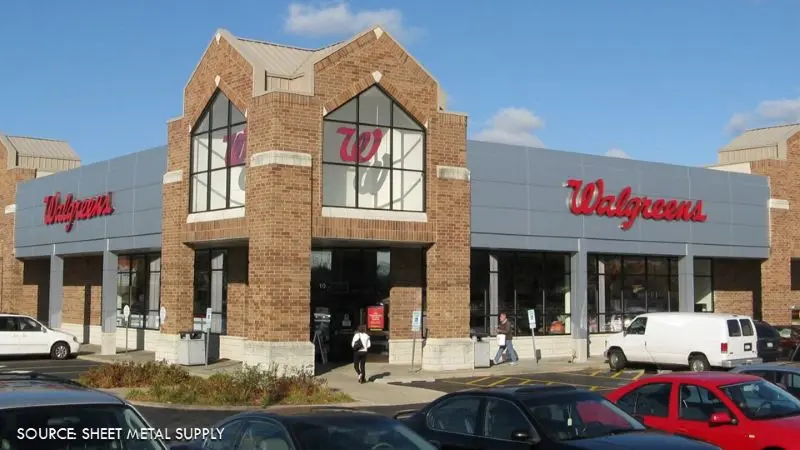
In the contemporary landscape of architecture and urban planning, a profound philosophical shift is taking place. As the industry reckons with its environmental footprint, the old adage "the most sustainable building is the one we don’t build" has transformed from a mere catchphrase into a guiding operational principle. Paired with the environmental pillars of "reduce, reuse, and recycle," architects and developers are increasingly looking past the wrecking ball in favor of adaptive reuse and deep retrofits.
At the vanguard of this architectural renaissance is metal composite material (MCM)—and more specifically, its most prevalent iteration, aluminum composite material (ACM). Once utilized primarily for billboards and commercial signage, ACM has evolved into a powerhouse material capable of breathing new life into aging structures, driving neighborhood rejuvenation, and redefining corporate identity on a global scale.
Main Facts: The Evolution and Anatomy of MCM
Metal composite material broadly refers to any architectural panel system featuring thin metal skins laminated to both faces of a central core, which today is predominantly fire-retardant. While the material spectrum encompasses titanium, zinc, copper, and stainless steel, ACM remains the undisputed champion of the category due to its affordability, ease of fabrication, and adaptability.
From Billboards to Building Facades
The history of MCM traces back to the 1960s, when the material was first introduced as a flat, lightweight, and rigid alternative for exterior signage. By the 1980s, forward-thinking architects recognized its potential for building facades.
When the original patents expired, the global marketplace experienced an explosion of adoption. Increased competition among producers spurred rapid innovations in manufacturing techniques, coating technologies, and core safety standards—shifting the industry away from early thermoplastic polyethylene (PE) cores toward mineral-filled, fire-retardant (FR) alternatives. Today, ACM stands as a premier material choice for both cutting-edge new construction and transformative retrofit projects.
Chronology: A History of Innovation and Market Growth
To understand how ACM became a staple of modern construction, it is helpful to trace its trajectory through the decades:
- The 1960s: MCM is conceptualized and engineered primarily for the signage and billboard industry, prized for its exceptional flatness, strength-to-weight ratio, and aesthetic uniformity.
- The 1980s: Architectural pioneers begin experimenting with MCM as a cladding solution for building exteriors, drawn by its sleek lines and design flexibility.
- Post-Patent Era: Following the expiration of foundational patents, the global market opens up. A surge in new manufacturers leads to greater availability, diverse finishes, and lower cost barriers.
- The 2000s–2010s: Enhanced engineering leads to improved fire-retardant mineral cores, addressing safety concerns and expanding code approvals for high-rise applications. Advanced CNC routing and PVDF coatings elevate the durability and visual potential of the panels.
- Present Day: ACM is recognized not just as a cosmetic upgrade, but as a high-performance sustainability tool capable of supporting rainscreen systems, thermal break strategies, and municipal urban renewal initiatives.
Supporting Data: Deliberate Specification and Precise Fabrication
The success of an ACM facade relies heavily on meticulous planning, engineering, and digital fabrication.
The Fabrication Pipeline
The journey of an ACM panel begins long before it reaches the job site. It starts with comprehensive Computer-Aided Design (CAD) models of the building’s facade and individual panel layouts. These digital blueprints are translated directly into machine-readable cutting parameters.
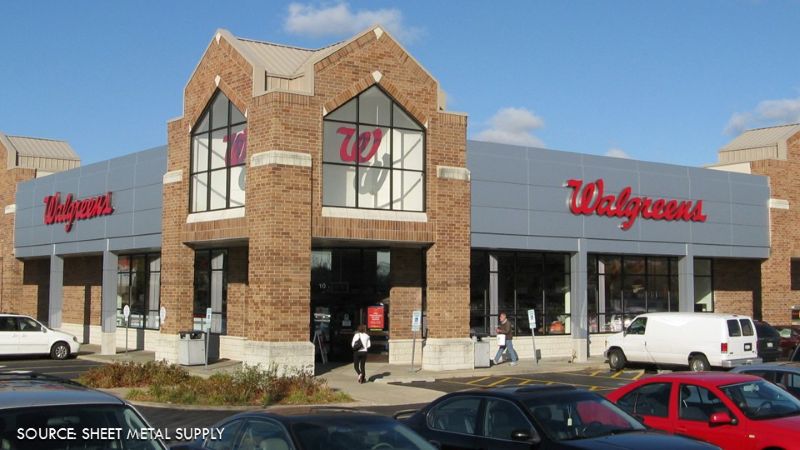
- CNC Routing: Panels are typically processed on large-format CNC table routers equipped with multi-head capabilities. A routing head mills a V-groove along the precise fold lines, while a secondary head cuts the panel perimeter to size and drills necessary fastening and weep holes.
- Manual Folding and Extrusion: Routed flat panels are folded by hand, and an aluminum perimeter extrusion is mounted to maintain structural integrity.
- Stiffening: Depending on wind load requirements and panel size, structural stiffeners are applied to the backside to prevent oil-canning or warping.
Material Performance Metrics
ACM assemblies offer substantial performance advantages that justify their widespread adoption:
- Weight Reduction: As an inherently lightweight cladding material, ACM dramatically lowers the structural deadload requirements of existing buildings, reducing seismic forces and transportation emissions.
- Thermal Efficiency: Modern rainscreen designs allow for the integration of continuous exterior insulation. Furthermore, the adoption of pultruded fiberglass girts—replacing traditional galvanized steel—virtually eliminates thermal bridging.
- Coating Longevity: Standard architectural finishes utilize high-performance coatings such as polyvinylidene fluoride (PVDF) and fluoroethylene vinyl ether (FEVE). These formulations are backed by decades-long warranties against chalking, fading, and peeling, even under harsh, direct UV exposure.
Official Responses and Municipal Incentives: Funding Facelift Projects
Beyond its engineering merits, ACM is increasingly winning favor with city planners and municipal governments. Many cities struggling with aging commercial corridors, declining downtown retail districts, and underutilized industrial zones have introduced aggressive facade-improvement grants and tax increment financing (TIF) incentives.
For example, municipal facelift initiatives—such as those seen in commercial hubs like Elk Grove, Illinois (at 1951 Landmeier)—actively encourage property owners to modernize outdated industrial and retail parks. These programs often provide substantial financial reimbursement through structured application processes, offsetting thousands of dollars in exterior renovation costs.
Compared to traditional remediation methods like masonry repair or basic exterior painting, an ACM rainscreen delivers a high-end, contemporary aesthetic backed by long-term performance, making it an economically viable choice for property owners looking to maximize return on investment (ROI).
Implications: Sustainability, Maintenance, and the Future of Retrofitting
The intersection of adaptive reuse, municipal incentives, and material science positions ACM as a critical player in the future of sustainable architecture.
Environmental Stewardship
From a lifecycle perspective, ACM aligns seamlessly with circular economy principles. The aluminum skins on both faces of the panels are predominantly sourced from recycled content. Furthermore, job-site scraps can be routed to specialized recycling facilities, and at the end of a building’s functional facade life, ACM panels can be cleanly uninstalled. The underlying sub-framing can often be retained or repurposed, and fresh panels can be applied with minimal waste.
Care and Maintenance
While extremely durable, ACM facades require basic maintenance to preserve their warranty and visual appeal. Industry best practices recommend:
- Annual Cleaning: Washing the facade once a year using water, mild soap, and non-abrasive tools (soft cloths, sponges, or non-abrasive brushes).
- Chemical Caution: Avoiding harsh solvents, strong alkaline cleaners, and abrasive pads that can permanently scratch or discolor PVDF and FEVE finishes.
- Graffiti Management: Utilizing manufacturer-approved graffiti removers, tested beforehand in an inconspicuous area.
- Routine Inspections: Regularly checking gaskets, sealants, and panel surfaces for signs of weathering, impact damage, or wear.
The Next Frontier in Design
Today’s architects are pushing the boundaries of what flat metal panels can achieve. Through advanced origami-style folding techniques, custom computer-controlled perforations, and integration with LED backlighting systems, mundane commercial boxes are being transformed into sculptural landmarks. With manufacturers continually refining finish technologies—offering everything from anodized textures to color-shifting pigments and hyper-realistic stone and woodgrains—metal composite material remains the undisputed frontrunner in modern facade design, bridging the gap between historical preservation and futuristic architectural expression.
