

By Anthony Capkun
Published: October 1, 2026
Main Facts
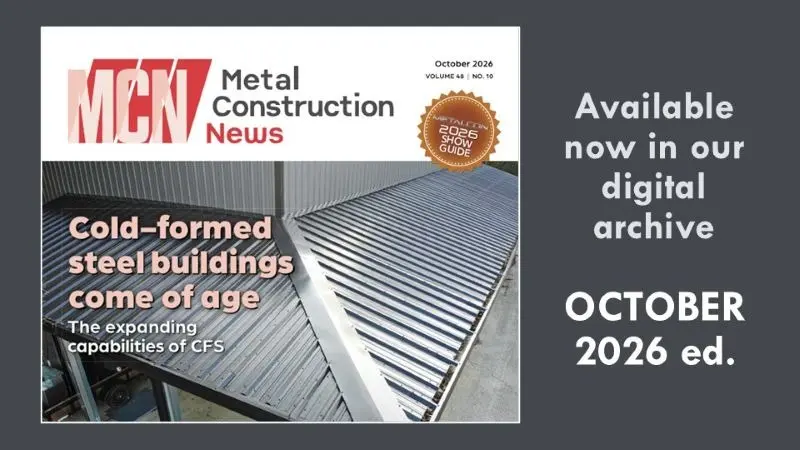
The latest edition of Metal Construction News (MCN) has officially dropped, marking a pivotal moment for the architectural metal and construction industries. Published on October 1, 2026, the newly released issue addresses the rapid evolution of structural engineering, project management, and environmental resilience that is currently reshaping the sector.
At the forefront of the October 2026 release is an in-depth examination of cold-formed steel (CFS) structures, which have transitioned from niche applications to mainstream structural powerhouses. Additionally, the issue serves as the definitive preview guide for METALCON 2026, offering attendees a comprehensive roadmap of the year’s premier industry gathering.
Beyond structural advancements and event coordination, this month’s publication tackles some of the most pressing operational hurdles facing contractors and facility managers today. Critical topics explored within the issue include the hidden thermal failures associated with ice damming in industrial distribution hubs, the logistical complexities of tracking labor across multisite projects, the shifting paradigms of worker safety equipment compliance, and the architectural necessity of AMCA 550-certified louvers in hurricane-vulnerable coastal regions.
Chronology
The release of the October 2026 edition follows a year defined by significant regulatory shifts, technological breakthroughs, and logistical challenges across the North American construction landscape.
- Early 2026: Engineering firms and manufacturers note a surge in demand for lightweight, high-strength structural framing, prompting Metal Construction News editorial boards to begin compiling research on the maturation of cold-formed steel. Simultaneously, event organizers gear up for METALCON 2026, compiling floor plans, workshop schedules, and masterclass curricula.
- Spring–Summer 2026: As construction crews navigate peak building seasons, general contractors report mounting difficulties in tracking labor overhead across dispersed job sites, while maintenance teams deal with the lingering structural consequences of previous winter thermal inefficiencies. In response, MCN commissions technical analyses on software-driven labor tracking and building envelope thermodynamics.
- Late Summer 2026: Architectural standardizations for coastal developments tighten in anticipation of severe weather seasons, elevating the importance of certified building components like AMCA 550 louvers. Safety gear manufacturers simultaneously introduce next-generation personal protective equipment (PPE), highlighting a performance gap above baseline OSHA mandates.
- October 1, 2026: Metal Construction News officially publishes its October 2026 print and digital editions, consolidating these critical industry developments into a single, comprehensive resource for architects, engineers, contractors, and building owners.
Supporting Data & Technical Insights
The features packed into the October 2026 issue of MCN rely on rigorous engineering principles, operational data, and architectural standards.
Cold-Formed Steel Comes of Age
For decades, cold-formed steel (CFS) was primarily relegated to non-load-bearing interior partitions, secondary framing, and low-rise residential structures. However, advances in computer-aided engineering (CAE), roll-forming precision, and high-strength alloy availability have fundamentally changed its capabilities. The October 2026 feature highlights how modern CFS systems are now being engineered for multi-story mid-rise commercial buildings, offering high strength-to-weight ratios, accelerated construction timelines, and reduced foundation loads compared to traditional hot-rolled steel or concrete alternatives.
Ice Damming: A Thermal Failure, Not Just a Leak
Maintenance teams managing large-scale metal distribution centers often misdiagnose ice damming as a simple weather-induced leak or drainage issue. MCN’s technical breakdown reveals that ice damming is, at its core, a severe building envelope thermal failure. In expansive metal-roofed facilities, inadequate attic or roof insulation combined with air leakage from the interior warms the roof deck, melting snow. As the runoff reaches the colder eaves, it refreezes, backing up water beneath panels. Left unchecked, this dynamic compromises insulation R-values, accelerates corrosion, and leads to catastrophic structural stress.
Multisite Labor Tracking Realities
In an era where contractors frequently juggle multiple projects across municipal and regional boundaries, labor tracking has grown exponentially more complex. Misallocated project hours, unrecorded travel time between sites, and inaccurate field-to-office reporting can severely distort job costs. According to insights highlighted in this month’s issue, these tracking errors do not merely eat into immediate profit margins; they skew historical cost databases, ultimately undermining the accuracy of future project bids in a hyper-competitive market.
Safety Gear: Beyond OSHA Compliance
The definition of workplace safety is undergoing a philosophical shift in 2026. While Occupational Safety and Health Administration (OSHA) standards establish the legal baseline for equipment, a widening gap exists between legally compliant gear and high-performance safety innovations. Modern job sites are increasingly demanding ergonomics, smart-sensor integration, and enhanced impact-absorption materials that exceed minimum regulatory thresholds, prioritizing total worker well-being over mere checklist compliance.
Hurricane Resilience and AMCA 550 Louvers
With extreme weather events increasing in frequency and intensity along the Atlantic and Gulf coasts, architectural resilience is non-negotiable. The October issue urges architects and engineers operating in these hurricane-prone corridors to master AMCA 550 (Standard Test Method for High Velocity Wind Driven Rain Louvers for Use in Specific Windstorm Conditions) certifications. These louvers are rigorously tested to prevent the infiltration of wind-driven rain and moisture during severe storms, protecting interior mechanical systems and maintaining building envelope integrity when it matters most.
Official Responses and Industry Reception
Industry leaders, educators, and event organizers have welcomed the release of the October 2026 edition, noting its alignment with the practical challenges currently facing the metal construction sector.
Dr. Aris Thorne, a structural engineering consultant specializing in lightweight steel framing, praised the coverage on cold-formed steel: "For too long, the industry viewed CFS through a restrictive lens. The latest MCN feature accurately captures how digital modeling and advanced metallurgy have turned cold-formed steel into a premier structural solution for sustainable, rapid-assembly construction."
Meanwhile, organizers of METALCON 2026 have expressed enthusiasm for the inclusion of the official Show Guide within MCN’s pages. A spokesperson for the event stated: "Having our floor plans, masterclasses, and educational tracks featured in Metal Construction News ensures that our attendees arrive prepared to maximize their conference experience. This partnership connects our presenters and exhibitors directly with the industry’s most engaged professionals."
Facility management associations have also highlighted the importance of MCN’s spotlight on thermal envelope failures. A representative from a major national commercial property network noted, "Reframing ice damming as a thermal failure rather than a seasonal nuisance is a critical paradigm shift for distribution center operators. MCN is helping our members look past quick-fix sealants and address the root thermodynamic causes of roof degradation."
Implications for the Future of Metal Construction
The insights published in the October 2026 edition of Metal Construction News point toward several long-term transformations across the architecture, engineering, and construction (AEC) industries.
- Accelerated Adoption of Alternative Framing: As cold-formed steel continues to prove its structural viability in mid-rise and complex commercial projects, traditional material specifications will face mounting competitive pressure, driving further innovation in roll-forming technology and prefabrication.
- A Holistic Approach to Building Performance: The diagnostic shift regarding ice damming underscores a broader trend: maintenance teams must increasingly think like building scientists. Thermal imaging, rigorous envelope commissioning, and proactive energy auditing will become standard protocols for large industrial footprints.
- Digital Integration in Project Management: The complexities of multisite labor tracking signal that manual timesheets and fragmented data collection are rapidly becoming obsolete. Contractors who adopt integrated, real-time digital labor-tracking ecosystems will secure a distinct competitive advantage in estimating accuracy and cost control.
- Elevated Safety and Regulatory Standards: By acknowledging the performance gap between baseline OSHA mandates and advanced safety equipment, the construction sector is moving toward a culture of proactive injury prevention rather than reactive compliance.
- Climate-Resilient Architecture: As coastal weather volatility intensifies, adherence to rigorous testing standards like AMCA 550 will no longer be viewed as an optional regulatory hurdle, but as a fundamental pillar of responsible architectural design and asset protection.
The October 2026 edition of Metal Construction News is currently available in print and can be accessed digitally through the official MCN Digital Edition Archive.
