

By Anthony Capkun
Published: October 1, 2026
The architecture, engineering, and construction (AEC) sectors are undergoing a period of rapid evolution, driven by labor shifts, demanding weather patterns, and advanced material sciences. Addressing these pivotal developments, Metal Construction News (MCN) has officially released its highly anticipated October 2026 edition.
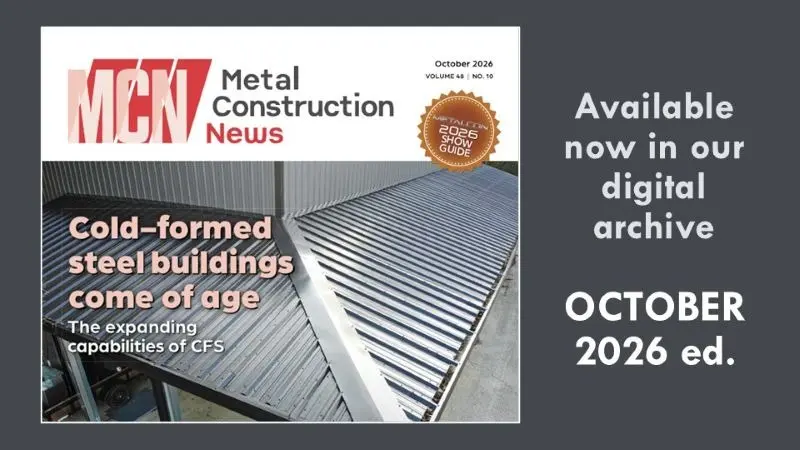
Available both in print and through the publication’s comprehensive digital archives, this month’s issue delves deep into the critical trends shaping the metal construction industry. From the structural maturation of cold-formed steel (CFS) and the operational complexities of multisite labor tracking to essential weather-mitigation strategies and pre-show coverage for METALCON 2026, the October issue serves as an indispensable guide for contractors, architects, and industry stakeholders alike.
Main Facts: What’s Inside the October 2026 Issue
The October edition curates a diverse array of technical articles, regulatory updates, and strategic insights designed to help professionals navigate modern construction challenges. Key feature highlights include:
- The Evolution of Cold-Formed Steel (CFS): Exploring how cutting-edge engineering and advanced design software are pushing CFS structures into larger, more complex building typologies.
- The Official METALCON 2026 Show Guide: An exhaustive roadmap for the industry’s premier annual event, featuring floor plans, exhibitor lists, specialized workshops, masterclasses, and educational session tracks.
- The Hidden Mechanics of Ice Damming: Shifting the narrative on winter roof maintenance by reframing ice damming in large-scale metal distribution centers not merely as a leak issue, but as a critical thermal failure.
- Multisite Labor Tracking Realities: Analyzing how decentralized workforces, misallocated project hours, and untracked transit times distort job-cost accounting and threaten future bidding accuracy.
- Modern Safety Gear Standards: Evaluating the widening technological gap between baseline OSHA-compliant equipment and next-generation personal protective equipment (PPE).
- Hurricane-Resistant Design: Highlighting the necessity of AMCA 550-certified louvers for architects designing resilient envelopes in hurricane-prone Atlantic and Gulf Coast regions.
Chronology of Industry Shifts: How We Arrived at October 2026
To understand the weight of the topics covered in this month’s Metal Construction News, it is essential to trace the macro-trends that have defined the metal construction landscape over the past several years.
Phase 1: The Material Revolution and Supply Chain Maturation (2022–2024)
Following the global supply chain disruptions of the early 2020s, the construction sector experienced an intense pivot toward efficiency, localized sourcing, and alternative structural materials. During this window, cold-formed steel saw a massive surge in popularity. Developers sought lighter, more predictable framing materials that could bypass the escalating costs and scheduling uncertainties associated with traditional heavy structural steel and lumber. Engineers began pushing the limits of CFS, utilizing panelized and modular construction methods that reduced on-site labor requirements.
Phase 2: The Labor Crunch and Technological Integration (2024–2025)
As project demands rebounded, the industry collided with a severe skilled labor shortage. Construction firms were forced to manage multiple concurrent jobsites with leaner crews. This operational strain exposed critical vulnerabilities in traditional administrative workflows—most notably in time tracking, payroll allocation, and fleet management. Concurrently, climate volatility intensified. Severe weather events, unexpected freeze-thaw cycles, and catastrophic hurricane seasons forced a industry-wide reckoning regarding building envelope resilience, thermal performance, and strict adherence to wind-driven rain standards.
Phase 3: The Convergence of Safety, Performance, and Digital Operations (2026 and Beyond)
Today, the industry operates in an environment where precision is paramount. Margins for error are shrinking under the weight of rising material costs and complex multi-jurisdictional compliance. The October 2026 issue of Metal Construction News captures this exact historical juncture—where technological integration is no longer a luxury, but a baseline requirement for survival and profitability in the metal construction market.
Supporting Data and Technical Analysis
The features compiled in the October 2026 edition are backed by rigorous technical scrutiny and industry data. Below is a closer look at the core analytical pillars featured in this month’s publication.
1. Cold-Formed Steel Comes of Age
For decades, cold-formed steel was largely relegated to interior non-load-bearing partitions, lightweight roof trusses, and low-rise residential framing. However, recent advances in computer-aided engineering (CAE), BIM integration, and roll-forming technology have enabled CFS to break into mid-rise commercial, educational, and multi-family residential structures.
According to structural engineering insights highlighted by MCN, modern CFS framing systems now boast higher strength-to-weight ratios, precise pre-panelization capabilities, and significantly reduced carbon footprints compared to traditional construction mediums. These engineering strides allow for faster erection times, minimized construction waste, and enhanced seismic performance, cementing CFS as a primary structural contender rather than a secondary alternative.
2. Deconstructing Ice Damming in Metal Distribution Centers
Large-scale metal distribution centers—often spanning hundreds of thousands of square feet—are uniquely vulnerable to thermal dynamics. While maintenance teams traditionally treat winter ice accumulation as a localized drainage or insulation leak, MCN’s technical feature argues that ice damming is fundamentally a thermal envelope failure.
When heat escapes through poorly insulated roof assemblies or thermal bridges within the metal structural framing, it melts the underside of accumulated snow. This water runs down the roof slope until it reaches the colder, unheated eaves, where it refreezes into a dam. Left unaddressed, this trapped water backs up under metal standing seams, compromising fasteners, degrading sealants, and causing catastrophic interior water damage. The publication emphasizes that solving this issue requires a holistic approach to continuous insulation, interior ventilation, and rigorous thermal imaging inspections.
3. The Financial Impact of Multisite Labor Tracking
With modern contractors frequently managing projects across multiple municipalities or regions, labor tracking has grown exponentially more complex. Field data indicates that up to 15% of project cost overruns stem from inaccurate time reporting—specifically regarding unallocated travel time between multisite projects, blurred administrative hours, and delayed field-to-office communication.
MCN’s operational feature explores how legacy paper-based or disjointed digital timecards fail to capture the true cost of labor. Miscalculated job hours not only distort current project billing but also poison historical data pools, leading to underbid projects and compromised profit margins in competitive bidding environments.
4. Navigating Safety Gear: Beyond OSHA Compliance
Safety equipment manufacturing has advanced at a staggering pace, yet a notable gap remains on jobsites. Many organizations continue to purchase gear that merely satisfies baseline OSHA compliance standards rather than investing in ergonomic, technologically integrated PPE that mitigates chronic injuries and acute accidents. The October issue reviews how modern harnesses, smart wearables, and advanced fall-protection systems are redefining jobsite safety, urging safety directors to look past minimum regulatory thresholds and embrace next-generation worker protection.
5. Hurricane Resilience: AMCA 550 Certification
With increasingly violent weather systems threatening coastal infrastructure, building envelope components are under intense regulatory scrutiny. Architects designing along the Atlantic and Gulf coasts can no longer rely on standard louver specifications. The October issue highlights AMCA 550-certified louvers—the industry benchmark for high-velocity wind-driven rain resistance. These specialized louvers are tested to withstand extreme wind pressures and torrential downpours, preventing water infiltration that can disable critical mechanical equipment rooms during severe tropical storms.
Official Responses and Industry Perspectives
The release of the October 2026 issue has drawn widespread commentary from industry leaders, trade association executives, and technical contributors who partnered with Metal Construction News to bring these stories to light.
Editorial Perspective from MCN:
"The challenges our industry faces today are vastly different from those of five years ago," noted editorial representatives during the launch. "Contractors are managing complex, multi-site labor forces while trying to adopt advanced materials like cold-formed steel. At the same time, architects are grappling with unprecedented weather extremes that demand uncompromising envelope performance. Our October edition is engineered to give professionals the tactical data and strategic clarity they need to stay ahead."
Exhibitor and Event Stakeholder Reactions (METALCON 2026):
With the inclusion of the official METALCON 2026 Show Guide, organizers have expressed enthusiasm regarding the synergy between the magazine’s editorial content and the live event programming.
"METALCON has always been about driving the metal construction industry forward through education, innovation, and networking," stated event coordination leads. "Having MCN feature our comprehensive floor plans, masterclasses, and educational tracks in this month’s issue ensures that attendees arrive prepared to maximize their conference experience."
Engineering and Safety Experts:
Contributors specializing in thermal envelope performance and safety compliance have praised the magazine for tackling uncomfortable truths, such as the true nature of thermal failures in distribution centers and the shortcomings of baseline OSHA gear.
"When we talk about building failures, we often look at structural collapse, but thermal degradation is a silent profit killer," remarked an envelope consulting engineer. "Shedding light on ice damming as a thermodynamic issue rather than just a weather nuisance is a massive step forward for building science education."
Implications for the Metal Construction Industry
The insights, guides, and technical breakdowns published in the October 2026 edition of Metal Construction News carry profound implications for various stakeholders across the AEC sector:
- For General Contractors and Project Managers: The operational emphasis on multisite labor tracking serves as an urgent call to audit existing project management software. Firms that fail to adopt real-time, granular labor-tracking tools risk bleeding capital through inaccurate bids and unbilled field hours.
- For Structural Engineers and Steel Fabricators: The validation of cold-formed steel in larger, more complex building typologies signals an expanding market. Engineers must continuously upskill in advanced CFS design software, while fabricators should prepare for higher demand in pre-paneled, off-site manufacturing solutions.
- For Architects and Specifiers: The focus on AMCA 550-certified louvers and thermal envelope performance reinforces the shift toward climate-resilient architecture. Specifiers working in coastal or severe-weather zones must integrate rigorous testing standards into their initial schematic designs to mitigate liability and protect critical infrastructure.
- For Safety Directors: The widening gap between baseline compliance and modern PPE innovation challenges safety officers to re-evaluate corporate procurement strategies. Investing in superior, ergonomic gear is increasingly recognized as a vital retention tool in a competitive labor market.
Accessing the October 2026 Edition
Industry professionals, researchers, and enthusiasts can access the full October 2026 edition of Metal Construction News digitally via the official MCN Digital Edition Archive.
As the construction landscape continues to evolve through the remainder of 2026 and into the future, Metal Construction News remains committed to delivering authoritative journalism, technical depth, and critical operational insights to empower the metal construction community.
For more information, back issues, and daily industry updates, visit the Metal Construction News Official Website.
