Vinyl siding is celebrated across the residential housing market for its durability, cost-effectiveness, and low maintenance requirements. Capable of lasting for decades, it stands as a popular exterior finish for millions of homes. However, "low maintenance" does not mean "no maintenance." Over time, environmental factors wage a quiet war on your home’s exterior, leaving behind a dulling film of grime.
From the chalky oxidation caused by relentless ultraviolet (UV) rays to wind-blown pollen, rain-splashed dirt, bird droppings, insect residue, and stubborn patches of algae and mildew, your home’s exterior takes a beating. While homeowners often face a choice between hiring a professional pressure-washing service or tackling the project themselves, revitalizing vinyl siding is entirely achievable as a DIY weekend project.
Requiring little more than basic household supplies, a garden hose, and some manual effort, cleaning vinyl siding safely can dramatically restore a home’s curb appeal without risking structural damage.
Main Facts: Understanding the Wear and Tear on Vinyl Exteriors
The degradation of vinyl siding is a natural, progressive process driven by exterior elements. Understanding what causes the buildup helps homeowners target the root of the problem without resorting to overly aggressive cleaning methods.
UV Oxidation: Sunlight breaks down the chemical compounds on the surface of vinyl siding over time, leaving behind a chalky, powdery film.
Biological Growth: Shaded areas, north-facing walls, and humid climates foster the growth of green algae, black mold, and mildew.
Organic Debris: Tree pollen, fallen leaves, wind-blown dust, and insect or bird waste cling to the textured surface of the panels.
The Pressure Washer Dilemma: While high-pressure washing offers rapid results, industry professionals caution that improper PSI settings or incorrect nozzle distances can crack, warp, or discolor vinyl, or even force water behind the panels, leading to interior rot.
Chronology: A Step-by-Step Guide to Safe and Effective Siding Maintenance
For a standard one-story home or outbuilding, a manual cleaning using a garden hose and a soft-bristled brush takes roughly 2 to 4 hours. Follow this chronological approach to ensure a thorough, damage-free clean.
Step 1: Sweep Away Loose Debris
Before introducing water or cleaning solutions, use a soft, dry broom or a long-handled duster to sweep away loose spiderwebs, dried mud, and surface dust. Much like sweeping a floor before mopping, clearing dry debris prevents your wash water from turning into muddy sludge instantly, keeping your cleaning solution effective for longer.
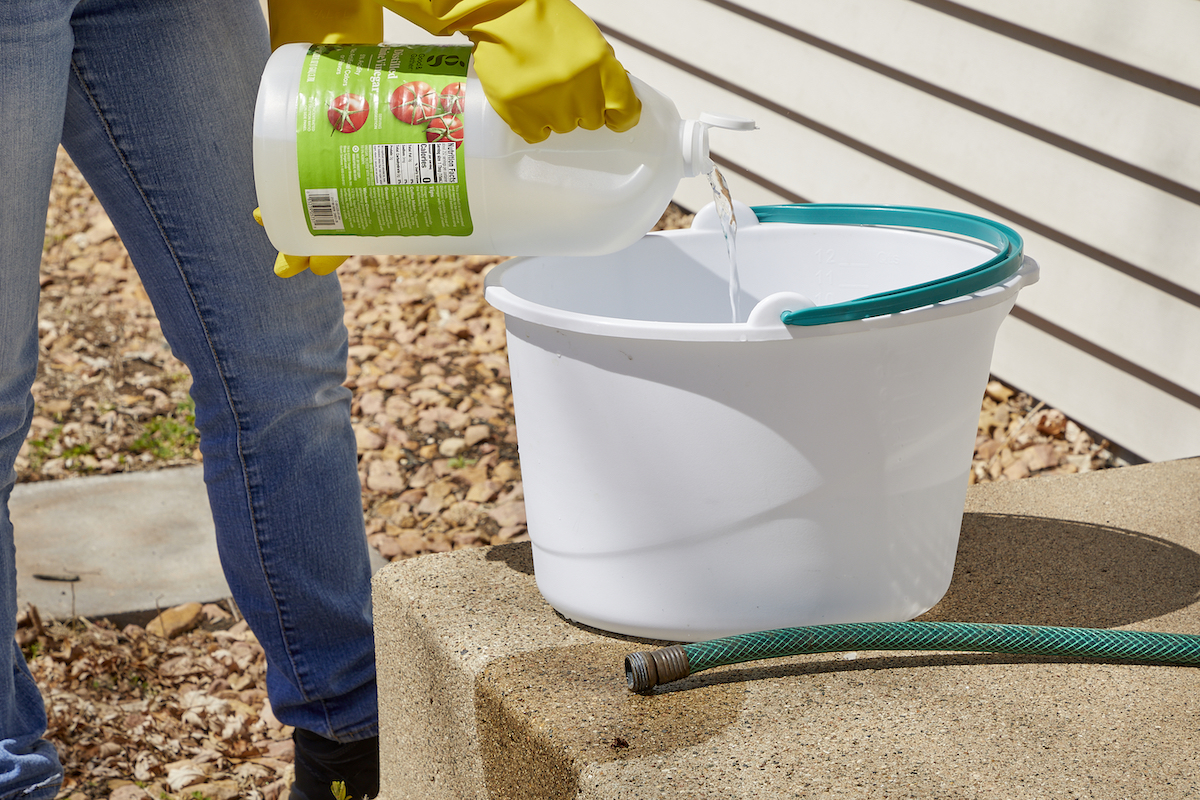
Step 2: Formulate or Choose Your Cleaning Solution
Harsh commercial chemicals are rarely necessary for vinyl siding. Andrew Prchal, co-founder and president of Gunner Roofing in Stamford, Connecticut, emphasizes the importance of mild formulations.
"You should be using cleaners as mild as possible when cleaning vinyl siding by hand so it doesn’t damage the siding," Prchal advises, suggesting a simple mixture of dish soap and water.
Alternatively, homeowners can mix a solution of 70 percent water and 30 percent white vinegar. The acetic acid in vinegar naturally cuts through mold and mildew buildup without harming surrounding turf, grass, or delicate landscaping. Avoid general-purpose industrial cleaners, bleach-heavy compounds, or organic solvents not specifically rated for vinyl, as they can cause permanent discoloration.
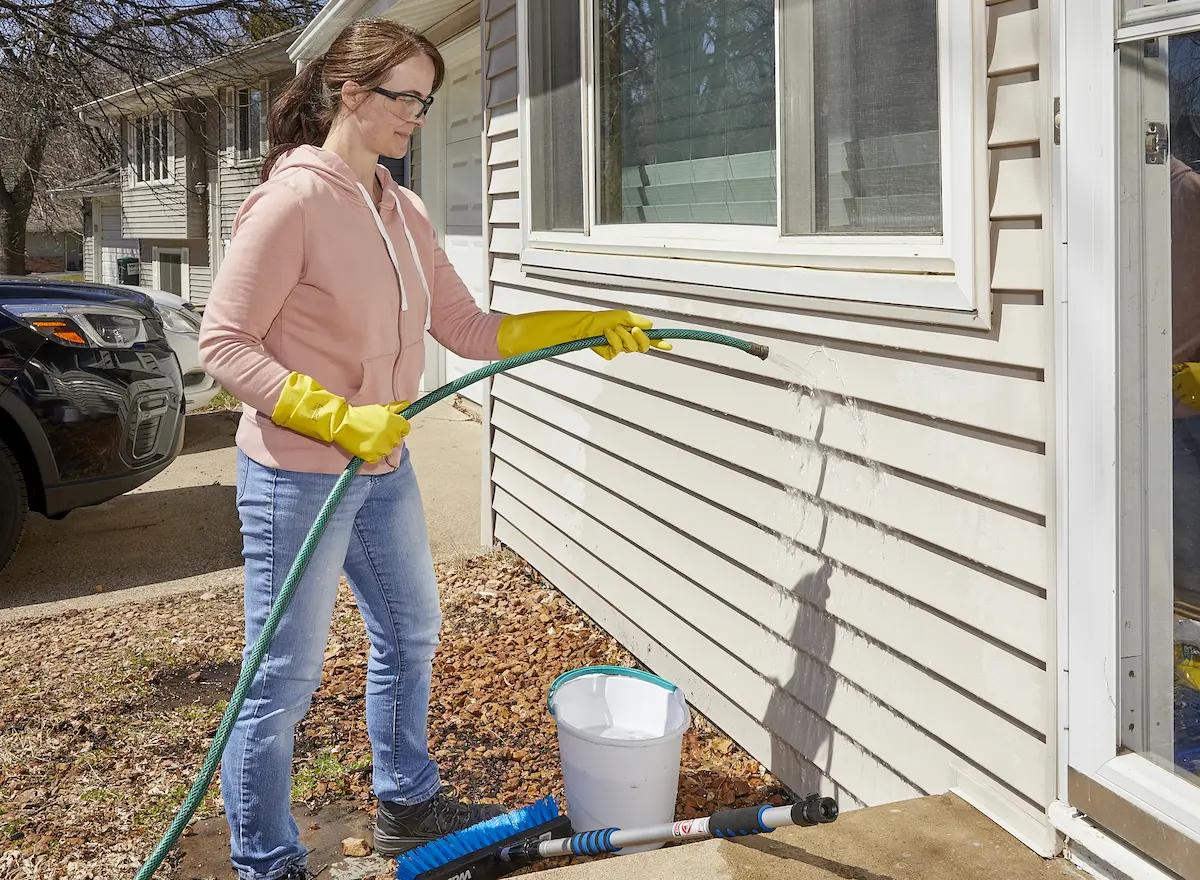
Step 3: Rinse with a Garden Hose
Before scrubbing, attach a standard spray nozzle to your garden hose and thoroughly wet the siding. Niki O’Brien, operations manager at Custom Exteriors LLC in Colorado and Wyoming, notes that this step alone often does the heavy lifting.
"Most times, the water pressure from a garden hose will take care of the dust and debris found on your siding," O’Brien says.
Starting from the top and working your way down, spray the surface to loosen stubborn particles and pre-soak the panels.
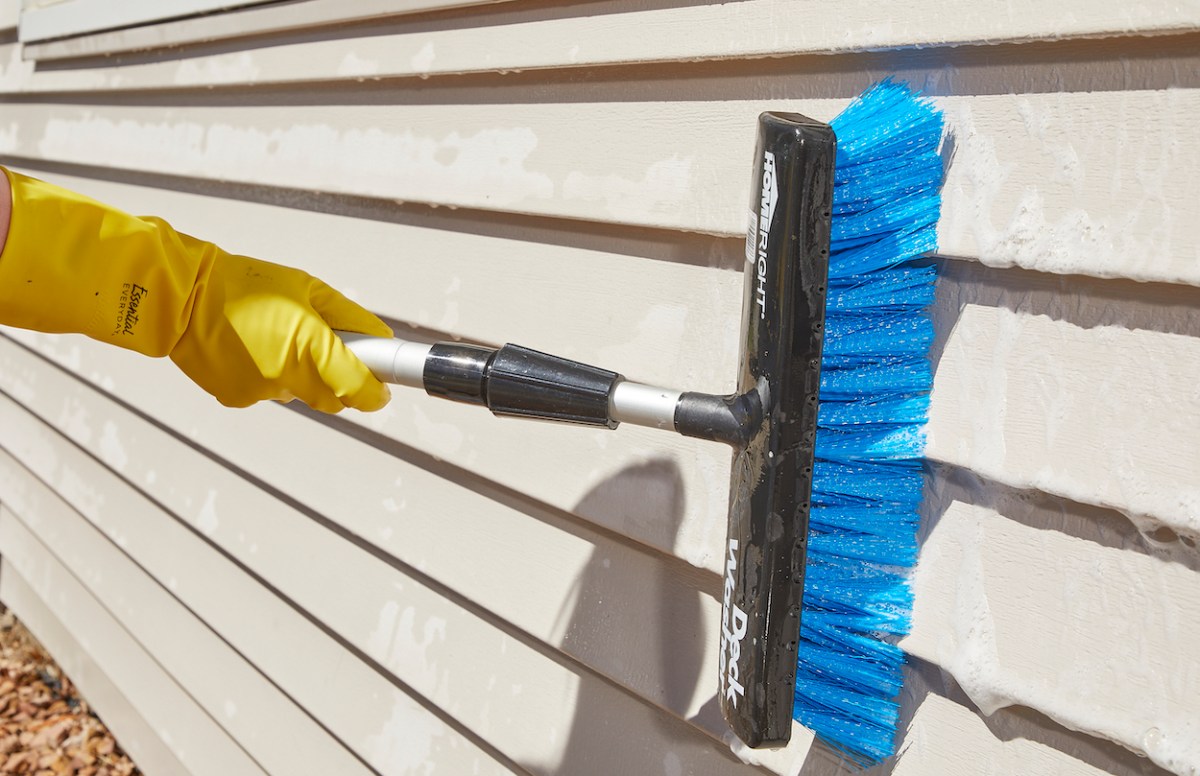
Step 4: Scrub Methodically from Top to Bottom
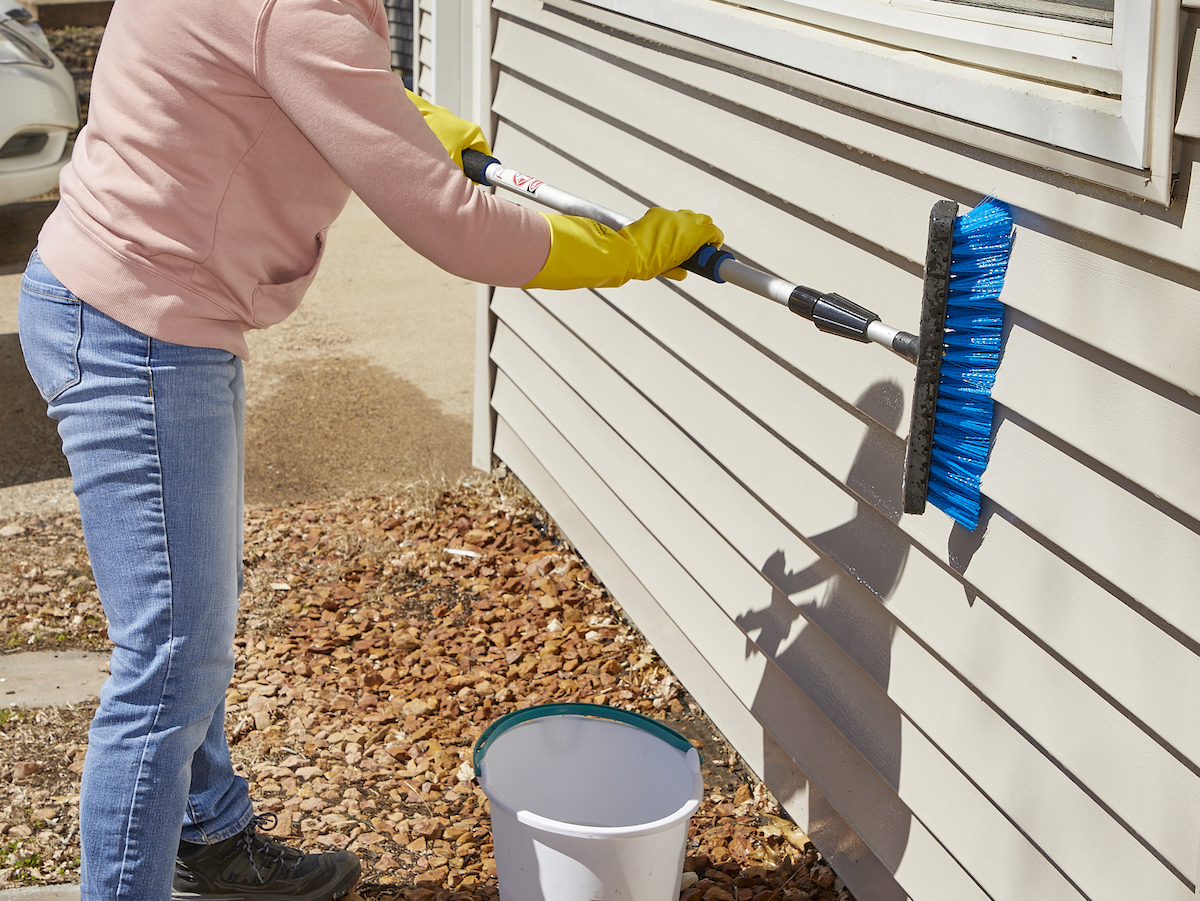
Equip yourself with a soft-bristled brush attached to a telescoping pole, which can reach heights of up to 30 feet. Dip your brush into your cleaning solution and gently scrub the siding.
Crucial Rule: Avoid metal brushes, steel wool, or abrasive scouring pads. As Prchal warns, "Do not use a metal brush as this can damage the siding and scratch it."
Directional Flow: Always work from the top down. Gravity will naturally carry the soapy water and dislodged dirt downward. Clean the entire length of a horizontal row before stepping down to the next section.
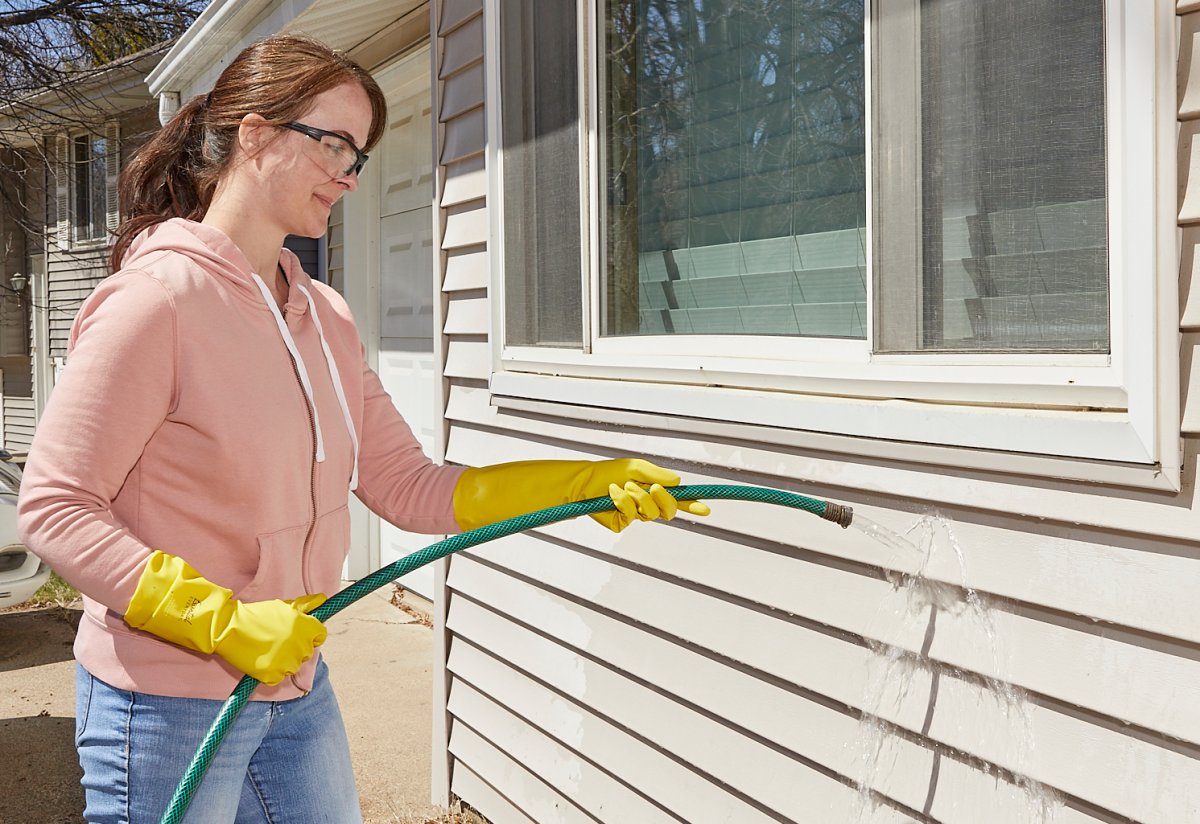
Step 5: Rinse Thoroughly
Using your garden hose, rinse away the soap and vinegar residue from top to bottom. Avoid spraying water upward at an angle, as high-pressure streams or upward-directed sprays can force water underneath the overlapping vinyl panels, trapping moisture in the wall cavity. Use this time to inspect the siding for cracks, warping, or loose fasteners.
Step 6: Spot-Clean Stubborn Stains
If localized stains—such as deep tree sap, stubborn mildew, or rust marks—persist after the general wash, apply a gentle scrub pad to the affected area. Always test the pad on an inconspicuous spot first to ensure it does not dull or scratch the vinyl finish.
Supporting Data & Professional Insights
When planning an exterior home improvement project, expert guidance ensures safety and efficiency. Industry professionals consistently warn against the unchecked use of commercial pressure washers by inexperienced DIYers.
Cleaning Method
Pros
Cons
Recommended Skill Level
Garden Hose & Soft Brush
Zero risk of structural damage; eco-friendly; low cost ($20–$30).
Labor-intensive; time-consuming for multi-story homes.
Beginner
Pressure Washer (DIY)
Fast execution; removes deep grime quickly.
High risk of cracking vinyl, water infiltration, and surface gouging.
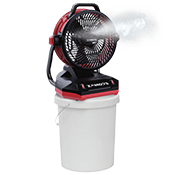
For homeowners looking to maximize comfort during a long day under the summer sun, productivity tools like the Ecomax Bucket Top Misting Fan offer practical relief. Running on battery power or a standard extension cord, such accessories help maintain safe working conditions during arduous outdoor chores. Similarly, utilizing a pump sprayer rather than constantly dipping a brush into a bucket can significantly streamline the application of cleaning solutions across large surface areas.
Official Responses and Expert Warnings
Exterior contractors and building envelope specialists agree that rushing into home maintenance without proper safety gear or realistic capability assessments can lead to costly mistakes.
Niki O’Brien emphasizes that high-pressure washing remains the leading cause of accidental vinyl siding replacement. "In our experience, the best way to clean siding is via garden hose and sprayer," O’Brien states. "We find that pressure washing on too high a pressure can result in damage. In vinyl siding, high-pressure water can actually break all the way through."
Furthermore, safety experts stress that working on ladders or attempting to stretch beyond one’s physical comfort zone poses a serious risk of injury. Andrew Prchal offers a pragmatic reminder for homeowners facing multi-story challenges:
"If you do not feel comfortable getting over to a specific area then we highly advise you not push yourself to do something you are not comfortable with. It is always better to be safe than sorry, and hire a professional."
Implications: Curb Appeal, Structural Longevity, and Property Value
Maintaining clean vinyl siding extends far beyond superficial aesthetics. While pristine exterior walls instantly elevate neighborhood curb appeal and boost property valuation, routine maintenance serves a much deeper structural purpose.
Preventing Material Breakdown: Allowing organic matter like mold, mildew, and algae to sit unchecked on vinyl surfaces accelerates the degradation of the polymer compounds, making the material brittle over time.
Early Damage Detection: Washing your home manually forces you to inspect every square foot up close. Catching cracked panels, warped seams, or pest entries early prevents minor flaws from evolving into costly interior water damage.
Cost-Effective Preservation: Spending $20 to $30 on vinegar, dish soap, and a soft brush every couple of years preserves the manufacturing warranty and functional lifespan of siding investments that would otherwise cost thousands of dollars to replace prematurely.
Whether you choose a quiet Saturday afternoon with a garden hose and a soft brush or decide to contract a licensed professional for a multi-story estate, keeping your vinyl siding clean is a cornerstone of responsible homeownership.