

By the Gear Testing Desk
Published exclusively for Pro Tool Insights
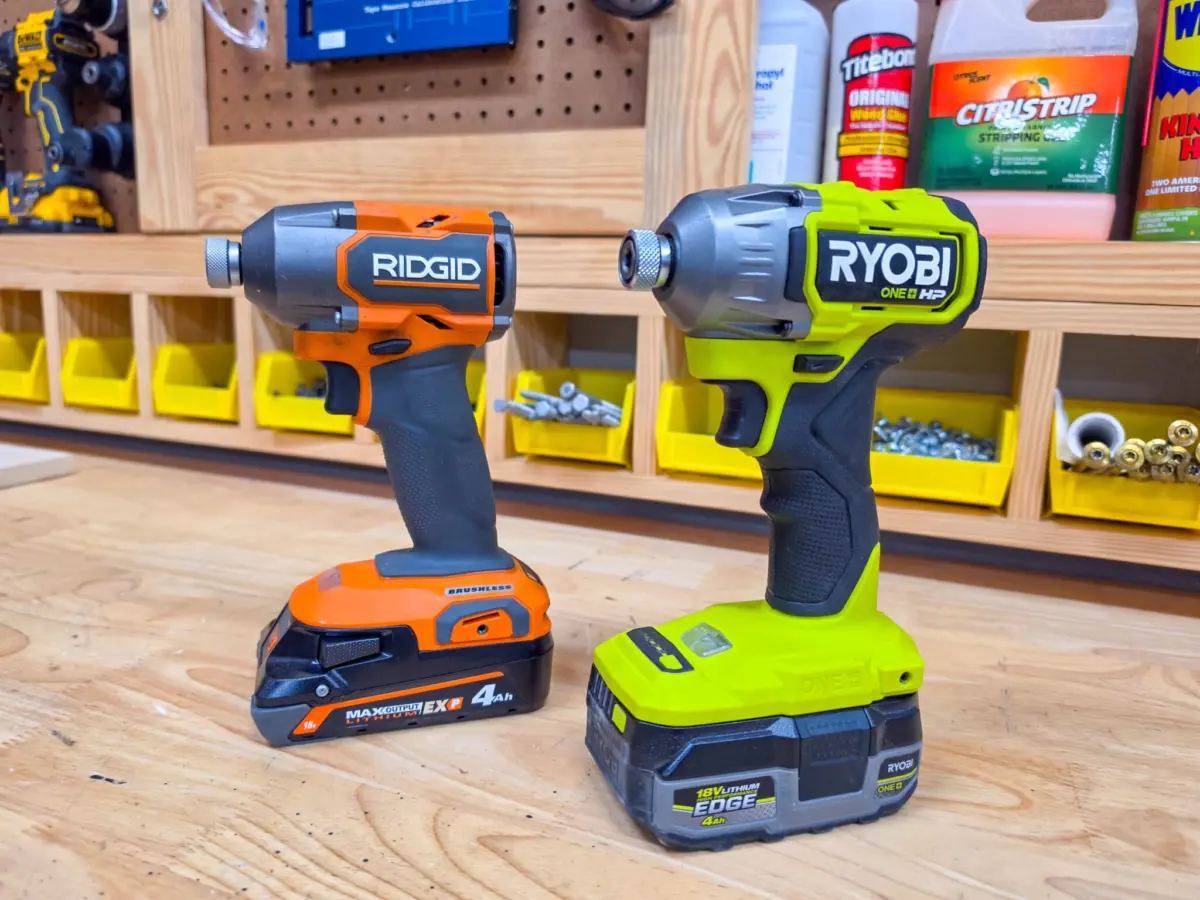
When shopping the tool aisles at Home Depot, the dichotomy between DIY and professional-grade cordless power tools has historically been crystal clear. For decades, brands like Ryobi served homeowners, hobbyists, and weekend warriors with affordable, reliable green tools. Meanwhile, sister brand Ridgid—both fall under the umbrella of Techtronic Industries (TTI)—carved out its reputation as the go-to "Prosumer" value brand, catering to contractors and serious tradespeople who needed heavy-duty performance without paying top-tier, premium prices.
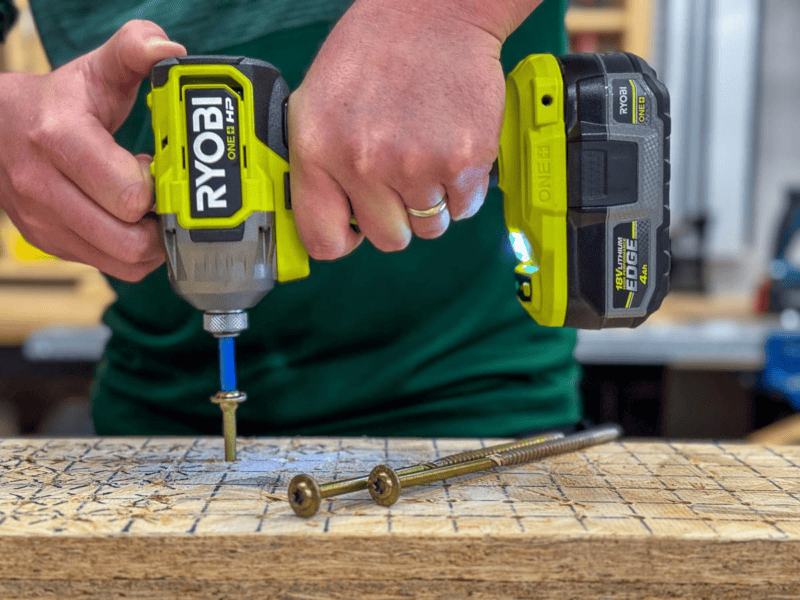
However, market dynamics change. Over the past few generations, Ryobi’s high-performance HP Brushless line has systematically bridged performance gaps that once felt insurmountable. Today, we are putting that evolution to the ultimate test. We are pitting Ryobi’s top-of-the-line HP Brushless PBLID04 against Ridgid’s powerhouse 18V Brushless R862312 impact driver in a rigorous, data-driven head-to-head competition.
Are the performance lines blurring between these two TTI stablemates, or does the badge on the side still dictate the true champion? Let’s examine the specifications, dive into our grueling testing metrics, analyze the data, and determine which tool deserves a spot in your toolbox.
Main Facts: The Contenders at a Glance
Before we struck our first arc or drove our first screw, we looked at how these two flagships stacked up on paper. At first glance, the specifications reveal an extraordinary parity in engineering.
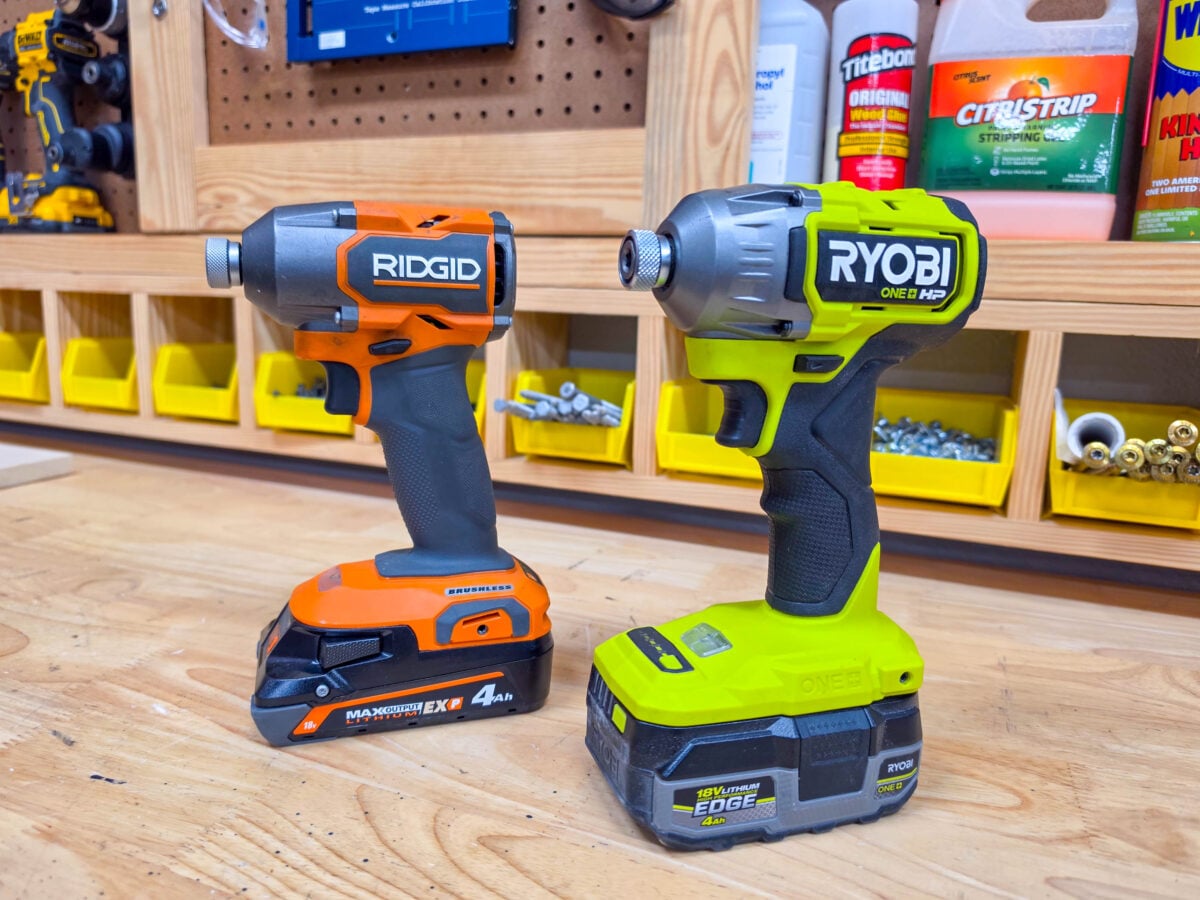
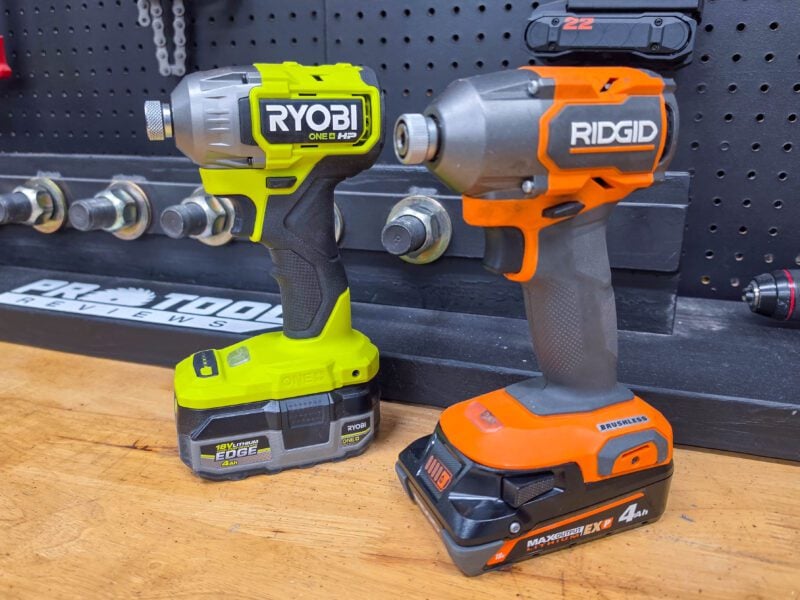
- The Ryobi HP Brushless PBLID04: Retailing as a bare tool for $129, this unit represents the zenith of Ryobi’s engineering capabilities. It features a compact footprint, advanced electronic modes, and a 3-year manufacturer’s warranty.
- The Ridgid 18V Brushless R862312: Command-priced at $149 for the bare tool or $209 for a complete kit, Ridgid brings slightly beefier raw metrics to the table, backed by its industry-famous Lifetime Service Agreement (LSA).
Both tools share identical bare weights of 2.5 pounds, and their working weights—factoring in comparable 4.0Ah high-output battery packs—hover right around 3.75 to 3.8 pounds. Yet, despite their nearly identical physical profiles, subtle shifts in motor tuning and gearing give each impact driver a unique personality under a heavy load.
Chronology of the Evaluation: How We Put Them to the Test
To ensure absolute fairness, repeatability, and objectivity, our testing methodology eliminates guesswork. We subjected both the Ryobi PBLID04 and the Ridgid R862312 to our standardized three-tier impact driver performance protocol. Every test is designed to stress different mechanical thresholds, from rapid medium-duty driving to high-torque breakaway challenges.
1. The Setup and Calibration Phase
Prior to testing, both tools were fitted with fresh, fully charged 4.0Ah batteries—the Ryobi utilizing its 4.0Ah Edge battery and the Ridgid pairing with its 4.0Ah Max Output EXP battery. We verified calibration across torque-monitoring equipment and established a uniform testing environment using high-density, stacked Oriented Strand Board (OSB) test blocks.
2. Phase One: The Speed Test with Ledger Screws
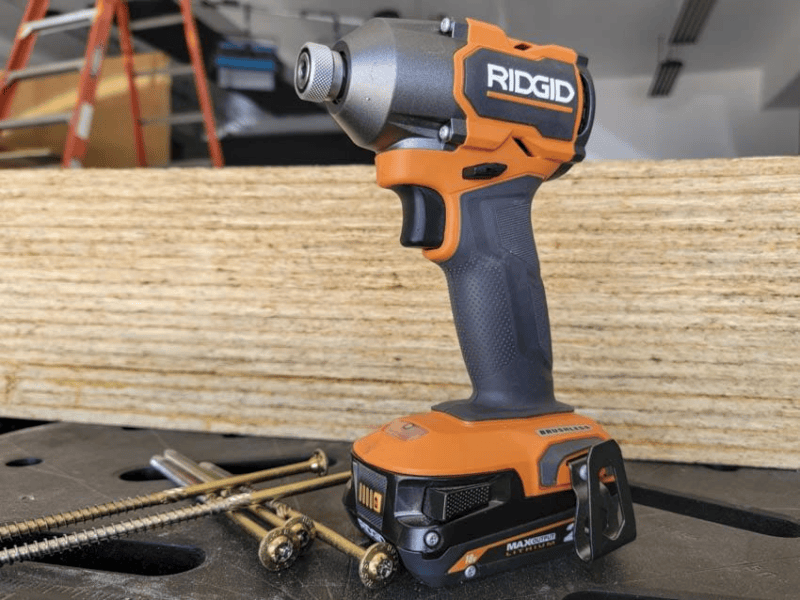
Our first real-world benchmark assessed medium-load application speed. We drove three 8-inch GRK RSS structural screws into our stacked OSB test blocks. We timed each tool from the moment the trigger was pulled until the fastener was seated flush.
This test falls comfortably within the everyday wheelhouse of both impact drivers, allowing us to evaluate how quickly their brushless motors deliver sustained RPMs under a moderate binding load.
3. Phase Two: The Bolt Break Test
Next, we evaluated brute breakaway torque performance—a critical metric for mechanics and framing contractors alike. We torqued eight 1.5-inch hardened steel lug nuts onto a specialized steel testing jig to precisely 150 ft-lbs (1,800 in-lbs).
Each impact driver was tasked with removing all eight nuts in sequence. We timed the total duration required to break all fasteners loose, subsequently calculating an average breakaway time per individual nut. This test evaluates how efficiently the impact mechanism transitions rotational energy into concussive blows when fighting high initial friction.
4. Phase Three: The Lag Bolt Endurance Test
For our final evaluation, we significantly increased the strain. Returning to the stacked OSB test block, we drove a massive 10 x 0.5-inch lag bolt using each tool, giving them a strict 30-second time limit.
Because driving a fastener of this magnitude completely flush into dense wood is generally beyond the realistic continuous duty cycle of a standard compact impact driver, we measured the remaining distance protruding from the wood surface when time expired. The less wood remaining, the better the tool managed thermal throttling and stall-prevention algorithms.
Supporting Data: The Testing Results
When the smoke cleared and the digital stopwatches stopped running, the results surprised even our seasoned review team. On paper, Ridgid held a slight numerical advantage in raw maximum torque and impact rate. However, real-world physics tell a more nuanced story.
| Performance Metric | Ryobi PBLID04 | Ridgid R862312 | Advantage |
|---|---|---|---|
| No-Load Speed | 950 / 2100 / 3400 / 2100(A) RPM | 800 / 2000 / 3400 / 2000 RPM | Ryobi (Slight RPM Edge) |
| Max Impact Rate | 4,200 IPM | 4,300 IPM | Ridgid (+100 IPM) |
| Max Torque | 2,300 in-lbs | 2,400 in-lbs | Ridgid (+100 in-lbs) |
| Head Length | 5.2 inches | 5.0 inches | Ridgid (-0.2 inches) |
| Bare Weight | 2.5 lbs | 2.5 lbs | Tie |
| RSS Screw Average | 6.80 seconds | 6.83 seconds | Ryobi |
| Bolt Break Total / Avg | 16.25 sec total / 2.03 sec per nut | 15.46 sec total / 1.93 sec per nut | Ridgid |
| Lag Bolt Test | 1.13 inches remaining | 1.5 inches remaining | Ryobi |
Analyzing the Numbers
The data reveals a fascinating performance split. In the medium-load RSS screw driving test, the Ryobi PBLID04 edged out the Ridgid by a hair, clocking a 6.80-second average against Ridgid’s 6.83 seconds.
When the stakes shifted to heavy-duty mechanical breakaway work, Ridgid flexed its engineering muscles. It cleared the eight lug nuts in a total of 15.46 seconds (averaging 1.93 seconds per nut), beating Ryobi’s 16.25-second total time.
However, in the punishing lag bolt endurance test, Ryobi bounced back strongly. The PBLID04 drove the massive fastener deeper into the OSB, leaving only 1.13 inches remaining compared to Ridgid’s 1.5 inches.
Ultimately, while Ridgid holds a fractional win in heavy torque applications, Ryobi matches—and in some cases exceeds—its professional cousin in speed and drive depth. Neither tool lagged significantly behind the other, meaning both impact drivers possess more than enough muscle for demanding job site tasks.
Key Highlights & Feature Deep Dive
Ryobi PBLID04: Refined Ergonomics and Accessible Value
- Design & Balance: The tool features an exceptionally comfortable grip contour. Even when paired with larger battery packs like the 4.0Ah Edge, the center of gravity feels natural, reducing wrist fatigue during overhead work.
- Mode Selection: Features a responsive 4-mode selector (including an assist mode) that allows users to easily transition from delicate fine woodworking to heavy structural driving.
- Pricing & Accessibility: At $129 for the bare tool, it represents tremendous value. Because Ryobi accessories and batteries are frequently discounted at Home Depot, building out a robust collection is remarkably cost-effective.
Ridgid R862312: Compact Power and Industry-Leading Support
- Form Factor: Measuring an ultra-compact 5.0 inches in head length, the Ridgid gives up a fraction of an inch to the Ryobi, making it slightly easier to squeeze between tightly spaced floor joists or wall studs.
- Raw Output: Backed by 2,400 in-lbs of torque and 4,300 IPM, it delivers immediate, aggressive impact energy that pros rely on when driving heavy lags or busting rusted fasteners.
- The Warranty Advantage: Ridgid’s defining differentiator remains its legendary Lifetime Service Agreement (LSA). Covering free parts and free service for the lifetime of the tool (upon registration), it provides unmatched peace of mind for heavy commercial users.
Official Responses and Industry Implications
The convergence of DIY and Pro performance levels raises an important strategic question for TTI: How far can a DIY brand encroach upon a professional subsidiary before internal market cannibalization occurs?
Industry analysts note that TTI has successfully segmented its brands through marketing, warranty structures, and retail positioning rather than massive disparities in core manufacturing quality. While company representatives declined to comment on internal head-to-head performance metrics, corporate statements emphasize that Ridgid is engineered explicitly for the demands of trade professionals who require lifetime guarantees under abusive job-site conditions. Ryobi, conversely, targets advanced DIYers, makers, and homeowners who demand professional-grade output without the enterprise-level overhead costs.
What This Means for Consumers
The implication for end-users is overwhelmingly positive. The intense internal competition driven by parent companies like TTI forces rapid technological trickle-down. Brushless motors, advanced circuit board protections, and high-output battery chemistries that once commanded a massive financial premium are now accessible at lower price points.
- Choose Ryobi if: You are already invested in the expansive 18V One+ ecosystem—which spans everything from sub-compact drills to lawnmowers and campsite lighting—and you want top-tier driving speeds without overspending.
- Choose Ridgid if: You operate in a professional trade environment where tool downtime is costly, and you intend to take full advantage of the Lifetime Service Agreement to protect your investment for years to come.
Final Verdict
When we tally the scores, compile the stopwatch data, and weigh the ergonomics, our testing team leans slightly toward the Ryobi HP Brushless PBLID04 as our personal favorite for everyday versatility and overall value. Despite Ridgid finishing a fraction of a point ahead in raw heavy-torque breakaway tests, Ryobi’s balance, exceptional speed, and significantly lower entry price make it a staggering achievement in modern tool manufacturing.
The gap between DIY and Pro has officially closed. The only question left is: which shade of green or orange will you choose for your next project?
