

For mechanical contractors across North America, the bottleneck of modern construction is rarely found at the job site itself. Instead, it is increasingly defined by what can—and cannot—be accomplished before materials ever cross the threshold of a project gate. As commercial, industrial, and mission-critical projects scale up in both complexity and geographical reach, mechanical contractors face mounting pressure to rethink how, when, and where building systems are put together.
For the Hermanson Company, a prominent mechanical contractor operating in the Pacific Northwest and beyond, outgrowing its existing production footprint was not simply a matter of running out of physical floor space. Rather, it was a systemic realization that its legacy fabrication operations could no longer keep pace with the evolving demands of larger, more geographically dispersed, and technically intricate projects.
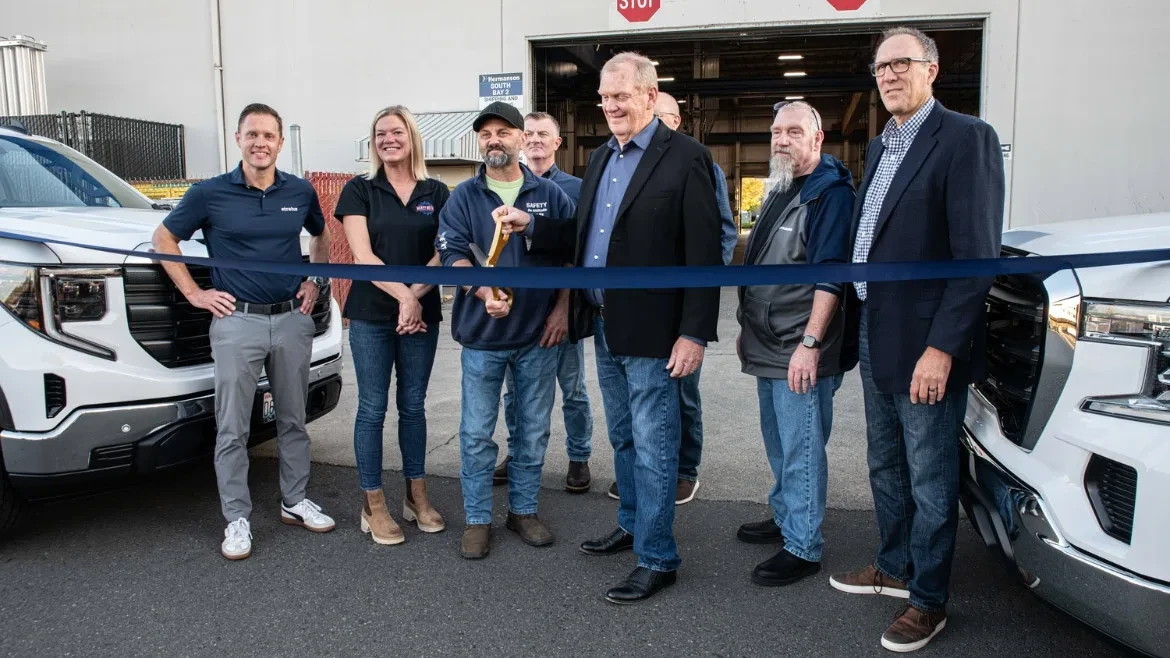
The company’s strategic answer to this challenge is a massive, state-of-the-art pipe fabrication facility in Kent, Washington. Spanning 81,800 square feet of dedicated manufacturing space—complemented by a 4,950-square-foot tradesmen’s office and a sprawling 33,000-square-foot pipe yard—the new facility represents a fundamental evolution in how Hermanson approaches heavy mechanical construction. Yet, company leaders are quick to point out that square footage alone does not guarantee success. True prefabrication maturity requires an upstream cultural shift, advanced digital integration, and an unbreakable bond between the shop floor and the field.
Main Facts: The Anatomy of Hermanson’s New Kent Facility
The crown jewel of Hermanson’s recent operational scaling is its newly commissioned pipe fabrication shop in Kent, Washington. Designed from the ground up to support the contractor’s expanding footprint in both local and national markets, the facility addresses the physical constraints that historically plagued the company’s production workflows.
- Total Production Space: 81,800 square feet dedicated entirely to pipe fabrication, modular assembly, and custom welding operations.
- Administrative & Support Space: A 4,950-square-foot tradesmen’s office designed to house project detailers, foremen, and production coordinators in close proximity to the shop floor.
- Material Staging: A 33,000-square-foot outdoor and semi-covered pipe yard capable of handling heavy raw materials, bulk inventory, and finished assemblies awaiting logistics dispatch.
- Advanced Capabilities: Specialized stations for stainless steel fabrication, high-pressure systems, complex welding, and enhanced Quality Assurance/Quality Control (QA/QC) protocols tailored specifically for national projects like data centers and advanced manufacturing plants.
- Digital Ecosystem: Integration with Stratus, a specialized fabrication management platform for Mechanical, Electrical, and Plumbing (MEP) contractors, providing real-time tracking across detailing, project management, shipping, and field installation.
According to company leadership, the primary driver for this investment was the need to support multiple major projects simultaneously. By moving complex, labor-intensive piping scopes into a controlled, highly regulated environment, Hermanson aims to shield its field personnel from unpredictable job-site variables, boosting both safety and overall craftsmanship.
Chronology: The Journey to a Modern Prefabrication Paradigm
To understand the magnitude of Hermanson’s recent expansion, it is necessary to examine the operational trajectory that led the company to Kent.
Phase 1: The Legacy Constraints
In Hermanson’s previous, smaller fabrication shop, physical constraints dictated the rhythm of daily work. Moving large, cumbersome pieces of pipe frequently brought production lines to a halt. Fabricators often found themselves waiting for overhead cranes to clear a path, or pausing operations entirely while oversized assemblies were shifted out of the way so other work could continue. These micro-delays accumulated over time, eating into profit margins and limiting the types of high-volume, complex projects the company could safely pursue.
Phase 2: Shifting Market Demands
Over the past decade, Hermanson’s project portfolio evolved rapidly. The firm increasingly secured contracts involving highly technical environments—such as hyperscale data centers, complex battery manufacturing plants, isolated laboratory systems, and high-pressure industrial facilities. These sectors demanded rigorous tolerances, specialized metallurgy (including extensive stainless steel work), and rigorous QA/QC documentation that traditional field installation methods struggled to reliably deliver under tight schedules.
Phase 3: Facility Selection and Commissioning
Recognizing that its existing infrastructure was capping its growth potential, Hermanson initiated plans for a comprehensive operational upgrade. The resulting facility in Kent, Washington, was selected, retrofitted, and equipped with modern material-handling systems, expanded crane capacities, and custom workstations designed to optimize linear workflow.
Phase 4: Digital Integration and Process Alignment
With the physical infrastructure in place, Hermanson deployed advanced digital tools like Stratus to connect the new shop with project managers, field superintendents, and detailing teams. Today, the facility operates not as an isolated island of manufacturing, but as a deeply integrated node within a broader, digitally coordinated project delivery network.
Supporting Data: Measuring What Matters in Modern Fabrication
For many construction firms, measuring the success of a prefabrication shop begins and ends with throughput—how many tons of steel or feet of pipe move out the door each week. Hermanson, however, has adopted a far more sophisticated, multi-dimensional framework for tracking performance and return on investment.
While physical volume matters, the company evaluates its shop operations through a rigorous matrix of operational metrics designed to ensure that shop output actually translates into field productivity:
- Planned Versus Actual Fabrication Hours: Tracking labor variance to continuously refine estimating models and improve shop-floor efficiency.
- Package Completion and Release Reliability: Measuring whether fabrication packages are fully completed and ready for release according to the master project schedule.
- Rework and Hard-Ticket Activity: Monitoring instances where assemblies require modification, serving as a key indicator of detailing accuracy or design changes.
- On-Time Delivery Metrics: Ensuring that fabricated spools arrive at the job site precisely when the installation crew needs them—neither too early to cause site congestion, nor too late to cause labor downtime.
- Production Data Accuracy: Evaluating the precision of digital data flowing from the detailing room to the shop-floor cutting and welding stations.
- QA/QC Performance: Auditing weld logs, material traceability reports, and non-destructive examination (NDE) results, particularly for specialized national projects.
By tying these metrics directly to field outcomes, Hermanson ensures that its prefabrication shop remains laser-focused on its ultimate customer: the installation crew working on the job site.
Official Perspectives: Insights from Leadership
The strategic philosophy guiding Hermanson’s expansion is rooted in collaboration, humility, and a clear understanding of the interdependence between office, shop, and field.
Scott Ponsler, Director of Labor at Hermanson, emphasizes that the challenges the company faced were fundamentally structural rather than merely spatial.
"The biggest issue was capacity, but not simply physical space," Ponsler explains. "As our projects became larger, more complex, and more geographically dispersed, we needed a fabrication operation that could support multiple major projects without forcing the field to absorb work that could be performed more safely and predictably in a controlled environment."
Ponsler also notes that while tools and technology have advanced dramatically, the core values of the trade remain steadfast.
"The fundamentals of the trade remain the same, including quality, craftsmanship, welding, assembly, layout, and safety. But the scale, specialized stations, complex assemblies, and level of digital coordination have changed."
Pat Klein, Pipe Shop Foreman at Hermanson, echoes this sentiment, emphasizing the service-oriented mindset that defines the culture within the Kent facility.
"Our philosophy in the fab shop is that we are here to serve the field," Klein states. "We think through the hardest aspects of field installation and try to simplify them as much as possible as fabrication moves through the shop."
Reflecting on the physical transformation enabled by the new facility, Klein adds: "The larger space has shown how much workflow can be affected by the physical environment. Having more room reduces delays caused by material movement and allows the team to work more efficiently and safely. The new shop gives Hermanson the space, workflow, and custom equipment needed to take on larger opportunities that may have been out of reach before."
Implications: The Upstream Realities of Prefabrication
Perhaps the most profound takeaway from Hermanson’s expansion is a sobering reality check for the broader construction industry: building a bigger prefabrication shop does not automatically create a better prefabrication program.
A common misconception across the commercial construction sector is that prefabrication is merely the act of relocating tasks traditionally performed outdoors in the dirt into an indoor warehouse. According to Hermanson’s leadership, this definition misses the point entirely.
Prefabrication is not a relocation of labor; it is a fundamental acceleration of project decision-making.
When a contractor expands its fabrication capacity, it invariably increases the pressure on upstream processes. If architectural, structural, and MEP designs are incomplete, if material procurement is delayed, if sequencing is poorly planned, or if project status data is inaccurate, a prefabrication shop cannot manufacture its way out of the problem. In fact, a high-capacity shop operating on bad information will simply produce incorrect assemblies faster, multiplying job-site waste and rework.
"Prefabrication is not simply moving field work into a shop," Klein cautions. "It changes when decisions are made and how the entire project is planned. A shop cannot correct incomplete designs, late procurement, poor sequencing, inaccurate status information, or a lack of field involvement by itself."
To avoid these pitfalls, Hermanson’s model relies on deep, early cross-functional collaboration. Field superintendents, project managers, detailers, purchasing agents, logistics coordinators, and shop leadership must operate as a unified team. Decisions regarding how work is packaged, sequenced, loaded, and delivered must be locked in months before a single pipe is cut.
By aligning detailing, purchasing, project management, and fabrication quality under a single digital and operational umbrella, Hermanson has positioned itself to tackle the most demanding mechanical challenges in the modern built environment. For the company, the Kent facility is not just an 81,800-square-foot warehouse filled with welding rigs and pipe rollers—it is the physical manifestation of a disciplined, forward-thinking approach to construction where success is measured not by how much material moves, but by how seamlessly it goes together in the field.
