

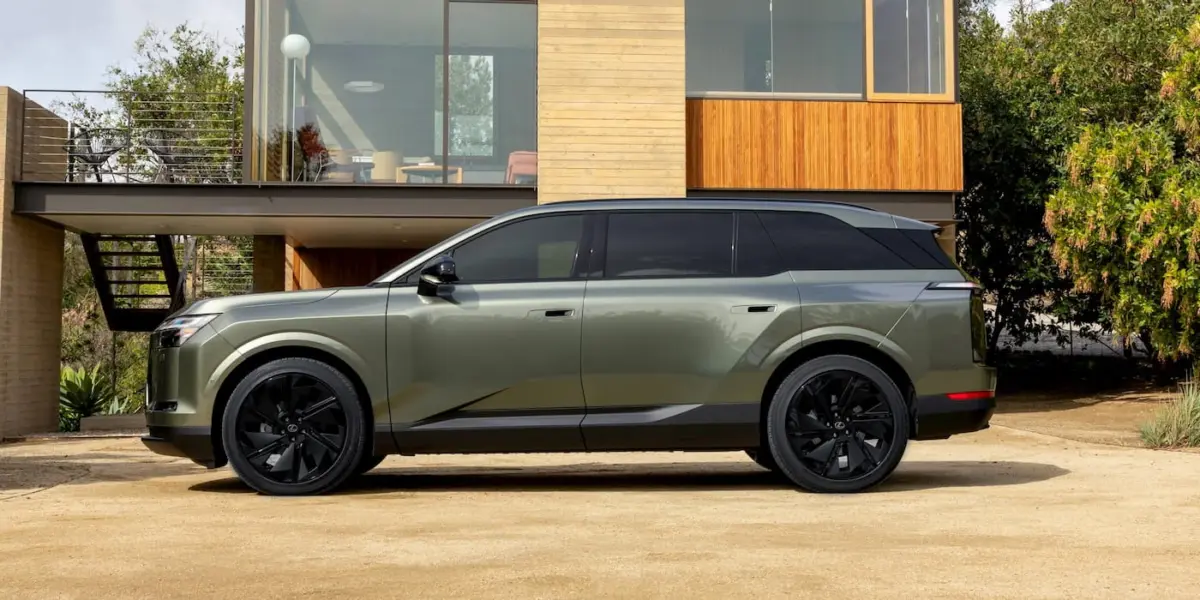
The electric vehicle landscape is undergoing a tectonic shift, with legacy automakers racing to fill every conceivable niche with battery-powered alternatives. Among the most anticipated segments is the full-sized, three-row electric SUV market—a space traditionally dominated by internal combustion engines due to the massive energy requirements needed to haul families, cargo, and trailers.
Now, Lexus is stepping up to the plate. The upcoming 2027 Lexus TZ represents a historic milestone for Toyota’s luxury division: it is the brand’s very first purely electric, three-row SUV. Ahead of its official market debut, the vehicle has broken cover, caught driving on public roads for the very first time in Toronto, Canada, while presumably filming promotional material.
This unexpected public sighting offers automotive enthusiasts and prospective buyers their first uncamouflaged, real-world glimpse of a vehicle destined to go toe-to-toe with heavyweights like the Hyundai IONIQ 9 and the Volvo EX90.
Main Facts: What We Know About the 2027 Lexus TZ
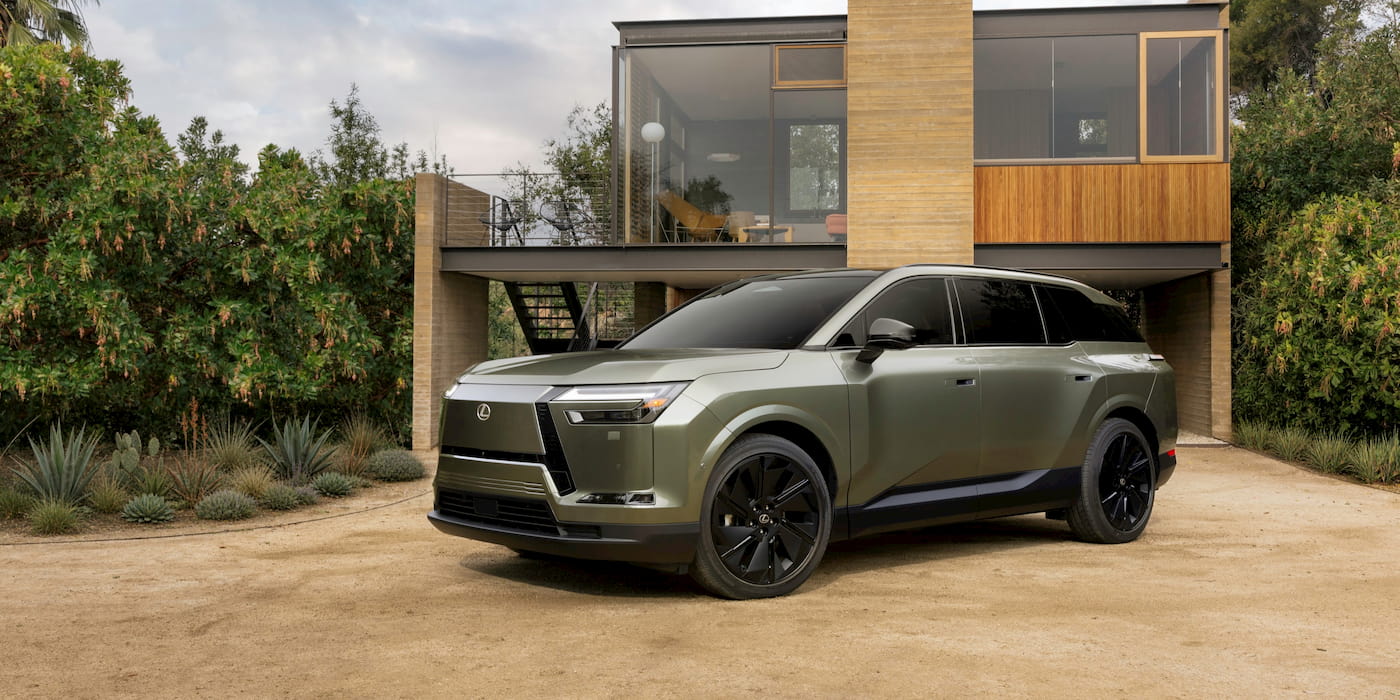
The 2027 Lexus TZ was first teased to the public in May, establishing itself as the luxurious, more sophisticated sibling to the upcoming Toyota Highlander BEV. While both vehicles share a foundational platform, Lexus has gone to great lengths to ensure the TZ delivers a distinctively upscale ownership and driving experience.
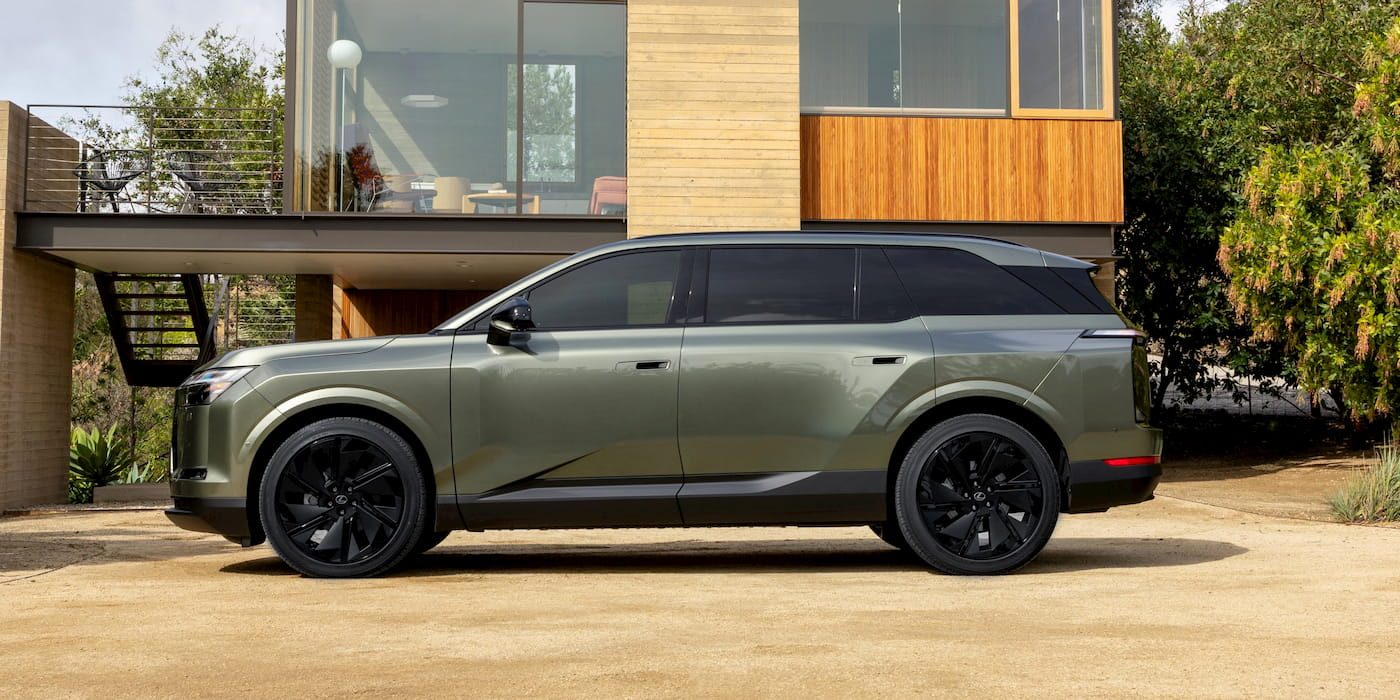
Measuring 200.8 inches long, 78.3 inches wide, and 67.1 inches tall, with a generous 120.1-inch wheelbase, the TZ occupies a commanding footprint on the road. Despite its familial ties to Toyota, Lexus has engineered the TZ to distance itself dynamically and aesthetically.
Underneath its sleek sheet metal, the TZ will be offered with two distinct battery pack capacities:
- 76.96 kWh battery pack
- 95.82 kWh battery pack
Lexus estimates that the larger battery variant will deliver an impressive driving range of up to 300 miles on a single charge. When it comes time to plug in, the vehicle supports charging speeds of up to 150 kW, allowing the battery to replenish from 10% to 80% in approximately 35 minutes. Crucially for North American buyers, the TZ comes equipped with a native NACS (North American Charging Standard) port, granting drivers direct, adapter-free access to Tesla’s sprawling Supercharger network.
Performance-wise, the TZ skips the base-level setups found in some competitors. Every 2027 Lexus TZ comes standard with an "evolved" version of the brand’s DIRECT4 all-wheel-drive (AWD) system. This dual-motor layout churns out a combined 420 horsepower, giving the heavy SUV enough muscle to tow up to 3,500 pounds. To manage this power across varying conditions, drivers can select from five distinct drive modes: Normal, Sport, Eco, Range, and a specialized Rear Comfort mode.
Chronology: From Concept Teases to Public Streets
The journey of the Lexus TZ from drawing board to public asphalt highlights the accelerated timeline of modern EV development.
- February 2026: Parent company Toyota pulls the curtain back on the Highlander BEV, signaling the arrival of a mainstream, three-row electric architecture.
- May 2026: Lexus officially reveals the first official images and specifications of the 2027 Lexus TZ, showcasing its luxury-focused exterior and high-tech cabin.
- September 2026: The first real-world sighting occurs. The TZ is spotted driving through the streets of Toronto, Canada. Images and video footage are captured and shared online via the popular
#TorontocarspottingFacebook group by user Rigun KG, revealing the vehicle participating in what appears to be a commercial shoot. - Late 2026 / Early 2027: Official commercial production and dealership rollouts are slated to begin, putting the vehicle in customer driveways.
The Toronto sighting is particularly significant because it confirms that pre-production or near-production units are already in the wild, undergoing real-world validation and media asset creation.
Supporting Data: Specifications and Pricing Expectations
To understand where the Lexus TZ fits into the broader automotive ecosystem, it is helpful to look at the numbers. The vehicle is positioned squarely in the heart of the mid-to-large luxury EV segment.
| Feature / Specification | 2027 Lexus TZ Detail |
|---|---|
| Vehicle Class | Purely Electric Three-Row Luxury SUV |
| Dimensions (L x W x H) | 200.8” x 78.3” x 67.1” |
| Wheelbase | 120.1” |
| Battery Options | 76.96 kWh and 95.82 kWh |
| Max Driving Range | Up to 300 miles (estimated) |
| Powertrain | Dual-Motor DIRECT4 AWD |
| Horsepower | 420 hp |
| Towing Capacity | Up to 3,500 lbs |
| DC Fast Charging Speed | Up to 150 kW (10% to 80% in ~35 mins) |
| Charging Port Type | Native NACS (Tesla Supercharger compatible) |
| Estimated Price Range | Mid-$60,000s (Starting) |
While Lexus has not yet published official pricing figures, industry analysts have a clear roadmap for what to expect. Given that the corporate cousin, the 2027 Toyota Highlander BEV, is anticipated to start in the mid-$50,000 range, the Lexus badge, upgraded interior materials, and advanced suspension systems will likely push the TZ’s starting MSRP into the mid-$60,000 bracket, scaling upward for higher trims.

Official Responses and Engineering Focus
Lexus has been eager to emphasize that the TZ is much more than a rebadged Toyota. Company engineers have focused heavily on isolating the cabin from road, wind, and motor noise. According to brand representatives, the TZ boasts the quietest cabin of any Lexus SUV produced to date.
This acoustic serenity is achieved through a multi-faceted approach:
- Reinforced Body Structure: Built to withstand the torsional rigidity demands of a heavy battery pack while dampening vibrations.
- Fine-Tuned Suspension: Calibrated specifically to absorb road imperfections without sacrificing handling composure.
- Dynamic Rear Steering: Enhances low-speed maneuverability in tight parking lots while providing high-speed stability on the highway.
Inside the cabin, technology takes center stage. The TZ features the latest iteration of the Lexus Interface Multimedia system. This modernized software package introduces customizable apps and widgets, alongside an upgraded, more conversational "Hey Lexus" voice assistant. Furthermore, the infotainment suite now supports full-screen navigation tailored specifically for electric vehicle owners. Built-in EV functions include advanced EV Routing to minimize range anxiety and an intuitive EV Range Map that graphically displays how far the vehicle can travel on its remaining state of charge.
Implications: What the TZ Means for the Luxury EV Market
The arrival of the 2027 Lexus TZ carries profound implications for both the brand and the electric vehicle market at large.

For Lexus, the TZ represents a critical bridge into the high-volume electrification era. While luxury buyers have embraced smaller electric crossovers, large families have faced limited choices if they want zero-emissions driving paired with Japanese reliability and luxury refinement. By introducing a dedicated three-row EV, Lexus ensures it retains loyal customers who might otherwise migrate to Tesla, Rivian, or European luxury marques.
Furthermore, the integration of the NACS charging port signals a mature approach to the North American EV infrastructure. By abandoning proprietary adapter hurdles out of the gate, Lexus is eliminating one of the primary friction points for new EV buyers, ensuring seamless access to the gold standard of charging networks.
As the TZ completes its promotional filming in Toronto and edges closer to its late 2026 or early 2027 showroom release, it stands as proof that traditional luxury automakers are no longer just dipping their toes into electrification—they are diving headfirst into the family hauling space.
