

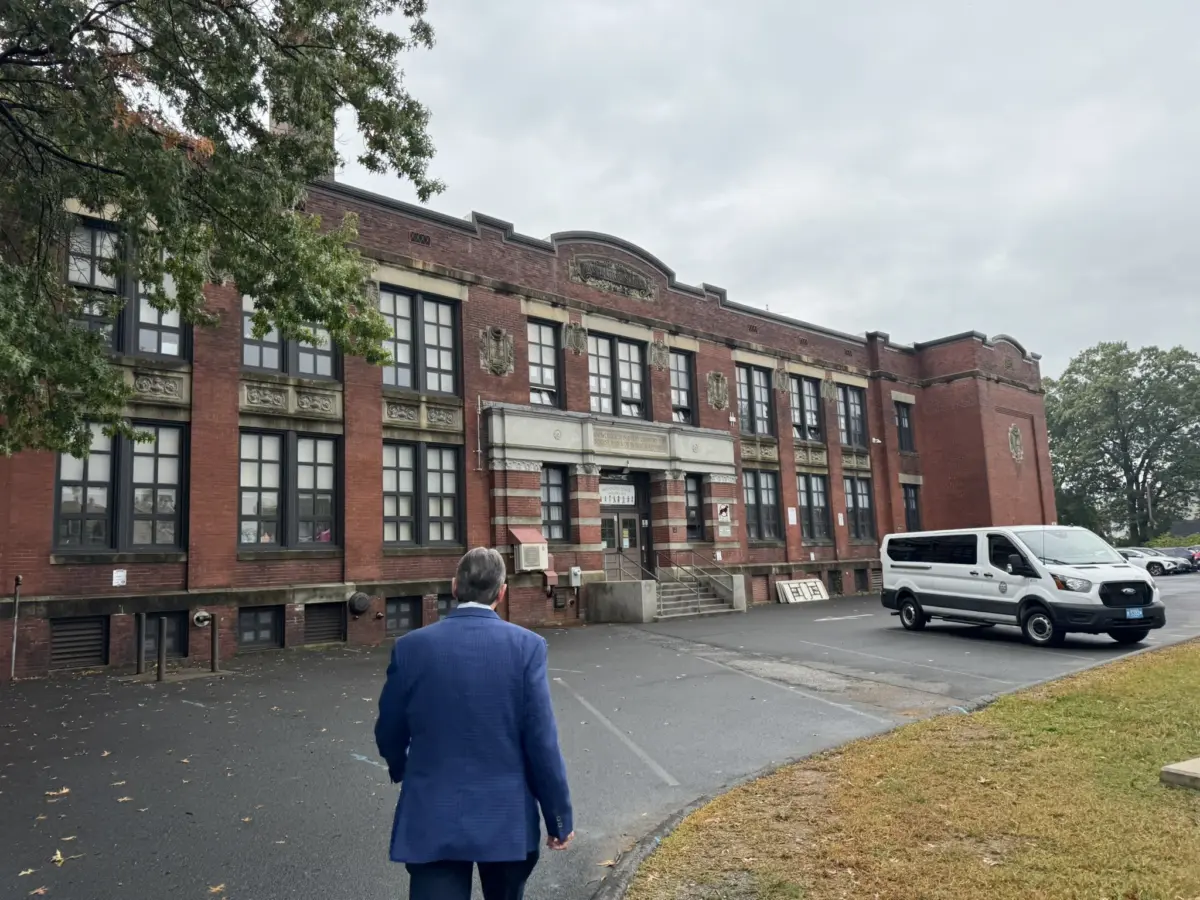
SPRINGFIELD, Mass. — Public school students across Springfield are scheduled to return to their classrooms on Monday, September 14, following a nearly week-long shutdown triggered by a sophisticated and highly disruptive cyber incident. The breach, which forced city officials to shutter the state’s second-largest school district out of an abundance of caution, has exposed the deepening vulnerabilities of municipal infrastructure to modern digital threats and prompted an intensive multi-agency federal and state investigation.
The incident, officially classified as a Level 4 security event, compromised critical district networks and crippled essential third-party online platforms. While officials scramble to restore full functionality, the closure has disrupted the education of approximately 27,000 students across 66 public schools and highlighted the precarious reliance of modern educational institutions on interconnected digital ecosystems.
Main Facts
The digital siege on Springfield Public Schools began unfolding late last week, culminating in a complete operational freeze that forced the cancellation of classes starting Tuesday. According to Mayor Domenic J. Sarno and district leadership, an unidentified external threat actor successfully penetrated the public school system’s network architecture.
The breach effectively severed the district’s access to a suite of vital third-party online programs. Among the systems locked down or rendered inaccessible were student medical records, transportation management systems, food service logistics, and several core educational tools used by teachers and administrators.
Because of the severe security implications, the incident was immediately escalated to a Level 4 designation. This classification denotes a cyber event of high severity, triggering a coordinated response involving local law enforcement, the Massachusetts State Police, and the Federal Bureau of Investigation (FBI). City and school IT professionals, alongside specialized cybersecurity contractors, have been working around the clock to contain the breach, purge malicious code, and securely restore system functionality.
As of the latest briefings, investigators have not confirmed whether a formal ransom demand has been issued by the hackers, nor have they publicly identified the specific threat group responsible. Containment efforts and forensic analyses remain highly active.
Chronology of the Crisis
The timeline of the Springfield cyberattack illustrates the rapid escalation from anomalous network behavior to a full-scale institutional shutdown:
- Late Last Week: District IT staff first detect anomalous digital signals—described by officials as "red flags"—within the school system’s network periphery. Monitoring tools register unusual data packets and unauthorized connection attempts.
- Saturday Evening: The situation deteriorates rapidly. The disruptions escalate significantly, crossing the threshold from routine network glitches into what officials formally classify as "malicious cyber traffic."
- Sunday and Monday: IT specialists attempt to isolate the compromised nodes, but realize the breach has broader implications for third-party integrations and core operational software.
- Tuesday Morning: Confronted with compromised administrative tools and—most critically—a complete loss of access to student health records, Mayor Sarno and Superintendent of Schools Dr. Sonia E. Dinall make the decision to close all 66 public schools.
- Wednesday through Friday: Schools remain dark for students while forensic investigators, the FBI, and state police comb through server logs. District officials issue strict advisories urging families and staff to keep district-issued laptops offline to prevent lateral malware propagation.
- The Weekend: Remediation efforts progress sufficiently to ensure physical school buildings are safe for occupancy. Administrators formulate a low-tech continuity plan to ensure learning can resume even as digital systems remain offline.
- Monday, September 14: Students are cleared to return to classrooms, stepping into an educational environment temporarily stripped of its modern digital conveniences.
Supporting Data and District Demographics
The scale of the Springfield Public Schools disruption underscores the immense logistical footprint affected by the breach:
- District Size: Springfield Public Schools represents the second-largest school district in the Commonwealth of Massachusetts.
- Student Population: Approximately 27,000 students rely on the district for daily education, social support, and nutritional programs.
- Infrastructure: The district operates 66 distinct public school facilities, ranging from elementary to high schools, requiring vast logistical coordination for student transport and meal distribution.
- Severity Level: Classified as a Level 4 incident, placing it in a tier of municipal cyber emergencies that demand federal counterintelligence and law enforcement intervention.
- Compromised Vectors: Medical databases (student health records, allergies, medication charts), transportation routing software, food inventory and distribution services, and specialized digital learning platforms.
Official Responses
The cyberattack drew swift and condemnatory responses from municipal leaders, educational administrators, and law enforcement agencies alike.
Mayor Domenic J. Sarno did not mince words when addressing the press regarding the actors behind the breach. Condemning the perpetrators as "cyberattack hackers," Sarno blasted individuals who deliberately target public institutions to "cause havoc, especially to students." The mayor emphasized that municipal resources would be marshaled indefinitely to support the ongoing federal and state investigation, vowing that the city would not be easily cowed by digital criminals.
Superintendent Dr. Sonia E. Dinall focused her remarks on educational resilience and operational continuity. Acknowledging the profound disruption caused by the loss of digital infrastructure, Dinall offered a reassuring message to parents and educators regarding the transition back to the classroom.
"Instruction does not rest solely with technology, and we will move forward even in the absence of some of our tools," Dr. Dinall stated.
School officials informed parents that teachers have been instructed to embrace traditional, low-tech methods if digital resources remain unavailable when classes resume. In a nostalgic twist on modern pedagogy, classrooms will temporarily rely on "books, notebooks, pencils, and paper" to maintain instructional momentum while IT specialists meticulously rebuild the district’s digital architecture.
Law enforcement agencies, including the FBI’s cyber division and the Massachusetts State Police, have maintained a tight-lipped posture regarding the specifics of the ongoing investigation. However, officials have confirmed that joint task forces are examining server vulnerabilities, tracing command-and-control IP addresses, and determining the exact vector of entry utilized by the attackers.
Implications for K-12 Cybersecurity
The Springfield incident is far from an isolated occurrence; rather, it serves as the latest high-profile data point in a troubling nationwide trend of cybercriminals targeting K-12 educational institutions and municipal governments. School districts have increasingly become prime targets for ransomware gangs and malicious actors due to a combination of vast troves of personally identifiable information (PII), valuable financial data, and chronically underfunded cybersecurity defenses.
The Safety and Operational Dilemma
One of the most revealing aspects of the Springfield attack was the primary catalyst for the school closures: student medical records. While financial theft or academic record tampering are common fears in school cyberattacks, the immediate threat to student safety posed by locked medical databases cannot be overstated. School nurses rely on instant access to digital health records to dispense daily medications, manage severe allergies, and respond to acute medical emergencies. When that data is abruptly walled off by malicious actors, keeping children in school buildings becomes an unacceptable operational risk.
The Threat of Malware Propagation
The directive issued by city officials urging students and families to stay off school networks and avoid using district-issued laptops highlights the insidious nature of modern malware. Attackers frequently use educational devices as trojan horses, attempting to leap from school servers into home networks, or vice-versa. By cutting off device connectivity, the district acted to quarantine the digital contagion before it could inflict wider collateral damage across the community.
A Return to Analog Resilience
Perhaps the most enduring implication of the Springfield incident is the stark reminder of the fragility of hyper-digitized classrooms. Over the past decade, K-12 education has become overwhelmingly dependent on cloud-based learning management systems, digital attendance tracking, online homework portals, and automated administrative workflows.
When those systems fail catastrophically, teachers are forced to pivot back to foundational pedagogical tools. Springfield’s temporary return to "books, notebooks, pencils, and paper" serves as both a pragmatic emergency measure and a philosophical reminder that education ultimately relies on the human connection between teacher and student, rather than the bandwidth of an internet connection.
As Springfield Public Schools reopens its doors on September 14, students, staff, and city administrators will do so under a renewed awareness of digital vulnerability. While the federal investigation continues in the background to unmask the perpetrators of this Level 4 attack, the immediate priority for the city remains clear: getting children back to learning, one analog page at a time.
