

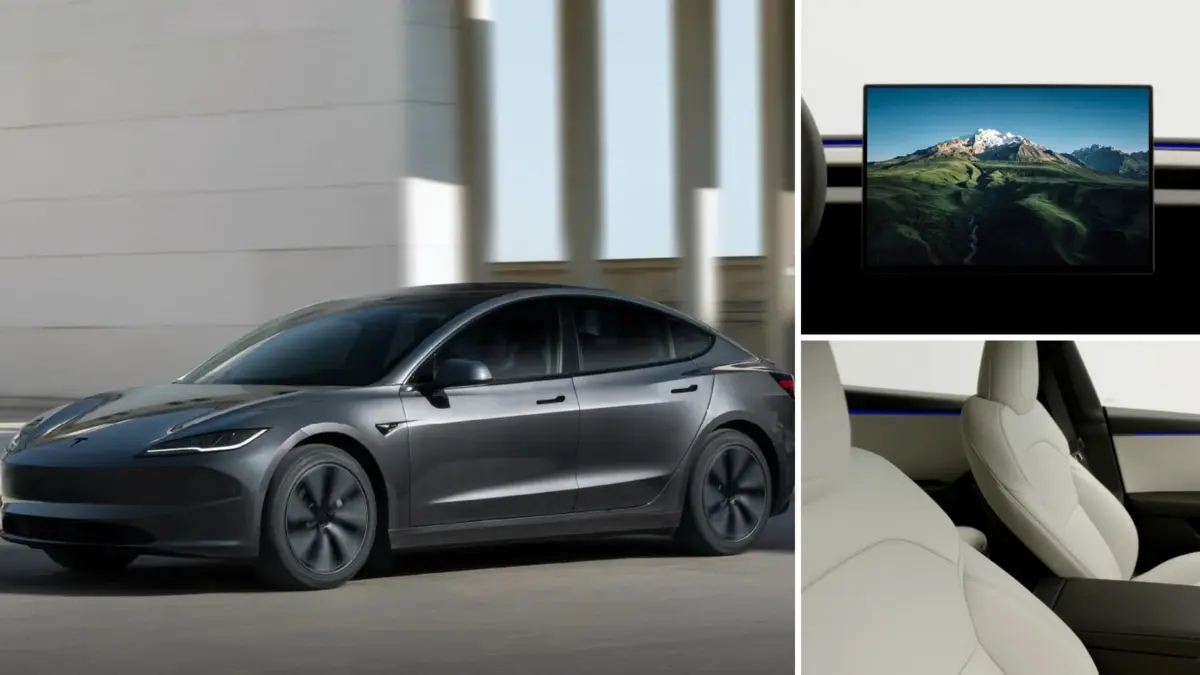
SHANGHAI / AUSTIN — In the high-stakes theater of the global electric vehicle market, regional parity is increasingly becoming a relic of the past. Tesla China has once again seized the initiative, rolling out a comprehensive hardware refresh, utility enhancements, and aggressive financial incentives for its locally produced Model 3 and Model Y lineups.
Yet, as Chinese consumers revel in a larger high-definition display, luxurious interior options, and bidirectional charging capabilities, American buyers are left looking across the Pacific empty-handed. The growing feature gap highlights a shifting corporate reality: under intense pressure from hyper-aggressive domestic competitors, Tesla is prioritizing the Chinese market for its most innovative hardware rollouts, leaving its home market in the United States noticeably trailing behind.
Main Facts: What Tesla Just Rolled Out in China
Announced via a coordinated blitz of marketing materials on October 1 across its official Chinese digital channels, Tesla’s latest round of updates introduces substantive improvements to the Model 3 and Model Y.
The primary updates center on three core areas:
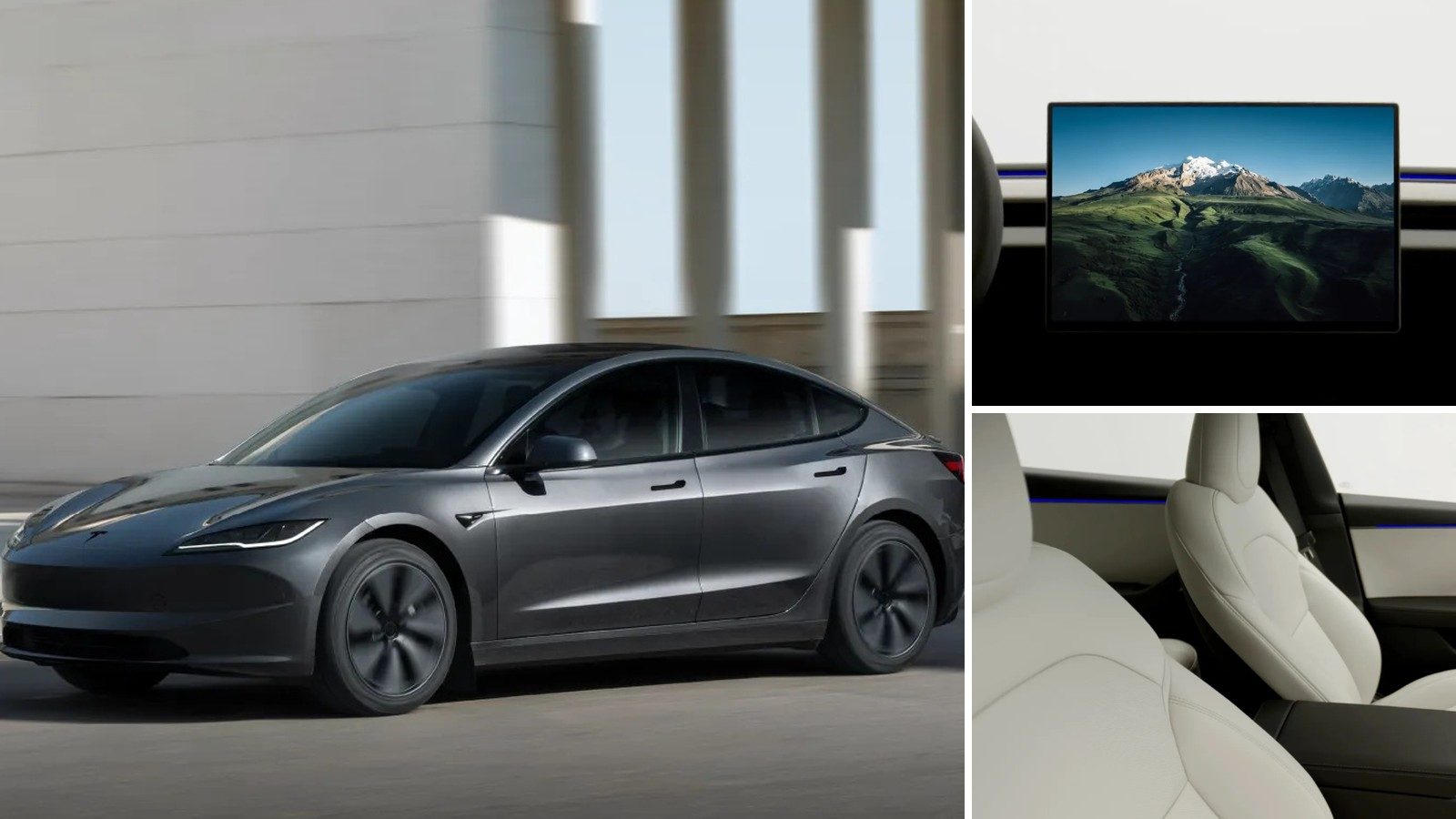
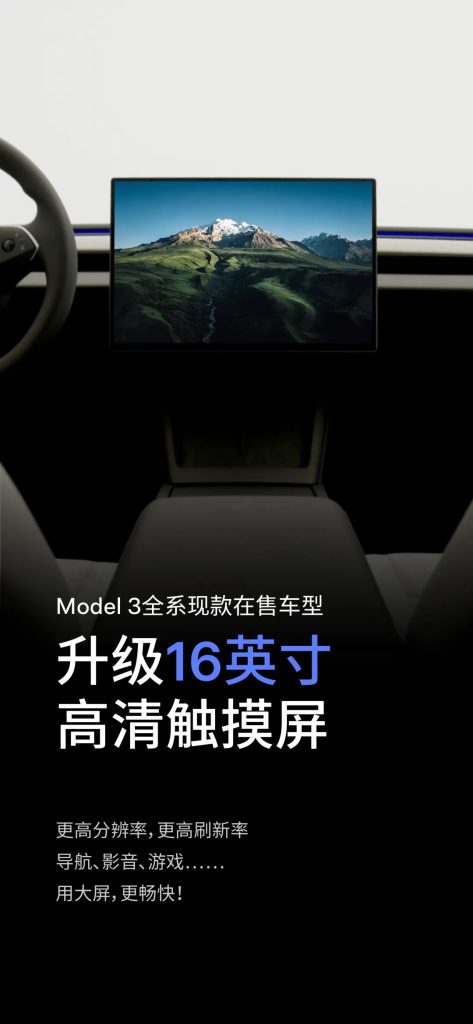
- The 16-Inch Touchscreen Display: Every current trim of the Tesla Model 3 built and sold in China now features an upgraded center touchscreen measuring 16 inches diagonally, replacing the previous 15.4-inch unit. Tesla notes that the new screen boasts both a higher resolution and an elevated refresh rate, though specific technical metrics were omitted from the official release.
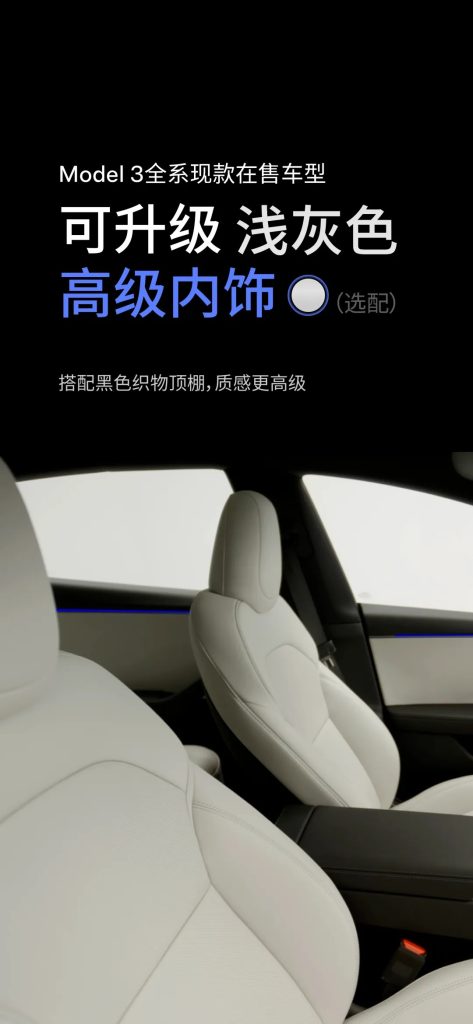
- Light Gray "Premium Interior": Chinese consumers can now option a sophisticated light gray interior package. True to Tesla’s aesthetic evolution, this option is paired with a striking black fabric headliner—a design language previously deployed in the American market for the 2026 Model Y.
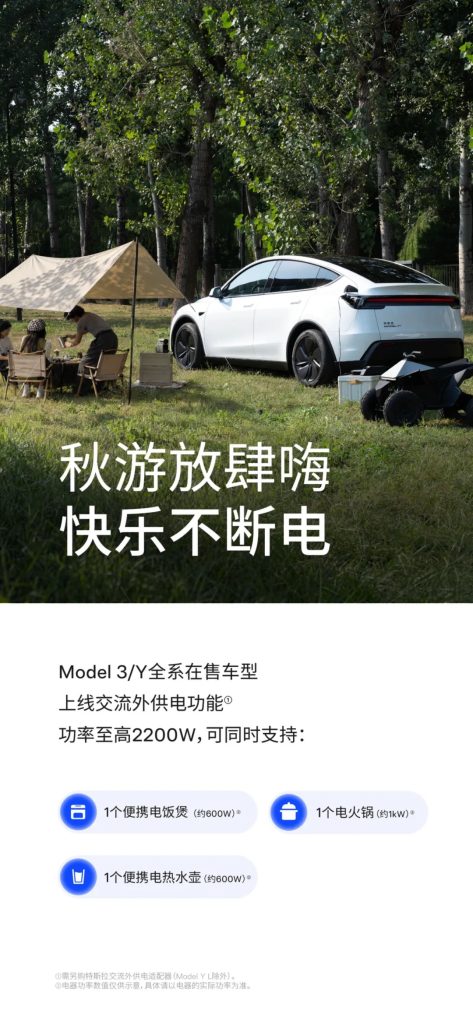
- 2.2 kW AC Power Export (V2L): Perhaps the most functional upgrade is the activation of up to 2,200 watts of alternating current (AC) power export across the entire current Model 3 and Model Y lineup in China. Utilizing Tesla’s optional AC power-export adapter, owners can draw substantial electricity directly from the vehicle. Tesla’s promotional materials vividly demonstrate this capability by running a 600-watt rice cooker, a 1,000-watt hot pot, and a 600-watt electric kettle simultaneously during a simulated outdoor camping trip. The sole exclusion in the lineup is the three-row Model Y L, which features integrated power export capabilities that circumvent the need for an external adapter.
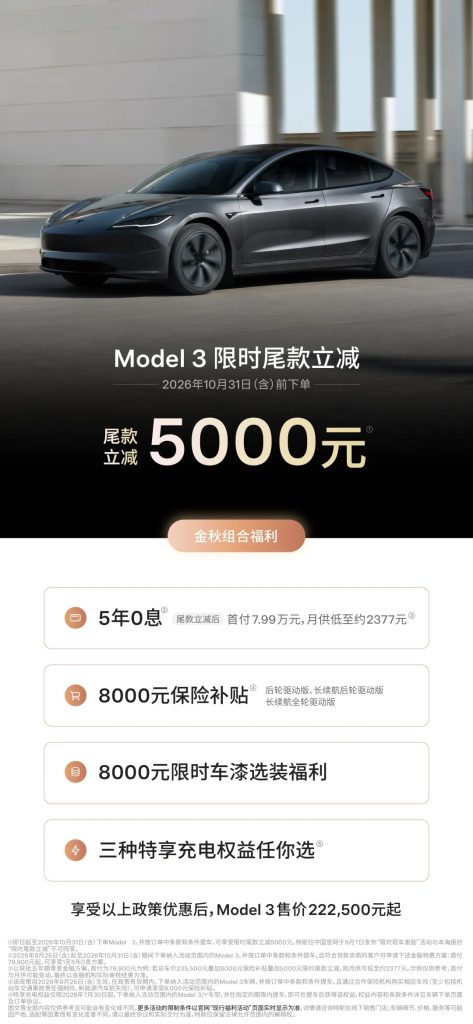
Alongside these hardware modifications, Tesla launched a fresh suite of financial incentives designed to capture market share ahead of the critical year-end sales push. Orders placed by October 31 qualify for a 5,000-yuan (~$740) discount applied directly to the final payment.
Tesla is stacking this promotion with a 5-year 0% financing program requiring a 79,900-yuan down payment (roughly 2,377 yuan per month), an 8,000-yuan insurance subsidy for Rear-Wheel Drive (RWD) and Long Range models, an 8,000-yuan paint credit, and a choice of charging perks. Factoring in all available subsidies and discounts, Tesla advertises the Model 3 starting at an effective price of 222,500 yuan (~$33,000). However, the baseline sticker price remains 235,500 yuan for the RWD variant, meaning the headline discount requires stacking both the final-payment reduction and the insurance subsidy.
Chronology of Events: The Evolution of Regional Disparities
The widening gulf between Tesla’s Chinese and American product offerings did not happen overnight; it is the culmination of a strategic pivot that has accelerated over the past year.
January 2026: The Model Y Signals a Shift
The seeds for the current interior design overhaul were planted earlier this year. In January 2026, Tesla refreshed its vehicle lineup by introducing the 2026 Model Y in the United States. That update brought the larger 16-inch screen and a contrasting black headliner to the American crossover market. At the time, analysts viewed it as a routine cabin refresh for Tesla’s high-volume seller, but it established a new benchmark for interior layouts that has now bled over to the Chinese Model 3 production lines.
August 2026: V2L Arrives Stateside—With Strings Attached
Vehicle-to-Load (V2L) capability has long been a standard selling point for competitors in Asia and Europe, but Tesla was slow to bring the technology to its vehicles. In August 2026, Tesla finally introduced V2L to the United States market, offering 2.4 kW of power export through an $80 adapter designed for the Gen 3 Mobile Connector.
However, the rollout was exclusionary. The feature was strictly limited to the Model Y Premium, Model Y Performance, and the Cybertruck. The entire American Model 3 sedan lineup was left completely shut out of the bidirectional power ecosystem.
October 1, 2026: China Gets the Comprehensive Treatment
In a stark contrast to the piecemeal US rollout, Tesla China executed a synchronized multi-feature launch on October 1. By updating the Model 3 with the 16-inch display, offering the premium light gray interior globally across the sedan tier, and enabling 2.2 kW AC power export across both the Model 3 and Model Y portfolios simultaneously, Tesla demonstrated a clear preference for efficiency and comprehensive feature deployment in its most cutthroat overseas market.
Supporting Data: Price Wars and Market Pressures
To understand why Tesla is lavishing its Chinese consumers with hardware upgrades and financial incentives while leaving US specifications untouched, one needs only to look at the macroeconomic and competitive landscape of the world’s largest EV market.
| Feature / Metric | Tesla Model 3 (China) | Tesla Model 3 (United States) |
|---|---|---|
| Starting Price (Base RWD) | 235,500 yuan (Effective ~$33,000 after stacked discounts) | $36,990 |
| Center Touchscreen Size | 16 inches (Higher resolution & refresh rate) | 15.4 inches |
| Interior Options | Includes new Light Gray with Black Headliner | Standard colorways |
| Vehicle-to-Load (V2L) | Standard across Model 3 & Model Y lineup (up to 2.2 kW) | Entire Model 3 lineup excluded |
| Current Incentives | 5,000 yuan final-payment cut, 5-year 0% financing, 8k insurance subsidy, paint credit | Standard federal tax credits (where applicable) |
Despite Tesla’s aggressive discount-stacking—bringing the entry barrier down to an advertised 222,500 yuan—the company faces unrelenting pressure from domestic Chinese manufacturers. For instance, BYD recently rattled the industry by launching its new Formula S electric sedan at a starting price of just 189,900 yuan (~$29,000), undercutting the Model 3 significantly even after Tesla’s latest promotional price cuts.
In this environment of margin compression and aggressive pricing wars, Tesla cannot rely on brand prestige alone. It must continuously sweeten the pot with hardware improvements (like the 16-inch screen) and practical lifestyle features (like the 2.2 kW V2L camping power setup) to convince buyers to choose a Tesla over a deeply discounted local alternative.
Implications: Why the US Model 3 is Falling Behind
The stark divergence between regional configurations raises pressing questions regarding Tesla’s global product roadmap and customer satisfaction in North America.
The Innovation Displacement Effect
Historically, automotive manufacturers often tested new features in their home markets before exporting them abroad. Tesla, however, has increasingly inverted this model. Because Shanghai Gigafactory operates as one of the most efficient, high-volume manufacturing hubs on earth—and because Chinese consumers are fiercely demanding when it comes to in-car tech, display real estate, and utility features—China has effectively become Tesla’s primary laboratory for rolling out mid-cycle refreshments.
For American consumers who purchase a Model 3 starting at $36,990, the omissions are becoming glaring. An American buyer looking at a newly manufactured Model 3 receives a smaller 15.4-inch screen and absolute exclusion from the V2L ecosystem, despite paying a comparable or higher relative price point depending on local incentives. The fact that the Model Y and Cybertruck received V2L capabilities in the US in August, while the Model 3 remains artificially restricted, indicates that Tesla’s hardware segmentation is deliberate rather than constrained by supply chains.
The Future of Bidirectional Charging
Vehicle-to-Load and Vehicle-to-Grid (V2G) technologies are transitioning from novelty camping perks to essential infrastructure expectations. As power grid strains increase and consumers look for resilient emergency backup solutions during severe weather events, the ability to pull 2.2 kW to 2.4 kW of AC power directly from a vehicle’s battery pack is a major selling point. By outfitting every single Model 3 and Model Y in China with this capability, Tesla is signaling that energy export is a core utility of its fleet—making the continued exclusion of the US Model 3 an increasingly difficult pill to swallow for American early adopters.

What Lies Ahead
As competition heats up globally, Tesla will eventually be forced to harmonize its hardware offerings to avoid alienating its domestic base in the United States. Whether the 16-inch display and universal V2L capabilities make their way across the Pacific in a forthcoming 2027 model year update remains to be seen. For now, however, the message from Austin and Shanghai is unmistakable: if you want the absolute cutting edge of Tesla’s mainstream sedan engineering, you want a Model 3 built in China.
