

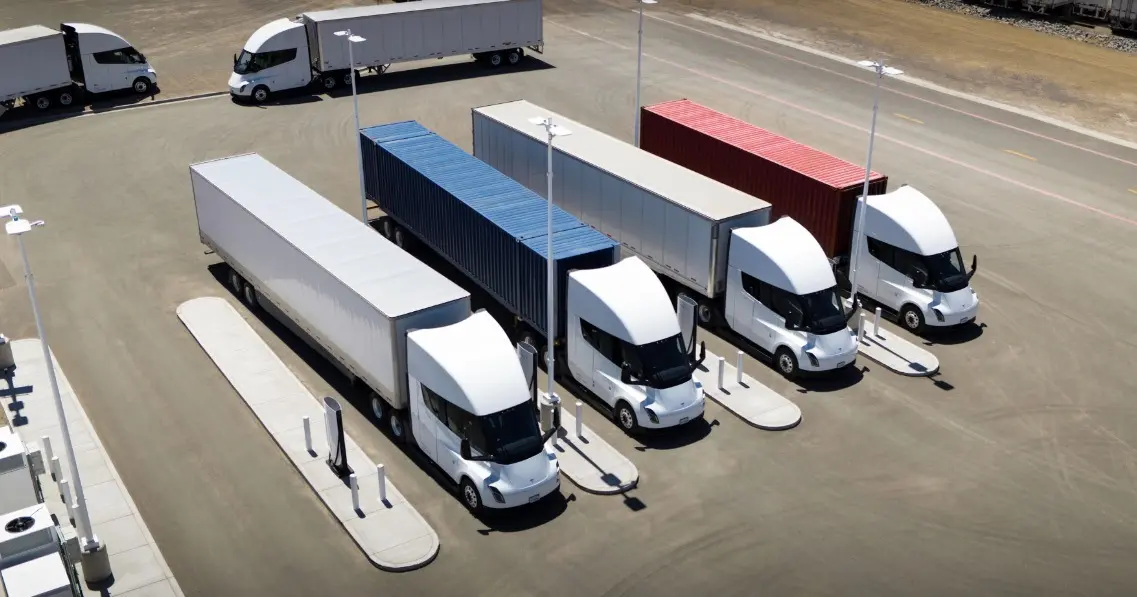
SAN FRANCISCO — In a pivotal development that signals a maturing business model for heavy-duty electric vehicle (EV) infrastructure, Tesla is expanding its footprint by operating public Megacharger sites at three upcoming electric truck depots owned by Forum Mobility, one of the foremost heavy-duty charging operators in the United States.
The announcement, made alongside Forum Mobility bringing an additional 30 megawatts (MW) of heavy-duty charging online, highlights a collaborative evolution in how commercial EV infrastructure is funded, built, and operated. Rather than relying exclusively on real estate acquired and managed in-house, Tesla is partnering with established regional infrastructure developers to accelerate the rollout of its Megacharger network. This move underscores the urgency with which logistics hubs, fleet operators, and technology providers are racing to electrify North America’s freight corridors.
Main Facts
The core of the partnership centers on California’s bustling freight ecosystem, specifically targeting major logistical choke points and drayage corridors. Under the agreement, Tesla will operate public Megacharging infrastructure at three of the four new heavy-duty electric truck depots that Forum Mobility is preparing to construct:
- FM Francis in Ontario, California.
- FM Adeline in Oakland, California.
- FM Coliseum in Oakland, California.
A fourth location, FM Santa Fe in Rancho Dominguez, California, is already heavily committed. It has been secured with contracted fleet capacity designated for more than 330 Tesla Semis, though Forum Mobility has confirmed that the site will remain accessible to the broader regional drayage community.
All four upcoming depots are engineered specifically for modern Class 8 electric trucks. They feature pull-through lanes—a vital design choice that allows truck drivers to pull in, plug in, and power up without the cumbersome process of unhooking their trailers. Furthermore, these sites incorporate a blend of the cutting-edge Megawatt Charging System (MCS) standard and traditional Combined Charging System (CCS) ports. According to Forum Mobility, the integrated MCS hardware can replenish up to 60% of an electric semi-truck’s driving range in roughly 30 minutes, drastically reducing downtime for commercial operators.
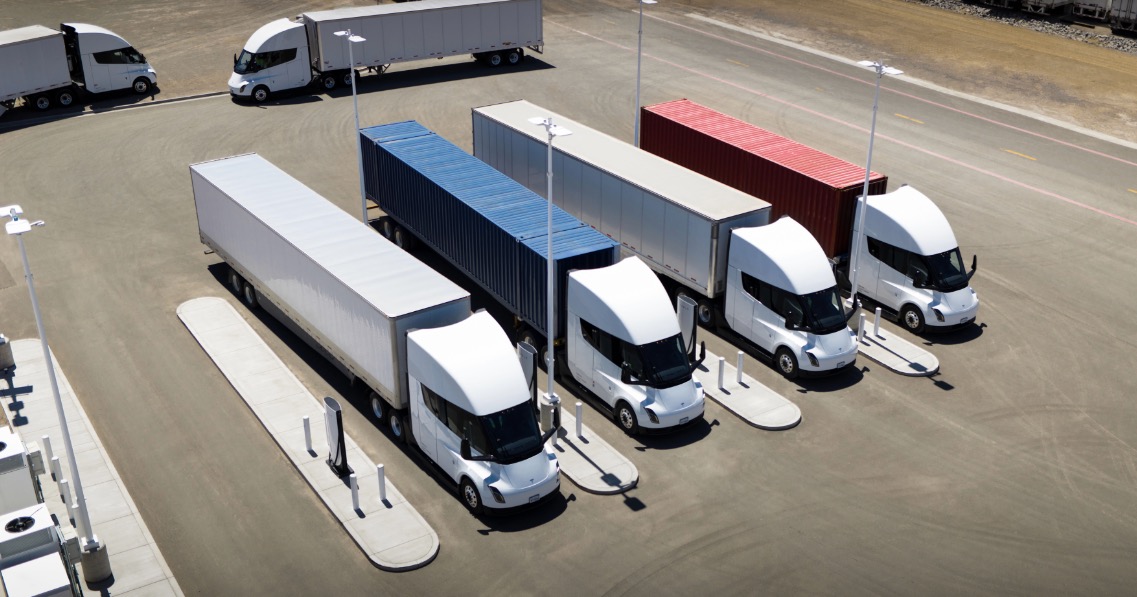
The financial and operational structure of this venture highlights a clean division of labor: Tesla builds and operates the charging equipment, while Forum Mobility owns the underlying real estate and stations. Tesla sells its Megacharger hardware for approximately $188,000 per unit and collects a $0.08 per kilowatt-hour (kWh) fee on third-party charging sites—a rate sitting 20% lower than its standard Supercharger for Business model. Because this hardware operates on the open MCS 3.2 standard, the stations are fully equipped to service heavy-duty electric trucks from competing manufacturers like Daimler, Volvo, and Scania, rather than being restricted exclusively to the Tesla Semi.
Chronology of Events and Network Expansion
The integration of Tesla hardware into third-party facilities is the latest milestone in a rapidly accelerating timeline for heavy-duty electric vehicle adoption:
- December 2024: Forum Mobility brings its flagship Port of Long Beach depot, FM Harbor, online with 44 CCS ports and 9 MW of total capacity.
- Early 2025 – Early 2026: Tesla aggressively scales its proprietary charging blueprints, outlining a roadmap of 66 planned Megacharger locations across the United States to support growing commercial deliveries.
- March 2026: Tesla officially opens its very first standalone public Megacharger station in Ontario, California, catering directly to early Tesla Semi customers.
- Mid-2026: Forum Mobility bolts two Tesla MCS Megachargers onto its existing FM Harbor depot, serving as an early proof-of-concept for the joint operating model.
- Current Announcement: Forum Mobility reveals that Tesla will operate the Megachargers at its three upcoming California depots (FM Francis, FM Adeline, and FM Coliseum), while total operational capacity surges past 40 MW online or under construction across 25 contracted carrier customers.
Looking forward, Forum Mobility’s aggressive expansion blueprint does not stop in California. The company is already planning subsequent waves of heavy-duty depots in vital logistics hubs, including the Inland Empire, California’s Central Valley, Las Vegas, Phoenix, Houston, Dallas, the Seattle/Tacoma corridor, and Chicago. Many of the initial California sites have been heavily supported and accelerated by state and regional clean transportation grants.
Supporting Data and Economic Realities
The rapid deployment of heavy-duty charging infrastructure is underpinned by undeniable economic and environmental shifts within the freight sector. Industry analysts and operators point to the total cost of ownership (TCO) as the primary catalyst for fleet electrification.
- Capital and Operational Costs: Tesla’s pricing model prices the Megacharger hardware at $188,000, establishing a clear capital expenditure benchmark for depot developers. The transaction fee of $0.08/kWh provides a predictable operational revenue stream for Tesla without exposing the company to commercial real estate risks.
- Charging Speed and Efficiency: The integration of the Megawatt Charging System (MCS) standard solves the historic bottleneck of commercial EV charging. Delivering enough electricity to recover 60% of a battery’s capacity in 30 minutes aligns closely with mandatory driver rest breaks (such as those mandated by Hours of Service regulations), transforming charging time into necessary downtime.
- Network Scaling: Tesla’s official rollout map currently features 66 dedicated Megacharger locations. However, partnering with independent infrastructure developers like Forum Mobility allows Tesla to bypass the slow municipal zoning, grid-interconnection, and real estate acquisition hurdles that typically bog down exclusive network rollouts.
- Regional Concentration: Forum Mobility’s strategic focus on the ports of Oakland and Long Beach targets America’s busiest drayage lanes. These short-haul, highly predictable routes represent the lowest-hanging fruit for battery-electric freight, where trucks return to a home depot or travel limited daily radiuses that perfectly match current battery capabilities.
Official Responses and Stakeholder Perspectives
The partnership has drawn widespread acclaim from port authorities, clean energy advocates, and corporate executives alike, all of whom view the collaboration as a necessary step toward decarbonizing America’s supply chain.

Matt LeDucq, CEO and co-founder of Forum Mobility, emphasized the economic driving forces behind the transition during the announcement:
"The highly favorable total cost of ownership for battery-electric class 8 trucks has driven rapid motor carrier adoption. By partnering with technology leaders like Tesla, we are able to provide commercial fleets with the reliable, ultra-fast charging infrastructure they need to make the permanent switch from diesel to electric."
Public agencies managing critical infrastructure are equally eager to embrace the rollout. Kristi McKenney, Executive Director of the Port of Oakland, highlighted the regional environmental benefits tied to the new depots:
"The Port of Oakland is excited to work with Forum Mobility to deliver advanced clean truck solutions. Drayage trucks are the lifeblood of our port operations, but they have historically been a major source of local emissions. Deploying high-speed megawatt charging hubs is a massive leap forward in cleaning up our air while maintaining operational efficiency."
Industry observers have similarly noted the pragmatic brilliance of the "Tesla runs the charger, Forum owns the station" model. It allows Tesla to monetize its proprietary hardware and software ecosystem across a wider array of commercial fleets, while empowering regional energy operators to manage local grid integration and property assets efficiently.

Broader Implications for the Freight Industry
The convergence of Tesla’s hardware expertise and Forum Mobility’s real estate footprint carries profound implications for the future of North American freight transport:
- Validation of Open Standards: By embracing the open MCS 3.2 standard, Tesla is proactively shifting away from a closed-ecosystem model for commercial trucking. In the passenger vehicle space, Tesla’s adoption of the NACS (North American Charging Standard) revolutionized the industry; applying a similar open-access philosophy to the Megacharger network ensures that multi-brand commercial fleets can utilize the exact same physical stalls. This significantly lowers the barrier to entry for fleet operators running mixed fleets of Tesla Semis, Volvo VNR Electrics, and Freightliner eCascadias.
- De-risking Commercial Real Estate: For Tesla, operating chargers on third-party land is a masterclass in capital efficiency. Developing multi-acre truck depots equipped with megawatt-scale grid connections is notoriously capital-intensive and time-consuming. By letting specialized operators like Forum Mobility handle land acquisition, utility coordination, and regional permitting, Tesla can scale its service revenue and vehicle delivery footprint globally without tying up massive amounts of corporate capital in real estate holdings.
- Overcoming the "Chicken-and-Egg" Infrastructure Dilemma: Fleet operators have long hesitated to order electric semi-trucks due to a lack of guaranteed, ultra-fast charging infrastructure along major freight routes. Conversely, charging operators have sometimes struggled to justify building massive 30+ MW depots before guaranteed truck volumes are secured. This partnership breaks the deadlock: Forum Mobility secures the land and long-term carrier commitments (such as the 330-truck reservation at the Rancho Dominguez depot), while Tesla provides the high-power hardware required to make those operations viable from day one.
- Accelerating North American Decarbonization: North America has historically lagged behind regions like Europe and parts of Asia in aggressively mandating and deploying heavy-duty commercial EV infrastructure. Initiatives like the California-based Forum-Tesla partnership demonstrate that market-driven economics, bolstered by targeted state grants and pragmatic business-to-business partnerships, can bridge the gap.
As these four California depots come online and Forum Mobility expands its footprint into Texas, Illinois, Nevada, and Washington, the blueprint for a nationwide electrified freight network is finally taking shape. If scaled successfully, this hybrid operating model could serve as the definitive template for how the world transitions its heaviest, most polluting vehicles away from fossil fuels and onto the electrical grid.
