

By Andrew J. Hawkins (Enriched & Expanded Report)
Transportation & Automotive Desk
Main Facts
In the wake of a horrific mass shooting at a Tesla Supercharger station in Twin Falls, Idaho, that left four people dead and seven others wounded, electric vehicle pioneer Tesla has introduced a critical safety update. The new software feature, dubbed “Emergency Drive Away,” is designed to solve a fatal design bottleneck inherent to modern electric vehicles: the mechanical locking mechanism that secures charging cables to vehicles while they draw power.
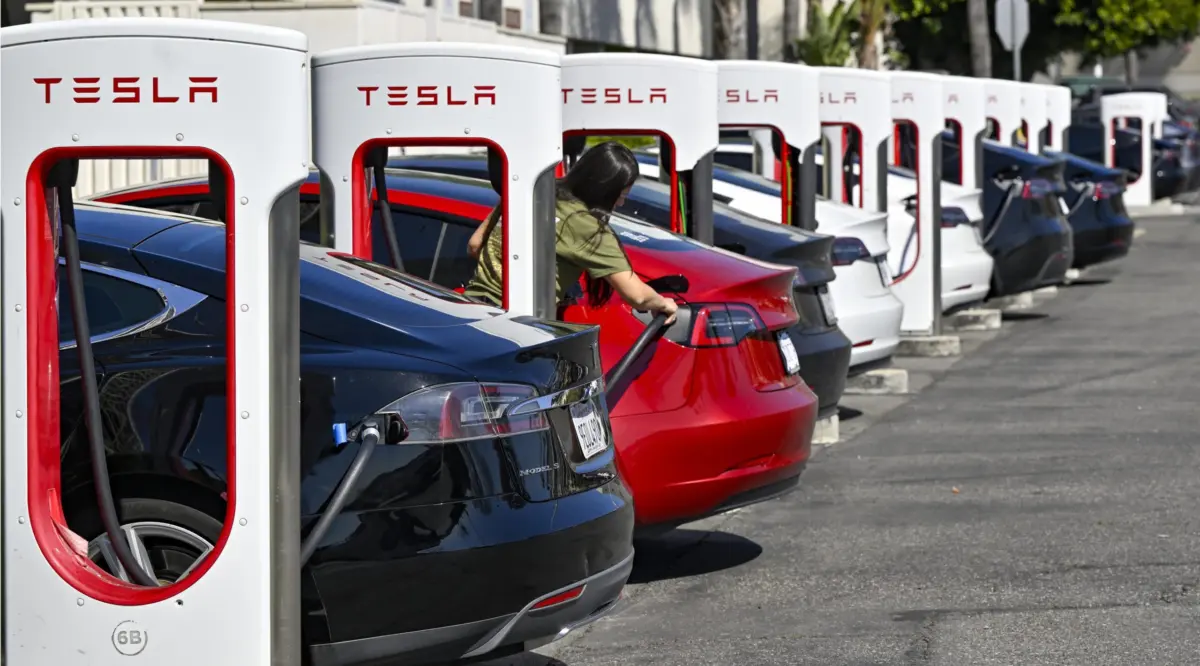
For years, the standard architecture of electric vehicles—and Tesla’s Supercharger network in particular—has prioritized energy transfer stability and anti-theft security. When a Tesla is plugged into a Supercharger, the heavy cable locks automatically into the charging port. Simultaneously, the vehicle’s powertrain is electronically disabled to prevent a driver from accidentally driving away with the cord still attached, which could arc high-voltage electricity, damage the port, or rupture the station infrastructure.
However, this vital anti-theft and safety interlock inadvertently created a trap during active threat scenarios. Because drivers had to manually release the cable via an infotainment menu or a physical trunk-release latch before shifting into gear, they were forced to remain stationary, exposed, and vulnerable if a threat materialized while they sat in their charging vehicle.
The newly deployed over-the-air (OTA) software update circumvents this limitation. It allows a driver to instantly override the charging lock and put the car into drive even while the heavy-duty cable remains physically attached to the vehicle. Upon shifting, an emergency prompt flashes on the touchscreen, asking the driver to confirm the urgency of departure. Once confirmed, the car forces a breakaway mechanism, causing the handle to shear off and fall to the ground.
While the feature provides a literal lifeline in a worst-case scenario, it is strictly an emergency tool. Engaging the system causes unavoidable, though necessary, damage to both the vehicle’s charging port and the proprietary Supercharger handle. Furthermore, Tesla has issued warnings that deliberate misuse of the feature will result in severe penalties, though the company has not yet detailed the exact nature of those punitive measures. For now, the feature is rolling out exclusively within the United States.
Chronology of Events
To understand how Tesla arrived at this pivotal software adjustment, it is necessary to examine the tragic timeline and the pressure from consumers and third-party innovators that preceded it.
August 2024: The Twin Falls Tragedy
The catalyst for the software update occurred in August at a bustling Tesla Supercharger station in Twin Falls, Idaho. A 24-year-old gunman opened fire on civilians at the charging hub in a random, horrific act of mass violence. Four individuals were killed, and seven others were wounded. Among the injured was a Tesla owner who had been sitting inside his vehicle while it charged. Trapped by the physical constraints of the locked charging cable and the vehicle’s disabled transmission, victims had virtually no way to flee the line of fire instantly without exposing themselves to exit the vehicle and manually disconnect the hardware. The gunman ultimately died by suicide at the scene.
The Rise and Fall of Aftermarket Interventions
Long before Tesla officially addressed the vulnerability, the aftermarket sector attempted to fill the gap. In 2024, an innovative startup named EVject gained significant traction within the EV community by launching a specialized "breakaway adapter." Marketed explicitly for safety-conscious drivers, the adapter allowed Tesla owners to pull away from a Supercharger station rapidly in dangerous situations without stepping out of the vehicle.
However, the path for independent safety solutions was fraught with friction. Tesla quickly took legal action against EVject, claiming internal stress and thermal testing indicated that the aftermarket adapter could overheat and pose a fire hazard. The legal battle persisted for months until late 2024, when Tesla quietly dropped the lawsuit. EVject consistently maintained that its engineering was robust and safe, but the dispute highlighted a glaring void: drivers wanted an emergency escape mechanism, and the automaker had not yet provided an official solution.
Late 2024 / Early 2025: Consumer Advocacy and Official Development
Following the Idaho shooting, social media channels, Reddit forums, and owner associations amplified calls for a software-based override. Owners pointed out that software could easily govern a controlled override mode, bypassing the need for bulky third-party hardware adapters. Tesla’s engineering teams responded quietly behind the scenes, culminating in the deployment of the "Emergency Drive Away" firmware update this week.

Supporting Data and Context
The urgency of Tesla’s software patch is intrinsically tied to the unique socio-technical landscape of the United States, where the intersection of high-capacity electric vehicle infrastructure and widespread firearm ownership presents unprecedented security challenges.
- Firearm Statistics: In its unofficial context surrounding the rollout, industry analysts have noted that the United States is home to an estimated 500 million privately owned firearms. Public charging stations, often located in desolate commercial parking lots, rest stops, or poorly lit corners of strip malls, present isolated environments where drivers are stationary for 15 to 45 minutes at a time.
- Charging Infrastructure Vulnerabilities: Unlike traditional gas stations where drivers remain outside their vehicles holding a pump handle—allowing them to drop the nozzle and drive away instantly—EV drivers frequently sit inside locked cabins, often with climate control running, watching videos, or working on laptops. This cabin isolation creates a delayed reaction time to external threats.
- Financial and Material Costs: The newly introduced feature trades physical infrastructure integrity for human life. When the "Emergency Drive Away" protocol is activated, the vehicle’s onboard charging pin assembly and the Supercharger’s latch mechanism undergo structural failure. Replacing a damaged Tesla charging port can cost hundreds to thousands of dollars in parts and labor, while municipal or corporate Supercharger downtime incurs repair expenses for the network. Nevertheless, Tesla’s calculus firmly establishes that property damage is a secondary concern when human lives are on the line.
Official Responses and Industry Reactions
Tesla’s announcement of the "Emergency Drive Away" feature was characteristically sparse in its corporate communications, reflecting the delicate nature of addressing a mass shooting without inviting sensationalized media cycles.
In a brief post on the social media platform X (formerly Twitter), Tesla outlined the functionality of the update:
"The new emergency drive away feature allows vehicle owners to override the charging lock and drive away while the handle is still attached. Shifting into drive will activate an emergency drive away alert that asks the driver to confirm they need to get away. The handle will break away and fall to the ground…"
Crucially, Tesla omitted any explicit reference to the Twin Falls massacre in its official release notes. However, transportation safety advocates and legal experts have universally interpreted the update as a direct institutional response to the tragedy.
Automotive safety groups have generally praised the update, noting that it sets a vital precedent for the entire electric vehicle industry. Legacy automakers and competing EV charging networks—such as Electrify America, EVgo, and Ionity—are now facing mounting pressure from consumer advocacy groups to implement similar emergency override software for their respective vehicles and charging ecosystems.
Regarding the punitive measures threatened for misuse, Tesla’s statement on X warned: "Deliberate misuse will invoke additional penalties." While transport lawyers speculate these penalties could range from remote software lockouts to charging network bans or financial invoicing for damaged Supercharger cables, Tesla has not clarified how it plans to differentiate between an authentic panic situation and reckless prank behavior.
Broader Implications for the EV Industry
The introduction of the "Emergency Drive Away" feature marks a watershed moment in the maturation of electric vehicles. For over a decade, EV design has focused primarily on efficiency, battery longevity, aerodynamic styling, and digital entertainment. Safety conversations were almost exclusively dominated by crash-test ratings, battery thermal runaway containment, and autonomous driving software capabilities like Full Self-Driving (FSD) or Autopilot.
The Twin Falls tragedy and Tesla’s subsequent software patch violently shift the conversation toward personal security and physical threat mitigation in an increasingly volatile public sphere.
- Redefining "Safety": Safety in the EV era can no longer be defined solely by crumple zones and airbags. It must encompass situational vulnerabilities that arise while a vehicle is immobilized during routine maintenance tasks, such as refueling, charging, or servicing.
- The Software-Defined Vehicle Advantage: This event highlights the ultimate superpower of modern software-defined vehicles: the ability to deploy life-saving physical modifications globally via an overnight Wi-Fi update. A problem that previously would have required a massive, multi-million-dollar physical recall to replace locking pins was solved through a line of code and a confirmation prompt.
- The Aftermarket Ecosystem: Tesla’s willingness to build this functionality natively validates the market demand identified by startups like EVject. While it signals a difficult road ahead for standalone hardware startups attempting to patent physical workarounds to automaker-controlled software ecosystems, it proves that consumer demand can effectively force multi-trillion-dollar corporations to adapt their safety roadmaps.
As the "Emergency Drive Away" feature rolls out to U.S. fleets, it stands as a grim reminder of the real-world dangers drivers face, while simultaneously demonstrating the agility of modern automotive engineering in adapting to protect human life above all else.
