

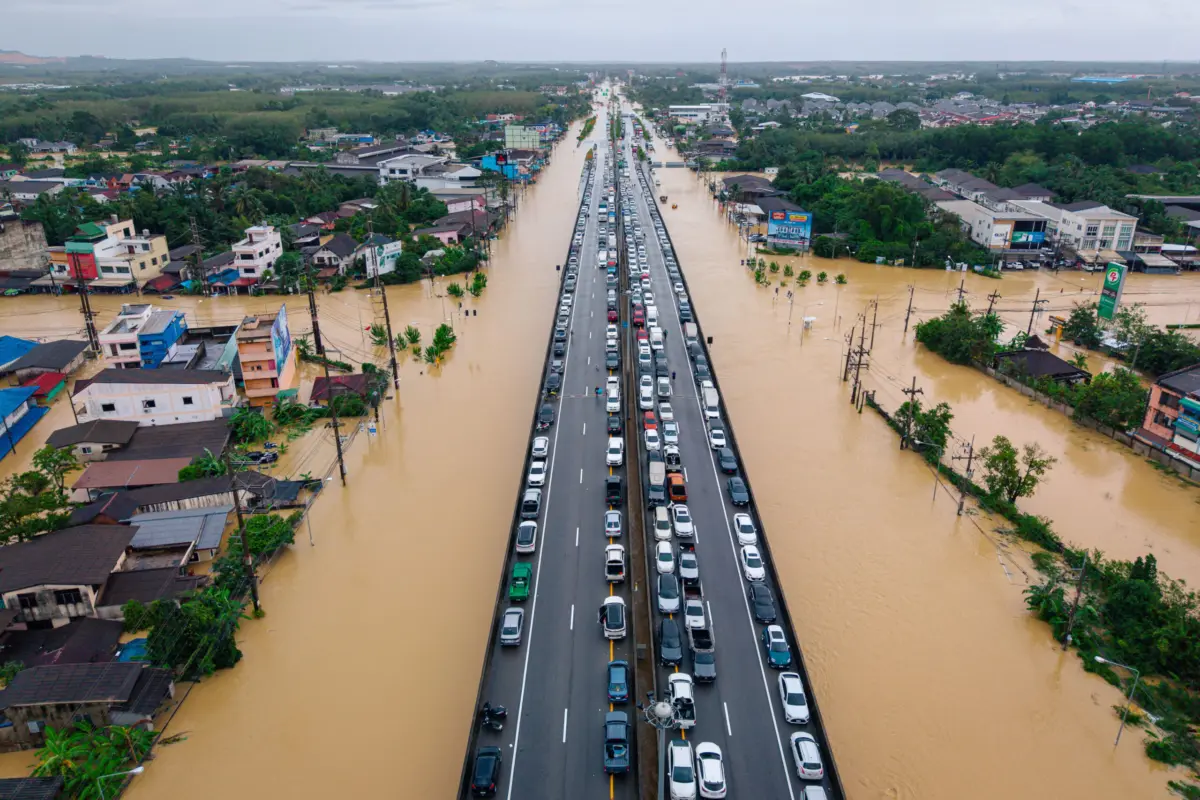
BANGKOK — In a sweeping policy overhaul designed to mitigate the compounding economic toll of climate change, the Thai government has greenlit a massive 15.5 billion baht ($467 million) annual disaster insurance program. The initiative aims to provide state-subsidized coverage to approximately 30 million households situated in high-risk zones across the Southeast Asian nation.
By forging a novel public-private partnership, the government seeks to offload a significant portion of the soaring financial liabilities associated with catastrophic floods, severe storms, and earthquakes onto private insurers. The move marks a critical evolution in how Thailand manages natural disaster recovery, transitioning away from a purely reactive, ad-hoc state compensation model toward a formalized, market-driven risk-transfer architecture.
Main Facts
The newly approved national insurance initiative fundamentally alters the financial safety net available to millions of Thai citizens vulnerable to extreme weather events.
- Program Scale and Cost: The Thai government has earmarked 15.5 billion baht annually for the program. State estimates indicate this expenditure will unlock roughly 75 billion baht in total annual catastrophe coverage, with the balance absorbed by private insurance markets.
- Target Demographic: Approximately 30 million households residing in formally designated high-risk areas throughout the country will be automatically integrated into the scheme.
- Coverage Scope: The policies protect against the triad of primary natural hazards threatening the kingdom: floods, severe storms, and earthquakes.
- Payout Structure and Limits:
- Rapid Relief: Households will receive expedited initial payouts of 10,000 baht for flood damages and 5,000 baht for storm or earthquake damages within 15 days of a verified event.
- Maximum Compensation: Total compensation is capped at 100,000 baht per household per individual disaster.
- Fatalities: In the tragic event of disaster-related fatalities, the program stipulates a payout of 2 million baht per deceased individual.
- Inter-Agency Collaboration: The complex framework is being jointly developed by the Department of Disaster Prevention and Mitigation, the Ministry of Finance, the Office of Insurance Commission (OIC), and the Thai General Insurance Association (TGIA).
Chronology: The Road to Reform
Thailand’s journey toward restructuring its disaster management and fiscal response has been accelerated by a relentless succession of severe climate-induced weather anomalies over the past several years.
The Historical Burden
For decades, the Thai treasury has borne the brunt of natural disasters through direct, reactive fiscal allocations. Government estimates reveal that the state routinely spends at least 30 billion baht annually directly compensating affected households for property loss, agricultural destruction, and infrastructure rehabilitation. This reactive approach placed a heavy, unpredictable burden on taxpayers and frequently strained annual budgetary planning.
The 2025 Catastrophe Triggers
The push for a permanent, institutionalized insurance mechanism reached a tipping point following a series of devastating weather events in late 2025:
- September 2025 (Northern Floods): Heavy monsoon rains triggered violent flash floods across northern Thailand. The disaster claimed three lives and directly disrupted the livelihoods of roughly 25,000 residents, destroying rural infrastructure and agricultural yields.
- November 2025 (Southern Deluge): A catastrophic seasonal flood swept through southern Thailand, impacting well over one million people. The floods heavily paralyzed Hat Yai—a vital commercial, logistical, and tourism hub in Songkhla province—causing immense economic paralysis and property damage that underscored the urgent need for a robust financial safety net.
The Policy Breakthrough
Following months of inter-ministerial consultations and actuarial modeling led by financial regulators and private underwriters, Prime Minister Anutin Charnvirakul formally announced the approval of the 15.5 billion baht program during a cabinet briefing in Bangkok. The announcement signals the formal launch of a multi-agency implementation timeline slated to roll out across vulnerable provinces.
Supporting Data & Economic Analysis
To understand the economic rationale behind Thailand’s new insurance paradigm, one must examine the broader macro-fiscal landscape of disaster management in developing and middle-income Asian economies.
Fiscal Exposure vs. Premium Allocation
- Current Annual State Expenditure: ~30 Billion Baht (Direct compensation, relief funds, and emergency infrastructure rehabilitation).
- New State Insurance Subsidy: 15.5 Billion Baht per year.
- Total Underwritten Coverage Value: ~75 Billion Baht annually.
- Private Sector Risk Absorption: The remaining liabilities exceeding the state’s direct funding caps will be distributed across the private insurance and reinsurance markets.
The Underinsurance Gap in Asia
Thailand’s initiative directly addresses a systemic vulnerability identified by global financial institutions: the staggering protection gap in emerging Asia. While urbanization concentrates populations and high-value assets in low-lying river basins and coastal zones—heightening exposure to natural hazards—climate change supercharges the frequency and intensity of extreme weather. Historically, a vast majority of the economic damage inflicted by these events has remained entirely uninsured, forcing governments to absorb 100% of the recovery costs or leaving vulnerable citizens destitute.
By capping state payouts at 100,000 baht per household and transferring catastrophic tail-risk to private carriers, the Thai government is establishing a sustainable fiscal buffer. Insurers will shoulder payouts beyond the limits covered directly by the government, effectively utilizing private capital markets to absorb shocks that would otherwise destabilize the national budget.
Official Responses and Stakeholder Perspectives
The rollout of the national disaster insurance scheme has elicited widespread commentary from government officials, regulatory bodies, and insurance sector representatives.
Government Leadership
Prime Minister Anutin Charnvirakul emphasized that the program is designed to create a predictable, sustainable safety net that protects citizens while safeguarding public finances.
"We are moving from a system of reactionary relief to a structured, resilient financial framework," Prime Minister Anutin noted during his briefing with reporters. "By partnering with the private insurance industry, we ensure that our citizens receive rapid assistance while shielding taxpayers from the unbearable, compounding costs of recurring natural disasters."
Administrative and Procedural Execution
Detailing the mechanics of the payout schedule, government spokeswoman Rachada Dhnadirek highlighted the administration’s commitment to bureaucratic efficiency and rapid liquidity distribution during crises.
"When disaster strikes, every day counts for a displaced family or a small business owner," stated Rachada. "Under this program, households will receive initial payouts of 10,000 baht for flood damage and 5,000 baht for storm or earthquake damage within an aggressive 15-day window. This ensures that immediate liquidity reaches those who need it most, long before comprehensive damage assessments are finalized."
Institutional Collaboration
The structural integrity of the program relies heavily on the synchronized efforts of financial regulators and industry associations. The Department of Disaster Prevention and Mitigation is spearheading hazard-mapping and vulnerability assessments to accurately define the 30 million high-risk households. Concurrently, the Ministry of Finance and the Office of Insurance Commission (OIC) are establishing regulatory guardrails to ensure that private insurers maintain adequate solvency margins to absorb secondary tier payouts. The Thai General Insurance Association (TGIA) has expressed cautious optimism, noting that while private carriers will take on substantial exposure, the pooling of risk across 30 million households creates a viable, large-scale commercial market.
Implications for the Future
The implementation of Thailand’s state-backed disaster insurance program carries profound implications for domestic policy, the insurance sector, and regional climate adaptation strategies across Asia.
Transforming Domestic Insurance Penetration
For decades, voluntary property and catastrophe insurance penetration in Thailand—particularly among low- and middle-income rural and semi-urban households—has remained comparatively low. By embedding millions of households into a state-subsidized framework, the government is effectively familiarizing a massive demographic with formal insurance products. Over time, this could catalyze organic growth in the broader commercial insurance sector, as citizens recognize the value of risk mitigation and seek supplemental private coverage beyond the state-mandated caps.
A Blueprint for Climate-Vulnerable Nations
As global temperatures rise and extreme weather events become the new normal, governments across the Global South are grappling with fiscal insolvency caused by recurrent disaster recovery expenditures. Thailand’s hybrid model—combining a heavy government subsidy for baseline protection with private sector risk-transfer for catastrophic overruns—serves as a compelling case study in public-private risk management. If successful, the framework could be replicated by neighboring ASEAN nations facing similar climate vulnerabilities, such as Vietnam, the Philippines, and Indonesia.
Long-Term Resilience and Adaptation
Critics and environmental analysts point out that while financial risk-transfer mechanisms are crucial for post-disaster recovery, they must be paired with aggressive physical adaptation strategies. Flood defenses, zoning laws that restrict residential development in high-risk river basins, and resilient agricultural practices remain paramount. Nevertheless, by structuring financial risk efficiently, Thailand has taken a monumental step toward climate resilience, ensuring that when the next major deluge or seismic tremor strikes, the nation’s economic foundation remains intact.
