

Introduction and Main Facts
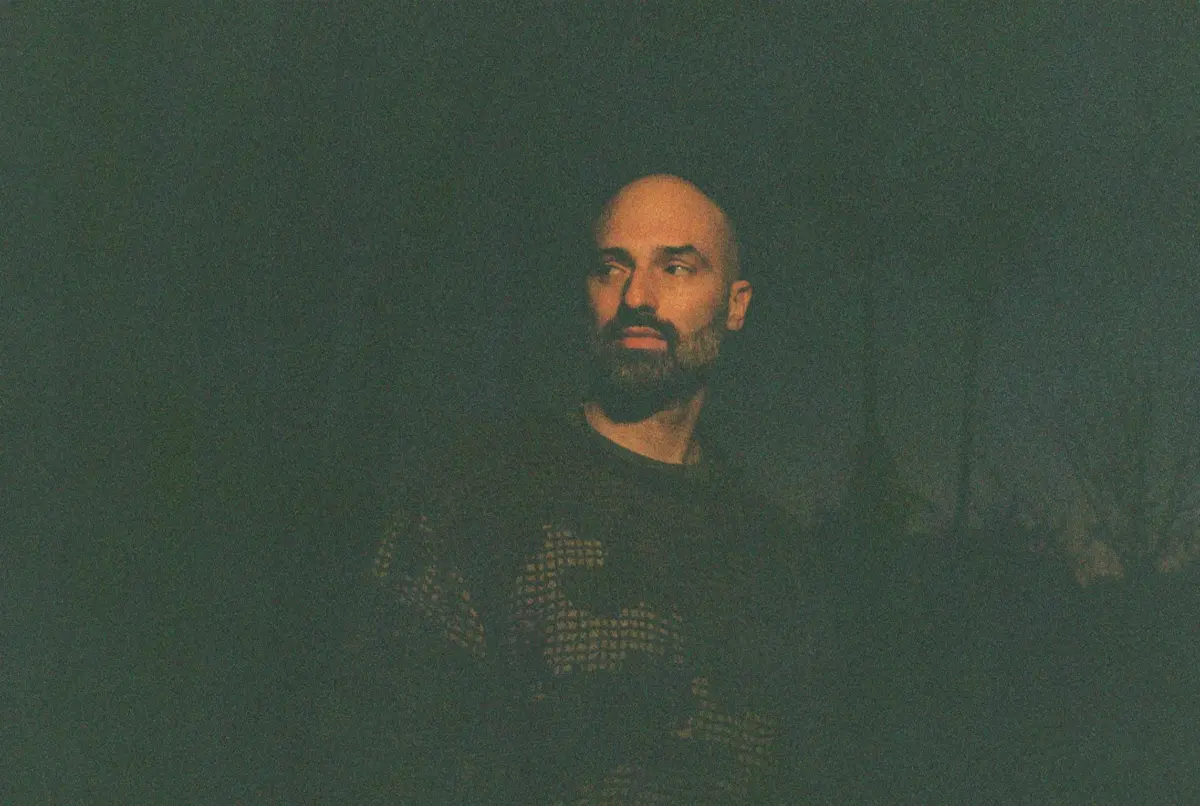
To the average music consumer, the name Nicholas Piantedosi—better known by his producer moniker, Decap—might not ring a bell in the same way that Kendrick Lamar, Olivia Rodrigo, or Charli XCX do. Yet, in a testament to the invisible architecture of modern hit-making, his sonic fingerprints are deeply embedded across the global charts. From chart-topping pop and hip-hop to Latin trap and even Ludwig Göransson’s Academy Award-winning score for Oppenheimer, Decap’s influence is pervasive.
While he collaborates with top-tier talent including Freddie Gibbs, Bad Bunny, Mac Miller, and BTS, Decap’s most profound industry-wide impact stems from Drums That Knock, his wildly successful series of sample packs. Launched in 2016 and now spanning 11 installments, the sample library has become a secret weapon for producers across genres. Renowned producer Kenneth Blume—better known as Kenny Beats, who has shaped hits for Denzel Curry, Vince Staples, and FKA Twigs—once lauded Decap’s impact succinctly: he "changed a million lives with a single snare."
In a recent interview exploring his creative process, workflow, and philosophy on gear, the Los Angeles-based producer opened up about the tools that define his career, his disdain for industry gatekeeping, and the eternal struggle of translating massive low-end frequencies to subpar smartphone speakers.
Chronology: From Junior High Samplers to Global Charts
Decap’s journey into music production did not begin in a multi-million-dollar Hollywood studio equipped with vintage mixing boards. Instead, it traces back to his early adolescence and a piece of hardware that remains close to his heart to this day.
- Late 1990s: A young Nicholas Piantedosi discovers his passion for beat-making in junior high school. Armed with his first-ever sampler, a Boss SP-202 Dr. Sample released in 1998, he begins cutting his teeth by chopping up audio samples—laying the foundational workflow for everything he would achieve later in life.
- 2016: Recognizing a gap in the market for punchy, dynamic, and heavy-hitting drum sounds that could cut through modern mixes, Decap launches the first edition of Drums That Knock. The sample pack quickly circulates through underground producer circles, praised for its immediate usability and characteristic warmth.
- The 2020s: As the sample series gains legendary status among beatmakers, Decap’s production and mixing credits expand exponentially. His signature sound permeates tracks for global superstars, shifting from underground hip-hop circuits to mainstream pop, K-pop phenomena like BTS, and cinematic soundscapes.
- Present Day: Drums That Knock reaches its 11th installment. Decap continues to operate out of Los Angeles, balancing high-profile production work, sound design, and a steadfast philosophy centered on accessibility and creative momentum over expensive hardware acquisition.
Supporting Data & Technical Insights: The Producer’s Toolkit
Decap’s workflow relies on a careful balance between cutting-edge digital software and foundational analog-emulation techniques. When asked about his indispensable tools, the producer breaks down his technical setup and creative methodology:
The Core Setup
- Digital Audio Workstation (DAW): Ableton Live serves as Decap’s primary canvas. "It’s how I get my ideas out," he notes, praising its speed and fluidity in translating spontaneous musical thoughts into fully realized tracks.
- The Secret Weapon (The Soft Clipper): According to Decap, the most underappreciated tool in modern production is the soft clipper. By driving signals into a clipper, producers can achieve a warm, analog-style saturation or make their drums hit with visceral aggression. "It’s the tool that changed my music," he states.
- Nostalgic Hardware: Despite working extensively in the box with modern plugins, Decap refuses to part with his 1998 Boss SP-202 sampler, a nostalgic touchstone that reminds him of his early days chopping samples in junior high.
The Mobile Audio Dilemma
A self-proclaimed fanatic of low-end frequency weight, Decap harbors a notable frustration with contemporary consumer listening habits—specifically, the reliance on smartphone speakers.
"I wish I could hear a fat 808 on my phone," Decap explains. "A raw 808 with no processing is basically inaudible on a phone speaker. So many people listen to music all day on their phone without ever truly feeling the low end. If I can make my drums knock on a phone anyway, I’m doing something right."
Overcoming Creative Blocks: The 3M Technique
When faced with creative stagnation, Decap relies on a strict internal protocol known as the 3M technique: Make it, Mix it down, Move on. He stresses that perfectionism is often the enemy of creation, advocating instead for momentum. "It doesn’t have to be perfect. It’s about staying in the action of creation, because that’s where the magic happens." This mindset is paired with regular meditation, which he uses to align his mind and body before tackling complex production sessions.
Industry Perspectives and Official Responses
Decap’s philosophy extends far beyond technical execution, touching on cultural attitudes within the music production community. Chief among his grievances is the persistent culture of "gear snobbery" and gatekeeping.
Throughout the digital age, a pervasive myth has circulated that professional-grade music can only be produced using expensive vintage hardware, specific analog consoles, or high-end proprietary software. Decap vehemently rejects this notion, championing accessibility and raw talent above all else.
"This idea that you’re not a real producer unless you use hardware, or unless you use this DAW or that one… It’s not true," Decap asserts. "If you’ve got a computer, you already have everything you need. The dopest producer might be a kid in North Africa with Skullcandy headphones. The only thing I care about is if you’re dope or not."
This egalitarian view has earned him immense respect from peers across the industry. Producers like Kenny Beats frequently highlight how creators like Decap democratize high-level sound design, providing bedroom producers with the exact tools needed to compete with major label releases. By distilling his hard-hitting aesthetic into accessible sample packs, Decap has effectively flattened the hierarchy of studio production, allowing raw creativity to supersede financial privilege.
Implications: The Democratization of Sound Design
The success of Drums That Knock and the philosophy championed by producers like Decap point to a broader, permanent shift in the music industry: the democratization of high-end production value.
1. The Death of Studio Gatekeeping
Historically, elite drum sounds, pristine mixing techniques, and proprietary audio processing were heavily guarded secrets locked inside multi-million-dollar recording facilities. Today, through independent sample creators and accessible digital workstations like Ableton Live, a teenager with a laptop and a budget pair of headphones can access the exact sonic characteristics used on a Billboard Hot 100 hit. This shift has decentralized music production, shifting power away from traditional gatekeepers and into the hands of a global network of bedroom producers.
2. Tailoring Mixes for Mobile Consumption
Decap’s critique of phone speakers highlights a critical technical evolution in modern mixing engineering. With the vast majority of consumers streaming music via smartphones, laptops, and cheap earbuds, producers can no longer rely solely on studio monitors or club subwoofers to translate their vision. The ability to make 808s and sub-bass frequencies "knock" even on compromised hardware—often achieved through harmonic distortion, saturation, and soft clipping—has become a mandatory skill in contemporary hit-making.
3. Redefining Success Beyond Name Recognition
In an era dominated by celebrity culture, Decap represents a growing class of behind-the-scenes masterminds who wield immense cultural and sonic influence without chasing personal pop-stardom. When asked what creation he is most proud of, his answer is telling: not a specific chart position, but rather "creating a hard-hitting sound that I love and watching it make its way across genres."
As summarized by the hypothetical tagline for his own biopic—"This all started with not wanting a real job"—Decap’s legacy is proof that artistic authenticity, paired with a relentless dedication to sonic impact, can quietly reshape the sound of modern popular music from the ground up.
