

By Home Improvement Desk
Published for homeowners seeking sustainable, professional-grade property maintenance.
Main Facts: The Science and Stakes of Concrete Restoration
At first glance, a concrete driveway appears indestructible. Built to withstand heavy vehicles, shifting sub-bases, and relentless exposure to the elements, concrete feels permanent. However, beneath its robust exterior lies a porous material susceptible to deep-seated grime, oil saturation, organic growth, and irreversible structural damage when improperly maintained.
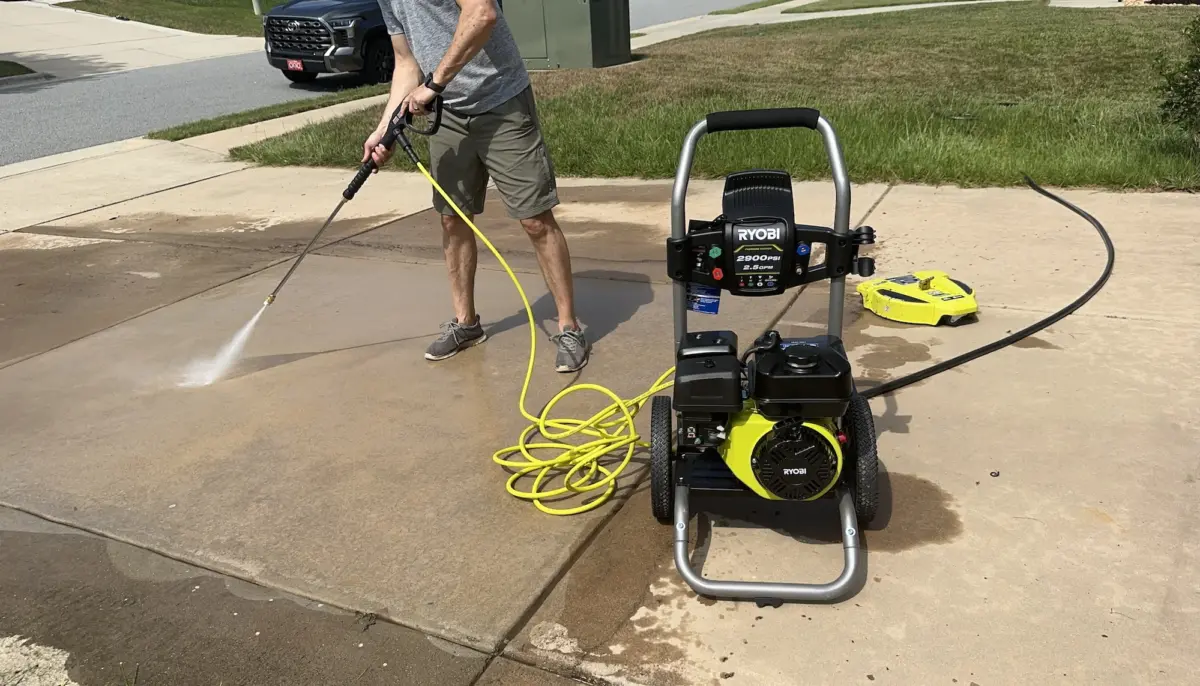
Pressure-washing is widely regarded as the ultimate method for returning a stained, weather-beaten driveway to a pristine condition. Yet, transforming an unsightly slab of concrete into an asset that boosts home curb appeal is not as simple as pointing a high-pressure nozzle and pulling a trigger. Utilizing incorrect equipment, excessive pressure, or the wrong chemical agents can permanently etch the surface, leave unsightly swirl marks, or strip away the vital "cream" layer of the concrete.
Achieving professional-level results requires an understanding of water mechanics, PSI (pounds per square inch) thresholds, GPM (gallons per minute) flow rates, and chemical formulation. According to industry experts, homeowners can save hundreds of dollars by tackling the job themselves—provided they adhere to strict operational guidelines and safety protocols.
Chronology: A Step-by-Step Execution Plan
Executing a successful DIY driveway pressure-washing project requires a deliberate, chronological approach. Skipping steps or rushing the preparation phase often results in subpar aesthetics and potential property damage.
Phase 1: Assessment and Preparation
Before a drop of water touches the pavement, the driveway must be thoroughly evaluated and cleared.
- Clear the Surface: Use a high-powered leaf blower or a stiff-bristle push broom to sweep away all loose leaves, twigs, stones, and surface dirt.
- Pre-Treat Stubborn Stains: While standard dirt and loose debris vanish under pressure, motor oil, transmission fluid, and deep-set algae require chemical intervention. Apply an alkaline-based degreaser to automotive fluid stains or a peroxide-based cleaner to organic discoloration. Scrub these areas vigorously with a stiff-bristle brush before introducing the pressure washer.
Phase 2: Applying the Cleaning Solution
Selecting the right detergent is critical to chemical safety. Avoid harsh acids like muriatic or hydrochloric acid, which actively eat away at the cement paste holding the aggregate together.
- Fill the pressure washer’s soap dispenser with an approved, concrete-safe cleaner.
- Attach the 65-degree low-pressure soap nozzle (typically color-coded black). This wide-angle nozzle drops the operating pressure, activating the machine’s chemical siphoning system.
- Begin application at the lowest point of the driveway and work upward to prevent uneven streaking.
- Maintain a consistent distance of 12 to 18 inches from the surface, sweeping the wand in smooth, overlapping arcs. Allow the solution to dwell and break down contaminants for approximately 10 minutes.
Phase 3: The Washing Process
Homeowners have two primary options for the main washing phase: utilizing a surface cleaner attachment or relying exclusively on a pressure washer wand.
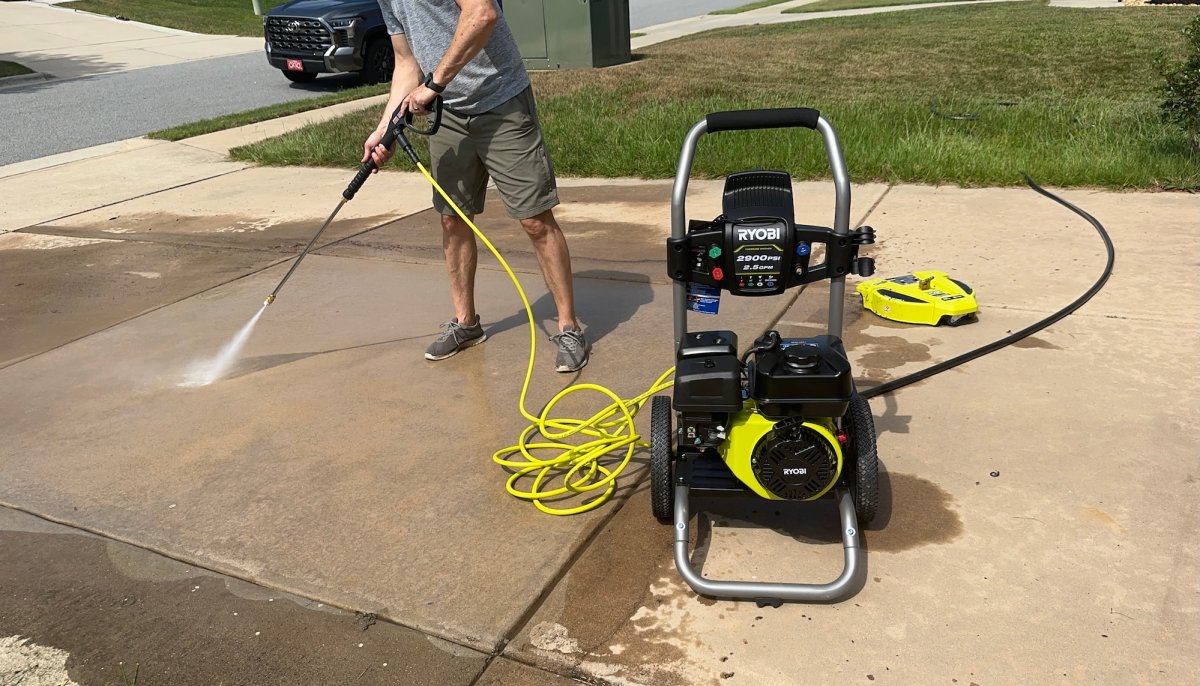
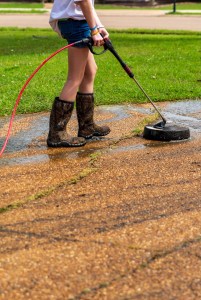
- Using a Surface Cleaner: Highly recommended for large surfaces, a surface cleaner is a disk-shaped attachment featuring dual spinning nozzles enclosed under a 12- to 16-inch deck. This tool dramatically accelerates the process, eliminates the striping common to wands, and cleans so efficiently that chemical pre-treatments (aside from oil spots) are often bypassed.
- Using a Wand Only: If working with a standard wand, maintain a steady, uniform distance from the concrete and sweep side-to-side in a consistent rhythm to avoid gouging the material.
Phase 4: Rinsing and Post-Treatment
- Switch to a wide 40-degree nozzle on the wand to thoroughly flush away loosened dirt and residual detergent, working systematically from top to bottom.
- Allow the concrete to dry completely.
- Apply an Algaecide: While optional for most casual cleaners, experts emphasize this final step for long-term protection. Applying a chlorine-based algaecide neutralizes microscopic organic spores, erases lingering washing lines, and keeps the driveway clean for three to five years under normal environmental conditions.
Supporting Data: Specifications, Costs, and Timeframes
Understanding the quantitative metrics of pressure-washing ensures that homeowners invest in the correct machinery without overspending or risking structural damage.
Equipment Specifications
- Pressure (PSI): Equipment must produce a minimum of 2,000 PSI to effectively lift stubborn grime from concrete pores. However, the pressure must not exceed 3,000 PSI. Exceeding this threshold risks stripping the protective cream layer and permanently etching the cement.
- Flow Rate (GPM): Measured in gallons per minute, flow rate determines how quickly an operator can cover ground. A machine featuring a flow rate of 4.0 GPM is considered the industry ideal for residential flatwork, though smaller jobs can be managed with a 2.5 GPM system.
Financial Breakdown: DIY vs. Professional Services
- Professional Services: According to national home service data compiled by Angi, hiring a professional contractor to pressure-wash a driveway typically costs between $100 and $500. Pricing scales by surface area, averaging roughly 30 cents to 55 cents per square foot.
- DIY Investment: Assuming the homeowner already owns or rents a compatible pressure washer, expenses are limited to cleaning solutions and specialized chemicals, which generally run $15 to $20 per gallon.
Time Requirements
- For a standard one- or two-car concrete driveway, the active physical labor—including prep, chemical application, washing, and rinsing—takes between 30 minutes and one hour.
Official Responses and Expert Guidance: Insights from the Field
To establish industry best practices, we consulted Philip Arms of Arms Brothers Pressure Washing located in Sugar Land, Texas. Arms emphasizes that patience and chronological maturity of the concrete are paramount before initiating any high-pressure cleaning project.
"We always want to verify that the concrete is at least 3 years old because applying pressure to concrete that has not set for long enough can strip the protective ‘cream’ layer off and cause permanent etching," Arms explains.
Many property owners mistakenly assume that concrete is fully cured the moment it hardens and turns white. In reality, concrete undergoes a prolonged hydration process, achieving its structural design strength over several years. Subjecting young concrete—anything under 36 months old—to thousands of pounds of per-square-inch water pressure invites structural degradation.
Furthermore, Arms highlights the transformative value of post-treatment chemical applications. "This [step] involves applying a chlorine-based algaecide that neutralizes all organic growth and gets rid of any pressure-washing lines and keeps the concrete free from organic growth for 3 to 5 years under normal conditions," he notes. Without this neutralizing agent, organic spores embedded deep within the concrete pores will rapidly regenerate, leading to premature green or black discoloration.
Implications: Safety, Property Value, and Long-Term Maintenance
Safety Hazards
While residential garden hoses peak at a harmless 80 PSI, consumer and commercial pressure washers routinely exceed 3,000 PSI. At this velocity, water streams are powerful enough to cause severe lacerations, puncture human skin, and propel eye-damaging debris—such as dislodged concrete chips, embedded gravel, and sharp twigs—into the air. Personal protective equipment, including eye protection, sturdy footwear, and long trousers, is mandatory during operation.
Curb Appeal and Structural Longevity
Maintaining a driveway goes far beyond superficial aesthetics. A clean, well-sealed concrete surface prevents the accumulation of moisture-trapping organic matter, which can accelerate freeze-thaw cracking during colder months. Furthermore, prioritizing exterior home maintenance significantly enhances property value, whether the homeowner intends to place the residence on the real estate market or simply desires a safer, more resilient outdoor living environment.
By balancing rigorous safety precautions, precise PSI thresholds, and professional-backed techniques, homeowners can successfully execute a commercial-grade driveway restoration right in their own front yard.
