

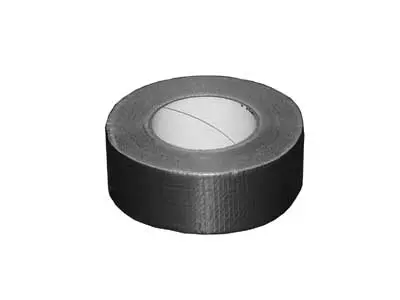
LOS ANGELES, CA — In the fast-paced world of commercial and residential roofing, ingenuity has long been celebrated as a survival mechanism. For decades, roofing contractors have prided themselves on their ability to solve unexpected problems on the fly, keeping projects on schedule and under budget. However, as the industry marks key milestones—including the 70th anniversary of prominent industry supplier Roofmaster—experts are sounding the alarm on a ubiquitous jobsite staple that has transitioned from a handy helper into a major safety and financial liability: duct tape.
While duct tape remains unmatched for quick, non-hazardous applications, its widespread misuse on electrical cords, pressurized hoses, and high-tech machinery has created a quiet crisis on American rooftops. What begins as a well-meaning attempt to complete a day’s work can quickly escalate into catastrophic equipment failure, severe regulatory penalties, or life-threatening accidents.
Main Facts: The False Security of the Quick Fix
At any active construction site, a roll of silver duct tape is never far from reach. Its high tack, water resistance, and ease of tearing make it the default solution for an array of minor inconveniences. If a worker’s knee pad strap snaps or a protective glove tears at the thumb, a quick wrap of duct tape resolves the issue in seconds without halting production.
The danger arises when this "make-do" mentality is applied to critical safety components and pressurized or energized systems. Industry safety inspectors point to two common, yet highly hazardous, applications of duct tape on modern roofing jobsites:
- Pressurized Propane (LP) Hoses: Liquid petroleum (LP) torches are standard tools for modified bitumen and torch-applied roofing systems. When a propane hose develops a microscopic tear or puncture, wrapping it in duct tape does not seal the pressurized gas; instead, it merely masks the leak. This allows highly flammable propane to accumulate beneath the tape adhesive, creating a localized pocket of fuel that can easily ignite from the torch’s open flame.
- Damaged Extension Cords: Heavy-duty extension cords on rooftops are subjected to extreme wear, frequently dragged over sharp metal flashing, rough asphalt, and abrasive concrete. When the outer protective jacket of a cord is sliced, exposing the inner insulated conductors, workers frequently wrap the wound in duct tape or standard black electrical tape.
[Exposed Copper Wires] ──> [Duct Tape Wrap] ──> [False Sense of Security] ──> [Shock/Fire Hazard]This temporary patch introduces a profound psychological hazard: a false sense of security. While a worker can smell or hear a leaking propane hose even through a layer of tape, electrical currents are entirely invisible and odorless. A taped-over cord hides damaged, fraying copper strands. If moisture penetrates the tape—a common occurrence on dew-covered or rain-slicked roofs—the water can bridge the gap between the live conductor and the worker, resulting in severe electrical shock, electrocution, or arc flash fires.
Chronology: Seven Decades of Technological Evolution and Safety Integration
To understand how duct tape became such a deeply ingrained hazard, it is necessary to examine the historical evolution of roofing practices over the last 70 years.
1950s-1960s: Low Regulation Era
  │  Minimal safety oversight; "make-do" jobsite repairs are standard practice.
  ▼
1970: The OSHA Revolution
  │  Occupational Safety and Health Act of 1970 establishes strict federal safety standards.
  ▼
1990s: Introduction of Digital Roofing Tech
  │  Transition to sensitive electronic tools (e.g., Leister hot air welders) requiring stable voltage.
  ▼
Present: The Modern Smart Jobsite
     High-voltage equipment, stringent liability, and professional maintenance protocols.
The Post-War Boom and Low Regulation (1954–1970)
In the mid-1950s, the roofing industry relied heavily on manual labor, hot asphalt kettles, and basic hand tools. Safety regulations were sparse, and workers were largely left to their own devices to solve equipment failures in the field. During this era, duct tape—originally developed for the military during World War II to keep moisture out of ammunition cases—found a permanent home in commercial construction. Its durability made it an ideal, unregulated fix-all.
The OSHA Era and the Standardization of Safety (1970–1990)
The passage of the Occupational Safety and Health Act of 1970 marked a dramatic shift in jobsite dynamics. For the first time, federal standards governed how electrical systems, scaffolding, and hazardous materials had to be managed on-site. Despite the introduction of these regulations, the "duct tape culture" persisted as a legacy habit passed down through generations of roofers.
The Technological Leap (1990s–Present)
Over the last thirty years, the roofing industry has undergone a technological revolution. The introduction of single-ply membranes (such as TPO and PVC) necessitated the use of highly sophisticated, electronically controlled hot-air welding equipment, such as Leister automatic welders.
These modern machines operate on precise digital microprocessors that require clean, stable electrical current. A practice that was marginally tolerated in 1960—such as patching a frayed cord with adhesive tape—now directly threatens the delicate circuitry of multi-thousand-dollar electronic welding systems, bridging the gap between old-school habits and modern electronic vulnerabilities.
Supporting Data: The Physics of Cord Damage and OSHA Compliance
The use of improvised tape repairs on electrical cables violates several core tenets of industrial safety physics and federal law.
The Physics of Voltage Drop and Equipment Damage
When the copper conductors inside an extension cord are damaged or partially severed, the cross-sectional area of the wire is reduced. This reduction increases electrical resistance at the point of damage, leading to two distinct phenomena:
- Localized Thermal Runaway: Increased resistance generates localized heat. If the cord is wrapped in duct tape, this heat is trapped, slowly melting the remaining internal insulation and significantly increasing the risk of a short circuit or fire.
- Voltage Fluctuations: Damaged conductors cause voltage drops along the line. For sensitive electronic equipment like Leister hot air welders, which require a constant, high-wattage draw to maintain precise welding temperatures, these fluctuations are catastrophic.
The table below illustrates the impact of compromised power delivery on sensitive hot-air welding equipment:
| Cord Condition | Electrical Behavior | Impact on Leister Welder | Financial/Safety Risk |
|---|---|---|---|
| Intact & Fully Insulated | Stable voltage, zero leakage current | Consistent heat output, optimal weld seam | None; standard operation |
| Taped/Frayed Cord | Voltage drops, localized resistance heating | Fluctuating nozzle temperature, weak seams | Cold-weld leaks, ruined membrane |
| Exposed/Wet Taped Cord | Short circuits, ground faults | Total control board burnout, system shutdown | $1,500+ repair, operator electrocution |
The Regulatory Cost: OSHA Standards
The Occupational Safety and Health Administration (OSHA) maintains strict, non-negotiable standards regarding electrical safety on construction sites. Applying duct tape to a damaged cord does not constitute a legal repair.
Key OSHA regulations frequently cited in jobsite inspections include:
- 29 CFR 1926.404(b)(1)(ii): Mandates the use of Ground Fault Circuit Interrupters (GFCIs) on all construction sites. A taped cord that allows moisture to enter will instantly trip GFCIs, halting work across the entire site.
- 29 CFR 1926.405(a)(2)(ii)(I): Stipulates that extension cords used on jobsites must be of the three-wire, heavy-duty, double-insulated variety. Flat-wire cords are strictly prohibited due to their lack of robust mechanical protection.
- 29 CFR 1926.416(e)(1): Explicitly prohibits the use of worn or frayed electrical cords or cables.
Under OSHA guidelines, any cord exhibiting a cut through the outer jacket to the inner insulated conductors must be immediately removed from service, tagged, and either discarded or repaired by a qualified electrician using certified heat-shrink tubing or vulcanized patches. Simple adhesive tape repairs are subject to immediate citations and heavy financial penalties.
Official Responses: Industry Leaders Advocate for Professional Standards
In response to the persistence of these dangerous field practices, manufacturers and safety advocates are actively pushing for a cultural shift on the roof.
            ┌────────────────────────────────────────┐
            │   Roofmaster Safety Advisory Council   │
            └───────────────────┬────────────────────┘
                                │
       ┌────────────────────────┴────────────────────────┐
       ▼                                                 ▼
┌──────────────────────────────┐                 ┌──────────────────────────────┐
│  FIELD-LEVEL INTERVENTION    │                 │   PROFESSIONAL REPAIR PATH   │
│  • Transition to U-Seal Band │                 │  • Certified Inspections     │
│  • Instant Stop-Work on LP   │                 │  • Authorized OEM Parts      │
│  • Mandatory Cord Tagging    │                 │  • Calibrated Testing        │
└──────────────────────────────┘                 └──────────────────────────────┘
In a statement addressing the company’s 70th anniversary, spokespersons for Roofmaster emphasized that while temporary weatherproofing solutions have their place, equipment maintenance must be left to professionals:
"In our seven decades of serving the roofing community, we have witnessed incredible field ingenuity. But there is a fine line between resourcefulness and recklessness. Duct tape is a phenomenal temporary weather barrier for a minor roof puncture, especially when specialized products like U-Seal Band are not immediately at hand. However, using it to patch a propane line or an electrical cord is an unacceptable risk. The potential cost of a catastrophic fire, a destroyed Leister welder, or an injured worker infinitely outweighs the nominal cost of replacing a cord or sending a tool to an authorized repair facility."
Safety directors at major commercial roofing firms echo this sentiment. The consensus is clear: jobsites must implement a zero-tolerance policy for taped electrical cords and gas hoses. Instead of attempting a quick patch, crews are instructed to utilize color-coded "Do Not Use" tags to isolate damaged gear immediately, routing it to certified repair depots.
Implications: The True Cost of Neglect and the Path Forward
The implications of continuing to tolerate improvised tape repairs are far-reaching, affecting jobsite safety, operational efficiency, and corporate liability.
Financial Consequences
A standard 100-foot, 10-gauge heavy-duty extension cord costs between $80 and $150. In contrast, the financial fallout from a single compromised cord can be devastating:
- Equipment Damage: A voltage drop can easily fry the main circuit board of an automatic hot-air welder, resulting in repair bills exceeding $1,000 and days of lost productivity.
- Regulatory Fines: OSHA fines for serious violations start at over $15,000 per occurrence, with willful violations exceeding $150,000.
- Litigation and Insurance: An electrical fire or worker injury caused by a known, improperly repaired tool can void general liability insurance policies, exposing roofing contractors to direct, ruinous litigation.
Best Practices for Modern Roofing Contractors
To safeguard their crews and their bottom lines, roofing contractors must transition from a reactive "tape-and-go" mindset to a proactive equipment management protocol:
- Daily Pre-Shift Inspections: Every power cord, generator connection, and propane hose must be visually inspected before work begins. Any equipment showing signs of wear, deep abrasion, or exposed copper must be cut and decommissioned on the spot.
- Utilize Certified Repair Facilities: Rather than relying on field-expedient fixes, contractors should leverage the expertise of factory-authorized repair centers. Facilities like those operated by Roofmaster feature certified technicians who can safely splice, re-jacket, and load-test power cables to meet OEM and OSHA specifications.
- Employ Specialized Field Solutions: For actual roofing membrane emergencies, crews should bypass duct tape entirely in favor of engineered temporary sealants, such as U-Seal Band. These products are specifically designed to withstand the high-temperature, high-UV environment of a rooftop without degrading or leaving destructive adhesive residues.
Conclusion
As the roofing industry continues to integrate advanced materials and digital equipment, its safety practices must evolve at the same pace. The humble roll of duct tape will always have a place in the toolbox for minor, non-critical tasks. However, when it comes to the electrical and pressurized lifelines of a jobsite, relying on a quick fix is no longer just bad practice—it is a hazard that the modern roofing industry simply cannot afford.
