

By Prakhar Khanna
As the tech industry gears up for its traditional late-summer media frenzy, the smartphone landscape finds itself in an unfamiliar configuration. August—historically the dead zone for consumer electronics purchases, a time when analysts universally advise consumers to sit on their wallets and wait for autumn’s next-big-thing announcements—is telling a remarkably different story.
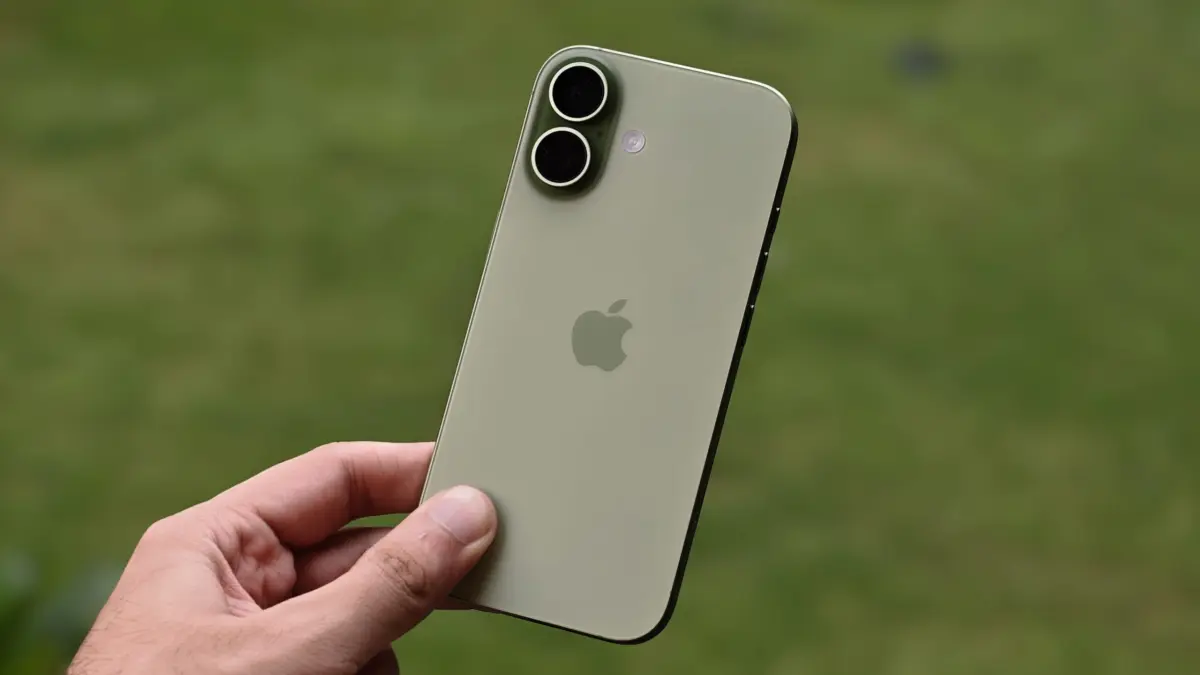
At the center of this shift is the iPhone 17. Launched a year ago to bridge the generational gap between Apple’s entry-level devices and its high-end Pro tiers, the standard iPhone has evolved from a conventional baseline offering into arguably the most strategically compelling value proposition in the mobile marketplace. Driven by rising component costs, shifting release roadmaps, and a changing competitive playing field, the iPhone 17 is no longer just a viable alternative to the upcoming generation—it may very well be the smartest smartphone purchase you can make right now.

Main Facts: The Evolution of Apple’s Baseline Flagship
When Apple released the iPhone 17, its primary mandate was modernization. For years, critics and consumers alike pointed out the widening chasm between standard iPhones and their Pro siblings, particularly regarding display technology and camera versatility. The iPhone 17 effectively dismantled that gap by introducing a slate of long-overdue upgrades to the entry-level tier.
Foremost among these changes is the display. The iPhone 17 finally brought a smooth, adaptive 120Hz refresh rate to the standard model, aligning Apple’s base phone with modern Android flagships and its own Pro lineup. Paired with increased peak brightness and reduced reflectivity, the display delivers a fluid user experience that is immediately perceptible when scrolling through media, navigating the home screen, or operating the device under direct sunlight.
Durability has also received a quiet yet impactful overhaul. Utilizing advanced glass compositions akin to the Ceramic Shield 2 found on the Pro Max variants, the iPhone 17 has proven exceptionally resilient against everyday drops and abrasions.

However, the hardware crown of the standard iPhone 17 belongs to its redesigned front-facing camera. Moving to an 18-megapixel square sensor, Apple solved a fundamental usability hurdle: landscape selfies. The viewfinder intelligently reframes shots based on the number of subjects in the frame, while the hardware integration powers "Center Stage," tracking users dynamically during video calls across FaceTime and third-party apps like WhatsApp. For users navigating physical accessibility challenges, such as hand tremors, the combination of the square sensor and enhanced optical stabilization provides a level of video smoothness previously reserved for heavily stabilized Pro setups.
On the rear, the device features a dual-camera array anchored by a 48-megapixel wide-angle lens and a 48-megapixel ultrawide sensor. While it lacks the dedicated optical zoom of a telephoto lens, it delivers sharp, color-accurate imagery that vastly outperforms its predecessor, the iPhone 16.
Chronology: A Delayed Successor and a Shifting Market
To understand why the iPhone 17 holds such unique weight in the current market, one must examine the timeline of Apple’s product cadence and broader macroeconomic forces.

- September 2025: Apple launches the iPhone 17 lineup at a starting price of $799, bringing 120Hz displays and upgraded selfie hardware to the base model.
- Late 2025 – Early 2026: A global surge in RAM prices—driven primarily by unprecedented data center and artificial intelligence infrastructure demands—forces competitors like Samsung and Google to elevate the baseline prices of their entry-level flagships.
- November 2025: Industry supply chain reports from Bloomberg and manufacturing sources indicate a restructured Apple roadmap, signaling that the traditional iPhone 18 launch will be split or delayed.
- August 2026: Approaching the traditional September window, analysts note that the iPhone 17 will face virtually zero direct internal competition from a new base model for an unusually long stretch. According to leaked roadmaps, the next standard iPhone is not slated to launch until March 2027, arriving alongside a lower-cost "iPhone 18E" variant.
- Current Status: With rumors swirling about impending price hikes for the upcoming iPhone 18 Pro and foldable "Ultra" models, the iPhone 17 stands alone as a price-stable, heavily featured anchor in a volatile market.
Supporting Data: Benchmarks, Battery Life, and Pricing Dynamics
The staying power of the iPhone 17 is not merely conceptual; it is backed by empirical data spanning display performance, battery longevity, and pricing architecture.
Battery Endurance and Software Realities
In standardized CNET endurance testing—incorporating continuous media streaming, social media navigation, active video conferencing, and mobile gaming—the iPhone 17 retained 98% of its charge after a punishing 45-minute battery drain test. This performance places it neck-and-neck with the iPhone 17 Pro and positions it firmly in the upper echelon of mobile battery efficiency, tying with heavyweights like the OnePlus 15 and the Motorola Razr (2026).
While the device currently runs iOS 26—a software iteration that has drawn criticism for occasional system volume bugs, Bluetooth latency, and landscape Control Center misalignments—early public beta deployments of iOS 27 indicate that these software friction points are actively being resolved. The forthcoming software update introduces separated audio sliders for alarms, media, and ringers, alongside spatial reframing capabilities driven by generative AI.

The Pricing Landscape
Priced at $799 at launch, the iPhone 17 maintained Apple’s long-standing entry-level pricing ceiling. However, market shifts have rendered this price point anomalous:
- Samsung Galaxy S26: Debuted at $899.
- Google Pixel 11: Debuted at $899.
By holding the line at $799 while competitors absorbed the shock of rising component costs, Apple inadvertently created a massive value buffer for the iPhone 17.
Official Responses and Industry Speculation
Apple has remained characteristically tight-lipped regarding its long-term pricing strategy and the reported fragmentation of its 2026–2027 release schedule. However, supply chain insiders and regulatory filings paint a clear picture of corporate positioning.

Industry analysts widely anticipate that Apple will elevate the pricing floor of its upcoming Pro and foldable devices at its upcoming September event. Furthermore, credible leaks originating from manufacturing hubs on Weibo suggest that future base models may adopt a bifurcated identity. Much like Google’s strategy with the Pixel 11 and Pixel A-series, future standard iPhones may see their processing power and feature parity dialed back to protect higher-margin variants, while budget-conscious consumers are steered toward "E" series alternatives.
This structural shift suggests that the iPhone 17 may represent the final era of a "true flagship" experience offered at a traditional entry-level price point, free from the hardware compromises rumored for future lower-cost iterations.
Implications for Consumers
For consumers standing at the precipice of an upgrade cycle, the traditional calculus of tech purchases has inverted.

- Avoid the Waiting Trap: Historically, August is the worst time to buy an iPhone. In 2026, however, waiting for the standard iPhone 18 is an exercise in diminishing returns. Because the next base model is delayed until March 2027—and rumored to inherit cost-cutting compromises akin to a mid-tier device—waiting yields very little tangible hardware benefit for the average user.
- Protection Against Price Hikes: With macroeconomic inflation and AI-driven component costs threatening to push upcoming Pro and base models into higher pricing tiers, locking in the iPhone 17 at its current market standing shields buyers from imminent industry-wide price adjustments.
- Maturing Software Ecosystem: Buyers stepping into the iPhone 17 ecosystem now bypass the initial launch bugs of iOS 26, stepping directly into an optimized software environment as iOS 27 transitions from public beta to general availability.
Final Verdict
The smartphone market is undergoing a structural realignment. Component inflation, delayed product roadmaps, and shifting AI integration strategies are permanently altering how manufacturers price and position mobile hardware. Within this turbulent environment, the iPhone 17 stands as an accidental masterpiece of timing and value—a fully mature, highly durable, and comprehensively upgraded flagship that proves you don’t always need to wait for tomorrow’s phone to get yesterday’s best deal.
