

WASHINGTON — For decades, the foundational bedrock of conservative economic philosophy was defined by a steadfast belief in a free market with minimal government intervention, low taxes, and the sanctity of private enterprise. Today, however, that traditional laissez-faire orthodoxy is undergoing a profound and accelerating transformation.
The modern political landscape has seen a decisive pivot away from these classical roots, replaced instead by an aggressive embrace of populist economic interventionism. From pharmaceutical price controls and industrial policy proposals to caps on credit card interest rates, restrictions on institutional single-family home buyers, and aggressive manipulations of the property and casualty insurance markets, contemporary policymakers are increasingly utilizing the heavy hand of the state to combat public frustration over the cost of living.
Critics argue that these interventions—disguised as solutions to affordability crises—inevitably distort private markets, trigger unintended economic consequences, and ultimately fail to address the root causes of inflation and financial distress.
Main Facts: The Rise of State Intervention and Market Distortion
The modern populist policy agenda spans a broad and unorthodox swath of the American economy, marking a sharp departure from historic Republican platform points.
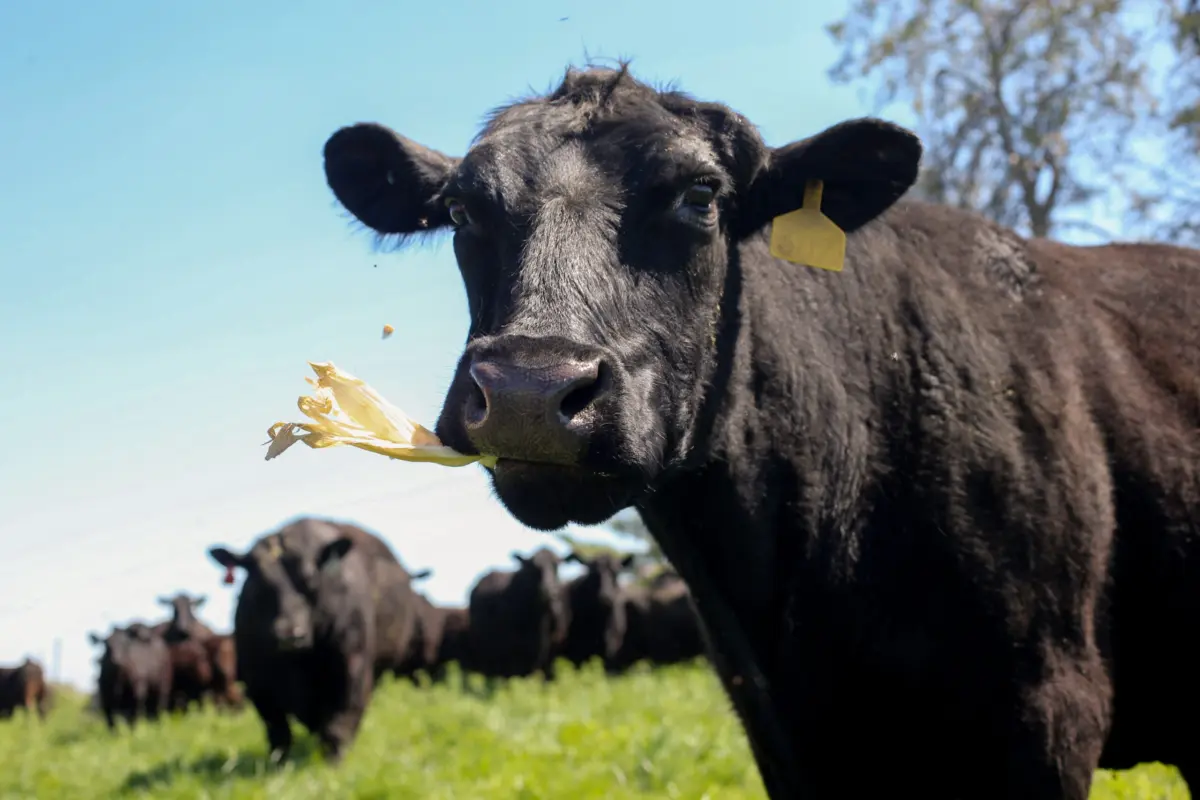
At the federal level, policymakers have deployed direct market interventions, including tariff manipulations, price ceilings, executive compensation caps for defense contractors, and specialized subsidies. Among the most striking recent developments is the federal administration’s temporary suspension of tariffs on foreign agricultural imports—specifically beef from Brazil—in a high-profile bid to lower skyrocketing grocery store prices.
While ostensibly designed to offer immediate relief to consumers grappling with a 13% spike in beef prices over the past year, this move highlights a broader trend: the willingness of modern populist administrations to deploy executive power to manage prices directly. However, economists warn that such actions create a domino effect of market distortions.
In the case of Brazilian beef, artificially lowering market prices triggers automatic economic blowback elsewhere in the federal bureaucracy, notably expanding government payout liabilities through heavily subsidized federal agricultural safety-net programs like the Livestock Risk Protection Program (LRP).
Furthermore, this interventionist mindset is not confined to the executive branch or agricultural policy. It has heavily bled into the property, casualty, and automobile insurance sectors. Federal proposals, state-level legislative overhauls, and academic policy recommendations are increasingly targeting insurance pricing structures, attempting to dictate allowable profit margins, cap premiums, and mandate corporate rebates.
Chronology: A History of Price Controls and Market Interventions
To understand the risks inherent in today’s populist economic strategies, economists frequently point to historical precedents where government tried and failed to out-maneuver the laws of supply and demand.
1971: The Nixon Wage and Price Freeze
The last time a U.S. administration implemented wide-ranging, nationwide price controls was in the summer of 1971. President Richard Nixon introduced a sweeping 90-day wage and price freeze in a desperate effort to halt mounting inflationary pressures.
Rather than stabilizing the economy, the law of economic consequences quickly kicked in. Private market signals were scrambled, and rather than falling, inflation ultimately ballooned to 12%. The artificial price ceilings generated severe market shortages, resulting in historic gas station lines stretching for blocks and empty supermarket shelves nationwide.
2017: The "Operation Weak Meat" Scandal
The recent decision to lift trade barriers on Brazilian beef also carries a complicated history rooted in international food safety scandals. In 2017, Brazilian authorities launched "Operation Weak Meat," a sweeping federal investigation into widespread corruption among lawmakers and meat inspectors.
The investigation revealed that health inspectors had routinely accepted bribes from major meatpackers—including JBS, the world’s largest meatpacking corporation—to overlook rotten, spoiled, or salmonella-infected beef. Companies systematically altered expiration dates and applied harsh acids to decaying meat to mask the foul odors before shipping it to global markets.
In response, the U.S. Department of Agriculture (USDA) implemented 100% re-inspection protocols and pathogen testing on all Brazilian meat imports. The volume of contaminated meat discovered was so alarming that the U.S. instituted a complete, two-and-a-half-year suspension of Brazilian beef imports, which remained in effect until February 2020.
2024–2026: The New Wave of Insurance and Price Controls
- The 2024 Campaign Trail: During the 2024 presidential race, then-candidate Donald Trump made sweeping assertions regarding soaring living costs, promising on social media to slash skyrocketing automobile insurance premiums by 50% overnight.
- August 2026: State-level interventions mirrored federal ambitions. Illinois Governor JB Pritzker signed legislation (HB 4273 and SB 714) granting state regulators unprecedented authority to review, audit, and outright block excessive home and auto insurance rate hikes, with the regulations taking effect on July 1, 2027.
- Late 2025–2026: Vanderbilt University published a prominent policy report arguing that property and casualty insurers had systematically overcharged consumers since the 1980s. The report called for the creation of federal oversight boards to restrict profit margins and force corporate rebates if loss and expense ratios are deemed excessive.
Supporting Data: The Economics of Subsidies, Tariffs, and Insurance
To evaluate the efficacy of these populist initiatives, a closer examination of the numbers reveals the fragile architecture underpinning these state-managed markets.
The Brazilian Beef Influx
- Tariff Rollback Volume: The temporary tariff suspension applies to 300,000 metric tons of imported beef, predominantly sourced from Brazil, beginning September 1.
- Per Capita Impact: While 300,000 metric tons sounds substantial, it breaks down to roughly two pounds of beef per American consumer.
- Tariff Reduction: Prior to the rollback, Brazilian beef products faced a 26.5% tariff. The emergency suspension lasted for three months.
- Discount Pricing: The administration announced that imported Brazilian beef would be retailed at a 25% discount relative to prevailing domestic market rates, though the exact formula for calculating these government-managed discounts remains opaque.
- Inflation Metrics: Domestic beef prices have risen by 13% over the past year, driven by a shrinking national cattle herd due to persistent drought, escalated fertilizer and diesel expenses, and soaring grazing land costs.
The Livestock Risk Protection (LRP) Safety Net
As imported beef floods the market and depresses domestic prices, the federal government faces secondary financial exposures. The Livestock Risk Protection Program establishes an artificial price floor for ranchers.
- When market prices drop below this established floor, the federal government is legally obligated to cover the deficit via insurance payouts.
- Federal subsidies for ranchers’ insurance premiums range between 35% and 55%.
- To assist demographic newcomers, an additional 10% premium subsidy is awarded to young ranchers and military veterans entering the livestock business. Consequently, government intervention to lower grocery prices via foreign imports directly increases taxpayer-funded liabilities to domestic producers.
The Automobile Insurance Crisis
- During the 2024 campaign, political rhetoric highlighted that automobile insurance rates had surged by 73%, prompting the controversial pledge to cut that number in half—a proposal insurance economists noted bore no grounding in actuarial reality or state regulatory law.
Official Responses and Stakeholder Reactions
The shift toward economic populism has sharply polarized economists, industry leaders, and political stakeholders.
Defenders of the administration’s policies argue that aggressive times require aggressive measures. Proponents insist that when ordinary citizens are squeezed by the cost of living, waiting for slow-moving free-market corrections is politically and socially untenable. By deploying tariffs, trade adjustments, and direct price-monitoring, populist advocates maintain that the government is actively standing up for working families against corporate price-gouging.
However, industry associations, free-market think tanks, and insurance experts have voiced profound alarm. Insurance industry trade groups have pushed back heavily against state-level price caps and federal oversight proposals, pointing to the foundational McCarran-Ferguson Act of 1945. This landmark federal statute explicitly grants individual states—not the federal government—the authority to regulate the insurance business. Legal scholars argue that federal attempts to cap insurance profit margins or mandate nationwide rebates violate both statutory tradition and constitutional frameworks.
Agricultural representatives have expressed mixed reactions. While cattlemen’s associations acknowledge the short-term relief potential for consumers, many have voiced deep anxiety regarding food safety standards associated with Brazilian meat imports, pointing directly to the ghosts of the "Operation Weak Meat" scandal. Furthermore, independent ranchers have questioned the long-term viability of manipulating import quotas while simultaneously relying on complex federal safety nets like the LRP.
Implications: The Dangers of Centralized Economic Management
The broader implications of this populist economic turn extend far beyond the meat aisle or the local insurance agency. They represent a fundamental philosophical fracture within the conservative movement and a dangerous drift toward central economic planning.
1. The Fallacy of Central Planning
Attempting to fine-tune a complex, globally interconnected economy by adjusting economic tuning knobs—such as waiving targeted tariffs, subsidizing insurance floors, or dictating retail prices—is akin to ancient rituals performed in hopes of summoning rain. It misunderstands the sophisticated, decentralized nature of markets. Price signals are not arbitrary numbers set by greedy corporations; they are vital pieces of information reflecting real-world scarcity, supply chain disruptions, and production costs. When the government suppresses these signals, it creates artificial distortions that inevitably result in chronic shortages, black markets, or degraded product quality.
2. The Erosion of Free-Market Principles
By adopting interventionist tools historically championed by the political left, modern populist policymakers risk institutionalizing state capitalism. When the state begins fixing pharmaceutical prices, capping credit card interest rates, determining the allowable expense loads of private insurers, and dictating retail discounts on meat, the boundary separating the public and private sectors dissolves.
3. The Ultimate Takeaway
The seduction of economic populism lies in its promise of immediate, powerful control. It offers politicians an appealing narrative: that the stroke of a pen can banish inflation and restore affordability.
Yet history—from Nixon’s disastrous 1971 wage and price freeze to the recurring failures of global agricultural price-fixing—shows that government cannot legislate away basic economic realities. For policymakers genuinely concerned with the health of the American economy, the solution does not lie in more subsidies, arbitrary price controls, or market manipulation.
The most prudent course of action remains the most difficult for politicians to accept: resist the temptation to micromanage, abandon foolhardy attempts to centrally plan complex markets, and simply get out of the way.
