

As the modern consumer grows increasingly conscious of domestic water quality, the market for home filtration solutions has evolved at a dizzying pace. No longer satisfied with basic pitcher filters or rudimentary carbon blocks, homeowners are seeking industrial-grade purification methods scaled down for residential kitchens. Enter the tankless reverse osmosis (RO) system—a technological leap that has transformed under-sink real estate and redefined access to potable water.
Among the vanguard of this movement is the Waterdrop G3P800 Reverse Osmosis System. Following up on previous iterations like the G3P600, Waterdrop has engineered a high-capacity, feature-rich unit designed to tackle the most stubborn impurities while optimizing flow rates and wastewater ratios. This comprehensive review examines the installation process, engineering mechanics, efficiency upgrades, and long-term implications of outfitting a modern home with the G3P800.
Main Facts: What is the Waterdrop G3P800?
The Waterdrop G3P800 is a high-performance, tankless reverse osmosis water filtration system designed for under-sink installation in residential and commercial kitchens. Certified to significantly reduce Total Dissolved Solids (TDS), heavy metals, chlorine, fluoride, and microscopic contaminants, the system combines a robust multi-stage filtration array with an integrated inline UV sterilizer.
Key performance and design highlights include:
- Tankless Design: Eliminates the bulky storage tanks associated with traditional RO systems, saving valuable under-sink storage space and preventing secondary bacterial growth.
- High Flow Rate: Delivers up to 800 gallons per day (GPD), ensuring a swift, steady stream of filtered water without frustrating delays.
- Superior Wastewater Ratio: Boasts an impressive 3:1 pure-to-drain ratio, wasting just one cup of water for every three cups produced.
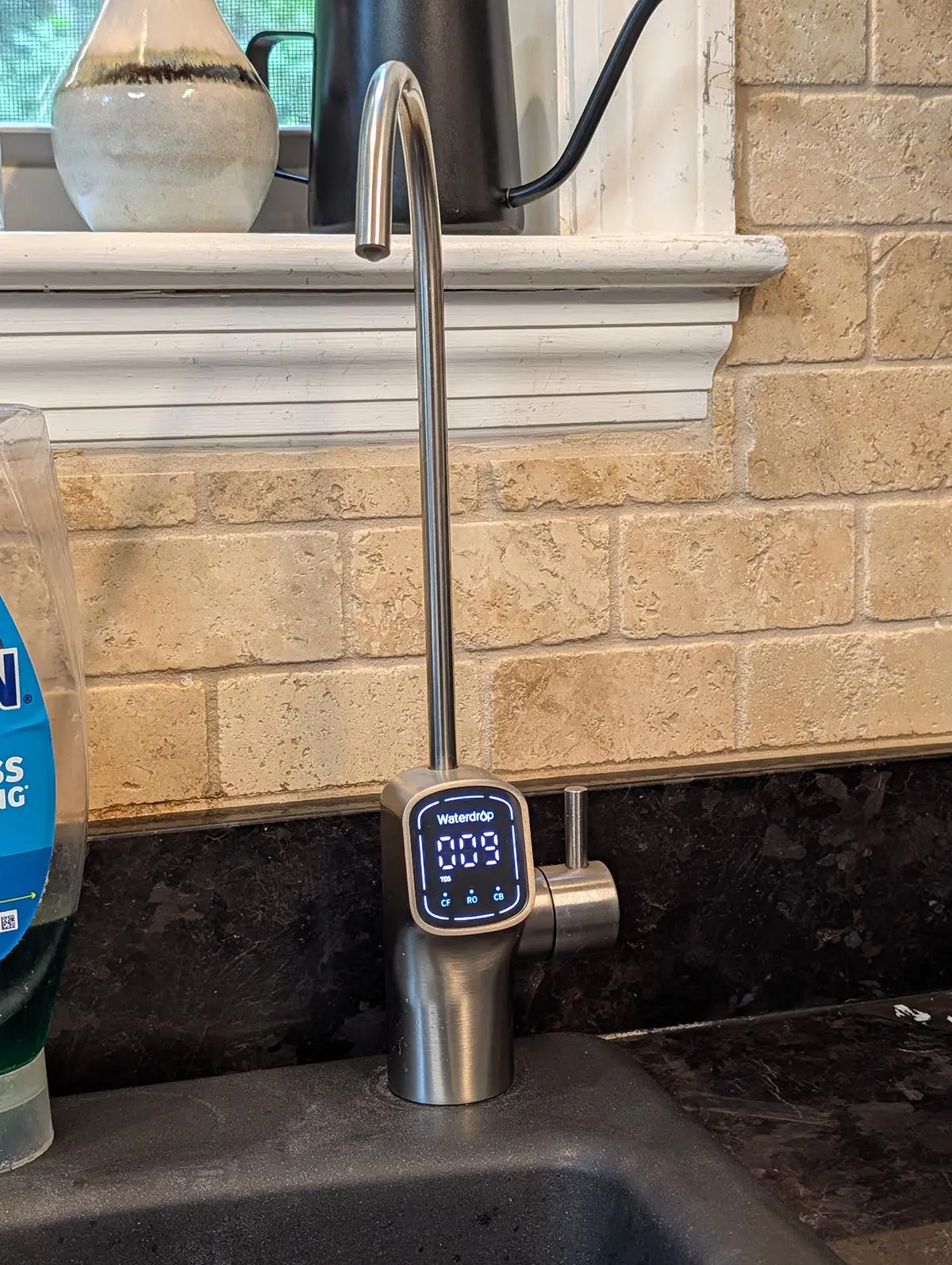
- Smart Faucet Integration: Features a dedicated, sleek dispensing faucet equipped with a real-time LED digital display indicating filter lifespan and live TDS levels.
- Inline UV Sterilization: Neutralizes bacteria and viruses right at the point of delivery for an added layer of safety.
Chronology: From Office Novelty to Household Essential
The evaluation of the Waterdrop G3P800 follows a trajectory that many smart-home upgrades share: initial skepticism, localized testing, and ultimate integration into daily life.
Phase 1: The Commercial Test Run (Nashville Office)
Two years prior to the home installation, reviewer and tester Corey Foster installed the predecessor model—the Waterdrop G3P600—under the sink of a Nashville office condo kitchenette. At the time, deploying an advanced reverse osmosis system in a shared office space felt like an extravagant novelty. However, months of continuous usage, zero leaks, and consistently low TDS readings proved the system’s reliability, earning it a coveted spot on industry-leading guides for under-sink water filters.
Phase 2: Raising the Stakes at Home
Moving from an office kitchenette to a bustling family kitchen fundamentally changes the stakes. High-volume usage, cooking demands, and multiple household members test the limits of any appliance. The installation of the G3P800 in a domestic setting shifted the perception of reverse osmosis filtration from a "nice-to-have" novelty to an indispensable household requirement.
Phase 3: Unboxing, Plumbing, and Commissioning
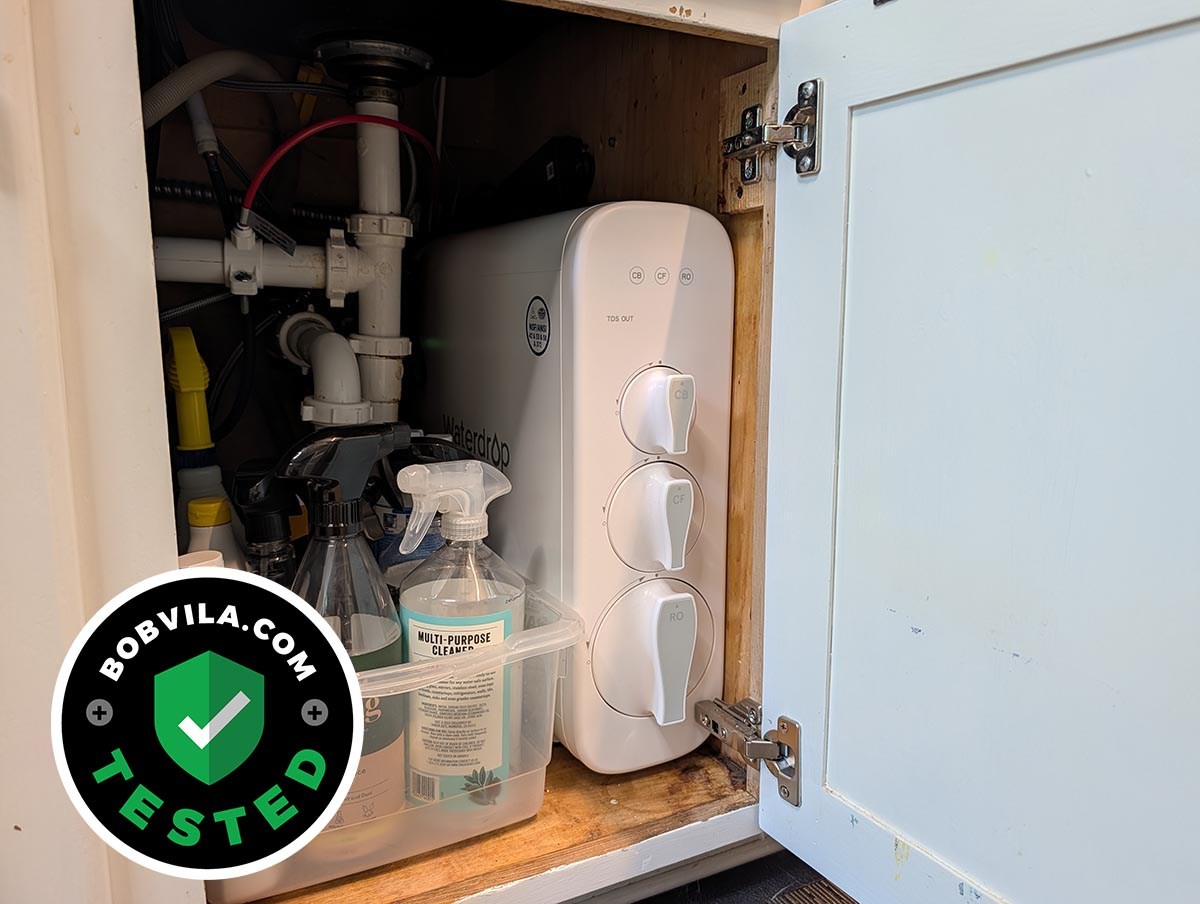
The deployment phase underscored modern consumer-appliances engineering. Unboxing the unit revealed a carefully packaged system complete with a precision water line cutter. The entire physical and electrical setup—including configuring a dedicated GFCI 110-volt outlet near the garbage disposal junction box—was completed in under an hour.
Supporting Data & Engineering Mechanics: How It Works
To truly understand the value proposition of the G3P800, one must look beneath the kitchen sink and analyze the fluid dynamics and filtration science at play.
The Purification Process
Traditional carbon filters excel at removing large particulates, sediment, and chlorine odors, but they routinely allow dissolved minerals, heavy metals, and microscopic chemical compounds to pass through. Reverse osmosis changes this equation by employing household water pressure to force tap water through a semi-permeable membrane.
The Waterdrop G3P800 integrates a multi-stage filtration process that strips out microscopic impurities. Following this core purification, the water passes through an inline UV sterilizer. This ultraviolet stage neutralizes microorganisms, bacteria, and viruses that might otherwise colonize standard filtration systems, ensuring biological safety at the point of consumption.
Real-Time Diagnostics via Smart Faucet
Operating the system is intuitive. Rotating the lever on the dedicated faucet simultaneously triggers the RO booster pump and the UV sterilizer, producing a soft, low-volume hum from the under-sink enclosure. Simultaneously, the faucet’s LED display illuminates, providing critical diagnostic data:
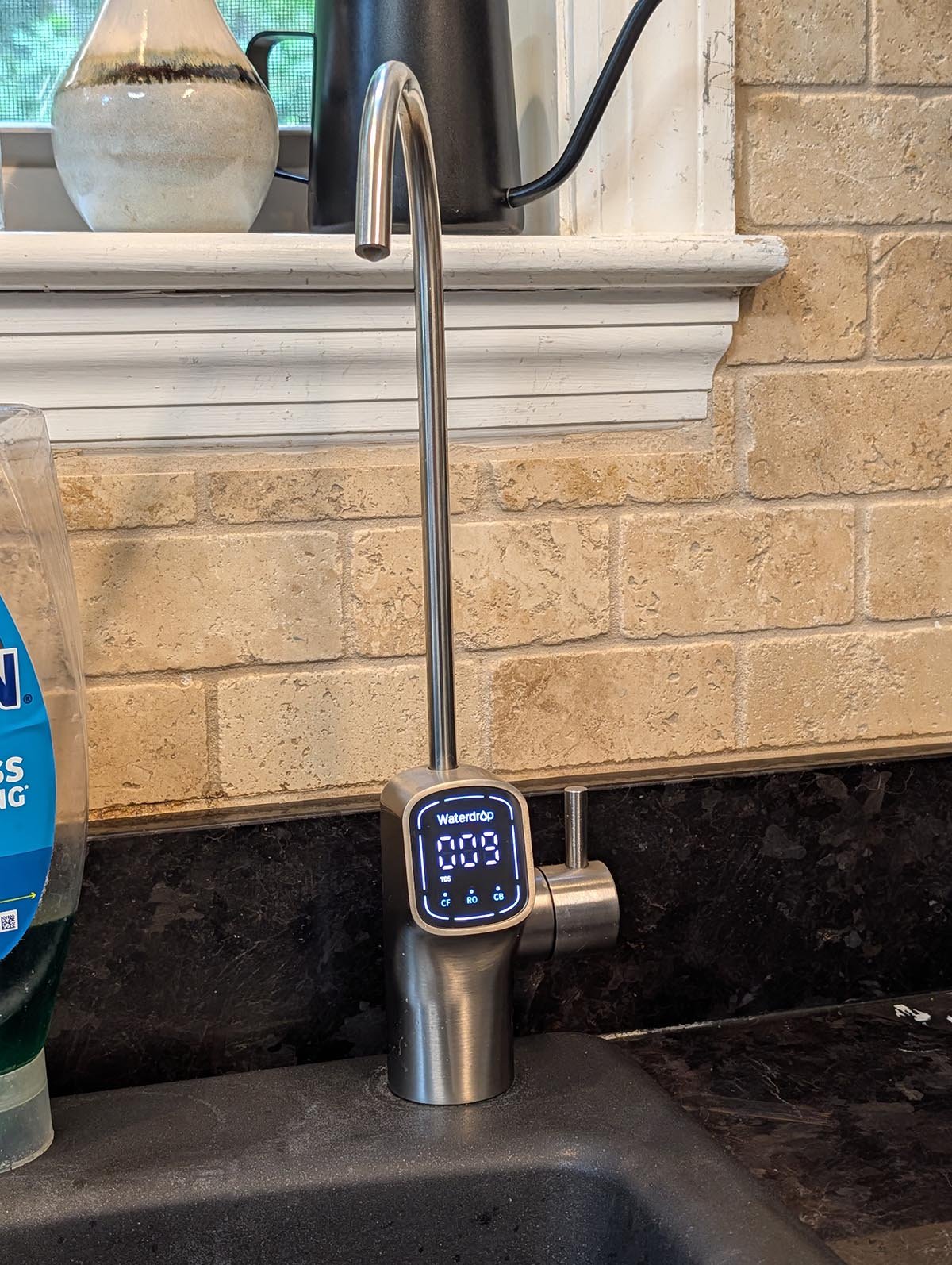
- Filter Status Indicators: Color-coded warnings let users know precisely when individual cartridges require attention.
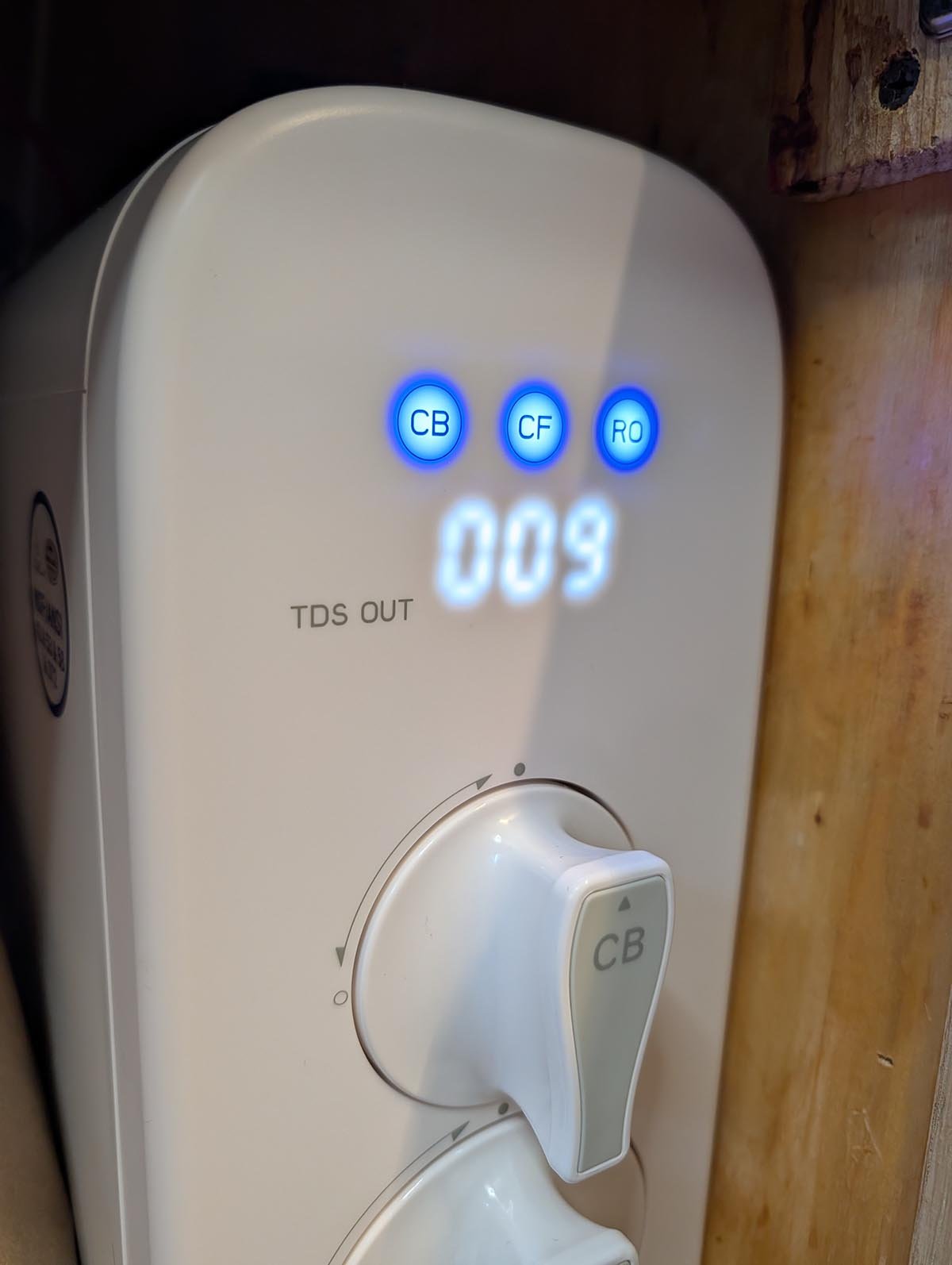
- Total Dissolved Solids (TDS) Monitoring: Real-time readings measured in parts-per-million (ppm). During testing, the G3P800 consistently maintained a pristine TDS reading of 8 ppm (with historical office units never exceeding 15 ppm), compared to untreated municipal tap water, which often reads in the hundreds.
Efficiency and Wastewater Management
Older generation RO systems have long faced criticism for their poor environmental efficiency. Many traditional setups dump up to four cups of wastewater down the drain for every single cup of purified water produced.
The G3P800 disrupts this paradigm with a heavily optimized 3:1 pure-to-drain ratio. By generating three gallons of pristine drinking water for every single gallon sent to the waste line, the unit dramatically reduces water waste. Coupled with its 800 GPD capacity, it delivers industrial-speed output without triggering environmental guilt or high municipal water bills.
Maintenance Simplicity
A common deterrent to owning an RO system is the arduous maintenance cycle involving specialized wrenches, shut-off valves, and potential cabinet floods. Waterdrop engineered the G3P800 with front-loading, quarter-turn filter cartridges. Replacing a filter requires zero tools:
- Twist the spent cartridge a quarter-turn.
- Pull it out cleanly (the internal valves prevent leaks).
- Push and twist the new cartridge into place.
- Flush the system for a few minutes.
Official Perspectives and Consumer Insights
While manufacturers naturally praise their own innovations, real-world feedback from experienced culinary users provides the most objective lens.
In households equipped with expensive, whole-home carbon filtration systems—which often cost thousands of dollars—residents frequently experience buyer’s remorse when they discover that whole-home systems fail to alter the taste profiles of drinking water, coffee, or tea. Chlorine, chloramines, and dissolved minerals remain stubbornly intact in municipal supplies despite whole-home treatments.
According to culinary professionals, such as former Starbucks store managers, water chemistry is the single most critical variable in crafting exceptional coffee, tea, and carbonated beverages (such as those made via SodaStream). By completely stripping away volatile compounds, chlorine, and mineral imbalances, systems like the G3P800 provide a neutral canvas. The resulting beverage quality represents an undeniable upgrade that bulk carbon filters simply cannot match.
Implications for Modern Homeowners
The widespread adoption of high-efficiency, tankless reverse osmosis systems carries several broad implications for residential architecture, public health, and consumer spending:
1. The Death of the Bulky Storage Tank
Early RO systems required massive pressurized storage tanks that consumed almost the entirety of a standard under-sink cabinet. Tankless systems like the G3P800 reclaim this real estate, allowing homeowners to retain storage for cleaning supplies, recycling bins, or garbage disposals without sacrificing water pressure or flow speed.
2. Micro-Level Health Security
As concerns mount regarding municipal aging infrastructure, chemical runoff, and microplastics in public water supplies, point-of-use purification acts as a vital defensive barrier. Technologies like integrated UV sterilization move home water treatment closer to laboratory-grade standards.
3. Cost-Effective Culinary Enhancement
Rather than investing thousands in whole-house filtration arrays that do little for drinking water taste, consumers are shifting toward targeted point-of-use systems. Spending a fraction of that budget on an under-sink RO unit yields an immediate, measurable return on investment in the form of better-tasting food, superior beverages, and peace of mind.
Verdict: Is the Waterdrop G3P800 Worth It?
The Waterdrop G3P800 Reverse Osmosis System bridges the gap between commercial-grade water purification and consumer-friendly DIY installation. With its straightforward sub-hour setup, innovative tankless footprint, high-flow output, and exceptionally low wastewater ratio, it sets a high bar for home filtration technology.
For families seeking absolute purity, exceptional taste, and hassle-free maintenance, the G3P800 proves that advanced water treatment is no longer a luxury novelty—it is a practical, essential upgrade for the modern home.
