

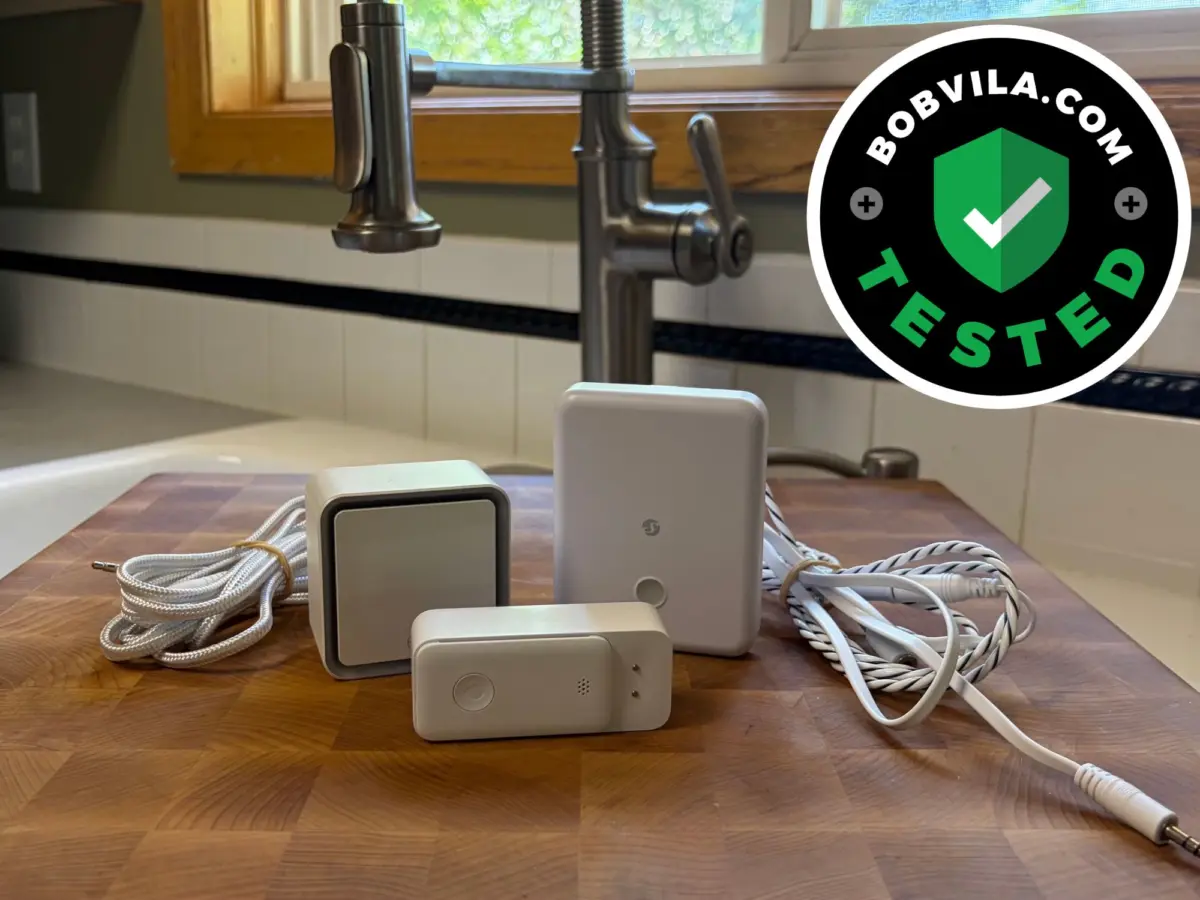
With severe plumbing failures affecting more than 2.5 million homes every year, property owners face an ongoing battle against silent, destructive water leaks. Beyond inflating monthly utility bills, undetected moisture can trigger catastrophic structural degradation, ruin subflooring, and foster toxic mold colonies that cost thousands of dollars to remediate. Recognizing a slow drip or a sudden pipe burst before it wreaks havoc is no longer just a matter of convenience—it is a financially vital step in modern homeownership.
To help homeowners navigate the crowded marketplace of moisture-monitoring devices, product-testing experts recently undertook a rigorous, multi-week evaluation of top-tier water leak detectors. By testing models ranging from budget-friendly $15 pucks to feature-heavy $100 smart ecosystems, reviewers aimed to answer a fundamental question: Do premium price tags translate to superior flood protection, or can affordable alternatives outperform luxury options?
Chronology of the Evaluation: How Testers Put Detectors Through Their Paces
The testing initiative was designed to simulate worst-case home plumbing scenarios. Over a three-week testing window, a panel of trade professionals and product reviewers put seven market-leading leak detectors through a battery of standardized physical and digital trials.
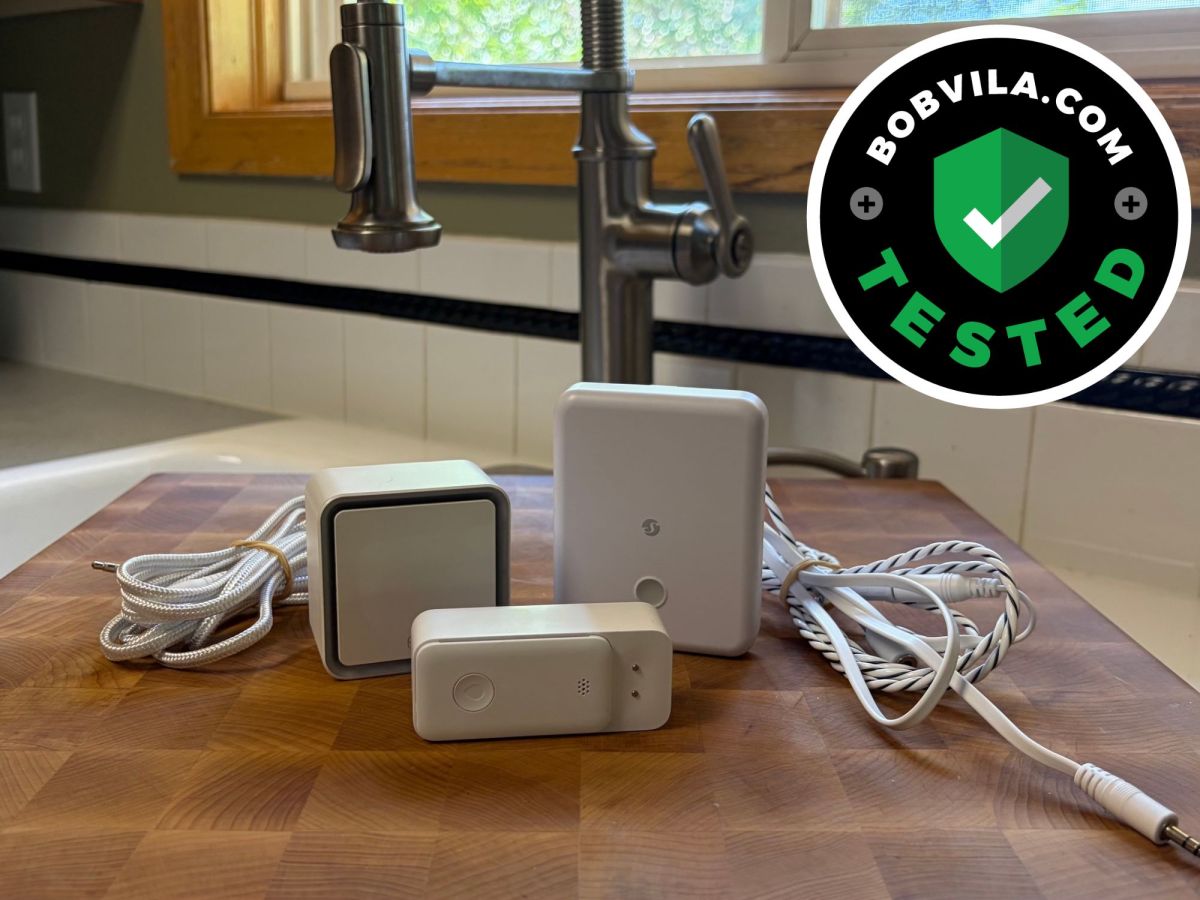
- Week 1: Setup and Ecosystem Integration: Reviewers unboxed each unit to assess the intuitiveness of the initial configuration process. They evaluated Wi-Fi connectivity, app onboarding, battery installation, and physical mounting mechanisms (such as 3M adhesive tabs vs. screw-in anchors).
- Week 2: Controlled Moisture Trials: Each detector was subjected to two distinct water exposures: a fine mist from a spray bottle to test sensitivity, followed by full submersion in a bowl of water. Testers logged the exact response time (measured in seconds) from initial liquid contact to the sounding of an audible alarm or receipt of an app notification.
- Week 3: Extreme Stress Testing: Devices were tested for specialized capabilities. Reviewers evaluated decibel output levels using sound meters, tested cable-style sensors for continuous moisture tracking along a path, and even placed select models inside household freezers to evaluate sub-freezing temperature alerts. Finally, the data was measured against a strict performance rubric to score each model on ease of use, reliability, functionality, and overall value.
Supporting Data: Understanding the Market Landscape
The evaluation highlighted a wide variance in pricing, hardware design, and alert methodologies across the leak-detection sector.
- Price Spectrum: Tested units spanned a price range from roughly $15 for basic, standalone audible alarms to $110 for multi-component smart kits.
- Response Times: Most modern sensors triggered a response within 5 seconds of direct water contact, though hardwired hubs (such as the YoLink system) demonstrated exceptionally fast digital notification delivery due to direct router connections.
- Decibel Outputs: Audible alarms varied dramatically, with simple units like the Basement Watchdog registering an ear-piercing 100 decibels—ideal for dank, isolated basements—while more feature-rich smart hubs utilized lower local volumes (around 65 decibels) in favor of pushing push-notifications directly to user smartphones.
Official Reviewer Findings: The Top Water Leak Detectors
Based on extensive real-world testing, the review panel assigned top honors to several standout models tailored to different consumer needs and budgets.
1. Best Overall: Shelly Flood Gen4 Smart Water Leak Detector
Challenging the notion that superior technology must carry a high price tag, the Shelly Flood Gen4 emerged as the favorite overall pick.
- Design & Functionality: Unlike standard puck-style sensors that only register water pooling directly beneath them, the Flood Gen4 utilizes a 2-meter (6.5-foot) sensing cable capable of detecting moisture along its entire length. Homeowners can mount the main hub safely off the floor while stringing the wire across high-risk zones. It features dual modes: Flood Detection Mode for indoor alarms and Rain Detection Mode for outdoor notifications.
- Performance: Testers praised its straightforward installation, reliable Wi-Fi app connectivity, and integration capabilities that can automatically trigger motorized valves or storm awnings. Earning a perfect 5/5 score for value, the Shelly model proved that high versatility does not require a luxury investment.
2. Best Bang for the Buck: SwitchBot Smart Water Leak Detector
For shoppers seeking full water submersion capability and smart home compatibility on a strict budget, the SwitchBot proved exceptionally competitive.
- Design & Functionality: Shaped like a compact garage door opener, this fully waterproof unit houses dual-contact sensors on its base. It combines a loud local siren with instant app, email, and voice integrations via Alexa, Google Home, and Siri.
- Performance: While its puck-style design requires precise placement where water is guaranteed to pool, its sub-$20 price point and robust smart ecosystem connectivity make it an undeniable bargain for under-sink monitoring.
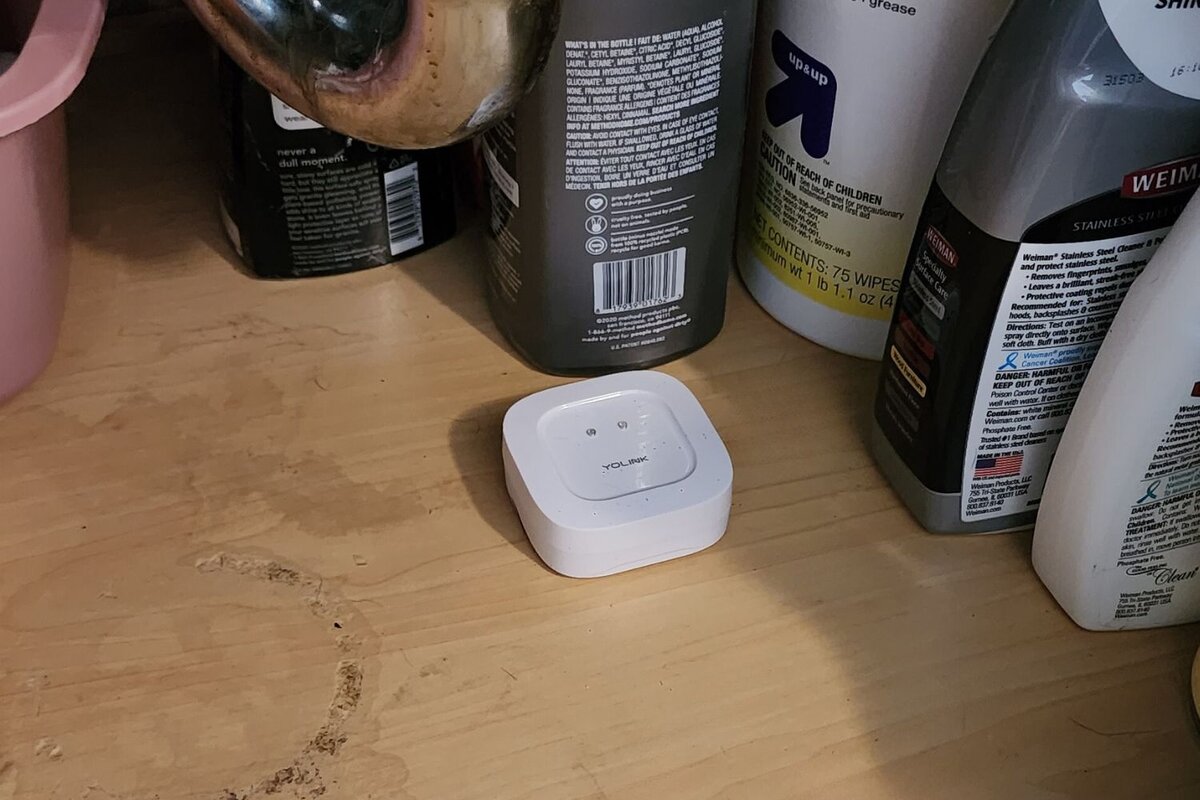
3. Upgrade Pick: YoLink Water Leak Sensor and Hub Starter Kit
For sprawling properties or users looking to bypass home Wi-Fi congestion entirely, the YoLink kit provides an industrial-grade solution.
- Design & Functionality: YoLink devices communicate via long-range radio frequencies rather than local Wi-Fi, boasting an open-air wireless range of up to 1,320 feet from the base station. The system routes alerts via SMS text, email, and smartphone banners.
- Performance: Although the base hub requires a hardwired connection directly to your home router, the resulting system delivers instantaneous notifications (often within 5 seconds) without draining household internet bandwidth.
4. Best Freeze Detection: Kidde 60WLDR-W Water Leak and Freeze Detector
Plumbing failures are frequently precipitated by sub-freezing temperatures. The Kidde 60WLDR-W addresses this dual threat effectively.
- Design & Functionality: Operating on two AA batteries, this compact unit monitors both moisture via bottom contacts and ambient temperature, triggering a freeze alert when surrounding air drops to 37 degrees Fahrenheit.
- Performance: Testers confirmed its reliability in simulated freeze trials. Furthermore, the Kidde app offers an emergency contact feature that automatically dials or texts designated friends or family members if the homeowner fails to respond to an alert.
5. Best Audible-Only: The Basement Watchdog Water Alarm
For low-tech, set-and-forget reliability in dusty, uninsulated spaces where smart apps are unnecessary, The Basement Watchdog remains a market leader.
- Design & Functionality: Featuring a simple battery-powered architecture, this unit triggers a piercing 100-decibel local alarm the moment water reaches a depth of just 1/32 of an inch.
- Performance: Lacking Wi-Fi connectivity or app overhead, it focuses purely on brute-force audio alerts. Its exceptional battery life and ear-splitting siren make it ideal for utility rooms and remote basements.
6. Best for Apple HomeKit Users: Eve Water Guard Smart Water Leak Detector
Apple ecosystem enthusiasts looking for localized data privacy will find a robust option in the Eve Water Guard.
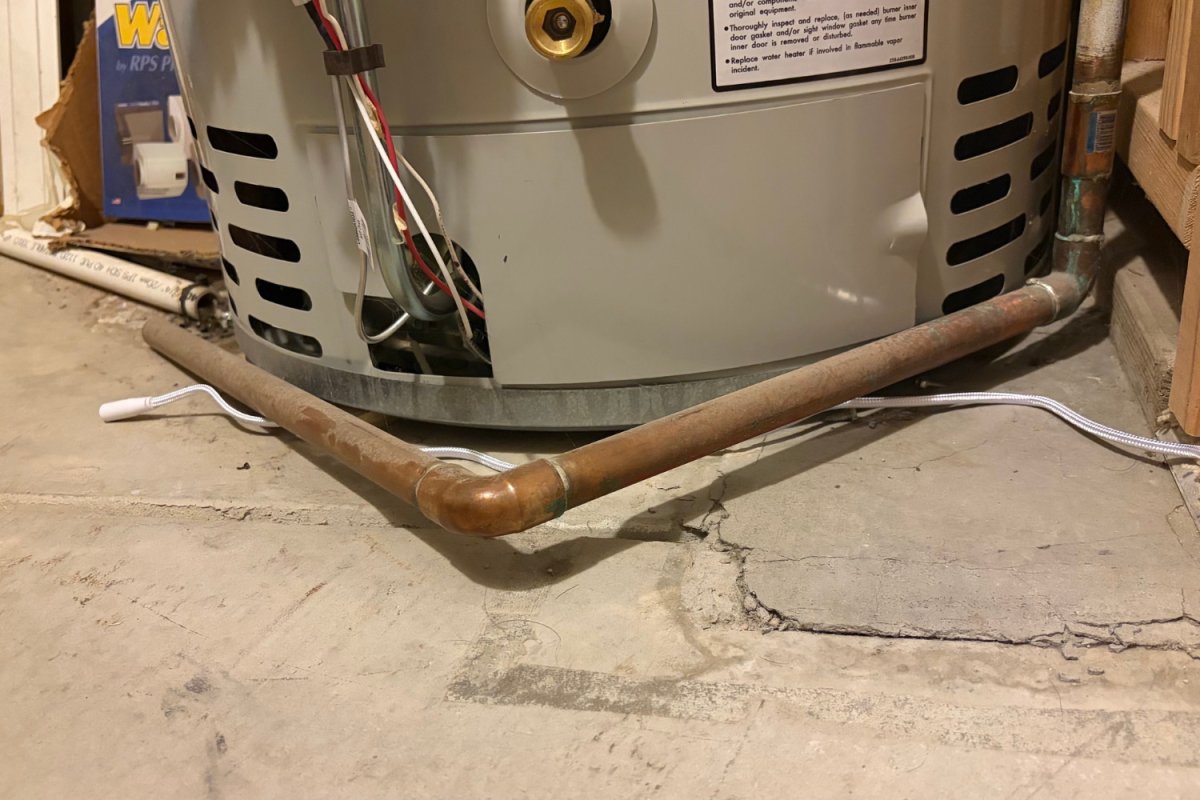
- Design & Functionality: Utilizing Bluetooth and Thread networking, the Eve features a 6.5-foot sensing cable similar to the Shelly model, wrapping easily around water heaters or snaking along cabinetry bases.
- Performance: Alongside app and audio alerts, the Eve incorporates a large, bright flashing red visual indicator—ideal for cutting through the darkness of a utility room during a night-time leak.
Implications for Homeowners: Choosing the Right Protection
Investing in water leak detection technology shifts a homeowner’s posture from reactive disaster recovery to proactive risk mitigation. When selecting a device, experts recommend evaluating four core criteria:
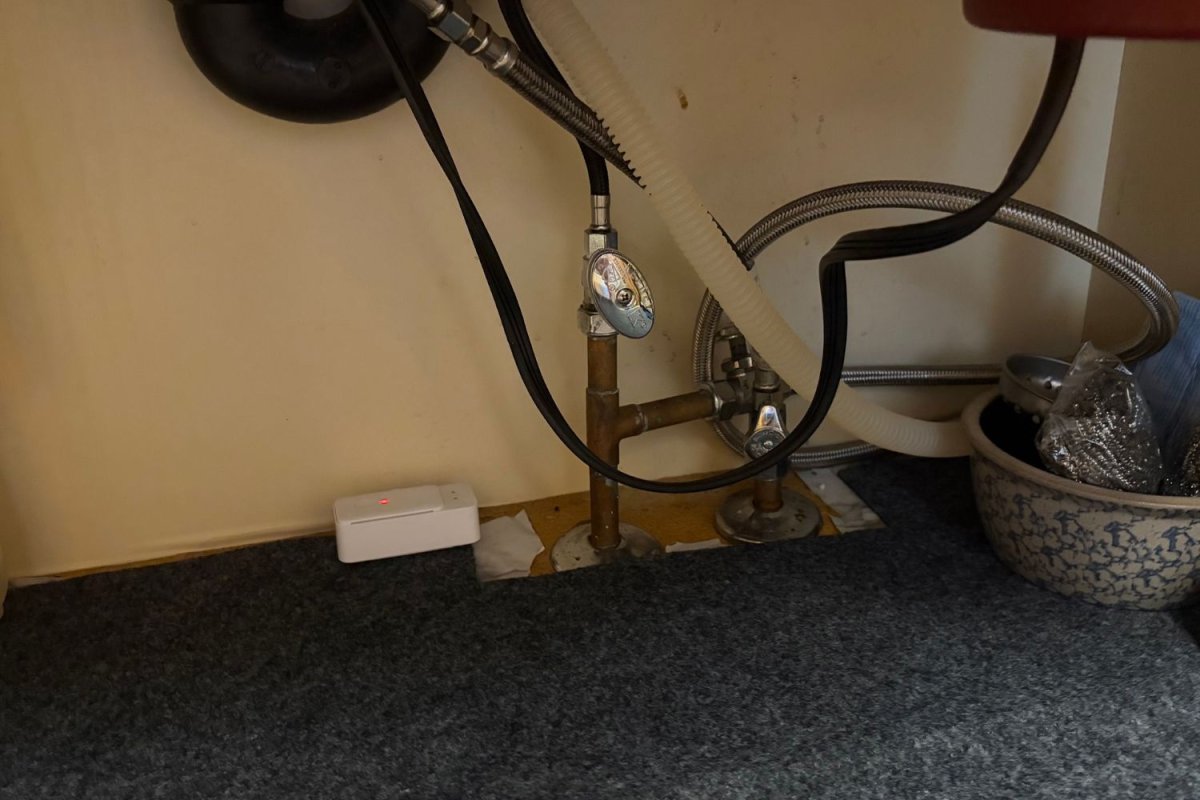
- Coverage Area: Use puck-style sensors for isolated appliance bases (toilets, washing machines), and cable-style sensors for linear runs along basement walls or behind complex kitchen cabinetry.
- Connectivity Needs: Determine whether you require remote smartphone alerts (via Wi-Fi, radio frequency, or Thread) or if a loud, standalone audible alarm is sufficient for your living arrangements.
- Power Sources: Battery-operated units protect your home even if a major flood trips the main electrical breaker, whereas hardwired hub systems offer instantaneous digital reporting speeds.
- Advanced Automations: Premium setups can link directly with motorized smart water shut-off valves, automatically severing the home’s water supply the microsecond a leak is detected—preventing thousands of dollars in structural damage before you even wake up.
As smart home technology continues to evolve, equipping vulnerable areas of a house with reliable moisture sensors has transitioned from a luxury gadget category into an indispensable cornerstone of modern home maintenance.
