

By Clean Energy Correspondent
Published: August 2026
Main Facts
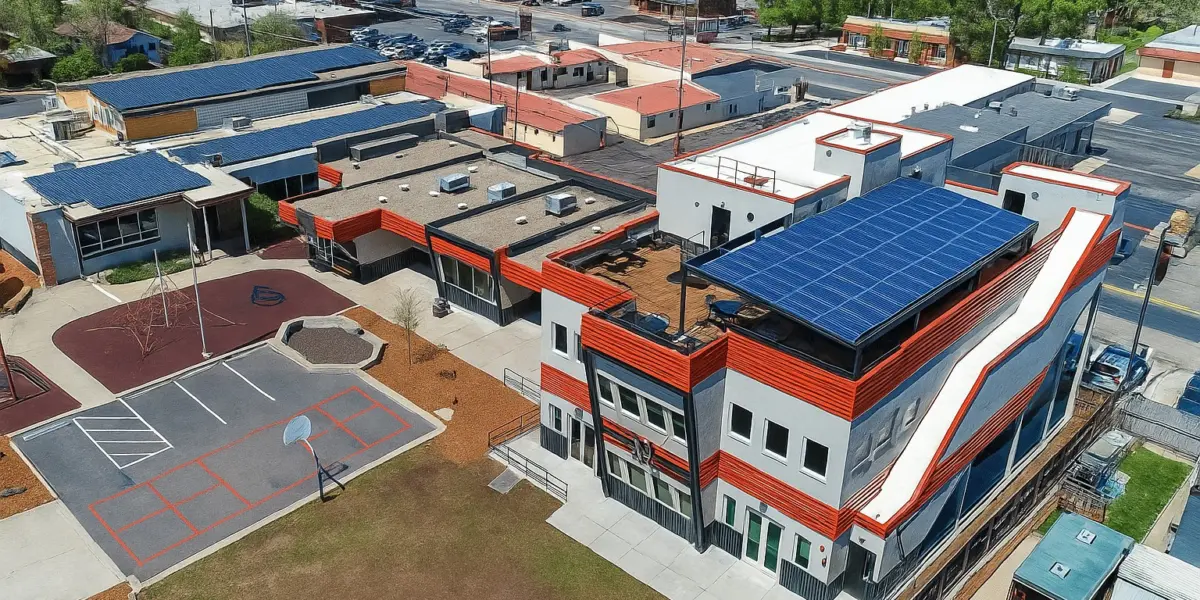
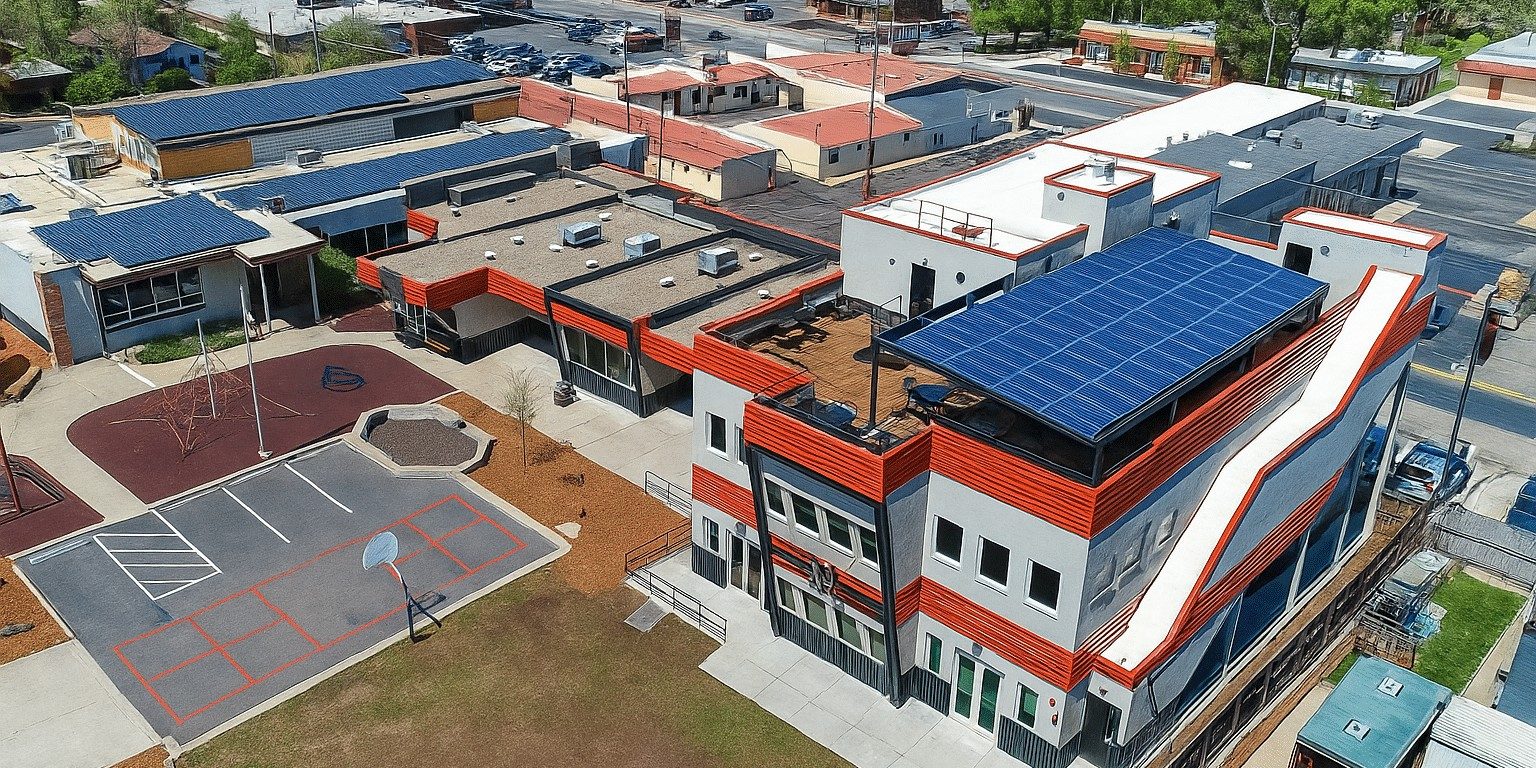
Across the United States, a quiet energy revolution is taking place on the rooftops and open grounds of local educational institutions. According to the sixth edition of the Brighter Future report published by the clean energy nonprofit Generation180, solar power now actively energizes more than 10,800 K-12 public and private schools nationwide.
This milestone means that approximately 1 in every 7 students in the United States—totaling over 7 million children—attends a school partially or fully powered by the sun.
The nationwide data, current through April 2026, highlights an unprecedented expansion in educational renewable energy infrastructure. The total number of solar-powered schools has nearly doubled since 2016, jumping from 5,450 to over 10,800. More impressively, the combined solar generation capacity across these institutions has more than tripled over the same decade, scaling past 2.4 gigawatts (GW).
To put that figure into perspective, 2.4 gigawatts is enough clean electricity to power more than 450,000 typical American homes annually—roughly equivalent to every single household in Austin, Texas.
Yet, despite this massive surge in photovoltaic (PV) generation, the report reveals a glaring chink in the armor of school sustainability: battery storage. While schools have rapidly adopted solar panels to trim utility expenses, pairing those systems with energy storage batteries remains exceedingly rare. Only a tiny fraction of solar-powered schools have integrated battery backups, leaving a massive, untapped opportunity to transform local educational facilities into community resilience hubs.
Chronology: A Decade of Educational Solar Expansion
The journey of American schools transitioning toward renewable energy did not happen overnight. It represents a steady, deliberate accumulation of policy shifts, technological cost-reductions, and community-led initiatives over the past ten years.
- 2016: Generation180 launches its tracking efforts, recording approximately 5,450 solar-powered K-12 schools across the United States. At this stage, adoption is primarily concentrated in progressive pioneering states like California, New Jersey, and Arizona, where state incentives and high electricity rates make solar an immediate financial win.
- 2017–2020: Falling photovoltaic hardware costs, coupled with third-party financing models such as Power Purchase Agreements (PPAs)—where schools pay little to no upfront capital costs—allow suburban and rural school districts to join the movement.
- 2021–2025: A massive wave of regional acceleration occurs. States traditionally outside the solar spotlight—such as Virginia, Connecticut, Pennsylvania, and Massachusetts—aggressively ramp up school installations. Massive district-wide rollouts, like Roanoke City Public Schools in Virginia, demonstrate the long-term viability of multi-site renewable projects.
- April 2026: Generation180 releases the sixth edition of its Brighter Future report. The total count crosses 10,800 schools, marking a near-doubling of adoption since 2016. Concurrently, the report issues the nation’s first comprehensive census of battery storage in K-12 institutions, revealing that fewer than 0.1% of schools possess operational energy storage systems.
Supporting Data and Regional Breakdown
The financial implications of this transition are staggering, particularly for cash-strapped school districts facing tight operational budgets. When utility bills drop, thousands—sometimes millions—of dollars can be redirected away from energy overhead and straight back into the classroom.
Consider Roanoke City Public Schools in Virginia, which is currently installing nearly 9.4 megawatts (MW) of solar capacity across 29 separate district sites. District financial analysts project that this solar infrastructure will yield a jaw-dropping $46.5 million in cumulative energy cost savings over a 35-year lifespan.
Geographically, the distribution of school solar remains heavily weighted toward certain states, though the playing field is slowly diversifying:
-
Top States by Total Solar-Powered Schools:
- California: 2,921 schools (unquestioned national leader)
- New Jersey: Thousands of systems distributed across dense suburban districts
- New York: Strong municipal and state backing
- Illinois: Rapid midwestern growth
- Arizona: High solar irradiance driving early adoption
-
Top States for Recent Growth (2021–2025 Capacity Additions):
States such as Virginia, Connecticut, Pennsylvania, New Jersey, and New York added the highest volume of new solar capacity. Meanwhile, states like Illinois, Minnesota, Wisconsin, Virginia, and Massachusetts led the charge in simply expanding the sheer number of newly solar-equipped school campuses.
The Storage Disconnect
While generation numbers tell a story of triumph, the data regarding battery storage paints a sobering picture of lag and missed opportunities. Generation180’s inaugural national count of K-12 battery systems revealed that only 155 schools nationwide have installed battery storage since 2016.
Out of those 155 installations:
- 94 schools have paired batteries directly with existing solar arrays.
- 61 schools operate standalone storage units.
This accounts for less than 0.1% of all US K-12 schools, even though the absolute number of school battery installations has technically grown sevenfold over the decade from a near-zero baseline.
Geographically, storage is even more centralized than solar generation. California accounts for 109 of the identified storage systems, representing roughly 70% of the entire national total. Massachusetts follows a distant second with 10 systems, Oregon has seven, Hawaii boasts six, and Arkansas holds three.
Official Responses and Expert Perspectives
As clean energy advocates examine the data, the consensus is clear: while schools have mastered the art of generating clean electricity, they have yet to secure their grids against increasingly frequent extreme weather events.
Tish Tablan, lead report author and senior director of Generation180’s Electrify Our Schools program, emphasized the shifting perception of solar energy within public education administration:

"This report shows that school solar is no longer concentrated in just a few places. Urban, suburban, and rural school districts across the country are using clean energy to reduce costs, improve facilities, and prepare students for the economy of the future."
Tablan also underscored the vast, unexploited potential of pairing those solar arrays with chemical battery storage, pointing out that public schools are uniquely positioned to serve as community safe havens:
"We have a huge opportunity to turn schools into clean-powered resilience hubs—community spaces that can keep the lights on, provide shelter, and support families when the grid goes down."
Given that approximately one-third of all US public K-12 schools are officially designated by FEMA as emergency shelters, the lack of backup power represents a major vulnerability during regional blackouts, winter storms, or heatwaves. When a grid fails, a school equipped with solar alone will automatically shut down due to anti-islanding safety protocols designed to protect utility workers. Without a battery storage system to isolate the building and maintain an independent microgrid, the lights, heating, refrigeration, and communications equipment will remain dark.
Broader Implications: Federal Policy and the Road Ahead
The sluggish adoption of battery storage stands in stark contrast to an evolving federal policy landscape that unexpectedly favors energy storage over traditional photovoltaic installations.
Under tax legislation passed in 2025, clean electricity tax credits for new wind and solar projects were subjected to an accelerated expiration timeline. Specifically, projects that began construction after July 4, 2026, and are placed in service after December 31, 2027, face an abrupt end to traditional production and investment tax credits.

However, official Internal Revenue Service (IRS) guidance specifically carved out exemptions for energy storage, leaving it shielded from that accelerated deadline. Battery storage systems continue to qualify for the federal Clean Electricity Investment Credit. Furthermore, because public schools and local governments are tax-exempt entities, they can directly access these financial incentives through elective pay (often referred to as "direct pay"), allowing them to receive cash refunds equivalent to the value of the tax credits.
This unique regulatory opening creates a golden window for school districts. Even as the financial runway for standalone solar projects tightens under changing federal guidelines, energy storage systems remain heavily incentivized.
Preparing Students for the Modern Workforce
Beyond utility bill savings and emergency resilience, the proliferation of campus solar infrastructure serves an invaluable educational purpose. By walking past operational inverters, rooftop photovoltaic arrays, and campus energy dashboards every day, over 7 million students are gaining firsthand exposure to the mechanics of the clean energy transition.
As school districts transition their bus fleets to electric power, upgrade aging HVAC systems to high-efficiency heat pumps, and install smart microgrids, campuses are effectively becoming living laboratories. Students are no longer just reading about climate science and electrical engineering in textbooks; they are attending classes inside buildings powered by the very technologies that will dominate the 21st-century workforce.
As school districts nationwide look for ways to balance tightening budgets against mounting infrastructure demands, the path forward is illuminated by the sun. The challenge for the remainder of the decade will not be convincing schools to adopt solar power, but ensuring they store that energy wisely—turning America’s classrooms into enduring beacons of community safety and technological progress.
