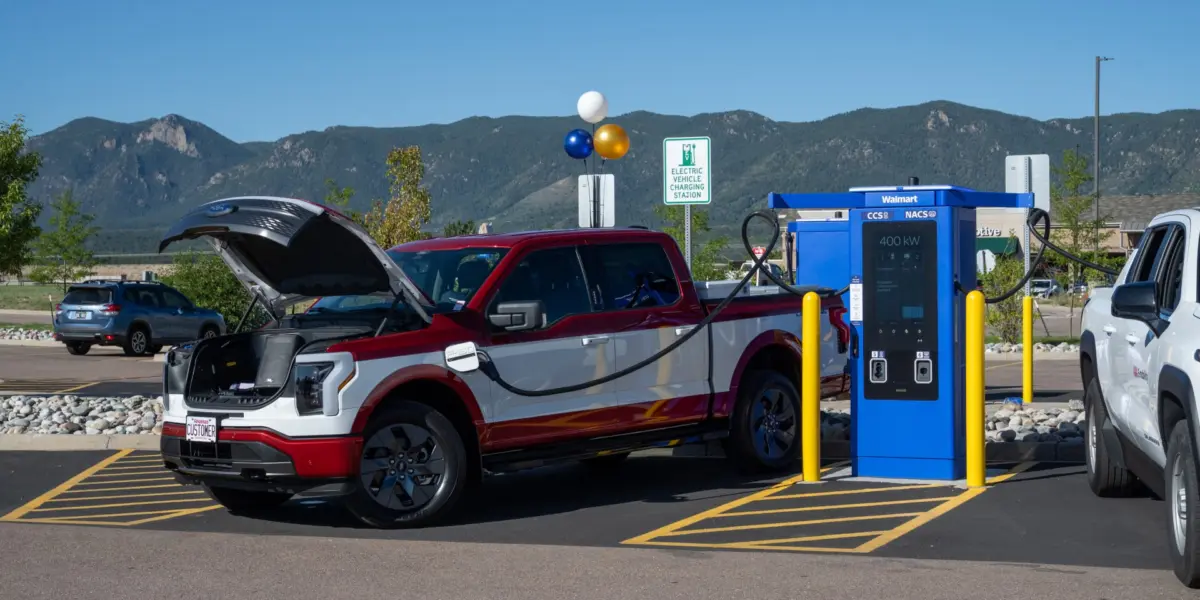
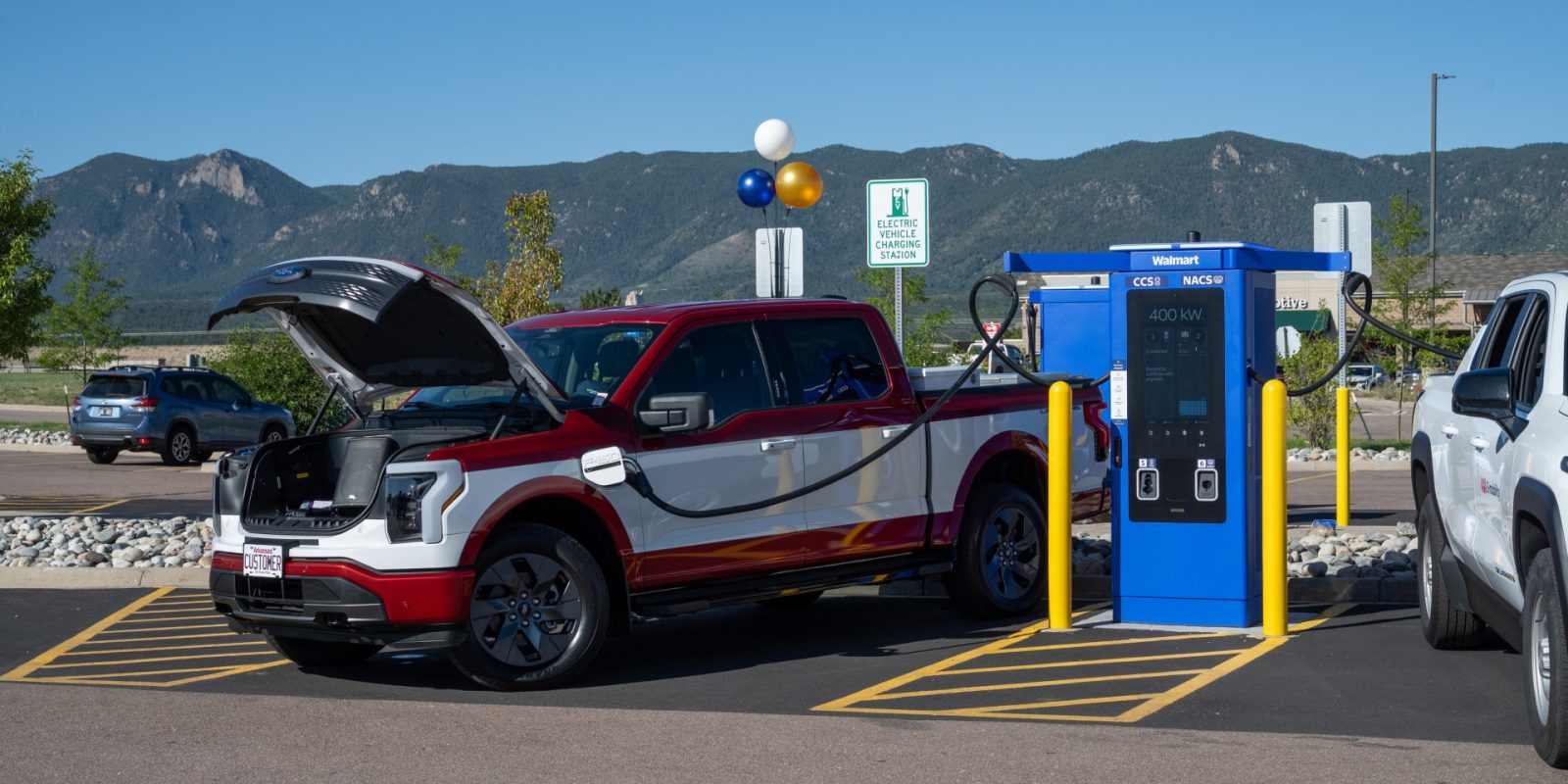
MONUMENT, Colo. — Retail giant Walmart has officially crossed a major threshold in the American electric vehicle (EV) infrastructure landscape, launching its 100th company-owned fast-charging site. Situated at the Walmart Supercenter at 16218 Jackson Creek Parkway in Monument, Colorado, this milestone station represents a significant step forward in the company’s aggressive strategy to integrate reliable EV charging into its massive footprint.
With this latest opening, Walmart’s proprietary charging network now spans 100 store locations across 20 states. The rollout highlights a broader retail trend of incorporating high-speed automotive infrastructure directly into commercial real estate, aiming to transform routine shopping trips into seamless refueling stops for the growing population of EV owners.
Main Facts: The Monument Milestone and Network Specs
The new Monument Supercenter charging hub is emblematic of Walmart’s infrastructure blueprint. The site features an eight-plug configuration, perfectly balanced to accommodate the evolving automotive market: four plugs utilize the Combined Charging System (CCS1) standard, while the remaining four feature the North American Charging Standard (NACS).
Each of the plugs is engineered to deliver up to 400 kilowatts (kW) of power. While the hardware is future-proofed for the next generation of high-capacity EV architectures, industry watchers note that most passenger electric vehicles currently on the market cannot yet accept the full 400 kW threshold. Nevertheless, the high-output capability ensures that vehicles capable of ultra-fast charging can operate at peak performance speeds.
Walmart is utilizing top-tier, heavy-duty European hardware for its stations. The Monument facility relies on Swiss-based ABB E-mobility’s A400 All-in-One hardware. Meanwhile, Walmart’s broader network also incorporates Italian manufacturer Alpitronic’s HYC400 Hyperchargers.
According to manufacturer specifications, ABB’s A400 can intelligently split power, supplying up to 200 kW to two separate vehicles simultaneously, or channeling the full 400-kW output to a single vehicle. Alpitronic units function similarly, utilizing a shared footprint of CCS1 and NACS cables to service dual stalls efficiently. Real-world testing of these systems—such as a recent InsideEVs evaluation at an early Walmart site in McKinney, Texas—demonstrated impressive capabilities, with a GMC Hummer EV pulling more than 300 kW and charging from 1% to 53% in just 27 minutes.
Chronology: From Ambition to Execution
To understand how Walmart reached its 100-site milestone, it is essential to trace the trajectory of the company’s clean energy commitments over recent years.
Early Planning and Real Estate Leverage: Recognizing that approximately 90% of the US population lives within 10 miles of a Walmart or Sam’s Club store, the retailer initially announced an ambitious long-term plan: to build out a massive, branded fast-charging network across thousands of its more than 5,200 US locations by 2030.
Software Development and In-House Engineering: Rather than relying entirely on third-party white-label systems, Walmart Global Tech was tasked with designing a proprietary software platform from scratch. Engineers built the backend architecture to seamlessly handle charger connectivity, real-time availability tracking, performance monitoring, payment processing, and external mapping integrations.
Initial Deployments and Testing: Throughout the initial rollout phase, select pilot sites—such as the station in McKinney, Texas—were deployed to test hardware durability and software reliability under heavy, real-world conditions. These tests provided crucial data regarding vehicle compatibility and charging curves.
Reaching the Centennial Mark: Culminating years of logistical planning, software iteration, and hardware installation, the opening of the Monument, Colorado Supercenter marks the official activation of Walmart’s 100th location, cementing its transition from a conceptual blueprint to a functioning, multi-state network.
Supporting Data: Infrastructure, Hardware, and Software Integration
Walmart’s approach to building a charging network relies heavily on vertical integration of its software and strategic partnerships for its hardware.
Hardware Breakdown
ABB A400 All-in-One: Deployed at sites like Monument, CO. Capable of delivering up to 400 kW total, with dynamic power-sharing of 200 kW per plug when two vehicles are charging simultaneously.
Alpitronic HYC400 Hypercharger: Utilized across various locations, pairing CCS1 and NACS cables to maximize stall utility and support heavy-duty, high-voltage vehicles like electric pickup trucks and SUVs.
Site Sizing: Typical Walmart charging plazas feature anywhere from eight to 16 plugs, ensuring high throughput and minimizing wait times during peak shopping hours.
Software and App Integration
While Walmart purchases its physical chargers from established European manufacturers, the software glue holding the network together is entirely homegrown. Walmart Global Tech engineered the platform responsible for:
Processing live availability and hardware performance metrics.
Managing secure payment transactions.
Broadcasting real-time station data to popular navigation and mapping platforms, including Apple Maps, Google Maps, PlugShare, ChargeHub, and Chargeway.
Crucially, the consumer-facing interface is embedded directly within the primary Walmart smartphone application. Drivers do not need to download or authenticate a separate, single-purpose charging app. Through the main Walmart app, users can effortlessly locate a nearby station, initiate a charging session, manage payments, and monitor battery replenishment in real-time. Furthermore, Walmart+ members receive exclusive financial discounts on their charging sessions, creating a direct tie-in with the company’s broader retail loyalty ecosystem.
Official Responses: What Leadership is Saying
Company executives have emphasized that the rapid expansion of the charging network is designed to complement, rather than complicate, the traditional retail experience.
"Reaching 100 sites is an important milestone, and our broad footprint positions us to make EV charging more accessible for communities while expanding the ways we serve our customers," said Shayne Wahlmeier, senior vice president of Walmart Energy.
The focus on reliability and frictionless user experience is a direct response to common consumer complaints regarding public EV infrastructure, such as broken chargers, confusing app requirements, and poor customer support.
"When a customer pulls into a Walmart to charge, we want the experience to feel as reliable and effortless as the rest of their shopping trip," noted Adam Happel, general manager of Walmart Retail EV Charging. "We’re proud to reach 100 sites, but our focus remains on building a network customers can count on every time they charge with us."
Addressing future friction points, Walmart has acknowledged consumer feedback regarding app fatigue. While the native app integration is robust, company representatives have confirmed that additional payment methods—including direct credit card readers—are slated for introduction as the network continues to scale. This move will accommodate drivers who prefer traditional point-of-sale transactions without needing to interact with a smartphone app.
Implications: Reshaping Retail and American Mobility
The crossing of the 100-site threshold carries profound implications for both the retail industry and the broader electric vehicle transition in the United States.
1. The Intersection of Retail and Refueling
For decades, traditional gas stations have captured convenience-store revenue while drivers fuel up. By embedding ultra-fast charging stalls directly into its sprawling parking lots, Walmart is pivoting this economic model toward big-box retail. While an EV charges for 15 to 30 minutes—the exact timeframe required to utilize a 300+ kW hypercharger—drivers are naturally incentivized to step inside the Supercenter to pick up groceries, run errands, or grab a meal. This symbiotic relationship provides a captive audience for retail while solving the "dwell time" problem for EV drivers.
2. Filling Infrastructure Deserts
With thousands of stores strategically positioned across rural, suburban, and urban corridors, Walmart possesses a distinct real estate advantage over traditional standalone charging networks. Because approximately 90% of Americans live within 10 miles of a Walmart, the continued expansion of this network has the potential to systematically eliminate charging deserts, particularly in America’s heartland where public fast-charging infrastructure has historically lagged behind coastal metro areas.
3. Raising the Standard for Reliability
Public charging reliability has long been an Achilles’ heel for the EV adoption curve, with broken screens and unresponsive payment terminals frustrating early adopters. By investing in enterprise-grade European hardware (ABB and Alpitronic) and building a centralized, in-house tech monitoring platform via Walmart Global Tech, the company is signaling that retail conglomerates can often provide a higher standard of operational maintenance and customer service than traditional niche charging operators.
As Walmart presses forward past its 100-site milestone toward its long-term objectives, the company is well-positioned to cement its status as a foundational pillar of America’s electrified transportation future—proving that the humble parking lot can double as the nation’s most convenient refueling highway.