

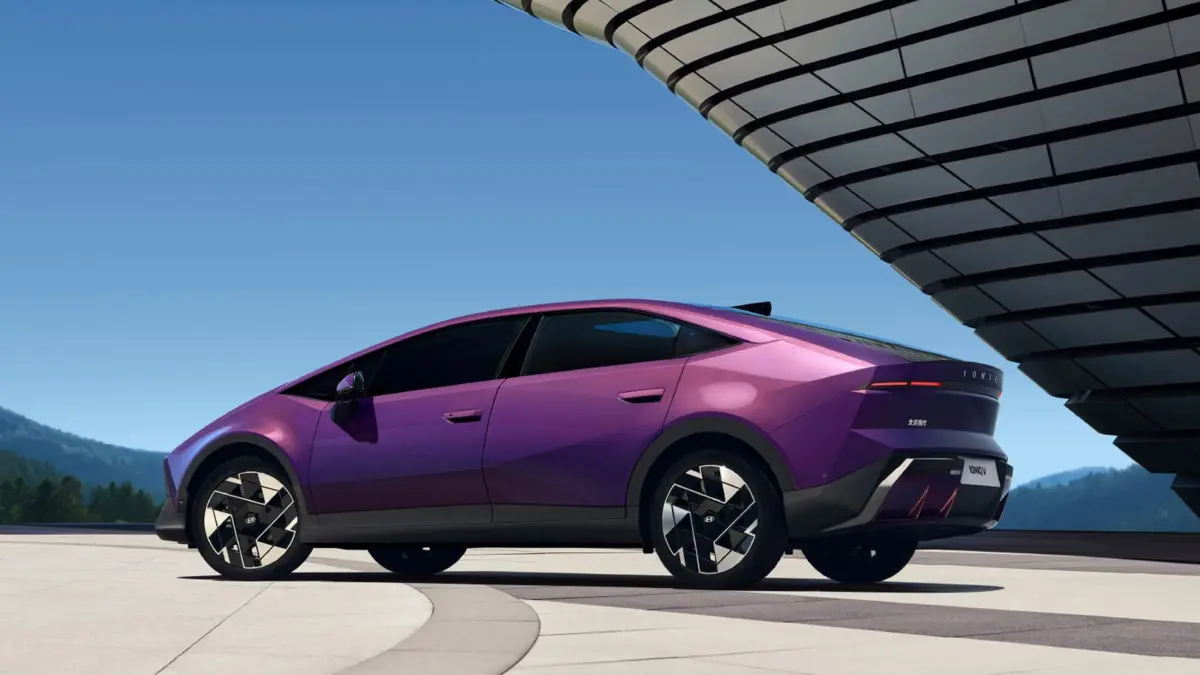
BEIJING — Hyundai Motor Group has officially opened order books for the all-new Ioniq V, marking a critical opening salvo in the automaker’s aggressive strategy to carve out a permanent home in China’s fiercely contested electric vehicle (EV) sector. First revealed as a striking concept just months ago, the production-ready Ioniq V debuted to global curiosity at the Beijing Auto Show and is now making waves at the ongoing Chengdu Auto Show.
Yet, as the pre-sale windows swing open across mainland China, English-speaking markets are left waiting on the sidelines. While Hyundai intends to take the vehicle global eventually, no official timeline has been set, leaving international consumers to marvel at the high-tech, aggressively priced crossover from afar.

Main Facts
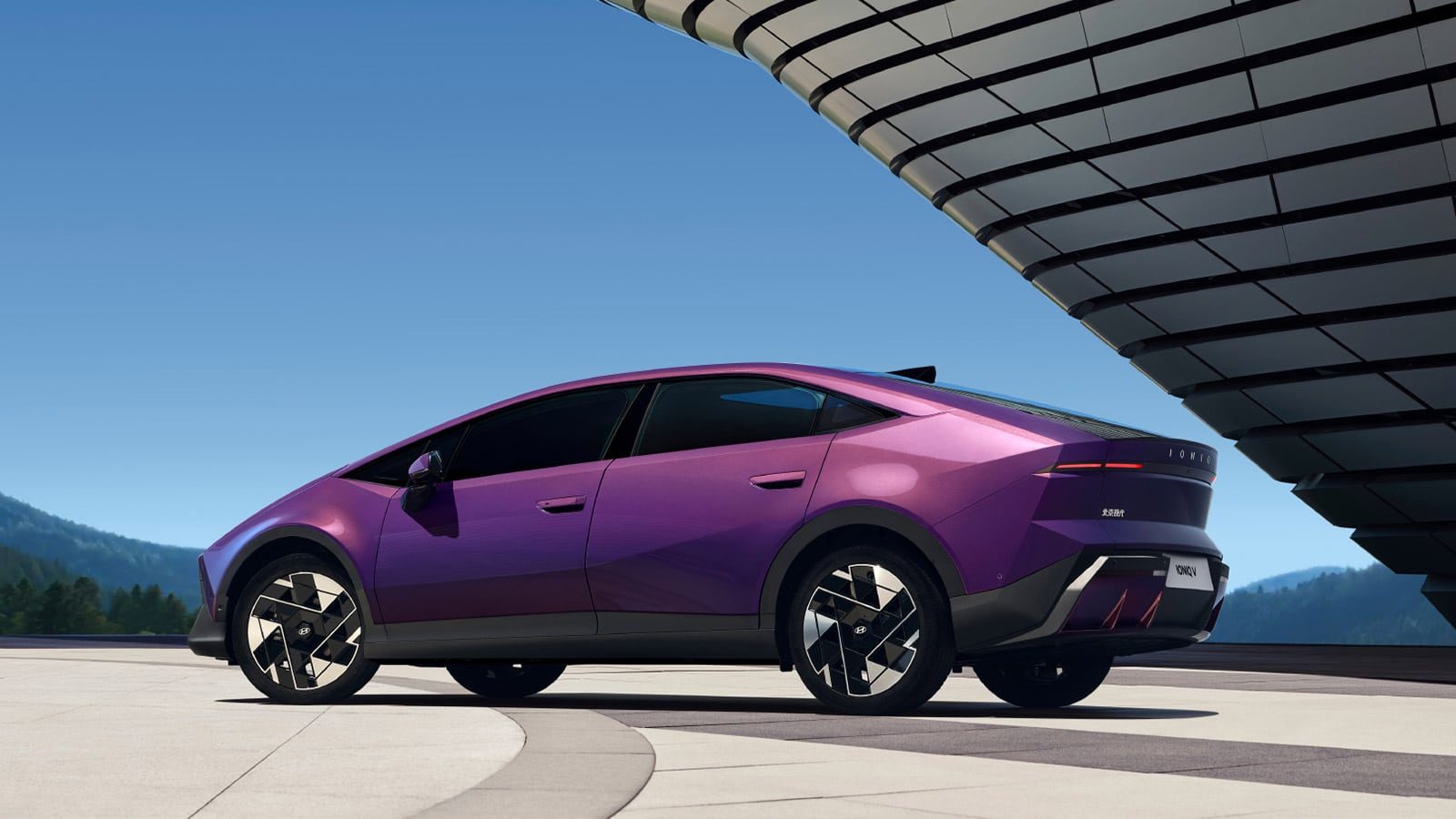
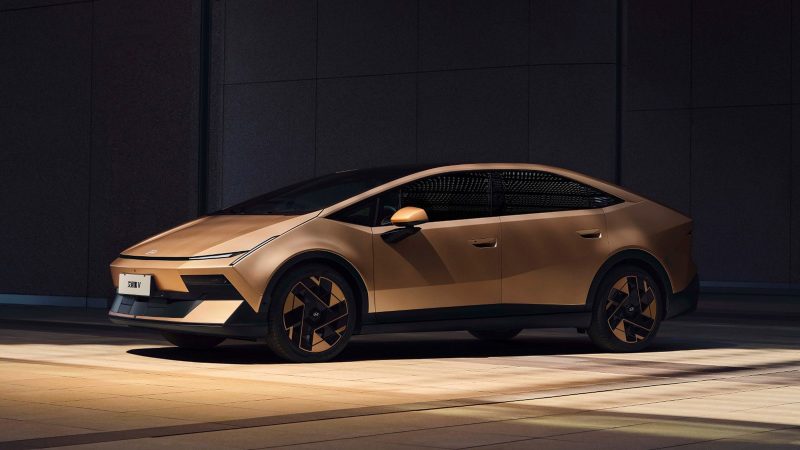
The Hyundai Ioniq V is the vanguard of a planned 20-model offensive designed to revitalize the South Korean automaker’s footprint in China, where traditional internal combustion engine (ICE) sales have plummeted in favor of rapid electrification. Built upon Hyundai’s proven, highly capable Electric-Global Modular Platform (E-GMP), the Ioniq V introduces a dramatic shift in design language for the brand.
The vehicle is launching across three distinct trim levels tailored to aggressively target China’s budget-conscious yet tech-hungry consumer base:
- Base Trim: Priced at approximately $17,700 USD (119,900 yuan).
- Mid-Tier Trim: Priced at approximately $19,400 USD (129,900 yuan).
- Top-Tier Trim: Priced at approximately $20,900 USD (139,900 yuan).
Mechanically, the Ioniq V offers two battery pack options: a 53.5 kWh unit and a larger 66.8 kWh pack. The lower-tier models churn out 188 horsepower (140 kW) and deliver a claimed CLTC range of roughly 330 miles (520 to 540 kilometers). Stepping up to the top-tier long-range variant yields 225 horsepower (168 kW) and stretches the CLTC range to an impressive 390 miles (620 to 650 kilometers). However, industry analysts note that China’s CLTC testing cycle tends to be notably optimistic, meaning equivalent EPA ratings in North America would likely adjust downward.
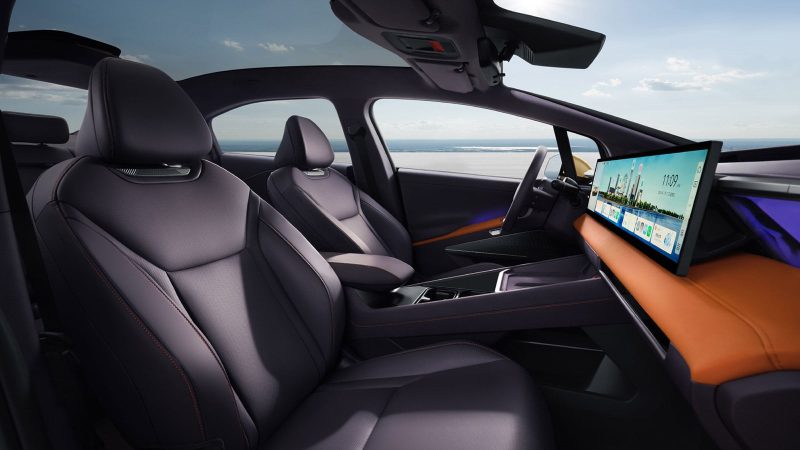
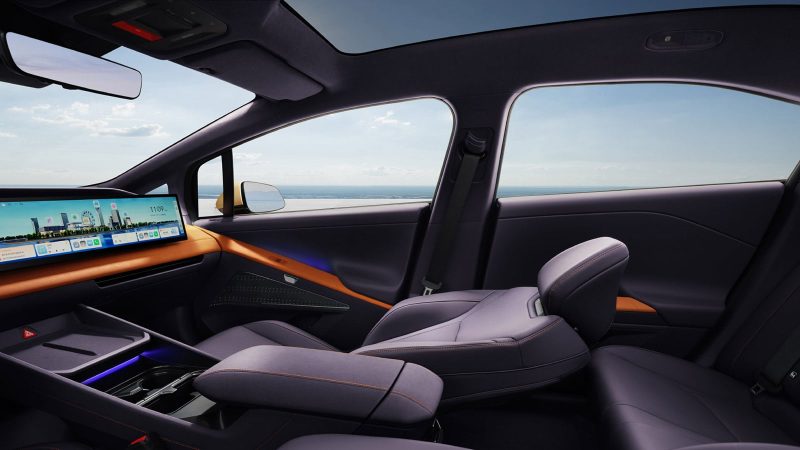
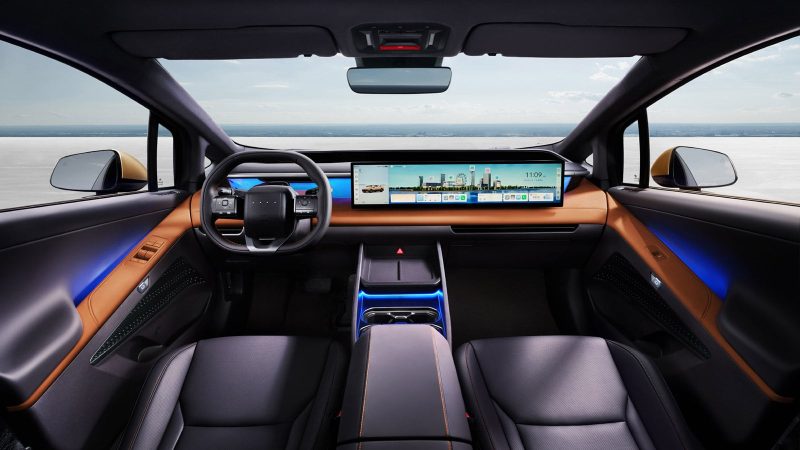
Inside the cabin, the centerpiece is an expansive 27-inch dashboard display integrating advanced software supported by prominent Chinese AI ecosystems developed by Baidu and ByteDance. Drivers are treated to a futuristic "Cyber Eye" head-up display system alongside a sophisticated Advanced Driver Assistance System (ADAS) engineered in partnership with Momenta, a leading Chinese autonomous driving firm.
Production of the Ioniq V will take place in Beijing through Hyundai’s joint venture with BAIC Motor.
Chronology of Development
The journey of the Ioniq V from an abstract styling exercise to a production-ready market contender has moved at lightning speed, mirroring the hyper-accelerated pace of China’s automotive industry.
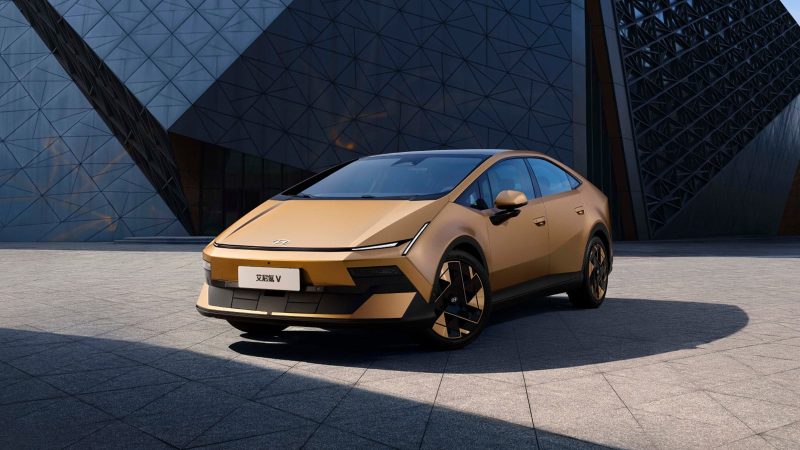
- Early Spring 2026: Hyundai pulls the wraps off its newest EV design concepts, teasing a radical shift toward ultra-angular, geometric styling that immediately draws comparisons to a low-polygon interpretation of the Toyota Prius.
- April 2026 (Beijing Auto Show): Just weeks after its initial concept tease, the Ioniq V makes its physical global debut at the Beijing Auto Show, boasting a 600-kilometer target range and stunning crowds with its polarizing, blocky geometry.
- August 2026 (Chengdu Auto Show): Hyundai returns to the spotlight at the Chengdu Auto Show, officially opening pre-sale orders for the Chinese market and detailing the three-tier pricing structure alongside comprehensive battery and motor specifications.
- Present Day: Order books are officially active across China, while international automotive analysts speculate on when—and if—the vehicle will clear regulatory hurdles to reach global consumers.
Supporting Data and Comparative Analysis
Despite visual cues linking its profile to popular hatchbacks like the Toyota Prius, the Ioniq V occupies a significantly larger physical footprint. Measuring 192.9 inches (4,900 mm) in length, it dwarfs the Prius’s 181.1-inch (4,600 mm) body. Furthermore, it stands roughly four inches taller and wider, clocking in at 57.9 inches (1,470 mm) in height and 74.4 inches (1,890 mm) in width, providing ample interior room for passengers and cargo alike.
Performance and Charging Infrastructure Context
Performance-wise, the Ioniq V leverages Hyundai’s robust 800V architecture—the same underlying hardware responsible for making models like the Ioniq 5 some of the fastest-charging EVs available in Western markets. While Hyundai has yet to publish exact peak charging speeds for the Ioniq V, expectations remain high for a sub-20-minute 10% to 80% replenishment cycle.
However, the competitive landscape in China operates on an entirely different technological tier. With domestic giants like BYD deploying ultra-fast 1.5-megawatt flash-chargers and local automakers locked in an arms race where charging times are measured in seconds rather than minutes, standard 800V speeds may face stiff competition. Even so, for its sub-$21,000 price point, the Ioniq V’s charging capabilities are expected to easily satisfy daily consumer demands.
Official Responses and Strategic Intent
Hyundai executives have been candid regarding the strategic necessity of the Ioniq V. By acknowledging that China has firmly established itself at the absolute bleeding edge of global mobility and vehicle software integration, the automaker views success in this crucible as a prerequisite for global relevance.
"China represents the vanguard of modern automotive evolution," notes industry analysts closely tracking Hyundai’s regional pivot. "If an international legacy brand cannot survive and innovate alongside domestic Chinese manufacturers, its long-term global competitiveness is severely compromised."
While corporate leadership has confirmed that the Ioniq V is intended for international distribution eventually, no explicit roadmap has been mapped out. Regional market observers anticipate that Australia—where EV uptake is surging and Hyundai recently introduced the Elexio—stands as a prime candidate for the next wave of distribution. European markets and parts of the Americas could follow, though regulatory and geopolitical barriers remain formidable obstacles.
Global Implications and Market Outlook
The launch of the Ioniq V highlights a growing chasm in the global automotive landscape. In China, consumers enjoy access to sophisticated, high-tech, long-range electric vehicles at remarkably accessible price points (starting below $18,000 USD). These vehicles are actively transforming urban air quality, mitigating reliance on fossil fuels, and lowering household transportation expenditures.
Conversely, stringent protectionist trade policies, tariffs, and a lack of aggressive domestic market deregulation mean that motorists in regions like the United States remain shielded—or rather, deprived—of these latest technological advancements. Without policy shifts that encourage open market competition and affordable EV adoption, Western consumers risk being left behind in the global transition toward sustainable mobility, continuing a cycle of inflated vehicle costs and delayed environmental progress.

As pre-sale numbers roll in from the Chengdu Auto Show, the Ioniq V stands not only as a pivotal product for Hyundai’s survival in Asia, but as a glaring case study of what the global EV market could look like if affordability and cutting-edge engineering were universally accessible.
