

Published: September 16, 2026
Author: Diogo Borges Ferreira / ArchDaily
Topic: The Lure of Escapism in Architecture and Alternative Worlds
Main Facts: The Allure of the Tabula Rasa
Ask a contemporary architect to identify the most formidable crisis in their discipline, and they will rarely point to the crumbling, unmaintained postwar public housing block located just two streets away from their downtown office. Instead, their gaze fixes on the horizon: the extreme pressure differentials of Martian colonization, the tensile engineering loads of floating ocean platforms, or the pristine, unmapped expanses of desert sands.
Unclaimed ground presents a unique professional seduction: it has no historical stakeholders to negotiate with, no deeply rooted political histories to answer to, and no skeptical tenants who remember the compromises of the last renovation. Designing for a blank slate is not inherently more difficult than navigating the bureaucratic and social complexities of an urban infill site, yet it commands the lion’s share of high-profile funding rounds, international media attention, and visionary renderings.
This persistent architectural flight toward remote, idealized frontiers raises a critical disciplinary question: When we praise these undertakings as the pinnacle of professional "ambition," are we actually witnessing an elaborate exercise in avoidance?
Chronology: From Radical Utopias to Corporate Frontiers
The impulse to abandon the messy realities of the existing city in favor of conceptual purity has a rich, deeply contested history within architectural thought.
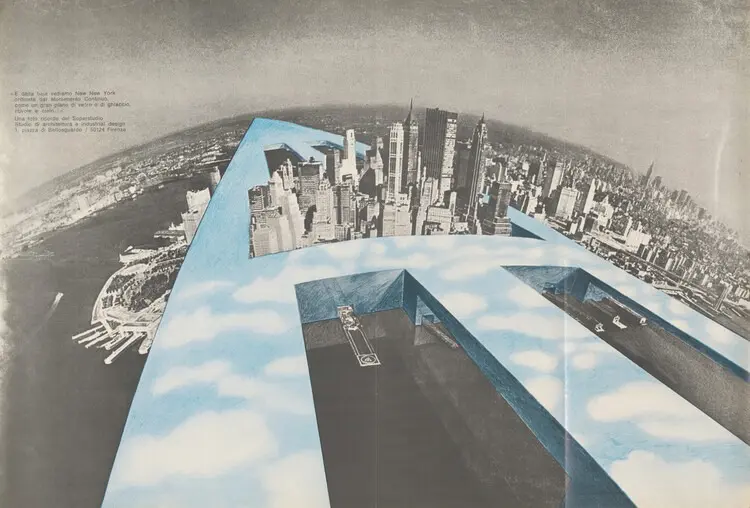
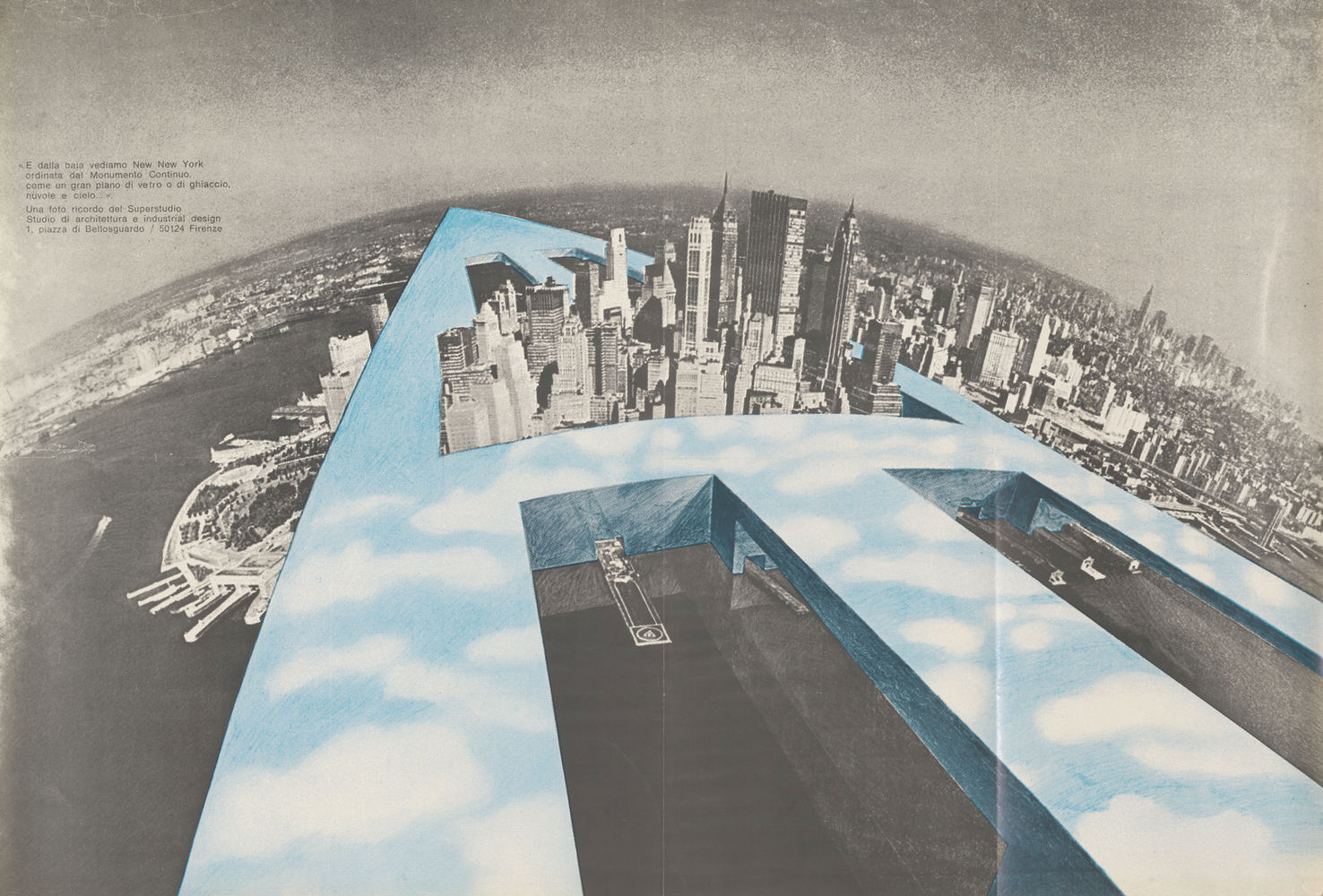
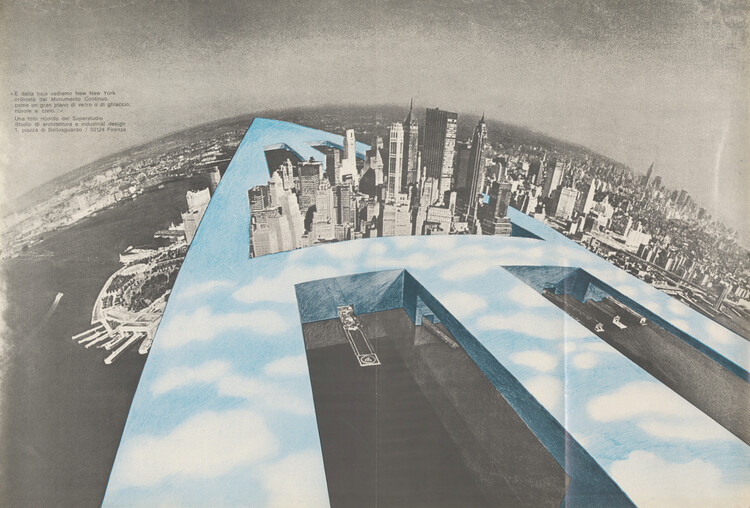
- 1969 – The Radical Critique: Italian avant-garde collective Superstudio unveils The Continuous Monument, a conceptual grid stretching endlessly across natural and urban landscapes. It was never intended as a literal housing scheme; rather, it functioned as an intellectual weapon—a critique of modernist planning deployed from a theoretical void that never intended to touch real soil.
- 1971 – The Spaceship Paradigm: Superstudio expands this ideological territory with The Fourth City, Spaceship City, further pushing the boundaries of architecture detached from local municipal obligations.
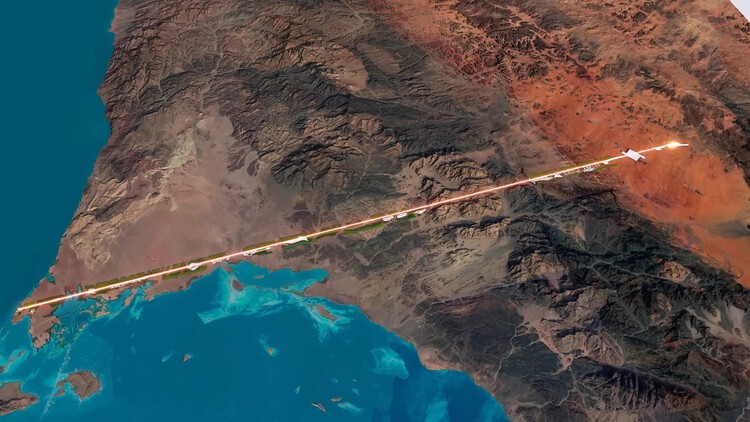
- 2010s – The Emergence of the Corporate Megaproject: Propelled by private tech capital and sovereign wealth, speculative mega-cities transition from theoretical paper architecture to heavily funded corporate realities. Projects like NEOM’s The Line and Marc Lore’s Telosa shift the escape vector from academic critique to real estate products backed by billionaires.
- 2023 – The Institutionalization of "Zero Gravity": The Venice Biennale showcases Zero Gravity Urbanism, branding floating ports and hyper-linear desert utopias with the ethical vocabulary of climate resilience, bringing firms like Bjarke Ingels Group (BIG), Adjaye Associates, and Studio Fuksas under a singular futuristic banner.
- 2026 – The Breaking Point: Urban resilience initiatives on Earth—such as New York City’s Battery Park City flood barrier—continually stall due to real-world property easements and local pushback, starkly contrasting with the frictionless planning permitted in completely unpopulated or extraterrestrial test beds.
Supporting Data and Case Studies: The Friction of Ownership vs. The Freedom of Zero
To understand why architects and mega-investors consistently bypass local urban repairs in favor of frontier interventions, one must examine the fundamental economics of land ownership and legal negotiation.
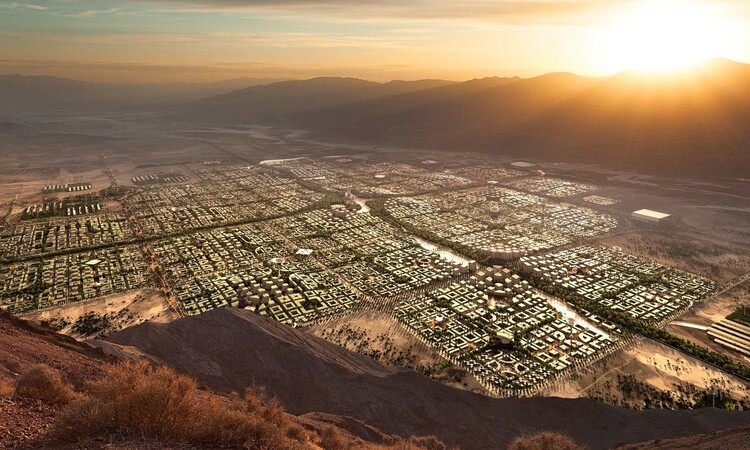
Telosa and the Search for Absolute Zero
Conceived by billionaire Marc Lore and designed by the Bjarke Ingels Group (BIG), Telosa represents the apex of modern planned-city ambition in the American West. Its core innovation—dubbed Equitism—proposes that residents own city land collectively, radically redesigning property law rather than just the physical skyline.
However, five years after its initial public launch, Telosa still lacks a physical site. This delay exposes a fundamental paradox of the tabula rasa: to truly draw a city from zero, a project must bypass not only existing buildings but also the deeply entrenched legal frameworks of private property rights. Because virtually every acre of habitable land on Earth already carries a legal history, finding a true blank slate becomes an exercise in geographic and political fantasy.
The Battery Park City Resiliency Paradox
Contrast the theoretical friction of Telosa with the gritty, grinding reality of urban climate adaptation. In Lower Manhattan, a multi-billion-dollar flood wall designed to protect the coastline from storm surges akin to Hurricane Sandy has spent more than a year gridlocked over two condominium properties.
To function correctly, the public flood barrier requires physical easements from five private residential buildings along the waterfront. When two of those buildings refused to sign after twelve months of intensive negotiations, the responsible public agency was forced into a costly redesign to route the wall around the holdouts. This detour inflated project costs, delayed structural protection, and left public waterfront zones closed indefinitely.

In stark contrast, proposed settlements on Mars or isolated oceanic platforms present zero easement negotiations. There are no stubborn landlords, no municipal zoning boards, and no citizens present to exercise a legal veto.
Official Responses and Institutional Rationales
Proponents of extreme remote urbanism argue that these bold frontiers serve as vital experimental laboratories for the entire construction industry. Leading global firms—including BIG, Coop Himmelb(l)au, and UNStudio—defend their involvement in projects like Saudi Arabia’s NEOM (encompassing The Line, Oxagon, and Leyja) as necessary catalysts for environmental innovation.
Exhibitions like Zero Gravity Urbanism frame these massive investments not as flights from reality, but as high-performance prototypes capable of generating green technologies, advanced water recycling systems, and zero-carbon mobility models applicable anywhere on Earth.
However, architectural critics and urban theorists argue that this migration of talent and capital strips vital vocabulary and financial resources away from the places that need them most. Terms like resilient, regenerative, and adaptive—which were forged through hard-won community battles for climate justice and post-disaster survival—risk becoming hollow marketing tropes when slapped onto luxury floating ports in the Red Sea. When humanitarian vocabulary is imported into totalitarian or corporate-controlled greenfields where no civic polity exists, the words cease to do meaningful work.
Implications: The Ethics of Returning Home
The division within contemporary architecture is not merely aesthetic; it is an ideological split between repair and escape. While thousands of ordinary practices quietly labor through the unglamorous mechanics of zoning laws, historic preservation, and neighborhood densification, the cultural prestige and financial oxygen flow disproportionately toward the horizon-chasers.
Architecture has always possessed an inherent desire for total authorship—the romantic fantasy of the solitary creator drafting an entire world from a blank sheet of paper. This impulse is neither entirely novel nor inherently corrupt. Superstudio proved that radical conceptual abstraction could critique the status quo without ever laying a brick in Florence.
Yet, a dangerous boundary is crossed when the romance of the blank slate transforms from a critical tool into an economic exit strategy. When architects use remote sites to bypass the messy, democratic obligations of a shared tax base, public courts, and resident voting rights, the design ceases to be a critique of society and becomes an evasion of it.
Ultimately, the lure of the remote site is a valid test of a discipline’s technical limits. But the true measure of architectural ambition is not how far away from humanity a design can travel; it is whether the designer plans on returning. The future of the built environment depends not on our ability to flee to Mars or the open ocean, but on our willingness to look at the unsolved crisis sitting two streets away from the office—and finally roll up our sleeves.
