

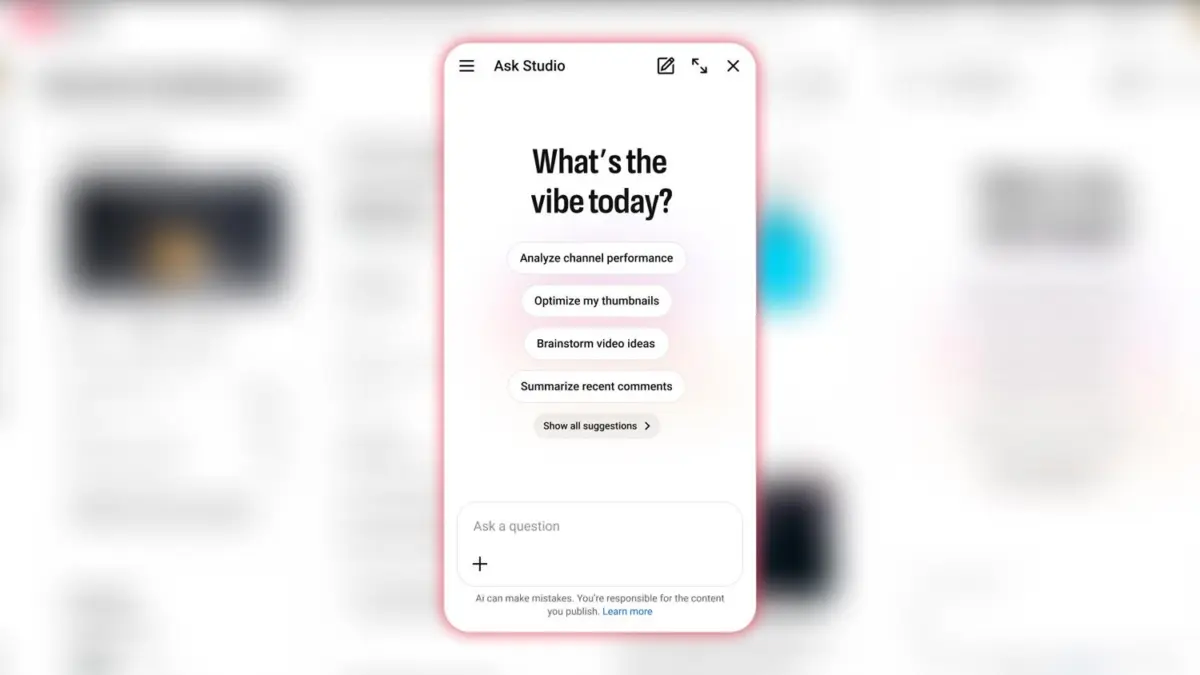
For as long as video-sharing platforms have existed, content creators have faced a singular, ever-shifting adversary: the algorithm. Navigating the murky waters of recommendations, click-through rates, and viewer retention has traditionally been a frustrating exercise in trial and error. Creators spent countless sleepless nights analyzing spreadsheets, agonizing over thumbnail designs, and guessing what their audiences wanted to see next.
Now, YouTube is changing the rules of engagement. Rather than leaving creators to constantly decode its recommendation systems, the platform is increasingly taking the guesswork out of the equation.
During its annual creator-focused Made on YouTube event, the tech giant rolled out a massive expansion of its artificial intelligence suite—evolving its dashboard from basic analytic helpers into proactive, automated optimization engines. While these tools promise to lift the administrative burden off creators, they also spark deeper conversations about the evolving relationship between human creativity and machine automation.
Main Facts: What YouTube’s New AI Suite Offers
The latest updates build upon the foundational AI tools YouTube introduced in 2025, which initially brought features like automated A/B testing for video thumbnails and chatbot interfaces for performance queries. This year’s iteration pushes far beyond simple text queries, introducing complex background automation and iterative testing frameworks designed to maximize audience engagement.
1. The Proactive Background AI Agent
Perhaps the most notable addition is a background AI "agent" that continuously monitors a creator’s channel. Unlike reactive tools that only analyze a newly uploaded video, this agent scours a creator’s legacy back catalog. It looks for older content that has unexpectedly gained renewed relevance due to current events, shifting cultural trends, or algorithmic resurgences. Once identified, the agent prompts the creator with tailored suggestions—such as updating a thumbnail or tweaking a title—to help capitalize on the sudden wave of interest. Additionally, the agent can parse through audience demographics and channel analytics to assemble data-driven sponsorship pitches for brands.
2. Automated Thumbnail and Title Generation
Moving beyond generic suggestions, the upgraded suite can now independently generate full-fledged thumbnail concepts and titles based on the actual video footage uploaded by the creator. Creators can also prompt the system to evaluate and grade their custom-made thumbnails before publishing.
3. Dynamic Thumbnail Segmentation
To squeeze every drop of watch time out of an upload, YouTube Studio now supports dynamic thumbnail testing. Creators can upload up to three distinct thumbnail variations for a single video. The platform’s backend system then automatically serves different images to distinct audience segments, determining which graphic drives the highest engagement and permanently assigning the most effective option.
4. Video Variant Testing
YouTube is pushing multi-version testing beyond static images into the video content itself. Creators can now upload up to three slight variations of a single video—such as cuts featuring different intros, alternative hooks, or reordered structures. YouTube exposes these variations to small, segmented test audiences to measure watch-time performance. Creators can either manually select the winning cut or let the system automatically lock it in after a seven-day testing period. According to Amjad Hanif, YouTube’s vice president of creator products, the system enforces guardrails to ensure the tested variants are not "dramatically different" from one another.
Chronology of AI Integration on YouTube
Understanding the rapid acceleration of YouTube’s AI strategy requires looking at how these features have rolled out over recent years:
- Early Era (Pre-2023): Creators relied heavily on third-party extension tools (such as TubeBuddy or VidIQ) and manual A/B testing methods to optimize titles, tags, and thumbnails.
- The 2025 Inflection Point: YouTube officially unveils its first-party AI creator dashboard, integrating foundational features like A/B thumbnail testing, early chatbot analytics query tools, and AI dubbing capabilities.
- Mid-2026: Public friction rises regarding AI usage in digital media. Prominent creators like Hank Green face severe fan backlash after admitting to using generative AI for research, bringing the topic of creator burnout and automation to the forefront of industry discourse.
- Late 2026 (Made on YouTube Event): YouTube announces its next-generation AI suite, shifting from diagnostic tools to autonomous optimization agents, dynamic audience segmentation, and multi-version video testing.
Supporting Data and the Industry Landscape
Despite the massive rollout of these powerful tools, a glaring question remains among digital media analysts: Do they actually work?
When pressed for concrete empirical data demonstrating that A/B testing, chatbot planning, or background agents translate directly into exponential view growth, YouTube representatives and VP Amjad Hanif declined to share specific performance metrics. Instead, the company frames the value proposition around time saved rather than guaranteed virality.
"The time that we’ve saved there is time that goes back into the creativity," Hanif notes.

However, the psychological and reputational cost of embracing AI in the creator space remains a high-wire act. The digital ecosystem has grown increasingly hostile toward unbridled automation. Earlier this summer, science communicator and YouTuber Hank Green sparked a major controversy when he acknowledged utilizing AI for background research on his videos. While many industry observers diagnosed Green’s situation as a symptom of chronic overwork and systemic burnout rather than malicious intent, the backlash underscored a harsh reality: audiences are deeply skeptical of machine-generated shortcuts.
Similar scandals have rippled across fashion, interior design, and pop culture, where brands and public figures face severe reputational damage the moment audiences suspect AI has bypassed human effort. In the court of public opinion, artificial intelligence is frequently viewed as an existential threat to authenticity.
Official Responses: Where YouTube Draws the Line
To address these widespread anxieties, YouTube leadership has drawn a firm ethical boundary between efficiency and replacement.
Amjad Hanif differentiates sharply between tools designed to help a creator optimize distribution and tools that actually execute the core artistic work.
"What I’ve heard from creators and what I’ve seen from my own conversations with viewers is that when it feels like it’s not actually from the creator, but the tools have taken over and the tools are producing the content, I think that’s kind of where it crosses the line a bit," Hanif explains.
According to YouTube, writing scripts, filming scenes, and wholesale content creation are lines that should remain strictly human. The platform maintains that its AI suite is intended to act as a digital assistant—handling the tedious mechanical work of analytics, tagging, and minor structural testing—so that the creator can focus entirely on storytelling.
Implications for the Future of Content Creation
The introduction of YouTube’s autonomous AI agent and multi-version video testing carries profound implications for the future of digital media:
1. The Standardization of Content
As more creators adopt YouTube’s automated thumbnail generators and dynamic testing frameworks, the visual and structural language of the platform may undergo homogenization. If an AI agent dictates the optimal hook, thumbnail aesthetic, and title structure based purely on historical watch-time algorithms, creators run the risk of designing content for machines rather than human connection.
2. Widened Chasm Between Amateur and Professional
Advanced testing tools—such as rendering and testing three distinct cuts of a video simultaneously—require sophisticated workflow management. Well-funded creator studios with dedicated editing teams will be positioned to leverage these features effortlessly, while solo creators or hobbyists may struggle to keep pace with an increasingly automated optimization loop.
3. Redefining the Creative Partnership
Ultimately, YouTube’s strategy signals a philosophical shift in how creators interact with the platform. No longer is the algorithm an opaque wall to be breached through intuition and luck; it is becoming an active collaborator sitting inside the editing suite.
Whether this partnership fosters a golden age of liberated human creativity—or steers the creator economy into a monotonous feedback loop of algorithmic perfection—will depend entirely on how creators choose to wield these powerful new tools.
