

As California charges forward with its ambitious climate agenda, a major regulatory shift has quietly transitioned from residential lawns to commercial construction sites. While initial public discourse surrounding Assembly Bill 1346 focused almost exclusively on household gardening tools like leaf blowers and lawnmowers, the reality of the legislation is far broader.
Effective January 1, 2024, California has banned the sale of new gas-powered Small Off-Road Engines (SORE) rated under 25 gross horsepower. This regulatory net has swept up critical industrial machinery, leaving contractors—particularly in the roofing sector—grappling with a rapidly changing landscape where traditional, gas-powered utility equipment is phased out in favor of battery and electric alternatives that may not yet be technologically mature.
Main Facts: The Scope of Assembly Bill 1346
Assembly Bill 1346 (AB 1346), signed into law in 2021, targets spark-ignition engines rated at or below 19 kilowatts—equivalent to 25 gross horsepower. While the media heavily emphasized the impact on residential landscaping, the regulatory framework developed by the California Air Resources Board (CARB) applies to all non-exempt small engines.
   [ Small Off-Road Engines (SORE) < 25 HP ]
                      │
         ┌────────────┴────────────┐
         ▼                         ▼
  [ Landscaping ]           [ Construction ]
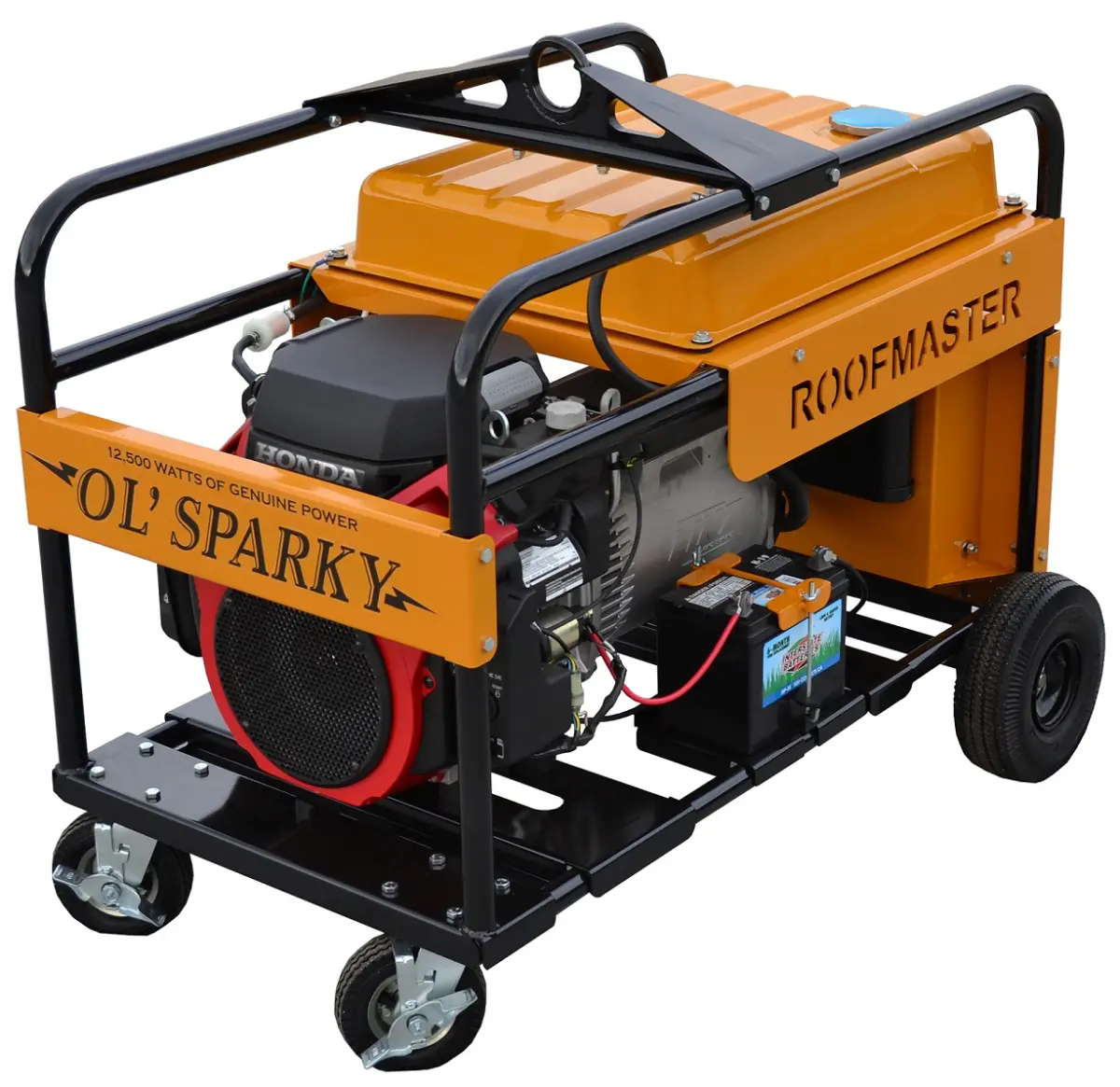
  - Leaf Blowers            - Utility Generators
  - Lawnmowers              - Material Pumps
  - Weed Trimmers           - Tear-off Machines
  - Chainsaws               - Application Equipment
Affected Equipment Categories
The SORE definition covers a vast array of commercial and industrial machinery. While construction and agricultural activities were initially discussed as areas of potential relief, the actual regulatory implementation has left much of the specialty construction sector without exemptions. In the roofing industry, the ban directly impacts:
- Portable Generators: Crucial for providing localized, stable power on jobsites lacking utility hookups.
- Material Pumps: Used for transporting liquid adhesives, coatings, and asphalt.
- Tear-Off Machines: Gas-powered equipment used to strip old roofing materials quickly.
- Application Equipment: Specialized sprayers and mechanical applicators.
- Specialty Vehicles and Utility Carts: Used to transport heavy materials across expansive commercial jobsites.
The "Grandfathering" Loophole and Supply Depletion
The regulation does not criminalize the use of existing gas-powered equipment. Contractors and homeowners are legally permitted to operate the SORE equipment they currently own. However, the purchase of new gas-powered SORE units is prohibited within state lines.
Manufacturers and distributors are allowed to sell remaining inventory of pre-2024 compliant engines. Consequently, a temporary buffer exists as distributors sell off their 2023 stock. Once these inventories are exhausted, California contractors will no longer have access to new gas-powered replacements under the 25-horsepower threshold.
Chronology: The Road to the 2024 Ban
The transition from a legislative proposal to an active market restriction spans several years of legislative debate, regulatory drafting, and industry pushback.
  2021                  Dec 2021              2022-2023             Jan 1, 2024           Post-2024
   │                       │                      │                     │                     │
   ▼                       ▼                      ▼                     ▼                     ▼
AB 1346 Passed       CARB Adopts            Manufacturers        Sale of New SORE       Distributor Stock
by Legislature Amendments Transition Ban Takes Effect Depletion Phase- October 2021 – Legislative Passage: Governor Gavin Newsom signs AB 1346 into law. The bill directs CARB to adopt regulations to prohibit the sale of new SORE by 2024, or as soon as CARB determines is technologically feasible.
- December 2021 – Regulatory Adoption: CARB officially adopts amendments to its SORE regulations to implement the mandate of AB 1346. The board sets the implementation date for January 1, 2024, establishing strict emission standards that effectively require new SORE to be zero-emission.
- 2022 to 2023 – Industry Transition and Stocking: Equipment manufacturers and distributors begin adjusting their supply chains. Knowing that production of California-compliant gas engines under 25 HP must cease, manufacturers maximize production of 2023-model engines to build a reserve of "grandfathered" inventory.
- January 1, 2024 – The Ban Takes Effect: The sale of newly manufactured gas-powered SORE under 25 HP is officially prohibited in California. Only zero-emission equipment (battery-electric or corded electric) or units with certified pre-2024 engines can be legally sold.
- Present Day – The Depletion Phase: The construction and roofing industries enter a transitional phase characterized by dwindling reserves of 2023 gas-powered equipment and an accelerating push toward jobsite electrification.
Supporting Data: The Environmental and Economic Calculus
The Environmental Mandate
The primary catalyst behind AB 1346 was the disproportionate volume of emissions generated by small, unregulated engines compared to modern passenger vehicles. According to CARB data:
- Operating a commercial gas-powered leaf blower for one hour emits the same amount of smog-forming pollution (reactive organic gases and nitrogen oxides) as driving a light-duty passenger car 1,100 miles—roughly the distance from Los Angeles to Denver.
- By 2020, total smog-forming emissions from SORE in California exceeded those from light-duty passenger cars in the state.
Smog-Forming Emissions Comparison (CARB Data):
┌────────────────────────────────────────────────────────┐
│ 1 Hour of Commercial Leaf Blower Use                   │ => [████████████████████]
├────────────────────────────────────────────────────────┤
│ Driving a Modern Passenger Car 1,100 Miles             │ => [████████████████████]
└────────────────────────────────────────────────────────┘
CARB projects that the transition to zero-emission SORE will reduce localized air pollution significantly, avoiding an estimated 72 tons per day of smog-forming emissions statewide by 2031.
The Technological and Infrastructure Gap
While the environmental benefits are clear on paper, industrial contractors point to significant operational hurdles, particularly regarding energy density and jobsite logistics:
| Equipment Type | Typical Power Source (Pre-2024) | Electric/Battery Alternative | Key Operational Challenge |
|---|---|---|---|
| Commercial Generator | Gas/Diesel (<25 HP) | Battery Storage Systems | Limited runtime; long recharge cycles; high capital cost. |
| Hot Air Membrane Welder | Generator-powered (Clean AC) | Corded Electric / Battery | Requires high, continuous wattage; battery packs are too heavy for practical rooftop use. |
| Material / Trash Pump | Gas Engine | Corded Electric | Requires constant access to high-voltage, multi-phase jobsite power. |
| Tear-Off Machine | Gas Engine | Corded Electric | Tripping hazards from cords; risk of cord damage on sharp debris. |
For example, hot air welders used to fuse thermoplastic single-ply roofing membranes (TPO and PVC) require stable, clean, high-wattage power. Drawing this level of continuous energy from portable battery packs is currently impractical due to the weight and cost of the batteries required to sustain an eight-to-ten-hour workday.
Official Responses: Stakeholder Perspectives
The implementation of the SORE ban has highlighted a deep divide between state regulatory bodies and the industries tasked with executing physical infrastructure projects.
The Regulatory Position (CARB)
State officials maintain that the transition is both necessary for public health and technologically achievable. In official statements, CARB emphasizes that the transition will prevent premature deaths and cardiovascular illnesses, particularly among low-income workers and communities of color who are disproportionately exposed to localized engine emissions.
To ease the transition, the state allocated millions of dollars to the Clean Off-Road Equipment Voucher Incentive Project (CORE), providing financial assistance to professional landscapers and small businesses purchasing zero-emission equipment. However, construction-specific SORE units have received far fewer targeted subsidies compared to commercial landscaping tools.
The Construction and Roofing Industry Response
Industry trade groups, including the California Roofing Contractors Association (CRCA) and various manufacturing representatives, have expressed deep concern over the speed of the rollout and the lack of viable alternatives for heavy-duty applications.
A representative from Roofmaster, a leading manufacturer and distributor of commercial roofing equipment, summarized the logistical friction:
"Manufacturers and distributors will still be able to sell affected equipment so long as they are using approved engines… but when that supply is exhausted, you will no longer be able to buy in California. We are left asking how the state expects us to perform complex commercial roofing operations with battery-powered equipment. For light tools like screw guns and reciprocating saws, batteries are excellent. But for heavy-duty application equipment and hot air welders that require clean, high-voltage, three-phase power, batteries simply are not a viable primary energy source on an active, off-grid jobsite."
Implications: The Road Ahead for Contractors
The enforcement of AB 1346 carries profound operational and financial implications for the construction and roofing sectors in California and beyond.
                           [ AB 1346 SORE Ban ]
                                    │
         ┌──────────────────────────┼──────────────────────────┐
         ▼                          ▼                          ▼
[ Capital Strategy ]      [ Operational Hurdles ]    [ Supply Chain Impacts ]
- Fleet hoarding          - Rooftop weight limits    - Cross-border sourcing
- Rising equipment costs  - Charging logistics       - Out-of-state leasing
1. Capital Allocation and Fleet Management
Contractors are faced with an immediate strategic choice: invest heavily in remaining 2023-compliant gas equipment or begin the costly process of redesigning their workflows around electric power.
- The "Buy Now" Strategy: Many firms are aggressively purchasing remaining grandfathered stock from distributors. This strategy provides a temporary operational shield but merely delays the inevitable transition.
- Asset Inflation: As the supply of compliant gas engines dwindles, the market value of used gas-powered generators, pumps, and tear-off machines is expected to rise sharply, creating a secondary market premium.
2. Jobsite Logistics and Safety Challenges
Moving away from portable gas engines introduces new logistical and safety variables to construction sites:
- The Cord Hazard: Transitioning to corded electric tools requires extensive networks of extension cords draped across active work zones. On roofing projects, where workers navigate sharp metal, hot asphalt, and high elevations, cords present significant tripping and shock hazards.
- Rooftop Weight Restrictions: High-capacity battery banks capable of powering heavy machinery are heavy. Transporting these massive power banks to high-rise rooftops requires specialized crane services, increasing setup times and labor costs.
- The Charging Dilemma: If a jobsite lacks an active utility tie-in, contractors must rely on large-scale, tow-behind diesel generators (which generally exceed 25 HP and remain legal under different regulatory tiers) to charge the batteries meant to replace the smaller gas engines—creating an ironic loop of fossil-fuel dependence.
3. The Risk of Regulatory Leakage
As supply chains tighten, industry experts anticipate a rise in "regulatory leakage," where California-based contractors seek workarounds to acquire gas-powered equipment. This includes purchasing SORE units in neighboring states such as Nevada, Arizona, or Oregon, and transporting them across state lines, or utilizing out-of-state leasing companies to source equipment. While CARB maintains enforcement mechanisms, policing every active jobsite in California presents an immense administrative challenge.
Conclusion: A Forced Technological Leap
California’s SORE ban represents a high-stakes bet that regulatory mandates will force rapid technological innovation. While the landscaping industry has largely adapted to battery power, the heavy construction and roofing sectors face a much steeper climb.
For contractors operating within the Golden State, the era of cheap, reliable, and easily transportable gas-powered utility equipment is drawing to a close. Those who fail to adapt their equipment strategies today may find themselves powerless on the jobsites of tomorrow.
