

Main Facts
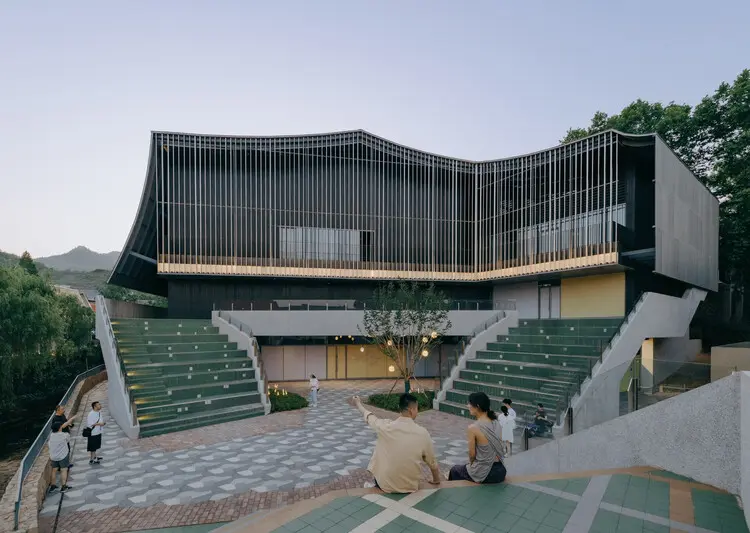
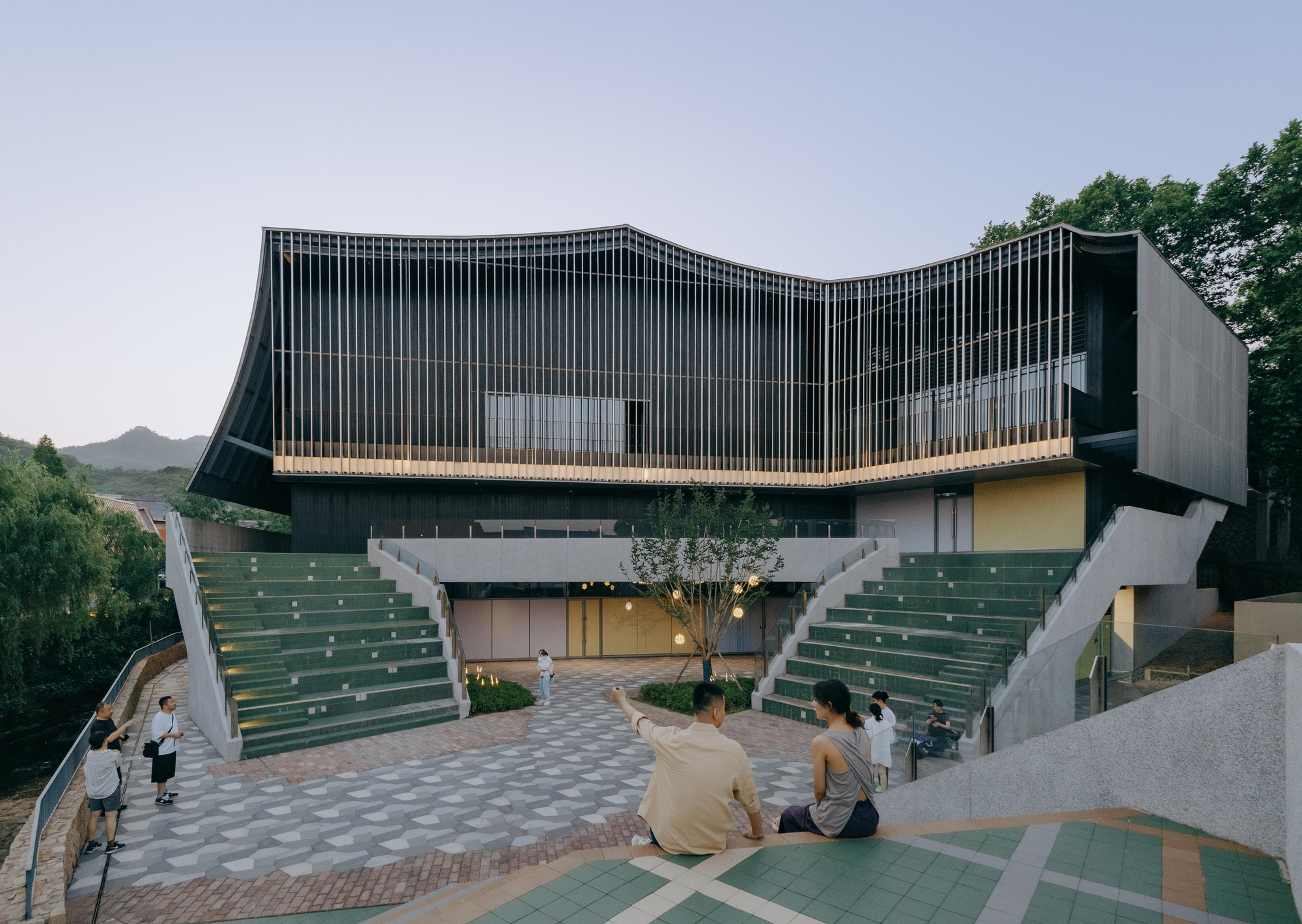
Nestled deep within the verdant, mist-shrouded valleys of western Zhejiang province, Moganshan has long served as one of China’s most storied and revered summer retreats. Historically defined by its deep economic and cultural ties to nearby Shanghai, the mountain resort has evolved into a unique crossroads of rural tranquility and cosmopolitan flair. The latest chapter in this ongoing architectural and cultural evolution is marked by the completion of the Moganshan Liaoyuan Theater, designed by the innovative architecture studio INCLS (One Design) and curated by Han Shuang.
Located along Yu Street in Liaoyuan Village, the project represents a major milestone in a broader revitalization initiative spearheaded by Deqing Culture and Tourism, a local state-owned developer. The theater is not merely a cultural venue; it is a spatial experiment that challenges conventional binaries—traditional versus modern, urban versus rural, and local versus foreign—redefining how contemporary architecture can integrate into a historic, picturesque landscape.
Project At-a-Glance:
- Project Name: Moganshan Liaoyuan Theater
- Location: Liaoyuan Village, Yu Street, Moganshan, Deqing County, Zhejiang Province, China
- Architectural & Urban Design Firm: INCLS (One Design)
- Curator: Han Shuang
- Developer: Deqing Culture and Tourism
- Photography: Yumeng Zhu
Chronology of Development: From Historical Retreat to Contemporary Cultural Hub
The Historical Context: Moganshan’s Evolution
Moganshan’s modern identity dates back to the late 19th and early 20th centuries, when foreign missionaries, diplomats, and elite merchants from Shanghai discovered its cool mountain microclimate, building rustic stone villas amidst the dense bamboo forests. This influx forged an enduring cosmopolitan spirit within a deeply rural topography. For decades, the area remained a quiet sanctuary, celebrated in Chinese literature and history.
The Shift Toward Rural Revitalization
In recent years, local governance and tourism boards recognized the need to breathe new life into Moganshan’s aging infrastructure while protecting its natural ecology. Deqing Culture and Tourism initiated a series of strategic interventions along Yu Street in Liaoyuan Village. The goal was to transform the rural settlement into a vibrant cultural destination that could draw urban tourists without alienating the local community.
Design, Construction, and Opening
- Concept Phase: INCLS (One Design) was commissioned to design a public theater that could anchor the new cultural district along Yu Street. The design team focused on striking a delicate balance between respecting the vernacular architecture of western Zhejiang and introducing bold, contemporary spatial typologies.
- Execution: Through careful massing, spatial sequencing, and material selection, the construction was completed to harmonize with the surrounding mountainous terrain and bamboo groves.
- Public Debut & Reception: Captured extensively by architectural photographer Yumeng Zhu, the completed theater opened to critical acclaim, quickly establishing itself as a focal point for architectural discourse and cultural programming in the region.
Supporting Data and Architectural Methodology
The Moganshan Liaoyuan Theater project stands out not just for its visual impact, but for the complex design methodologies employed by INCLS.
Spatial Integration and Urban Context
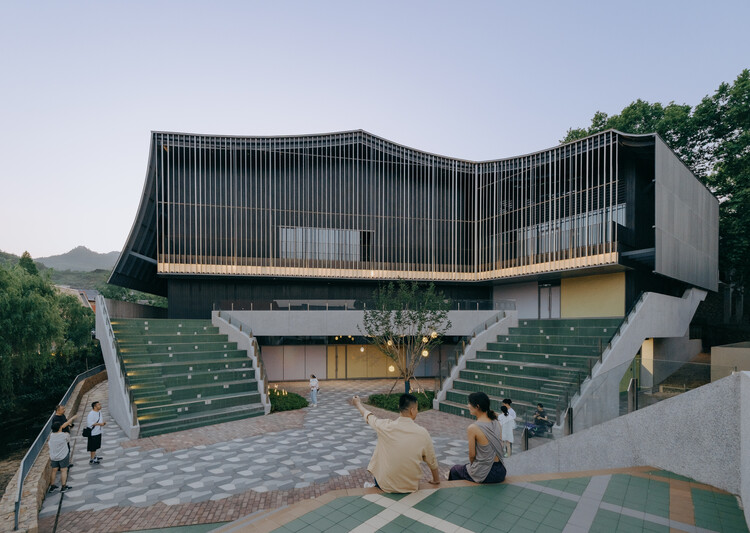
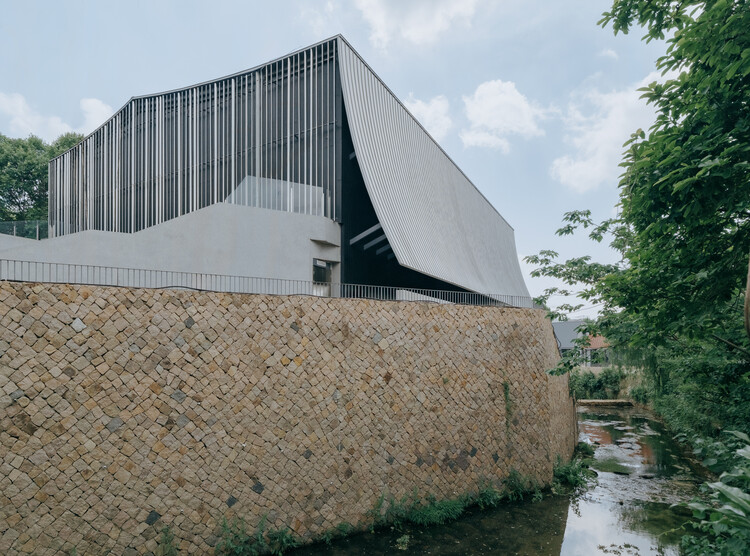
Yu Street in Liaoyuan Village presents a distinct scale—characterized by low-rise traditional buildings, narrow pathways, and an intimate relationship with the natural valley. Rather than imposing a monolithic urban structure, INCLS fragmented the theater’s volume, allowing it to converse with the surrounding streetscape. The building steps down and interacts with the topography, echoing the undulating contours of the Moganshan mountains.
Materiality and Craftsmanship
The architectural palette reflects a thoughtful synthesis of local traditions and modern engineering:
- Local Material Echoes: The use of textures, tones, and aggregates inspired by regional building traditions ensures the theater feels rooted in its geography.
- Transparency and Light: Strategic placement of large glass facades and perforated surfaces invites natural light deep into the interior while dissolving the boundary between the interior performance spaces and the external landscape.
- Acoustical and Structural Excellence: Inside, the main auditorium balances cutting-edge theatrical acoustic requirements with tactile, warm interior finishes that prioritize human comfort and spatial intimacy.
Official Responses and Curatorial Insights
The realization of the Moganshan Liaoyuan Theater has generated considerable dialogue among architects, cultural curators, and municipal leaders.
Curatorial Perspective
Curator Han Shuang emphasized the cultural gravity of the project within the valley. In statements regarding the exhibition and curation of the building’s narrative, Shuang noted that the Liaoyuan Theater acts as a spatial mediator. It reconciles the historical tension between Shanghai’s metropolitan influence and Moganshan’s rustic seclusion. "The theater is designed to be a vessel for encounters—where the local villager and the urban traveler share the same spatial experience," Shuang observed.
Developer and Municipal Vision
Deqing Culture and Tourism framed the project as a cornerstone of sustainable rural development. By investing in high-caliber architecture like the work produced by INCLS, the developer aims to shift Moganshan’s tourism model away from passive sightseeing toward active cultural engagement. Municipal representatives highlighted that public architecture must serve as a catalyst for economic vitality, ensuring that rural communities benefit directly from architectural innovation.
Implications for Rural Architecture and Future Development
The completion of the Moganshan Liaoyuan Theater carries profound implications for the future of rural architecture in China and beyond.
Challenging Rural-Urban Binaries
For decades, rural revitalization projects have often fallen into two extremes: either pastiche replicas of vernacular styles that lack modern functionality, or alien urban boxes dropped into quiet countrysides. INCLS’s design for Liaoyuan Village proves that a third way exists. By engaging thoughtfully with the "familiar binaries" of urban versus rural and modern versus traditional, the architects have created a hybrid typology that honors the past while fully embracing contemporary needs.

A New Blueprint for Cultural Tourism
As remote scenic areas across the globe grapple with the pressures of over-tourism and commercialization, projects like the Liaoyuan Theater offer a sustainable blueprint. By anchoring tourism around high-quality public cultural infrastructure—rather than generic retail or hospitality—regions can foster deeper intellectual and emotional connections between visitors and the land.
Inspiring the Next Generation of Designers
The international attention garnered by the Moganshan Liaoyuan Theater underscores the growing prestige of Chinese regional architecture. It demonstrates that visionary design is no longer confined to major tier-one metropolises like Shanghai or Beijing; rather, the rural landscape has become one of the most exciting laboratories for architectural experimentation.
As Liaoyuan Village continues to welcome artists, travelers, and locals to its new cultural anchor, the Moganshan Liaoyuan Theater stands as a testament to the power of design to unite disparate worlds, elevate communities, and harmonize with the timeless rhythms of nature.
