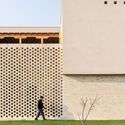
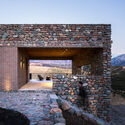
As Uzbekistan undergoes a rapid and complex urban transformation, a new generation of local designers is redefining what it means to build in Central Asia. Amid a landscape shifting between Soviet modernist heritage, ancient Silk Road history, and contemporary commercial expansion, the practice ARC Architects has emerged as a critical voice. Founded in 2017 by architect Bobir Klichev, the studio operates out of offices in both Tashkent and Bukhara. By weaving minimalist aesthetics with deep ethnic and material references, ARC Architects is pioneering a contemporary architectural language that honors the past while fearlessly addressing the demands of the present.
Rather than relying on superficial pastiche or treating historical vernacular as a museum piece, the studio asks a pressing, nuanced question: How can Uzbekistan’s architectural heritage be genuinely reinterpreted for the 21st century?
Main Facts
Founding and Leadership: Established in 2017 by principal architect Bobir Klichev.
Studio Locations: Dual-base operations in Tashkent, the nation’s political and economic capital, and Bukhara, a historic hub of Silk Road architecture and culture.
Design Philosophy: A synthesized approach merging structural minimalism, contextual sensitivity, and subtle ethnic references, avoiding direct historical reproduction.
Notable Projects: The Mercure Bukhara Old Town Hotel, the SUZANI by Madina Kasimbaeva Museum, the Kanishka Start Store, and various modern residential typologies like Country House KK-1234.
Core Influences: The historic urban morphology of Central Asian cities—characterized by inner courtyards, narrow climatic alleys, and layered historical eras spanning medieval Islamic epochs and Soviet-era urbanism.
Chronology: The Evolution of ARC Architects
To understand the trajectory of ARC Architects, one must trace both the personal timeline of its founder and the broader arc of Uzbekistan’s architectural renaissance over the past decade.
2017: The Genesis in Bukhara
Bobir Klichev founded ARC Architects in Bukhara, a city whose skyline is punctuated by centuries-old minarets, madrasas, and trade domes. Immersed in this dense architectural heritage, the nascent firm began by addressing small-scale commercial and residential interventions. Working within a UNESCO-protected historic urban fabric forced the team to master the delicate balance between modern programmatic needs and strict preservation guidelines. This foundational constraint instilled a deep respect for scale, proportion, and materiality that would define all subsequent projects.
2018–2020: Expanding the Horizon to Tashkent
Encouraged by early successes, the studio expanded its operational footprint to Tashkent. This move exposed the team to a radically different urban context: a metropolis heavily shaped by Soviet modernism, post-earthquake reconstruction, and rapid post-independence commercial development. During this period, ARC Architects transitioned from localized heritage-adjacent building to developing a cohesive design philosophy. They began experimenting with how traditional Central Asian spatial concepts—such as the avliyo (interior courtyard) and transitional shading elements—could be abstracted into contemporary retail and hospitality architecture.
2021–2024: Landmark Cultural and Hospitality Projects
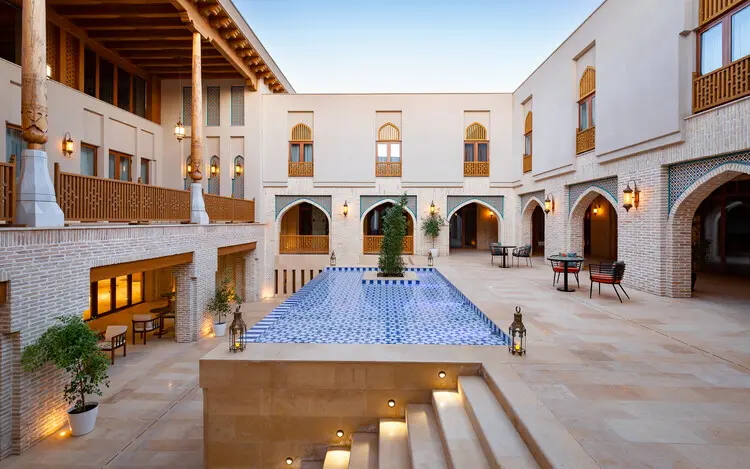
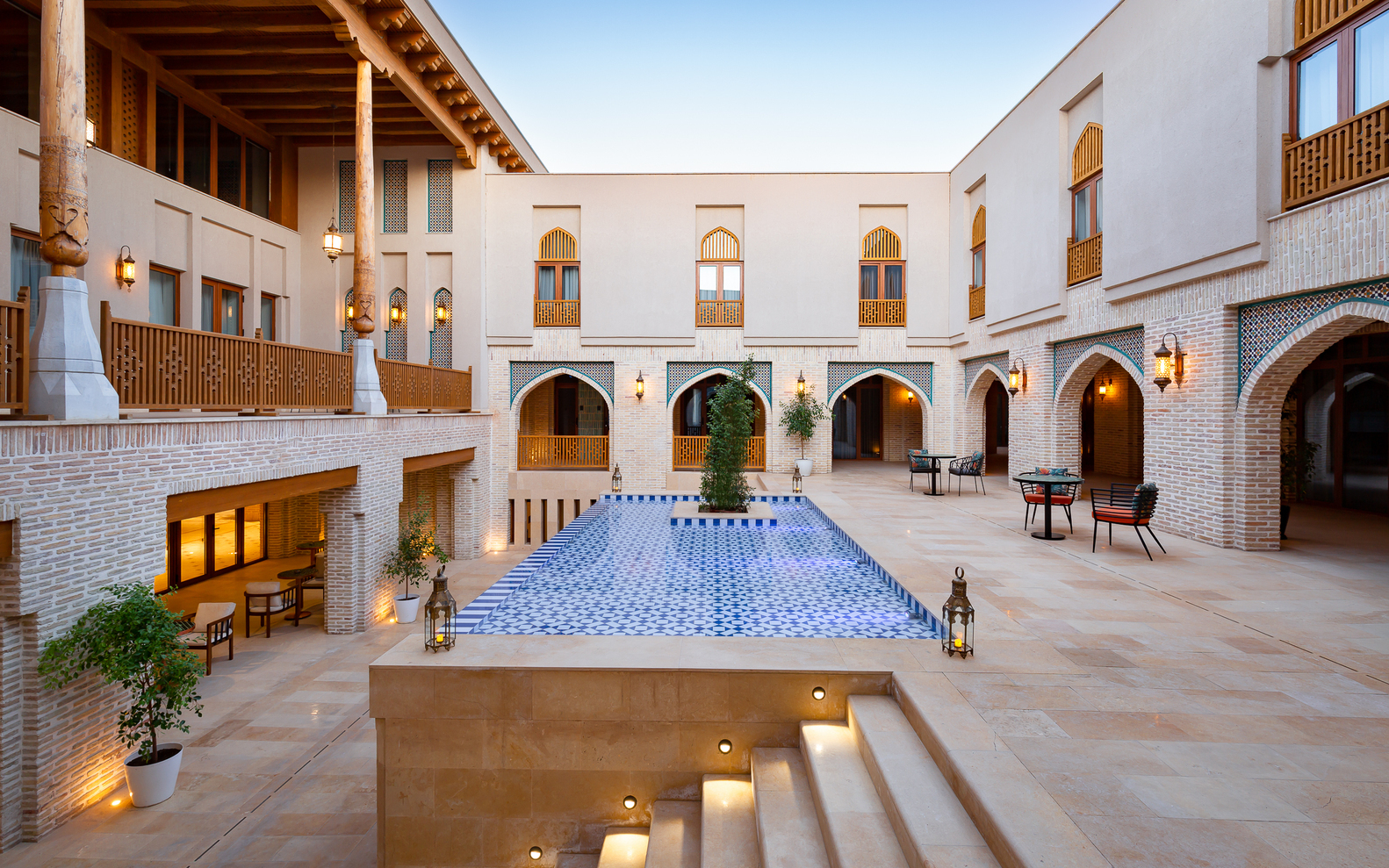
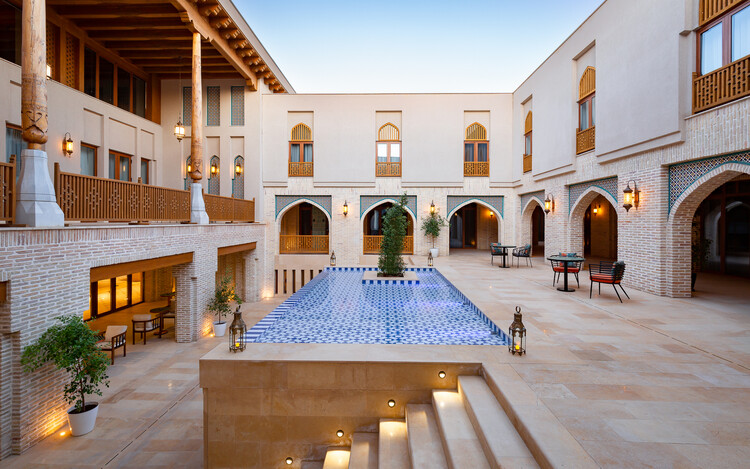
This era marked the studio’s maturation into large-scale, high-profile projects. The completion of the Mercure Bukhara Old Town Hotel demonstrated the firm’s ability to insert large hospitality volumes into historical contexts without overwhelming the human scale. Concurrently, the firm took on cultural commissions, such as the SUZANI by Madina Kasimbaeva Museum, where architecture serves as a quiet, respectful backdrop to the vibrant, intricate textile art of traditional Uzbek embroidery.
2025–Present: A Regional Benchmark
Today, ARC Architects stands as one of Uzbekistan’s most forward-thinking design studios. Their portfolio bridges private sanctuaries and public-facing commercial hubs, establishing a benchmark for how contemporary Central Asian design can engage globally while remaining fiercely loyal to its local roots.
Supporting Data: Contextualizing Central Asian Modernity
The work of ARC Architects cannot be separated from the unique geopolitical, climatic, and cultural data points defining modern Uzbekistan:
Climatic Extremes: Uzbekistan experiences severe continental climates, featuring scorching summers with temperatures frequently exceeding 40°C (104°F) and cold winters. ARC’s designs heavily leverage traditional passive cooling strategies, such as thermal mass, deep overhangs, protected courtyards, and narrow spatial corridors that encourage natural ventilation.
Historical Layering: Modern Uzbek cities contain at least three distinct architectural epochs:
The Silk Road Era: Mudbrick construction, tilework, introverted courtyards, and civic integration.
The Soviet Modernist Era: Monumental concrete grids, pre-fabricated panel housing, and utopian public plazas (notably prominent in Tashkent following the 1966 earthquake).
Urban Density: While Tashkent features wide boulevards and monumental Soviet planning scales, historic cores like Bukhara and Samarkand rely on human-scaled, organic urban fabrics. ARC Architects fluidly navigates both scales, applying micro-urbanist principles even to standalone suburban or commercial structures.
Official Responses and Design Philosophy
In various studio statements and design manifests, the team at ARC Architects has elaborated on their core ethos—moving away from folkloric mimicry and toward a functional, material-driven modernism.
"We do not wish to build stage sets of a romanticized past," notes the studio’s design team. "Uzbekistan’s architecture has always been pragmatic, responsive to the desert climate, and deeply communal. Our goal is to extract those underlying spatial rules—how a courtyard captures shadow, how brick modulates light, how a threshold transitions from the chaotic street to the quiet interior—and translate them into a clean, contemporary architectural language."
Artisanal collaboration is another pillar of the studio’s official methodology. In projects like the Suzani museum and various boutique hospitality spaces, ARC actively collaborates with local master craftsmen (usta). By integrating traditional plasterwork (ganch), ceramics, and textile arts directly into minimalist concrete and steel structures, the firm creates a dialogue between industrial permanence and tactile, human-scaled craftsmanship.
Implications: The Future of Uzbek Architecture
The design practices pioneered by firms like ARC Architects carry profound implications for the future of urban development across Central Asia:
Combating Cultural Homogenization: As global capital flows into Central Asia, cities face the threat of placeless glass-box developments that ignore local climate and culture. ARC’s work proves that contemporary architecture can be globally competitive while remaining deeply local.
Re-Evaluating Soviet Heritage: While the current real estate boom often threatens Soviet-era modernist structures, studios like ARC foster a design culture that respects all historical layers. By learning from the climatic responsiveness of both ancient mudbrick architecture and mid-century concrete framing, contemporary architects are better equipped to design sustainable buildings.
Elevating the Artisanal Economy: Through direct integration of local artisans into high-end architectural commissions, ARC Architects helps sustain endangered traditional building crafts, ensuring that modernization supports rather than displaces local cultural heritage.
Ultimately, the work of ARC Architects serves as a masterclass in architectural translation. By holding the tension between memory and matter, the studio is not just building hotels, museums, and homes—they are helping construct the modern identity of Uzbekistan itself.